Taarkashi – Drawing matrilineal threads
Born in Saharanpur in 1901, amma was named Alice David at birth. It is difficult to say if she was an Anglo-Indian, but her mother, Angelica, had travelled from Germany to work for the East India Company.

Born in Saharanpur in 1901, amma was named Alice David at birth. It is difficult to say if she was an Anglo-Indian, but her mother, Angelica, had travelled from Germany to work for the East India Company.
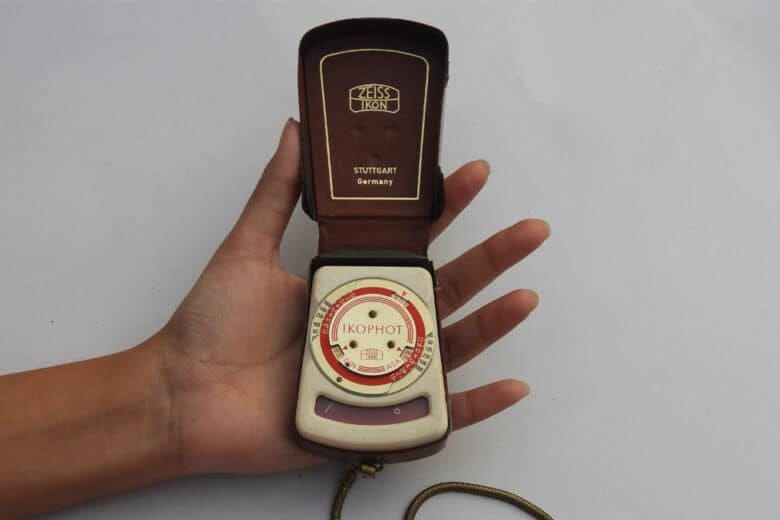
An ikophot is a handheld meter made in the 1950’s by Zeiss Ikon in Stuttgart, Germany. My grandfather Shyamal Kumar Majumdar probably procured this in the 1960s from Fancy Market, Kidderpore, Kolkata. It has a bubble glass at the front that takes in the light, which then drives the meter needle. It is covered by a little black lid which can be removed while using the device.
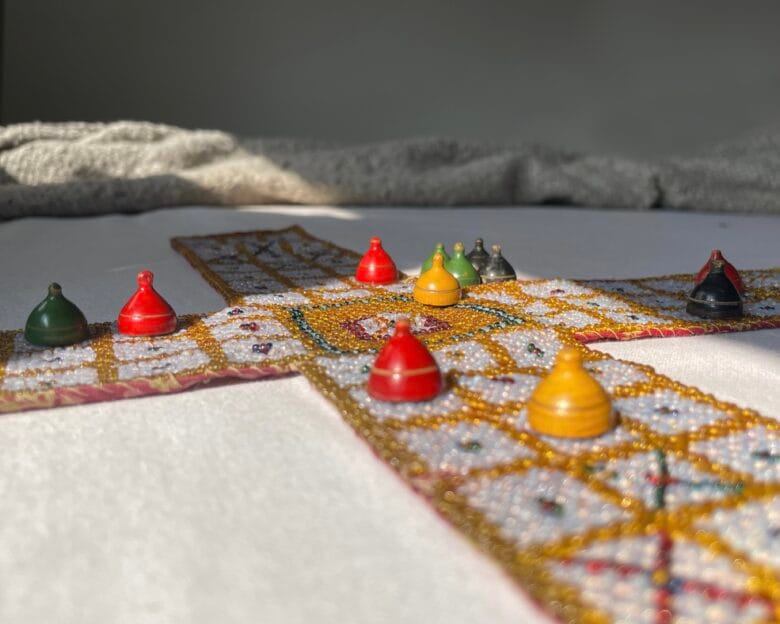
Throughout history, pachisi was the ‘poor man’s chaupar’. But to my grandmother, whose childhood pachisi grids were scribbled in chalk, my grandfather’s novelty board — like rubies, emeralds, sapphires, and pearls sewn together — seemed no less regal. “She embroidered each bead herself,” she tells me, looking back at the outbursts, meltdowns, and amusement this game brought to my grandparents’ living room 60 years ago. “I guess she’d be your great-great-grandmother”.

The cupboard is a tall and narrow one, measuring 6 feet in height. It has four shelves inside, and a pull-out drawer symmetrically placed in the middle. The piece was in display in a furniture shop, and the shop keeper enticed him to pick it up. At Rs 200, it seemed a great bargain for a wooden unit claimed to be made of teak.
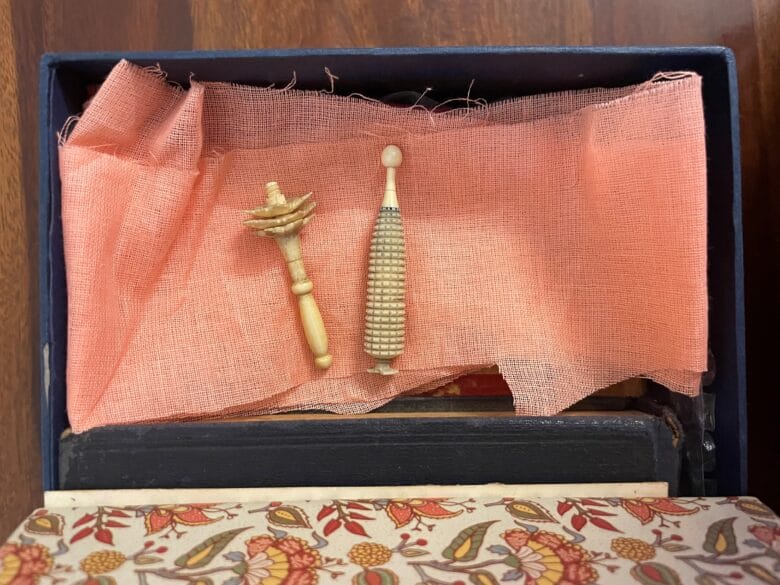
As a part of her trousseau, on her wedding – which incidentally took place during the India Pakistan war of 1971 – my maternal grandmother, Shashi Bhalla (neé Sood) carried a few objects from her mother’s trousseau from Bombay to Delhi. Two of these were later passed on to her daughter, my mother, Sapna Puri, and have now found their way to me. A surmedaani, and an ivory stick used to apply bindi.