The Sambharde from Mulky

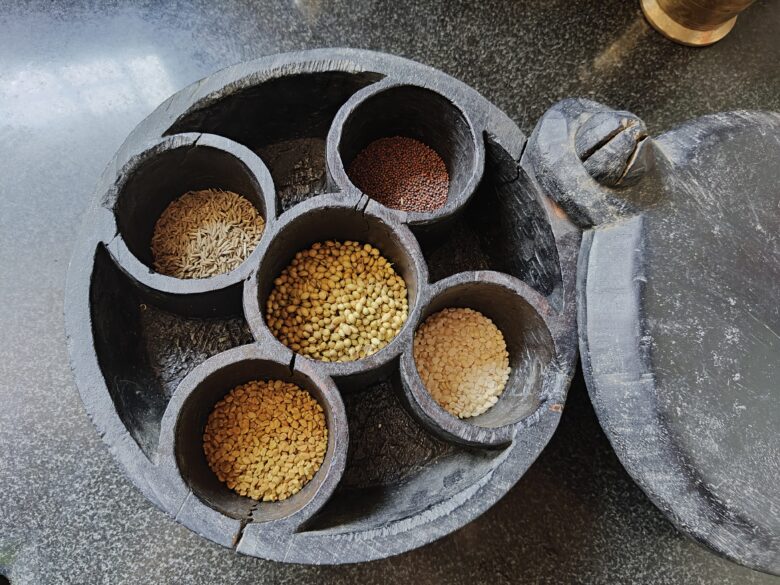
The Konkani Sambharḍe (or Sāmarḍe) is the regional wooden spice container of the western coast of India. It is carved from a single block of wood, with the compartments hollowed out one by one. The craftsmanship isn’t decorative; it’s structural. The wood has lasted for decades. The beauty of the box is that it breathes – it lets the spices stay dry without trapping moisture inside.

Echoes of Home in the Things We Keep

Many of these objects – the Dori Danda, the Sev Sancha, the Hamam Dasta – are no longer used, but sometimes I find myself using them intentionally, just to remember my grandmother. At first, I was drawn to moments where we were together in the kitchen, the small rituals. Over time that turned into an interest in the kitchen itself.

A box, a family, and a home that isn’t 

A squarish walnut wood box that has been in our family for more than 70 years. About 11 inches long, 10 inches wide, and a little more than 3 inches deep. Unknown date of purchase. Likely hand-carved by an unknown artisan in what used to be the riyasat of Jammu and Kashmir in colonial India. 

Lost and Never Found: Young Razia’s life in her Beloved Delhi

When an object has witnessed Partition, it ceases to be ordinary. In the case of my maternal grandparents, these objects were a framed portrait of my nana, his personal diary, and a silver drinking bowl. A photograph of my nani, Razia Ummul Baneen, holding her first born, my uncle, in her arms. The family also carried a folding wooden chair, a sewing machine, its table and motor, some clothes, and a tarazu. All these made the journey from Delhi to Karachi.

Thap Bubu’s Vanity Box

Sitting sizeably, at 14 inches in length and 12 inches in breadth, this dark wood box could easily be mistaken for an ornately carved low side table. However, come closer and the magic inside is revealed. The vanity cum jewellery box from the early 1900s, sits pristinely preserved in the hands of its third owner.

Close
© Copyright 2024. All rights reserved.
Close

Subscribe to the Museum

Receive a new story from somewhere in the Indian subcontinent in your inbox every week!

Loading