
TEXT AND PHOTOGRAPHS BY SOBIA
New Delhi, India
A betel-nut cutter from Lucknow, and the woman who taught me that love is in the small, careful things
There is an object in my kitchen that does not belong only to me. It belongs to Nanna to her hands, her afternoons, her particular way of making everyone around her feel held. It is a Sarota: a betel-nut cutter, small and bladed, made of steel, worn smooth in the places where her fingers rested. It came from Lucknow. It came from her. And no matter how many years pass, it refuses to be just a kitchen tool.
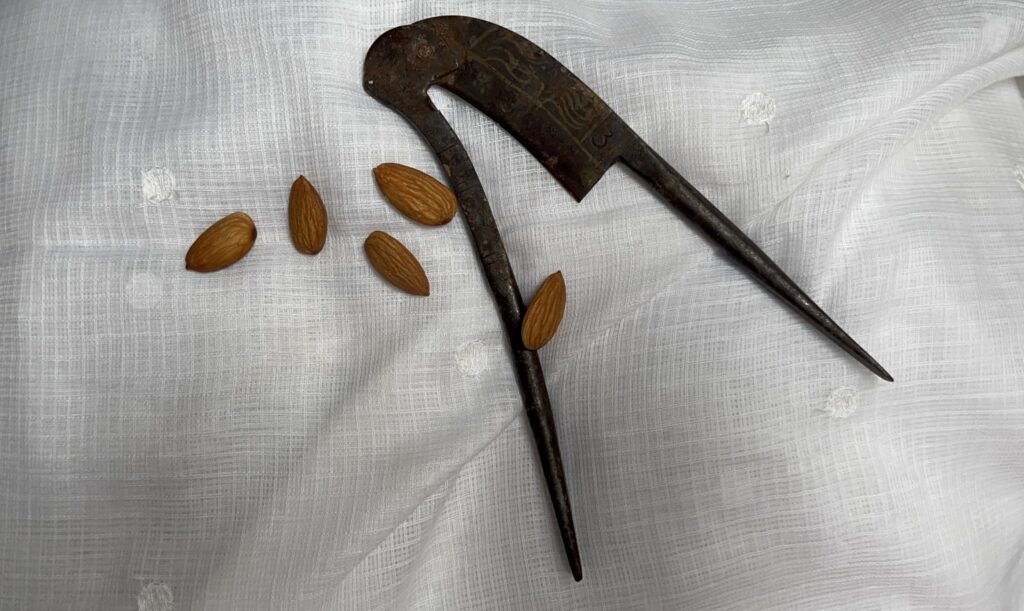
I can still see her. She would settle onto the charpoy in the garden that woven cot that seemed to exist only for her, positioned just so in the afternoon shade. She moved unhurriedly, the way people do when they have learned that life does not need to be rushed. The Sarota would come out, and with it, the ritual would begin.
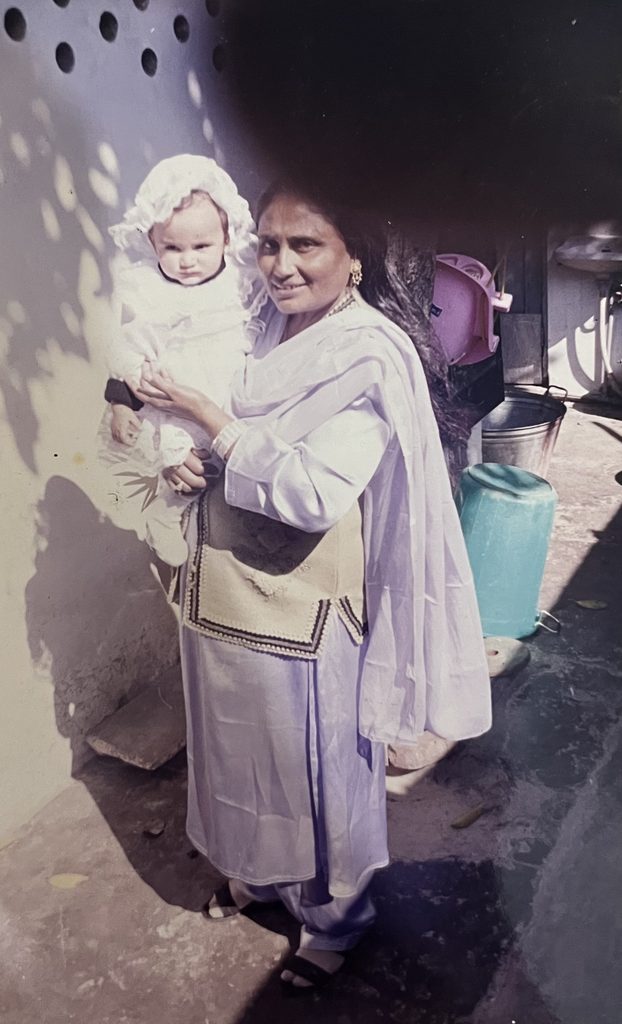
My grandmother’s name was Bilquis Jahan, and she was from Sandila, Uttar Pradesh. She was much more than my grandmother, she was my best friend. The bond I shared with her was unlike any other, even more profound than the one I have with my mother. She was the kindest person I have ever known, always smiling, gentle, and full of warmth. She taught me, not through words but through her actions, the importance of helping others, showing kindness, and treating everyone with compassion. Those values continue to shape who I am today.
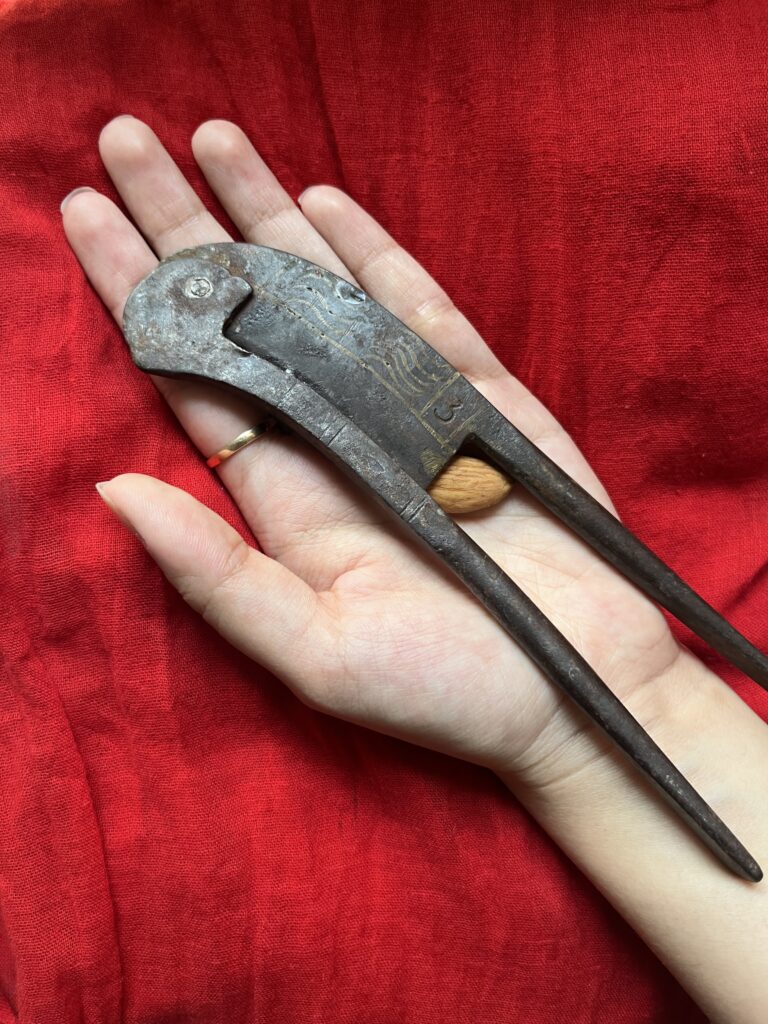
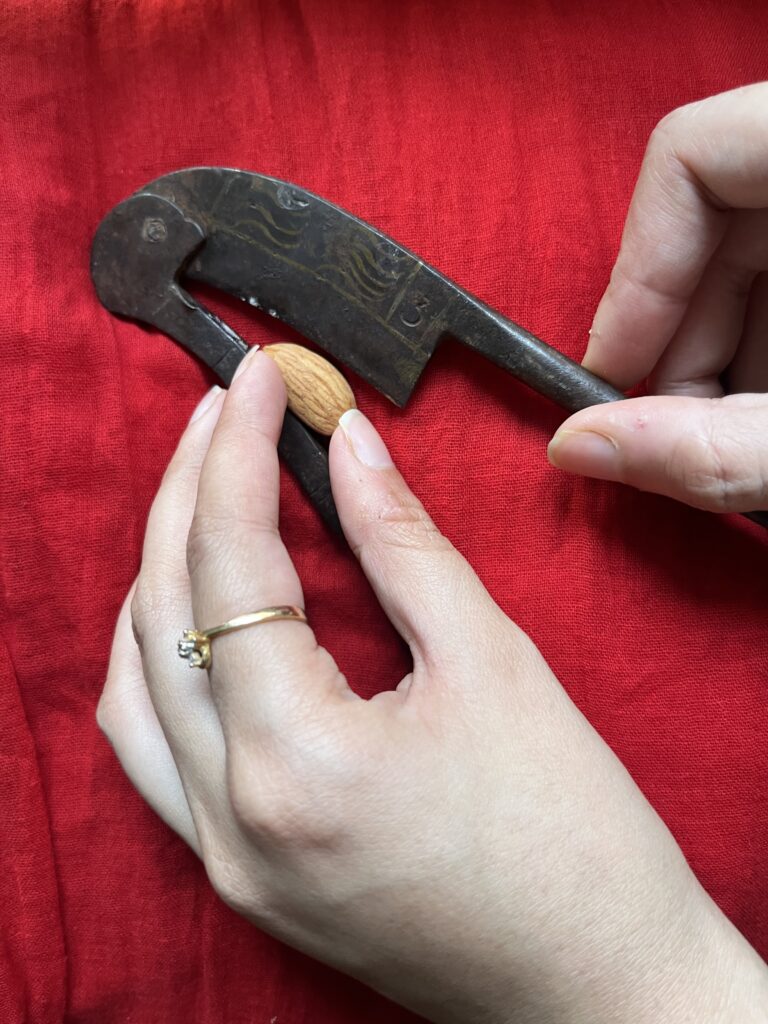
I do not know where the sarota was bought from and Nanna is no longer with us to tell me. Engraved on the head of the sarota, appears to be the Urdu letter Seen (س). I think my grandmother may have inherited it from someone whose name started with the letter Seen. She cut betel nut the way she did everything: with precision and with love. The blade came down a clean, quiet snap and the areca split perfectly. She would fold each piece into a paan leaf, press it gently, and hand it to whoever was nearby. To the children gathered around her. To neighbours who had stopped to talk. To anyone who came within the warmth of her orbit. In Lucknow, offering paan is not a small gesture. It is the language of welcome. It says: sit down, you are among family. Nanna spoke that language fluently.
What I remember most is what she did after. When the cutting was done, Nanna would fold the Sarota into a piece of red cloth a deep, warm red, the same shade as the paan itself, as though the cloth and the leaf had been chosen together. She wrapped it carefully, tucking the blade out of sight. It was her way of protecting us children from its edge. But watching her now in memory, I think it was also something more: tenderness toward the object itself, a recognition that things which serve us well deserve to be treated with care.
“She wrapped the blade in red cloth so it could not hurt us. That was Nanna – always thinking three steps ahead, always quietly standing between us and harm.”
The red cloth has stayed in my mind all these years. It was such a small thing. But it contained an entire philosophy of carefulness, of protecting what you love, of honouring the objects that hold your life together. She did not make a ceremony of it. She simply did it, every time, as naturally as breathing.
Now the Sarota lives with us, and Nanna does not. Every Eid, my mother places it in my hands to cut almonds and cashews for the celebration. The steel is cool at first. Then it warms. And in that warming, something shifts a door opens somewhere in my chest, and I am not in my kitchen anymore.
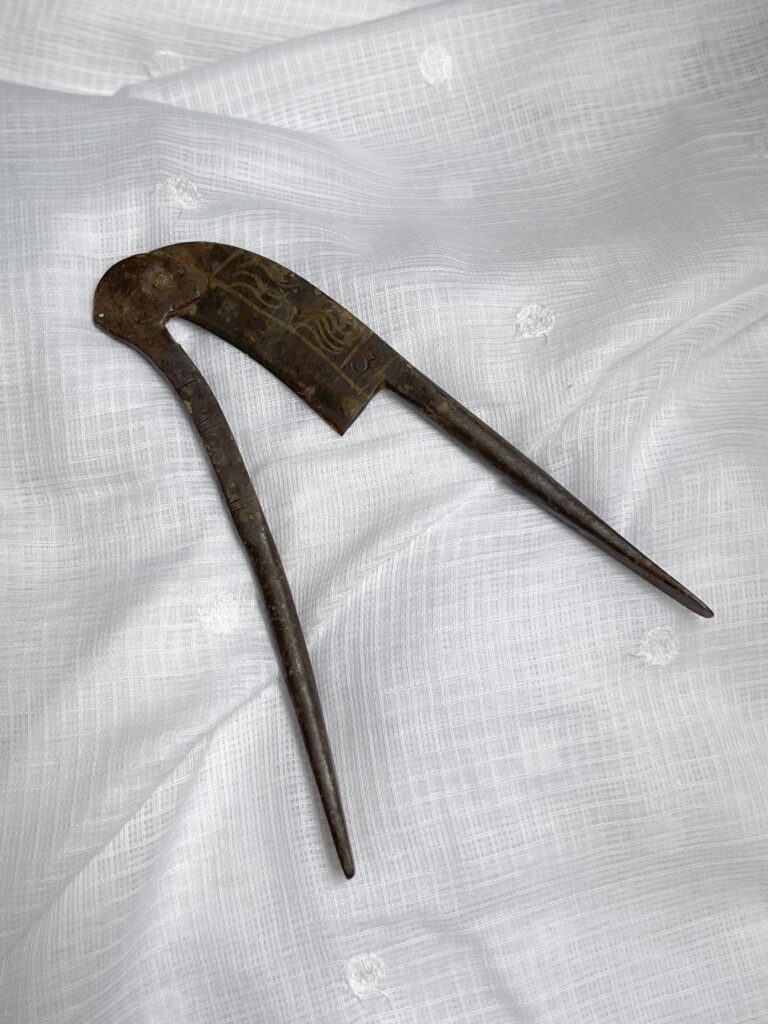
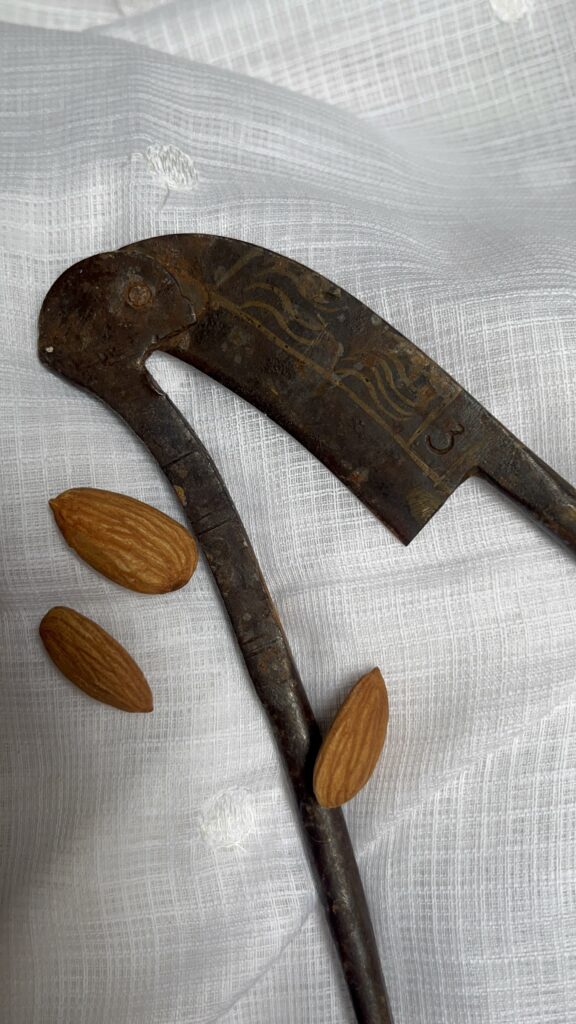
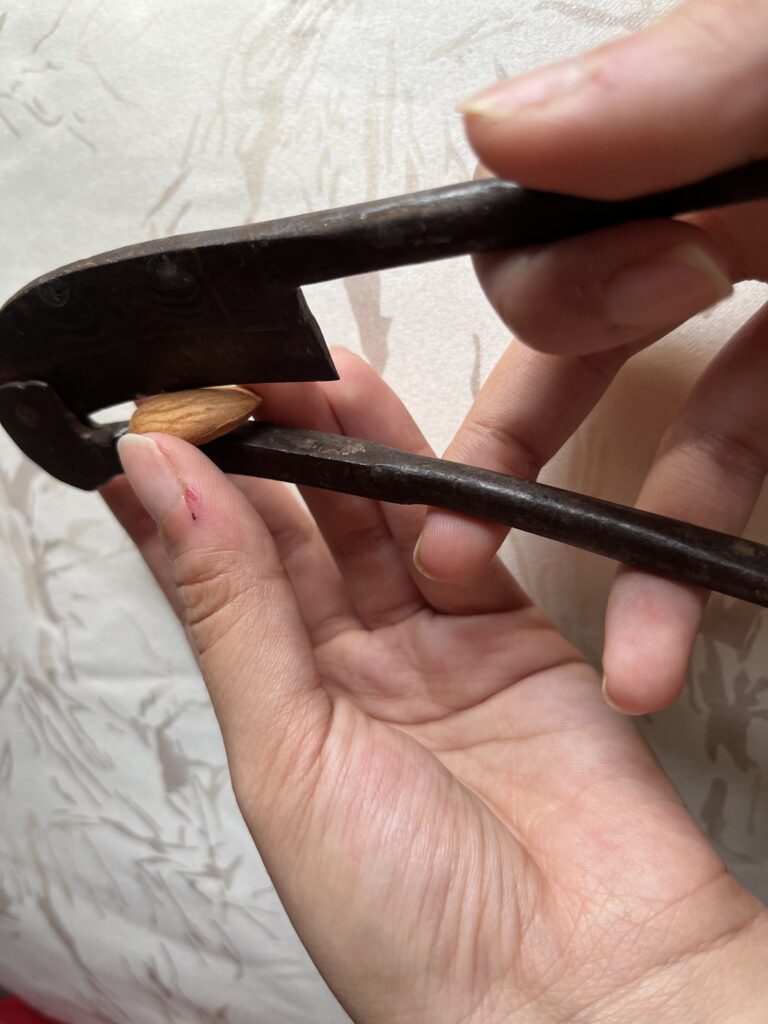
I am in the garden. The afternoon is long and golden. The charpoy creaks softly. Nanna is there, unhurried and unhurriable, cutting paan and distributing it to the children like small, green gifts. She looks up and sees me watching her, and she smiles — that particular smile, the one that made you feel like the most important person in the world. The Sarota snaps. The sound is exactly as I remember it.
This is the strange alchemy of heirlooms: that a steel blade wrapped in red cloth can carry a whole person inside it. That every Eid, when I hold the Sarota, I am not grieving Nanna I am visiting her. She is still on the charpoy. She is still offering paan to everyone within reach. She is still wrapping the blade away carefully when she is done, still thinking of us, still, in every small gesture, saying: I love you, I love you, I love you.