
TEXT BY MONABI MITRA
PHOTOGRAPHS BY MONABI MITRA & ROHIT SAMAL
Kolkata, West Bengal, India
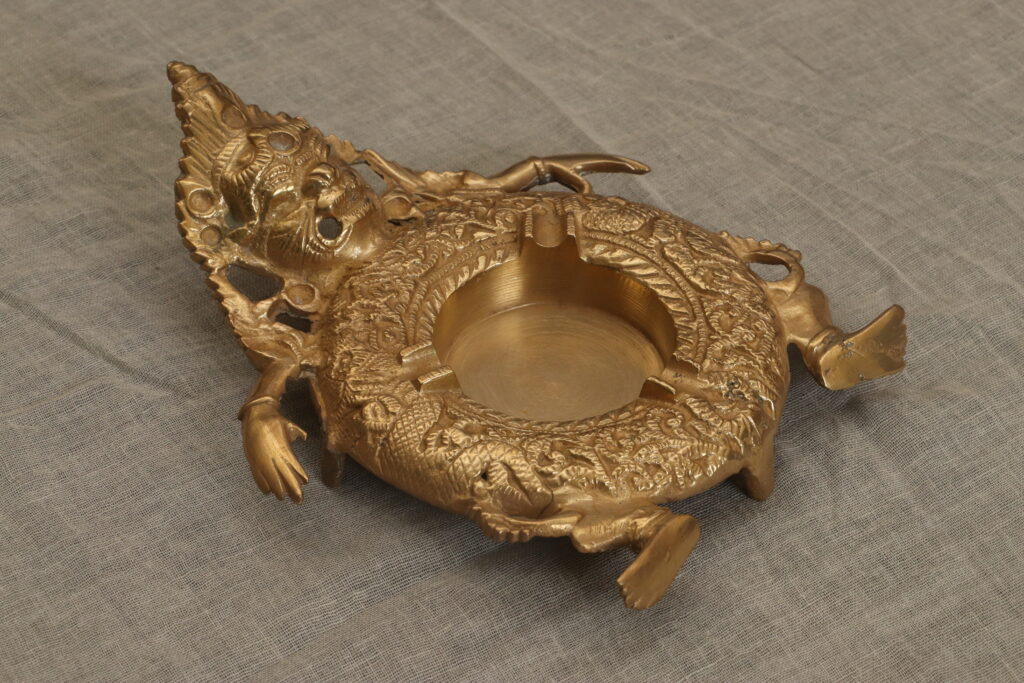
In the afterlives of objects, I would like to describe a seventy-year-old ashtray, bought by my mother and passed on to me. The ashtray is made of brass, with a head resembling Mahakala, a deity revered in Buddhism and associated with wisdom, protection and the removal of obstacles, and limbs shaped around the belly, which doubles as the deposit area. Though not of great antiquity, it has been an important part of three generations. The story is given below.
It was 1954 and Ronita, aged fourteen had finished her School-Final examination. She was quiet but self-possessed and already aching for something more, beyond the humdrum life girls had hitherto been expected to lead. So were most of the other girls in her class. India had come out of colonial rule and there was hope in the air. Girls like her, educated, enthused by the stirrings of independence and the books they had read were looking forward to a life of achievement. It had been an arduous year at the St John’s Diocesan School where her classmates Gayatri Chakraborty and Ketaki Kushari were the ‘top girls’, getting ready to make a mark in life. But so were many others, Ronita being part of them. Her uncle was travelling to Darjeeling for a holiday with his family. “Come with us”, said Borokaka. “You’ve studied hard. You need some rest”.
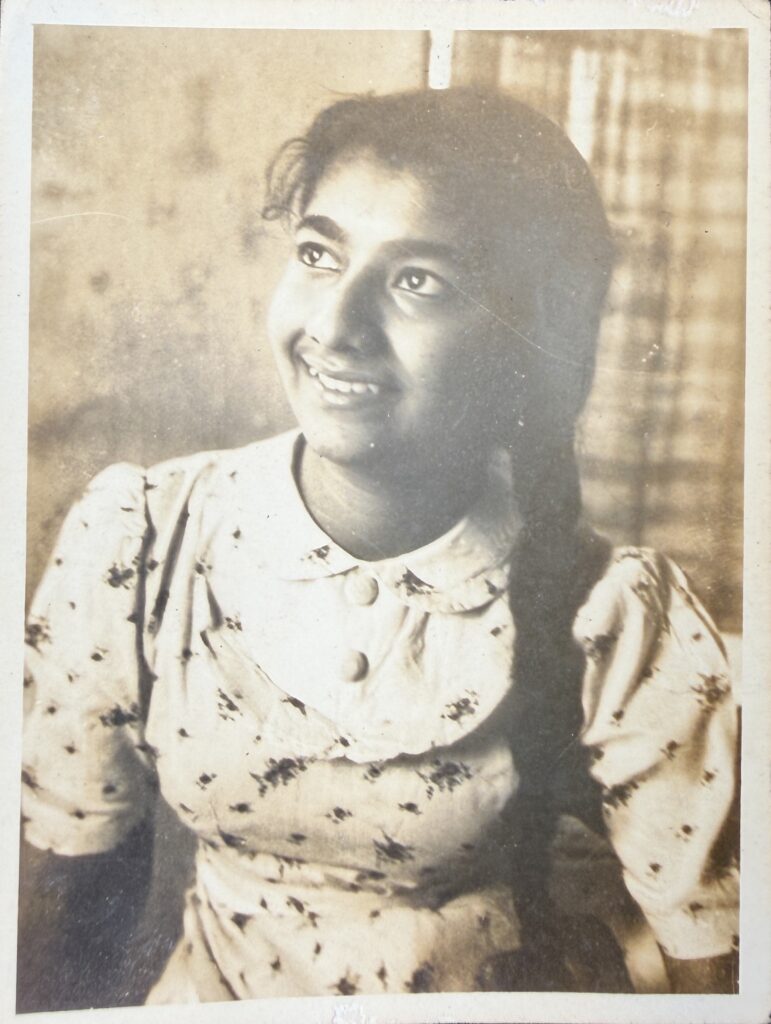
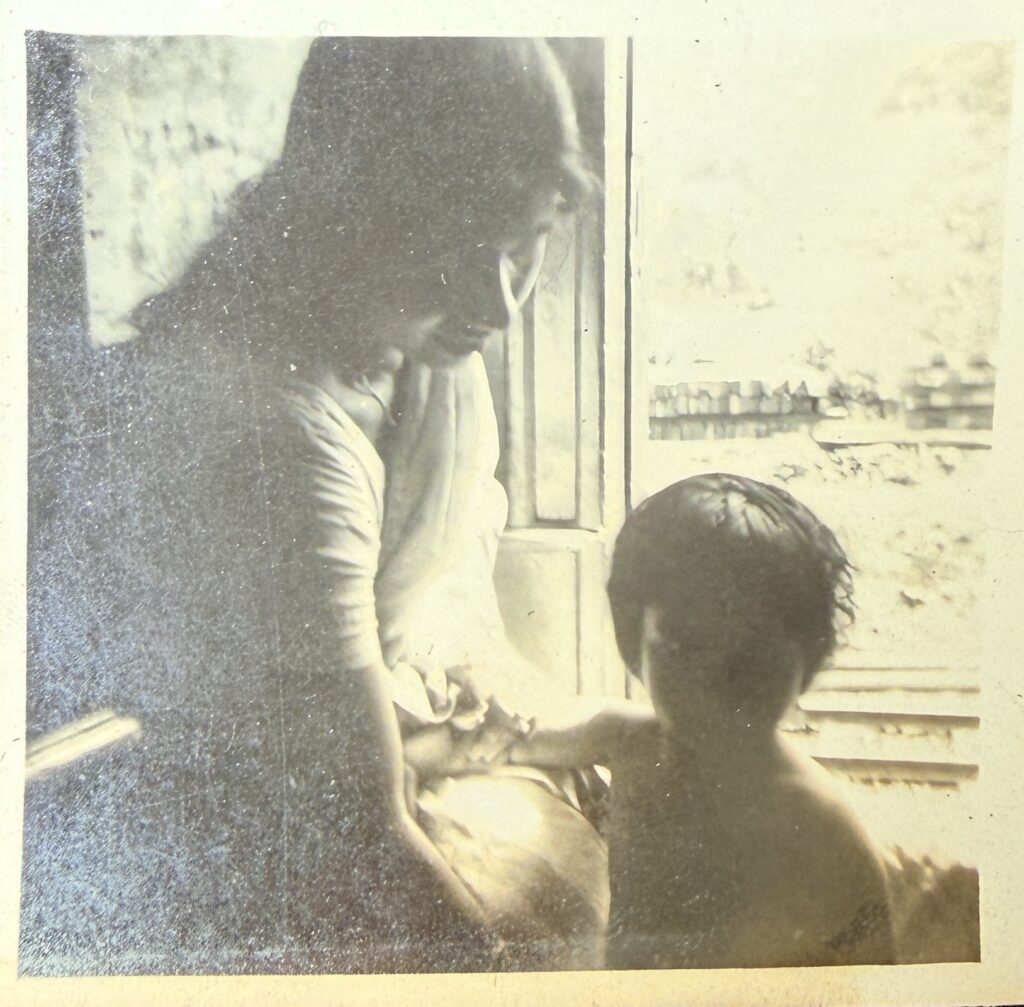
Ronita travelled to Darjeeling with her uncle (Borokaka) her aunt (Kakima) and her four-year-old cousin Buli. They put up at the Lowis Jubilee Sanatorium in Limbugaon. Here are her remembrances in her own words. At fourteen, Ronita encountered the figure simply as an unfamiliar, fierce-looking face; she did not yet know its identity as Mahakala. In her recollection, she describes it as part of the mysterious, fairy-tale world she saw around her:
“I remember vividly that time in Darjeeling. The sanatorium was also doubling as a hotel and I loved it, not just for the views, but also the books. I would hop up and down to the Jubilee Library at the top of the stairs, thumbing through books and spending a lot of time there. The library was looked after by a Nepali gentleman with a benign smile. Sometimes my uncle would chide me for so much of reading and I would go out with him and my cousin. We would stroll through the Mall, where people took walks and bought gifts. I bought this ashtray from a Tibetan shop selling bric-a-brac that lined the steep Mall Road. I loved the curved lines, the smiling contours of the demon -like face carved at the top. I felt it was part of the ambience- the playful clouds, the dark mountains looming behind, the thick fog which would smother us for a few minutes before swirling away again. Somehow, I felt the demon head was part of this fairy tale world, and I would imagine a time would come for me, too, when I would be transported to a new future”.
The ashtray travelled back to Calcutta. Perhaps because it was an image of Mahakala, representing wisdom, protection and transformation or perhaps because it was simply meant to be, the Darjeeling holiday was followed by a series of changes. A few months later Ronita joined the Intermediate Arts Course at Lady Brabourne college, followed by an Honours in History at Presidency College, Calcutta. Here, events took an unexpected turn. Ronita met, became friends with and ultimately married her classmate from the History course itself, much to the chagrin of two sets of parents. Like the props in an Uttam Kumar-Suchitra Sen movie of the early sixties, the ashtray now witnessed romance and aspiration. Wills Filter cigarettes were balanced on it, the assassination of President Kennedy was discussed over it and from its ashes arose, phoenix-like, dreams of success at the IAS exam. Within two months of their marriage, her husband was in Mussoorie for training as an IRTS officer while Ronita changed her spelling to Ranita, as a marker of new life and defiance of traditional roles, and travelled with her husband to far flung railway colonies, to Badarpur and Lumding in Assam, to Adra and Khurda Road in the BNR section.
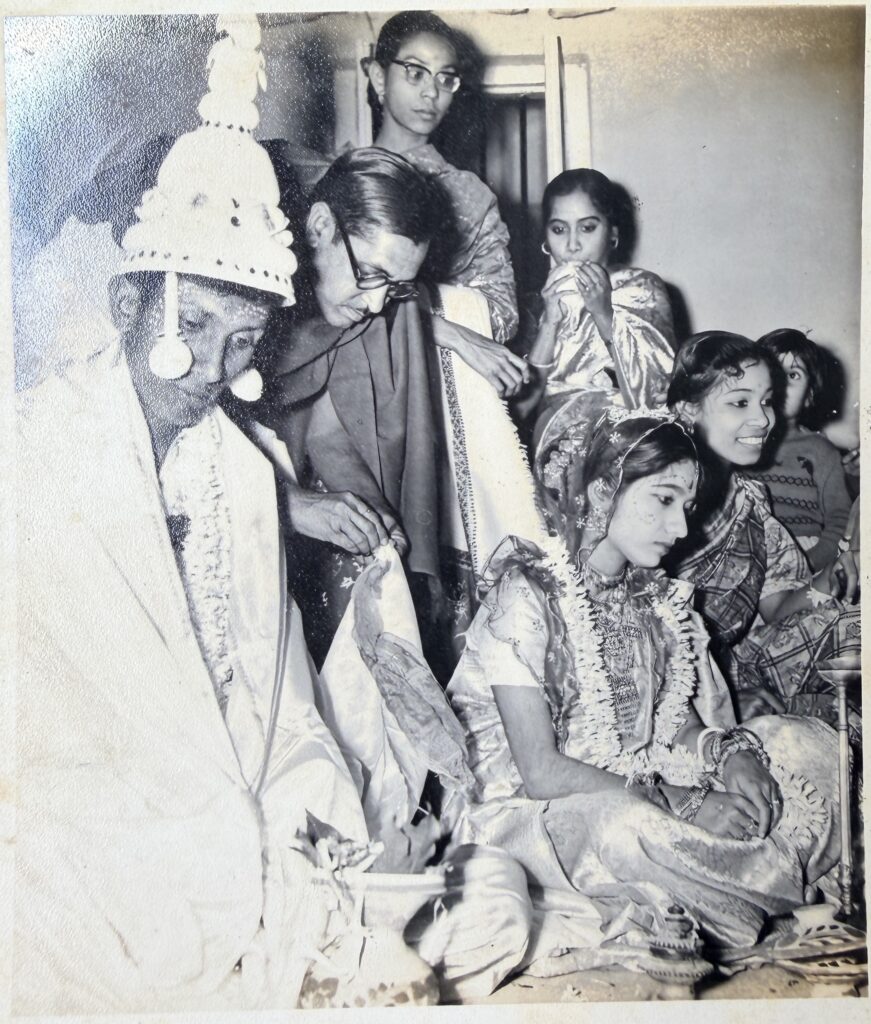
Photo taken by Sukumar Ray
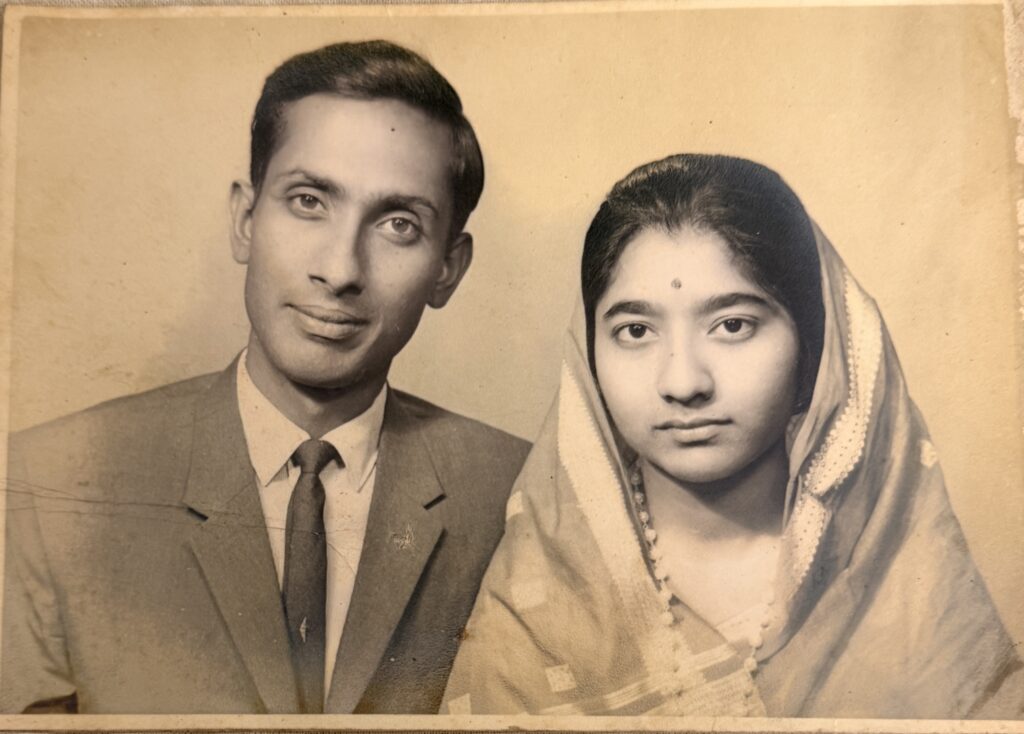
Bourne and Shepherd, Calcutta
Meanwhile I was born. I was the last Romantic, and while my sister went to a posh school in Calcutta, I was the ‘Missy baba’ in beautiful bungalows in tiny railway towns. The ashtray was in the sparsely decorated drawing room. I could feel its presence as I entered that huge shaded room, all red floors and wooden rafters, while outside the bougainvillea spilled over the wicker gate to the lily pool, the caterpillars nestled in the hollows of the tamarind trees. I held an unripe guava and a sprig of Kutush or lantana flower and imagined the ashtray head to be sternly watching me. Once I had a dragonfly by the hand, struggling in its gossamer wings and again, I could feel the ashtray unamused and disapproving. I had a firm belief in the supernatural. In those bungalows, it was so easy to imagine a fairy lurking on a leaf or a shadowy spirit straying over the phlox hedges. The ashtray was part of that world.
But time passes, and in a while the bungalows vanished as I marched through the duties of life. School, college, University, marriage, job applications, birth of a son! Hastening to class every morning at 10 for teaching students the wonders of English literature. Returning with more meetings, attendance calculations, writing papers, grading scripts.
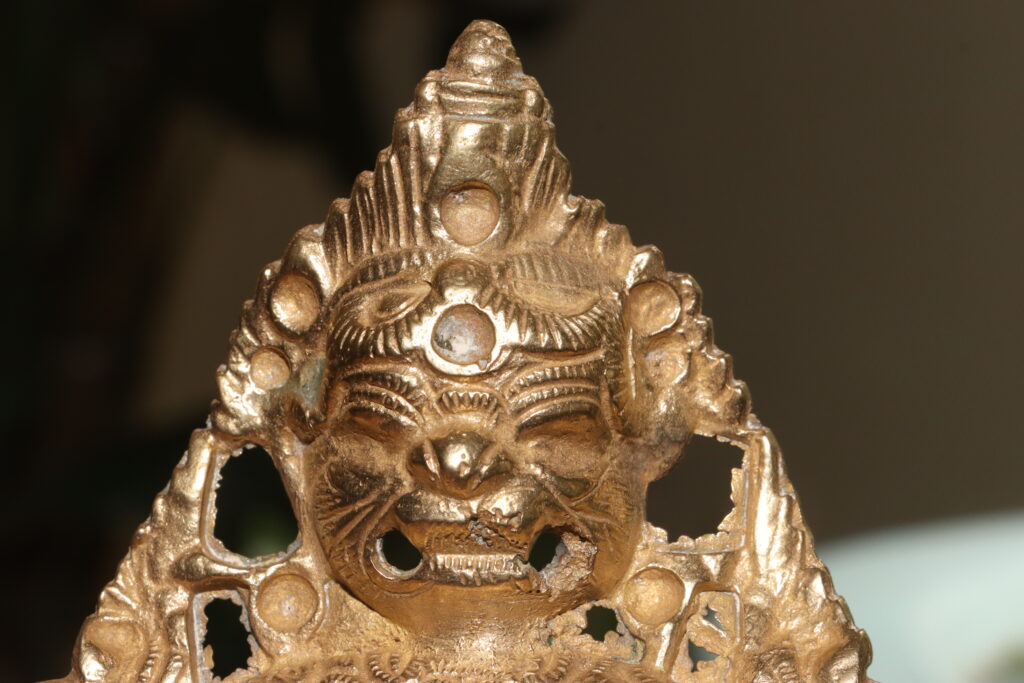
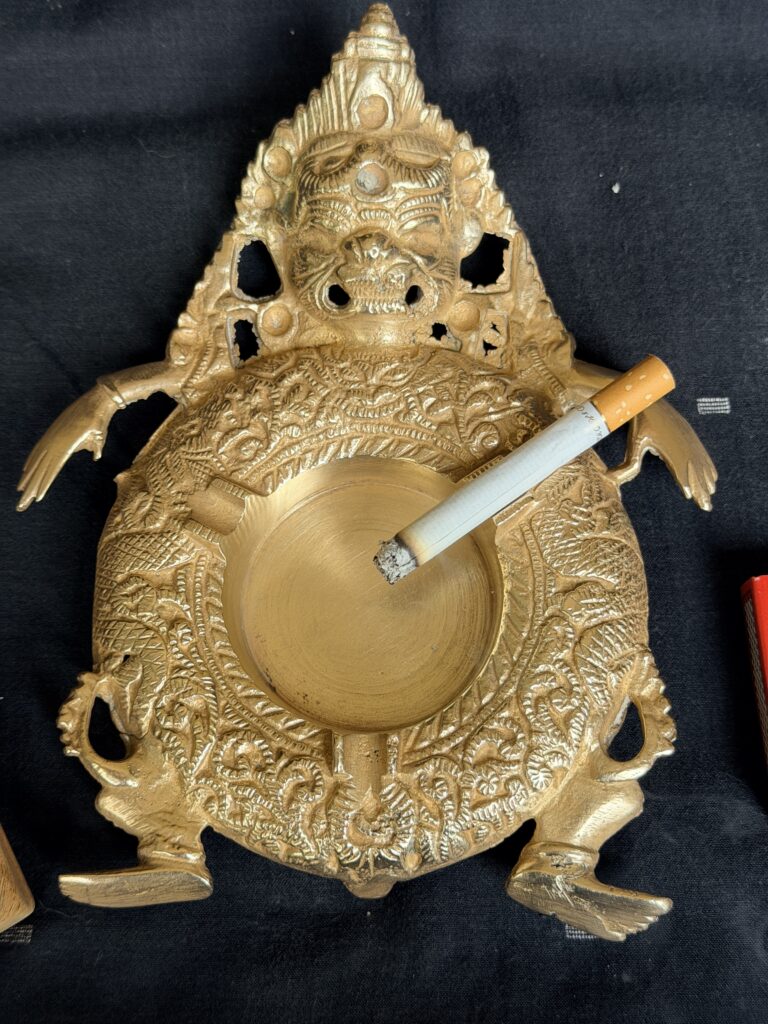
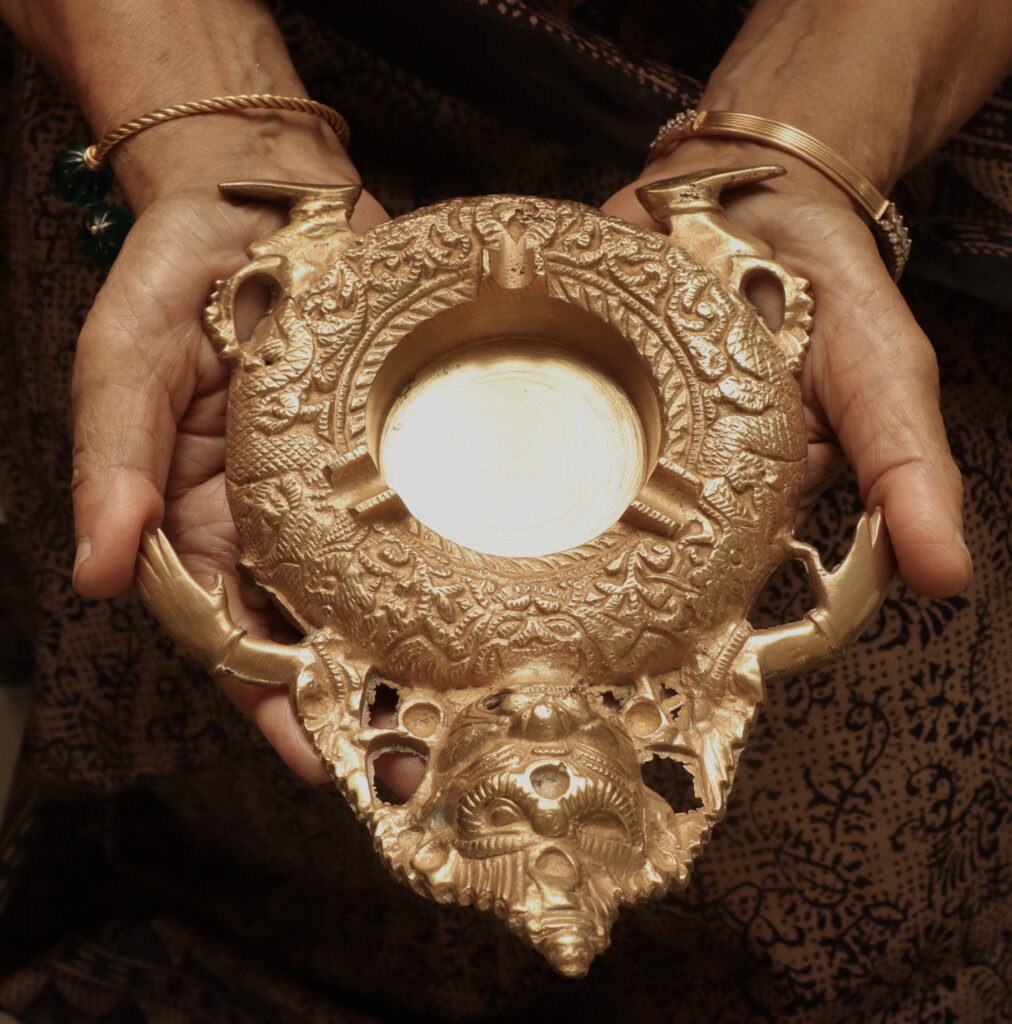
One day I came home early and found my son, now seven, had filled the ashtray belly with water -colour paints and was dabbing at a representation of the family. The Tibetan ashtray took it stoically. Thin fingers and fumbling paint brushes filled him with red, blue and yellow ochre. The mantle had passed and the ashtray was now a colour palette. This continued till piano lessons and football took over. By 2012 the ashtray was both an artefact and a part of ritual. A quick swipe of Brasso when guests were expected, perhaps a scatter of bel flowers in its belly in the summer for a party. In serious moments It became a paperweight for bulky printouts. It became an ashtray again for furtive first cigarettes dumped on it by my son and his friends and quick clean-outs once they heard me entering the room.
This is not the end for it, of course. My mother will pass, and so will I but the ashtray will be put to new uses I cannot imagine. Perhaps someone, somewhere, ages hence, will chance upon this writing and remember something small in size but big on memories, cutting through Time’s swathe with lived experience.