
TEXT AND PHOTOGRAPHS BY KHUSHI MOHUNTA
Amritsar, Punjab, India
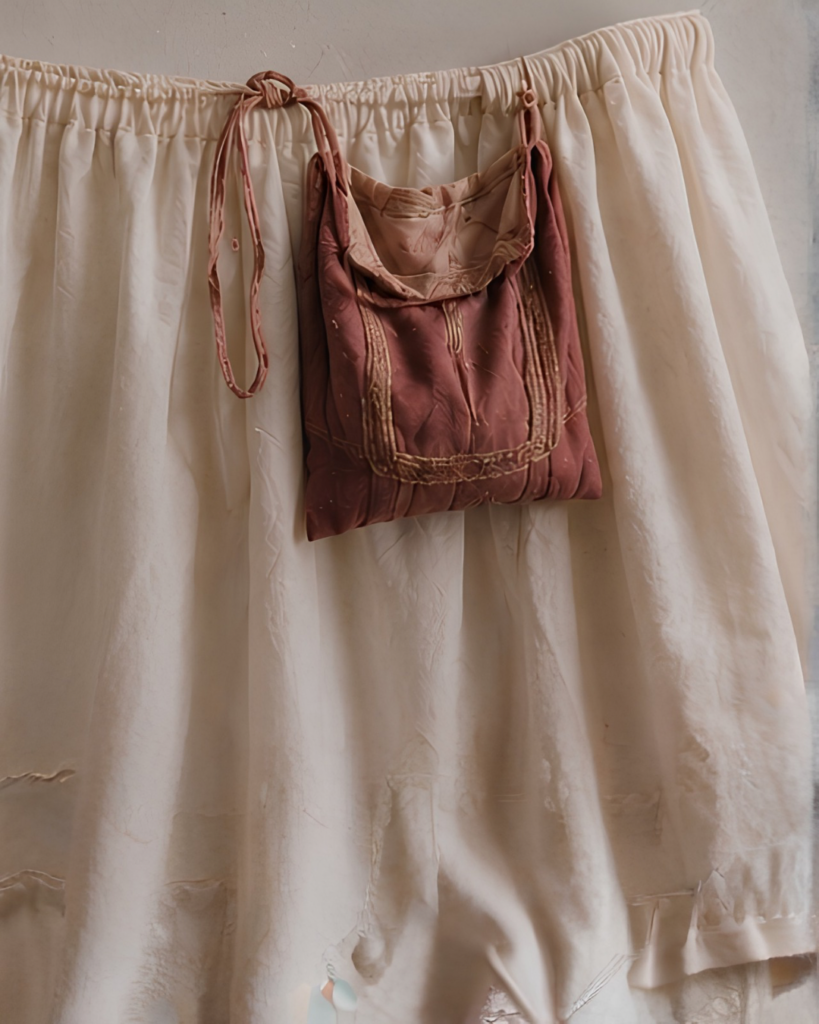
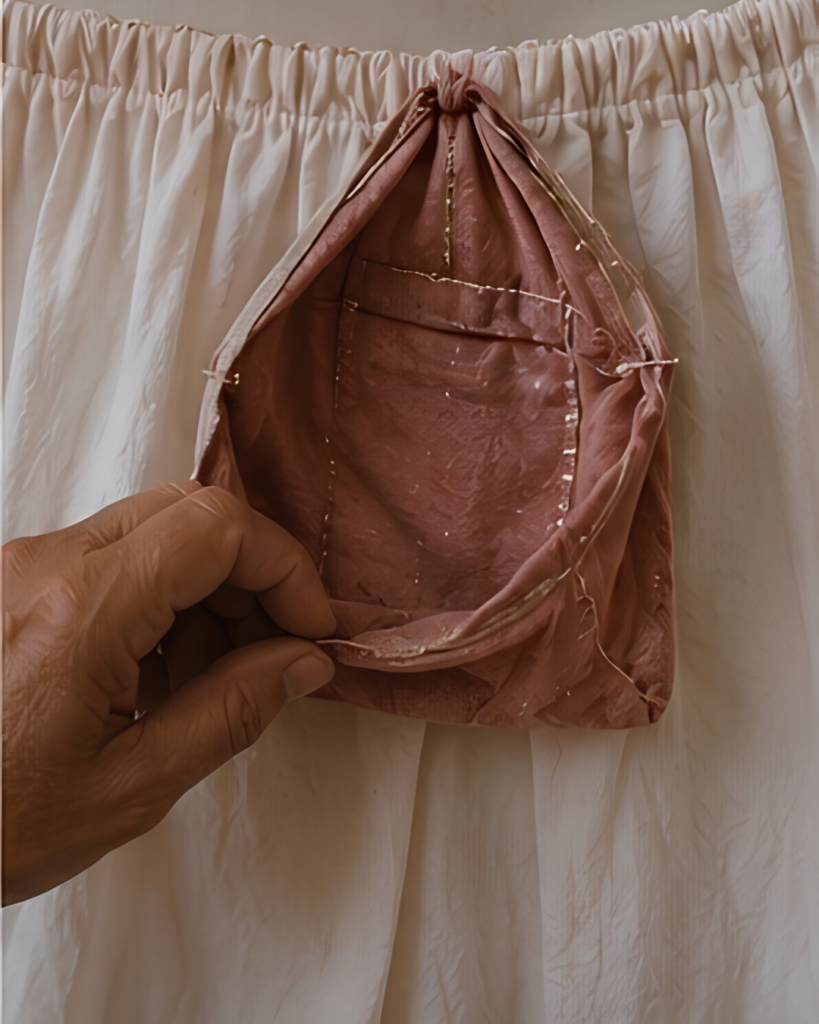
Those were the days when all the women in the house had invented a cloth purse and stitched it into their petticoats, for survival meant abandoning the city whenever they were alerted to.
The purses were neither ornate nor permanent. Made from scraps of cotton cloth left over from worn petticoats and saris, they were small rectangular pockets, roughly the size of a woman’s palm, stitched by hand into the inner seam of petticoats. Hidden from sight, they carried folded currency notes, a few pieces of jewellery, and whatever clutched the belief of rebuilding. Their purpose was not convenience but contingency. In a city where uncertainty had become routine, these hidden purses became the Mundra Women’s most dependable form of preparedness.
***
Forty-two years later, my maternal grandmother, Nalini Mundra, recollects the horrors of the Blue Star Operation conducted by the Indian Armed Forces in Amritsar, Punjab, during June 1–8, 1984. For an India of the 1980s, that too for women of the 100 Ft. Road, Amritsar Cantt., Amritsar, Punjab, for anyone equipped with the geographies of Amritsar, was not a safe zone.
“3 June 1984, woh din.. mai kabhi bhool thodi sakti hu1.” Santosh Mundra tells me. “Shooting to chal hi rahi thi; aur saare bachche school gaye huye the2” Nalini adds, struggling to hold her voice now, trembling and eyes almost watery.
I grew up with not one but three maternal grandmothers—Santosh, Nalini, and Suman Mundra. The hidden purses belonged to each of these young mothers living in a joint household in Amritsar Cantonment, who stitched them close to themselves. No one taught them how to make them. They emerged from necessity and adapted to habit and need. One woman might keep more cash; another might prioritise jewellery. Each purse reflected a collective understanding of what survival might require.
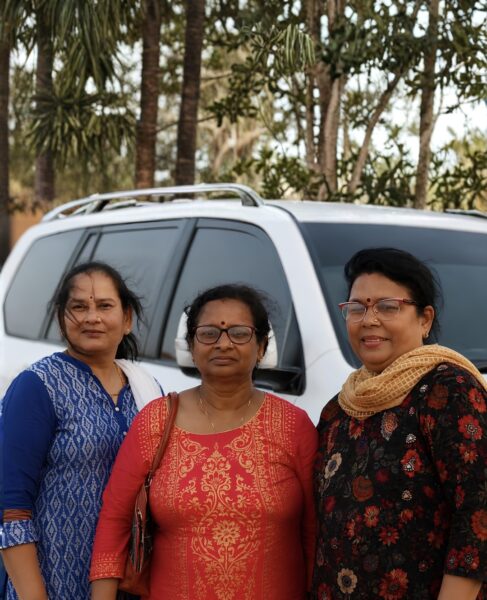
When I ask them about those stitched purses now, they laugh almost as a relief. “Ab kya zaroorat hai3?” Suman says. But even as she says this, she reaches absentmindedly to the edge of the cupboard, fingers brushing against a corner where nothing is hidden anymore.
Memory, like those purses, is carried close to the body. And everybody had a different place of safekeeping. What they remember is not always the same thing, or rather, it is never the same thing in the same way. Memory, in our house, does not arrive in stories but in measures. Nalini still checks the latch twice at dusk.
“Darwaze band kar diye the. Andar se kundi4,” Suman recalls, her hands instinctively mimicking the motion even now, as though the latch might still need securing.
The house, which once held the easy noise of six children and three mothers rushing behind and after them, had learnt to communicate in silence. Windows were no longer openings; they were risks. Curtains stayed drawn, not against the sun, but against sight. Outside, the city had gone still, not mute. And, against that tone-dead stillness, Santosh reminisces about her room’s windows shattering.
“Goliyon ki awaaz…raat bhar5.”
It did not allow them sleep at night or peace in morning, because the children had been sent to school that morning. This is the detail that returns most often, in all three of their memories—not the tanks, not the announcements, but the absence of children inside the house. The unbearable normalcy of that decision. School bags packed the night before. Hair oiled and braided. Tiffins prepared.
“Kaise bhej diya…6” Nalini says now, more to herself than to me.
By afternoon, when the kids just made it home, the word had spread, “Shoot-at-sight, with immediate effect.”
Inside the house, survival became a series of small, deliberate acts. Money counted, folded, and tucked into those stitched purses. Jewellery wrapped in old cloth and hidden in places only women knew. Important papers gathered, though no one could say which ones would matter if they had to leave.
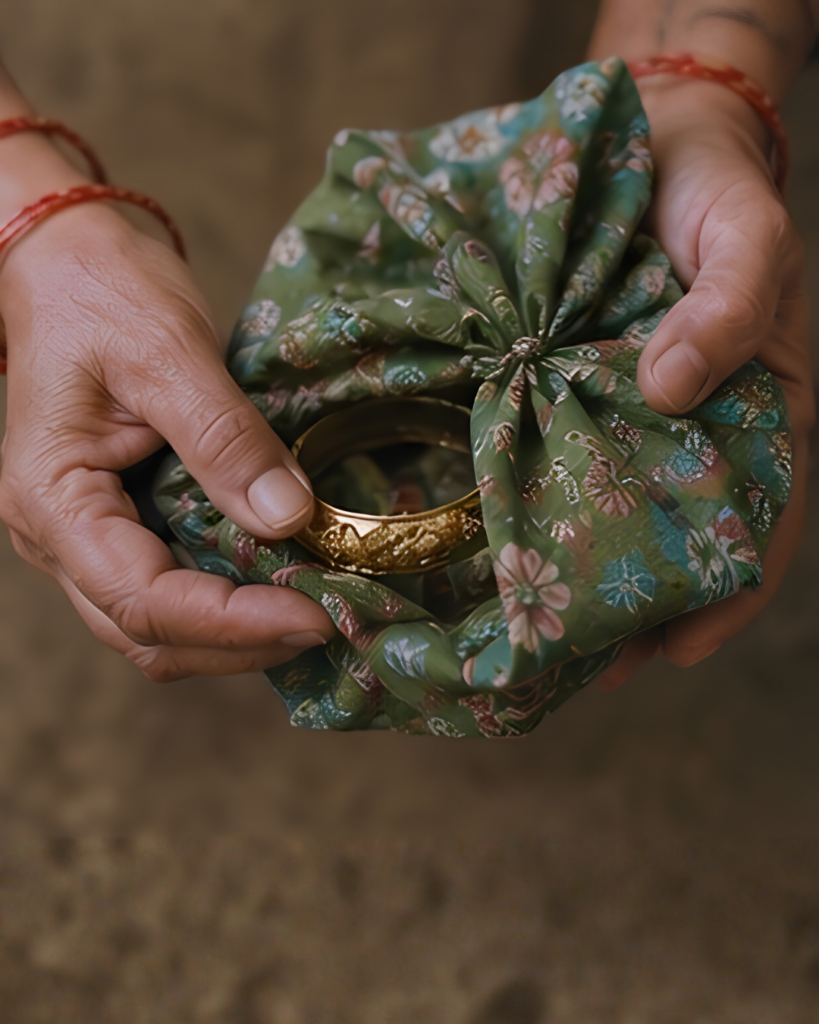
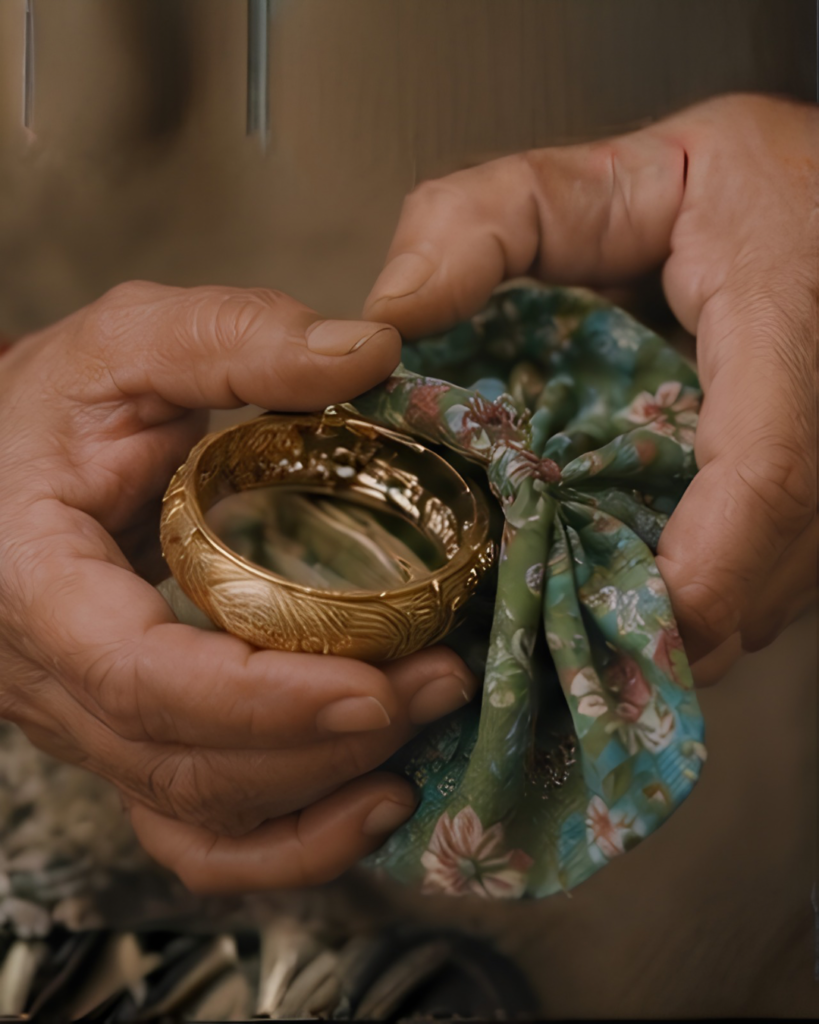
The purses were worn beneath their clothing throughout those days. Some contained emergency cash; others carried small gold ornaments accumulated over years of marriage. One even held folded addresses of relatives living outside Punjab. If the family needed to leave without warning, the women would not have to stop and gather valuables. Everything essential would already be on their bodies.
“Bas itna ki bhag sakein7” Santosh says, giving me chills.
The men discussed routes—which roads might still be open, which relatives could take them in—but it was the women who prepared for departure, not knowing if it would come. They packed not suitcases, but possibilities.
“Ek family ko bhej diya tha, agar kuch ho aaye to…8”
“Where?” I ask them, clutching hard onto the bedside.
“Indore.”
One family was chosen to leave, not because they were the most prepared, but because someone had to go first. “Bass nikal gaye the… bina peeche dekhe9” Suman says as she sheds a tear. No one remembers what they carried in their hands, only what they carried in their bodies and what they left behind. The rest remained. “Jaate kahan10?” Santosh repeats.
After that incident, everyone slept in the same room, not out of fear alone, but out of a need to account for each other. Bodies arranged close, children pulled inward, the women closest to the door. The latch checked once, then again. And sometimes, again on every washroom round. Outside, the city went dead silent. Inside, certain things persisted. “Chai toh banti hi thi11,” Nalini says, almost smiling.
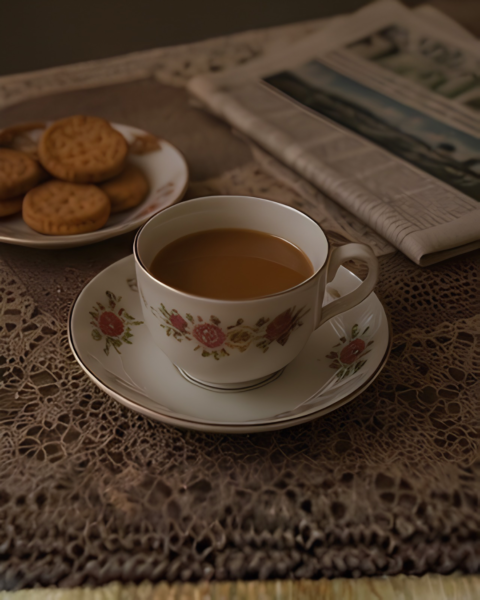
I ask them if they spoke about what was happening inside the house. “Zyada nahi12,” Suman says. Because to name fear too clearly is to make it larger. So they spoke around it. In instructions. In small corrections. In reminders: “Darwaza dheere se band karo13” “Batti band kar do14.” “Khidki ke paas mat jao15.”
***
Years later, these instructions still remain, though their urgency and fear have faded.
Nalini still lowers her voice at dusk, without realising it. Suman still prefers the inner rooms of the house. And, Santosh…

Trauma, in our house, had settled in like a habit, and trauma response like a muscle memory. And yet, when they speak of those days now, there is no single story. Each memory is complete in itself, and yet incomplete without the others. “Ab toh sab theek hai16,” Nalini says at one point, almost as reassurance. But even as she says this, she reaches again to the edge of the cupboard, pressing it shut with a firmness that exceeds the moment as if something somewhere might still need to be secured.


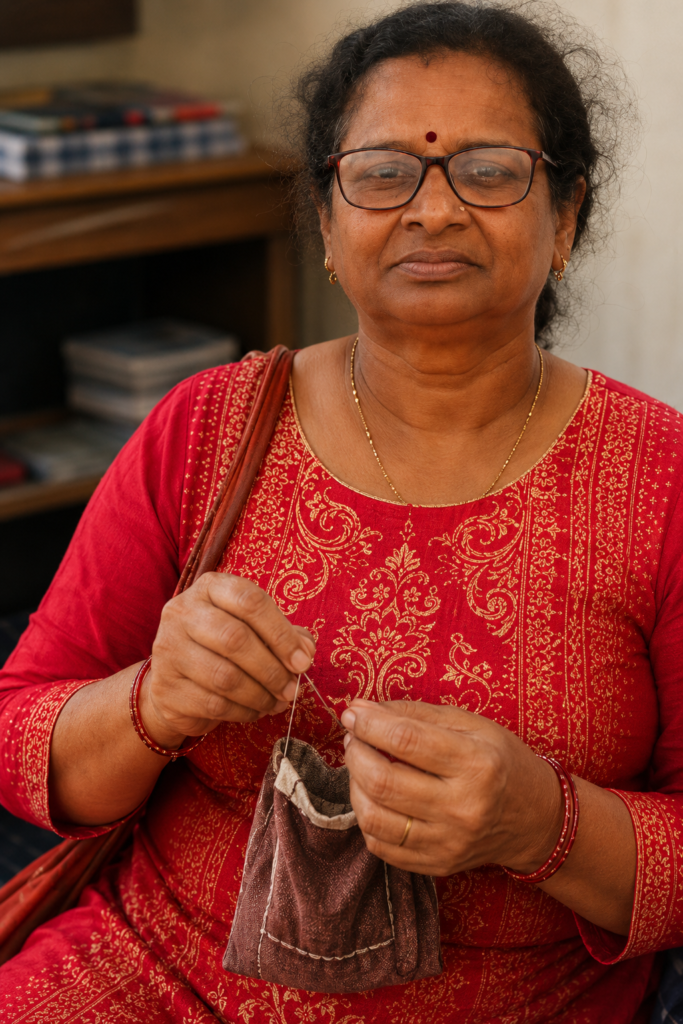
None of the original purses survives today. The petticoats into which they were stitched wore thin with use and were eventually discarded. There is no preserved specimen tucked away in a trunk, but what remains instead is a collective memory of where the pockets sat against the body, what they contained, and the circumstances that made them necessary. I understand then that those stitched purses were never only about leaving. They were about being ready to hold a life together in the smallest possible space—inside a petticoat.
The purses never appeared in family photographs. They were not heirlooms meant for display or objects expected to survive generations. They were emergency objects, stitched in secrecy and worn in uncertainty. Yet of all the things my grandmothers remember from June 1984, these hidden purses endure. Long after the cloth disappeared, they remain evidence of the quiet labour through which women prepared to protect a family when history arrived at their doorstep. We keep the most precious things closest to our chest, and maybe that is why some memories never leave us; they only learn where to hide.
1. “3 June 1984… how can I ever forget that day.”
2. “Despite the active shooting, all the kids had gone to school.”
3. “What’s the need now?”
4. “The doors had been closed and latched from inside.”
5. “Bullets could be heard throughout the night.”
6. “How did we send them?”
7. “Just enough so we could run.”
8. “We had already sent a family off, in case anything happens.”
9. “We just left… without looking behind.”
10. “Where would have we gone?”
11. “Tea was still made.”
12. “Not much.”
13. “Close the door slowly.”
14. “Turn off the lights.”
15. “Don’t go near the window.”
16. “Now, everything is fine.”