
TEXT AND PHOTOGRAPHS BY AABHA DESHMUKH
Belgaum, Karnataka, India
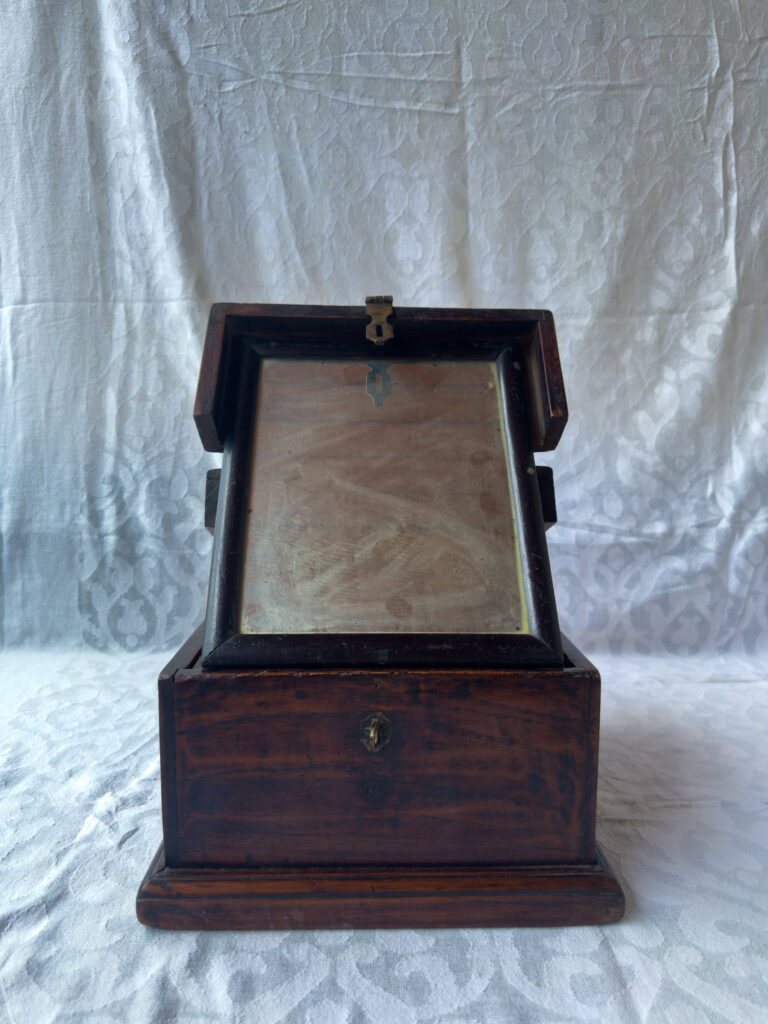
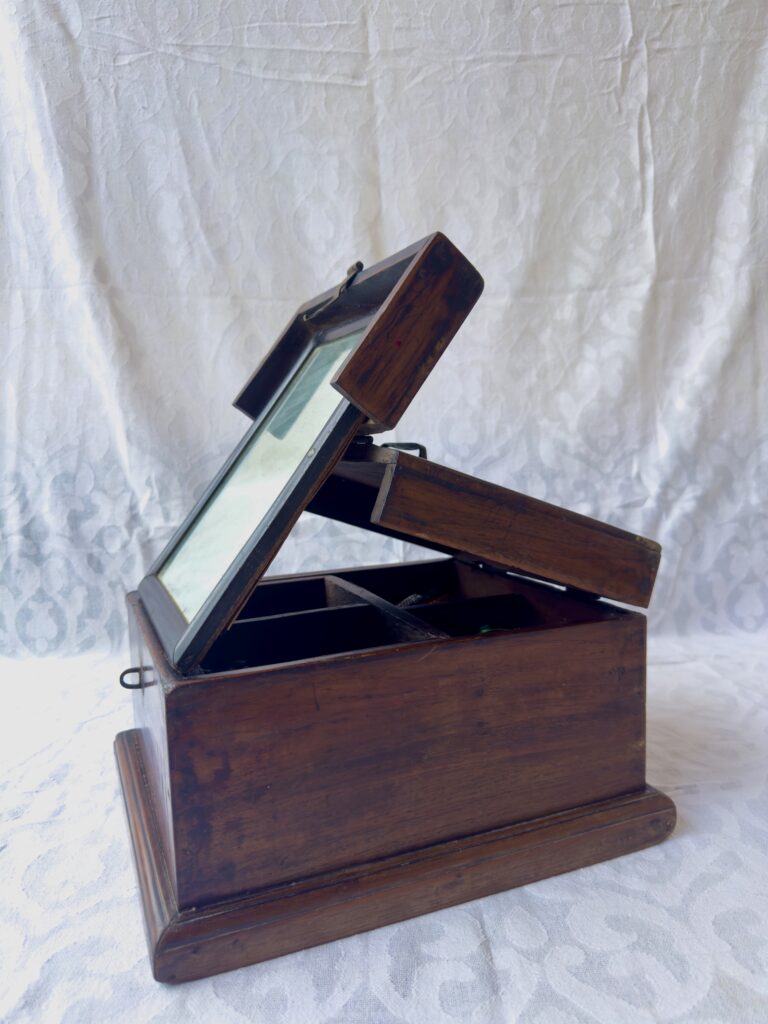
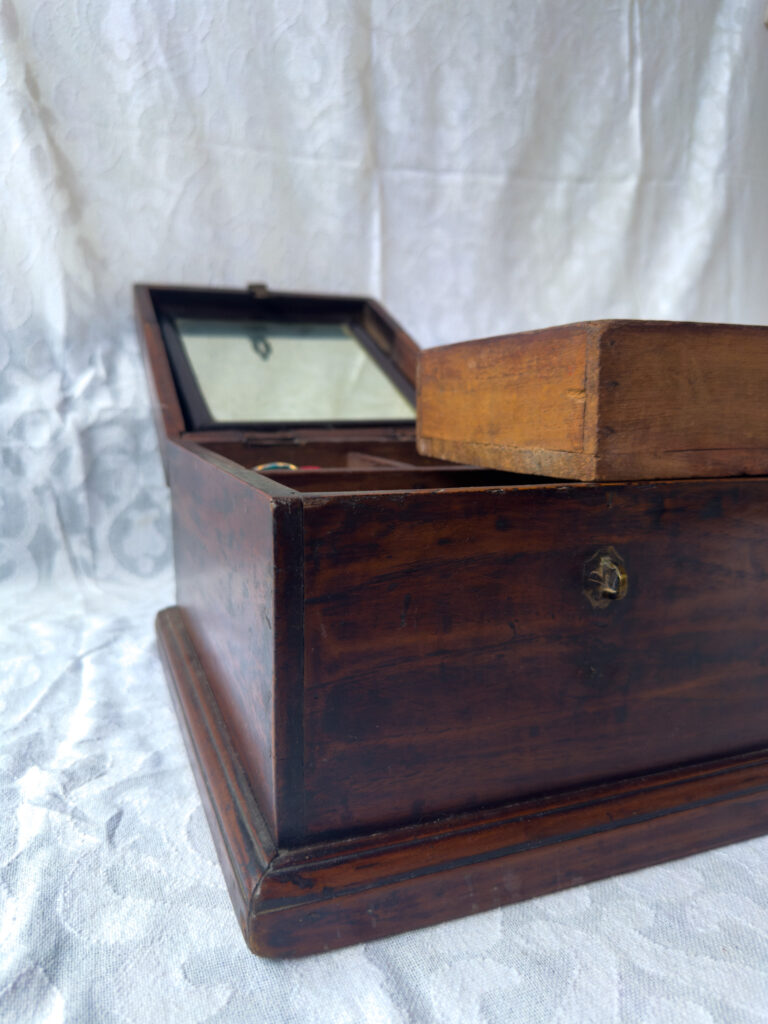
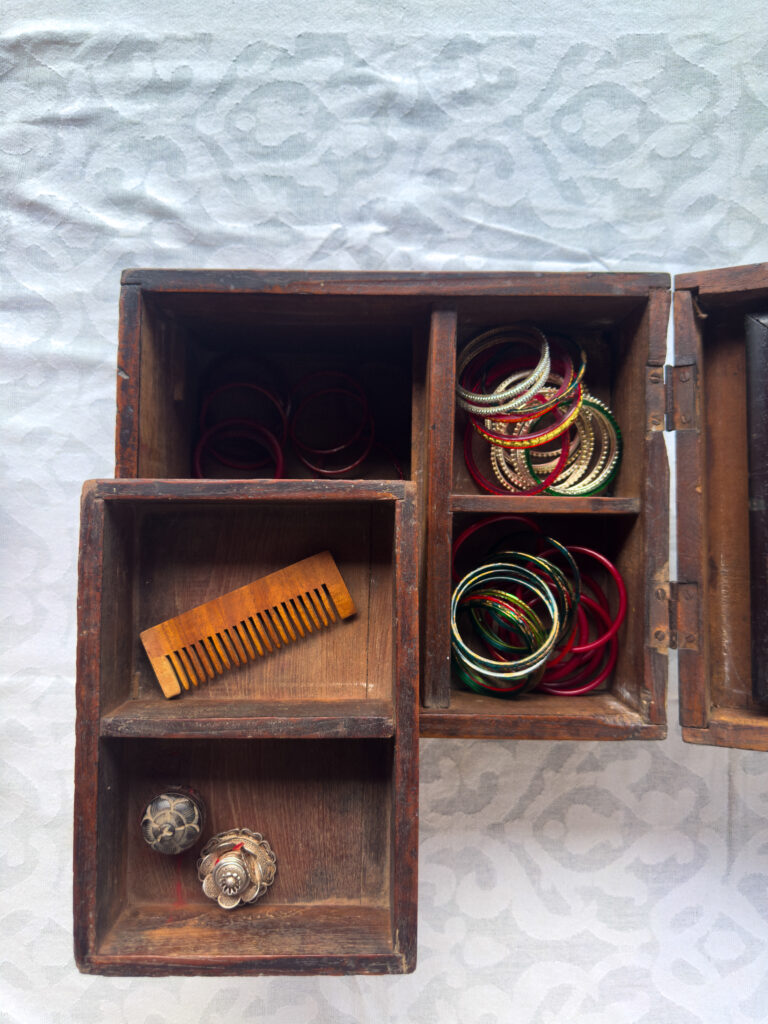
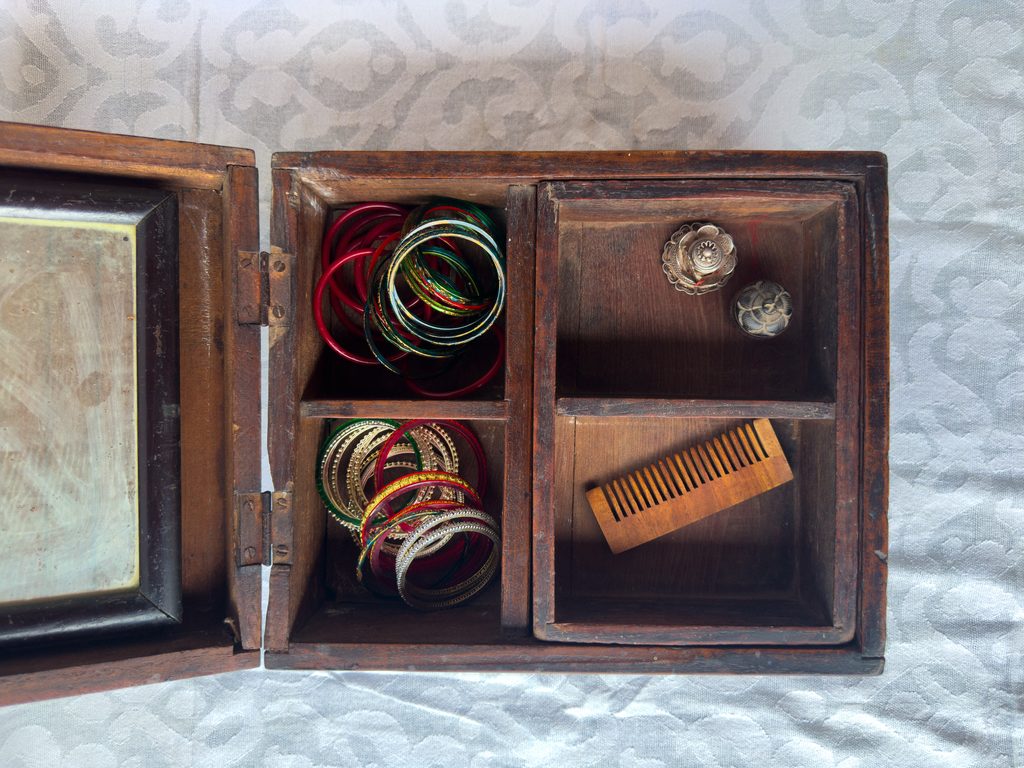
In one corner of our living room sits a wooden box. It measures roughly fourteen inches long, twelve inches wide and eight and a half inches tall. Plain, sturdy, and polished with age, it hardly draws attention. Until you lift the lid. And then a clouded mirror catches your reflection, revealing two tiers of tiny compartments tucked secretly underneath the box. As a child, I was fascinated by its layers, and it still hasn’t ceased to astonish me how something so simple and ordinary on the outside can unfold to something so detailed and extraordinary on the inside.
This box has witnessed the lives of some of the strongest women I’ve known. I was ten years old when my mother sat me down at the dining table and told me that my great-grandmother had passed away. On that day, I remember the sky wearing its brightest blue, stacked with white clouds like tufts of cotton, ready to receive her. I remember that far more vividly than I remember the grief of losing her. At that age, I knew my great-grandmother mostly through what she left behind. She lingered in stories told through the kitchen, or family habits that pass on amongst us, and most enduringly, this wooden box.
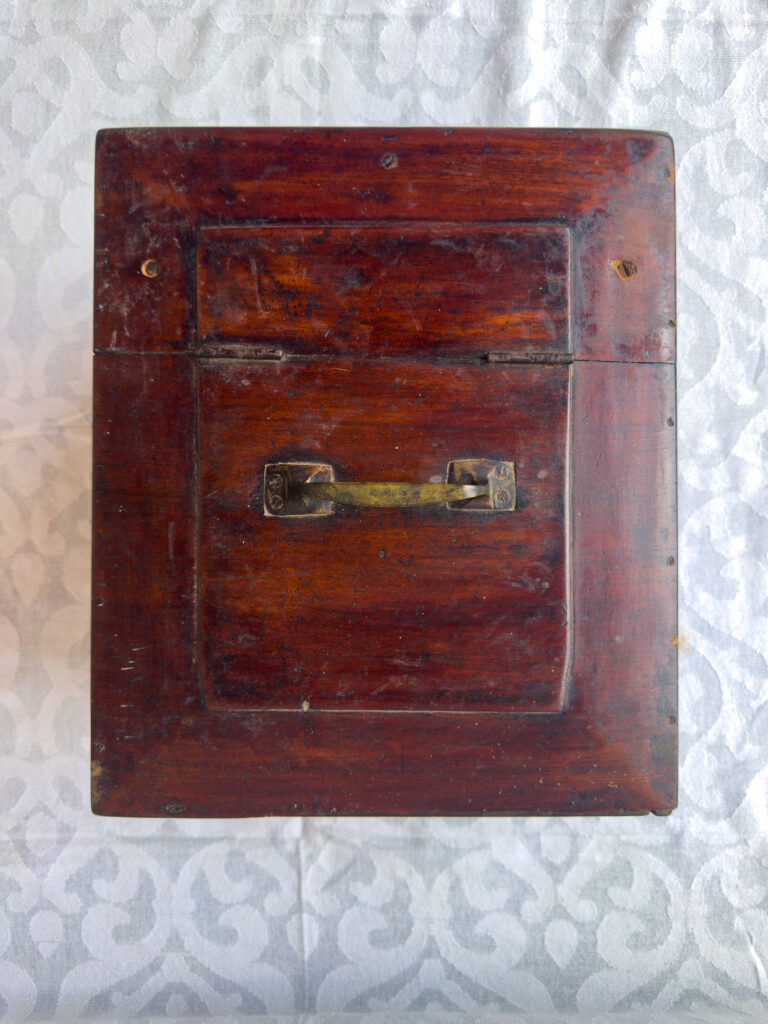
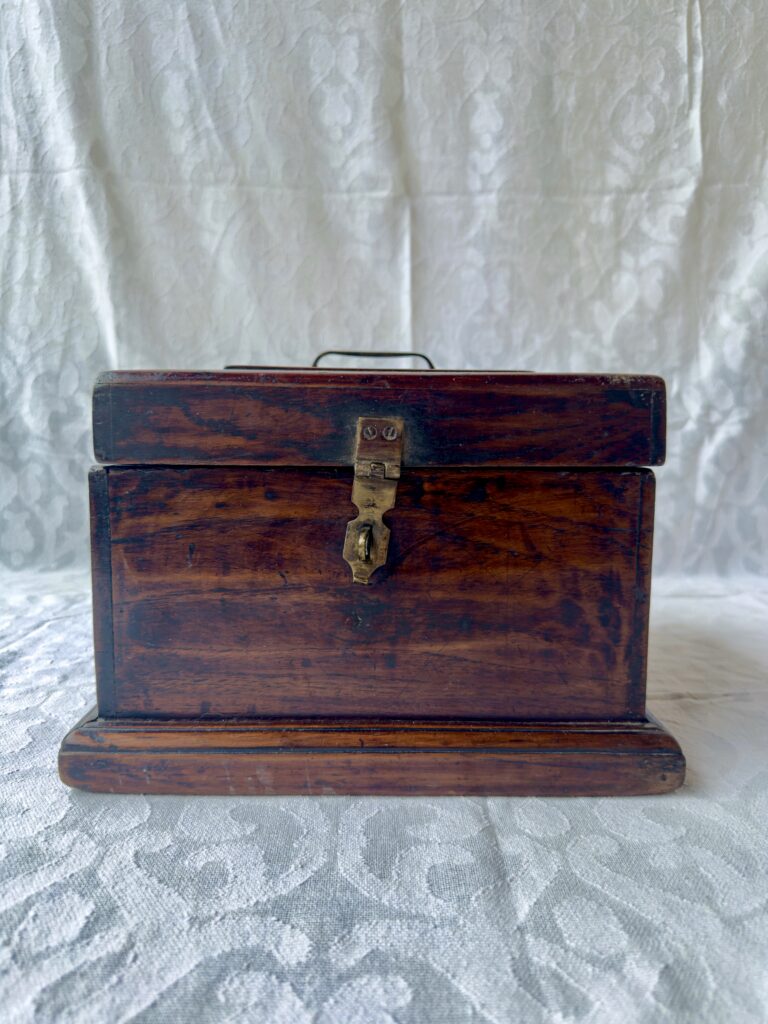
The journey of this box begins in Danoli, a small village in Maharashtra’s Kolhapur district, where my great-grandmother, Akkatai Gumanna, spent her childhood. In the early 1920s, when she was barely twelve or thirteen years old, she was married to Sadashiv Wale. Family lore has it that she looked upon the older man she was to marry with apprehension, and wondered how and why he had landed on her doorstep.
As part of her bridal trousseau or rukhwat, her father Advyappa Gumanna, commissioned a local carpenter, Ganpa Sutar, to make her an Indian Rosewood vanity box—a phaner peti, as it is called in Marathi. It travelled with her as part of her rukhwat, one of the few practical possessions and gifts she could truly call her own. Yet, as was customary in many parts of Maharashtra at the time, marriage did not immediately mean leaving home. Akkatai continued to live with her parents for a few years, still very much a child at heart. She wandered the lanes of Danoli, and was affectionately and respectfully called “Diwan Sahab” in the village as she was the eldest daughter of the family. Between transitioning from childhood to adulthood, the vanity box remained with her, marking a future that had already been decided.
When she was 17 or 18 years old, she finally left Danoli for Sangli, Maharashtra, and along with her traveled the phaner peti her father had gifted. Marriage also brought a new name: Shantabai Sadashiv Wale.
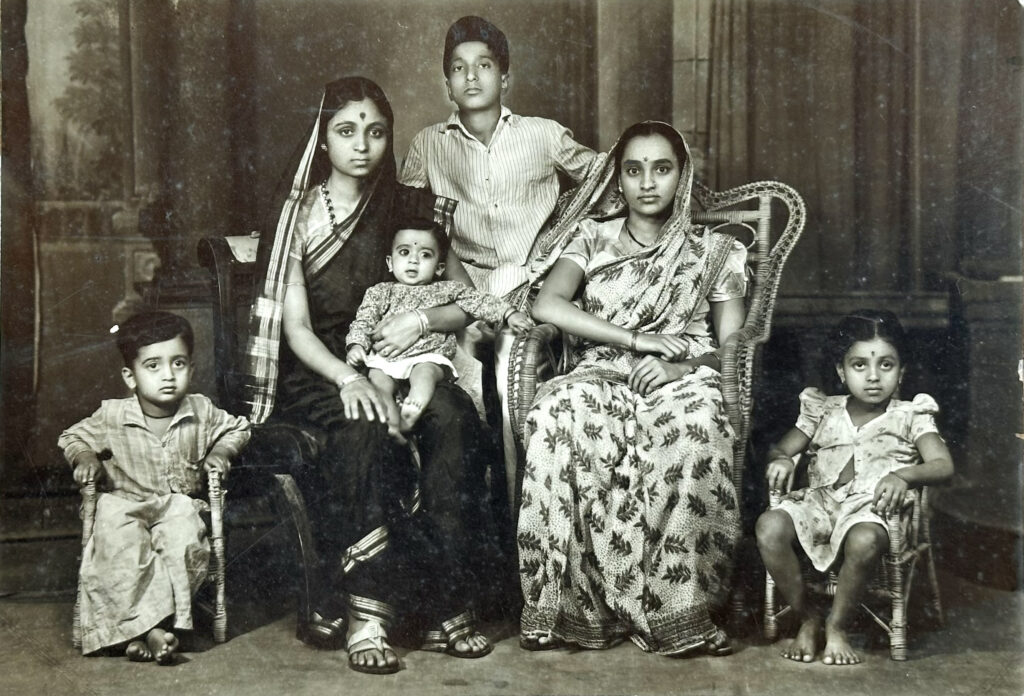
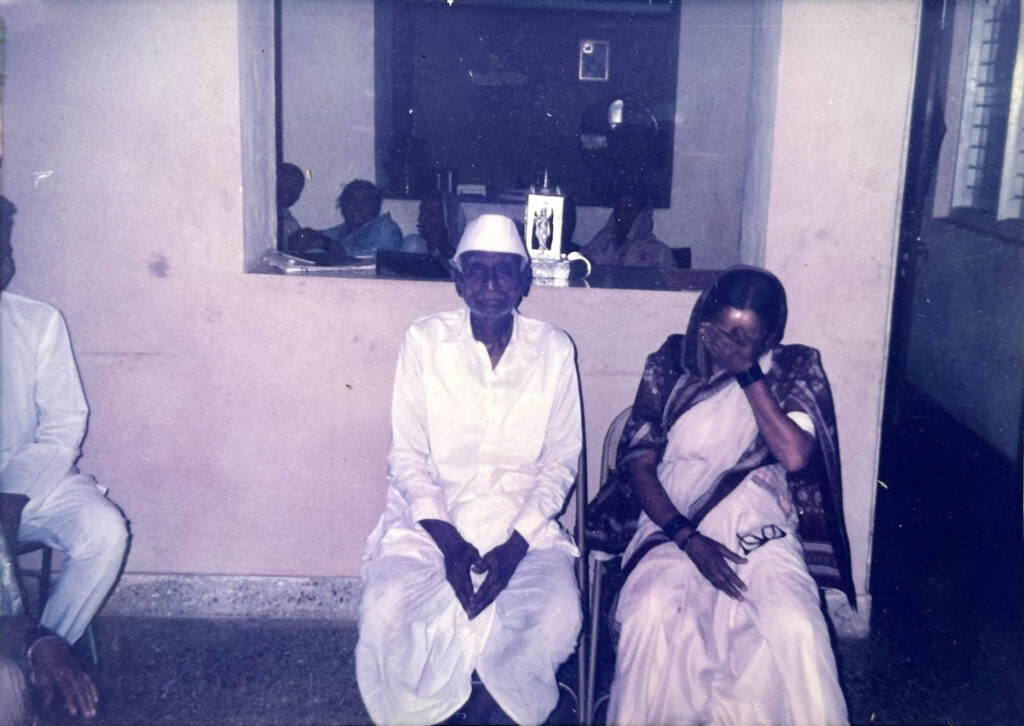
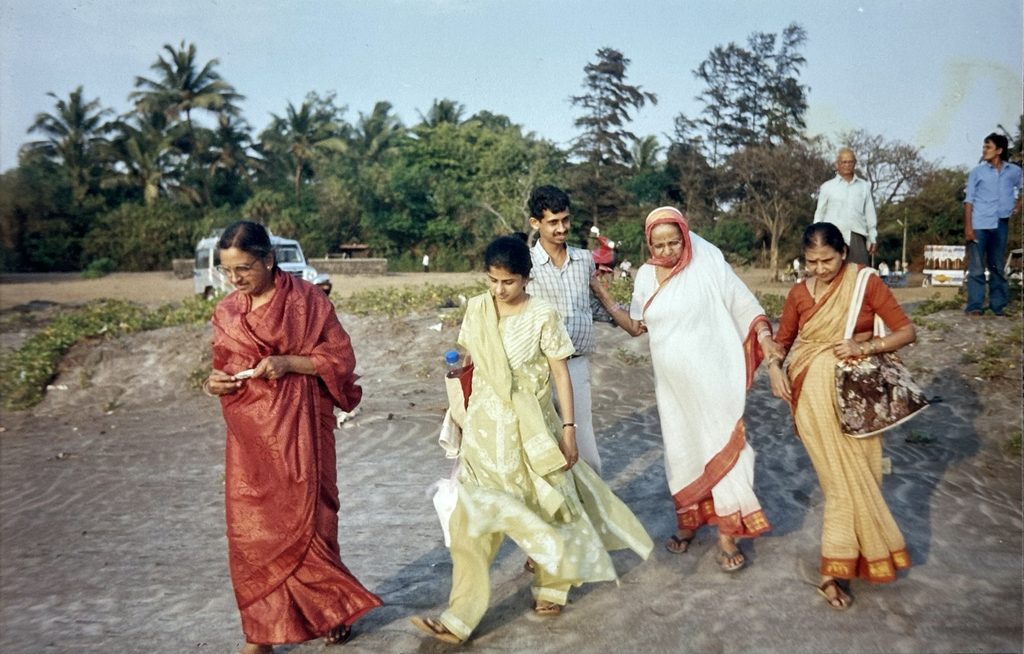
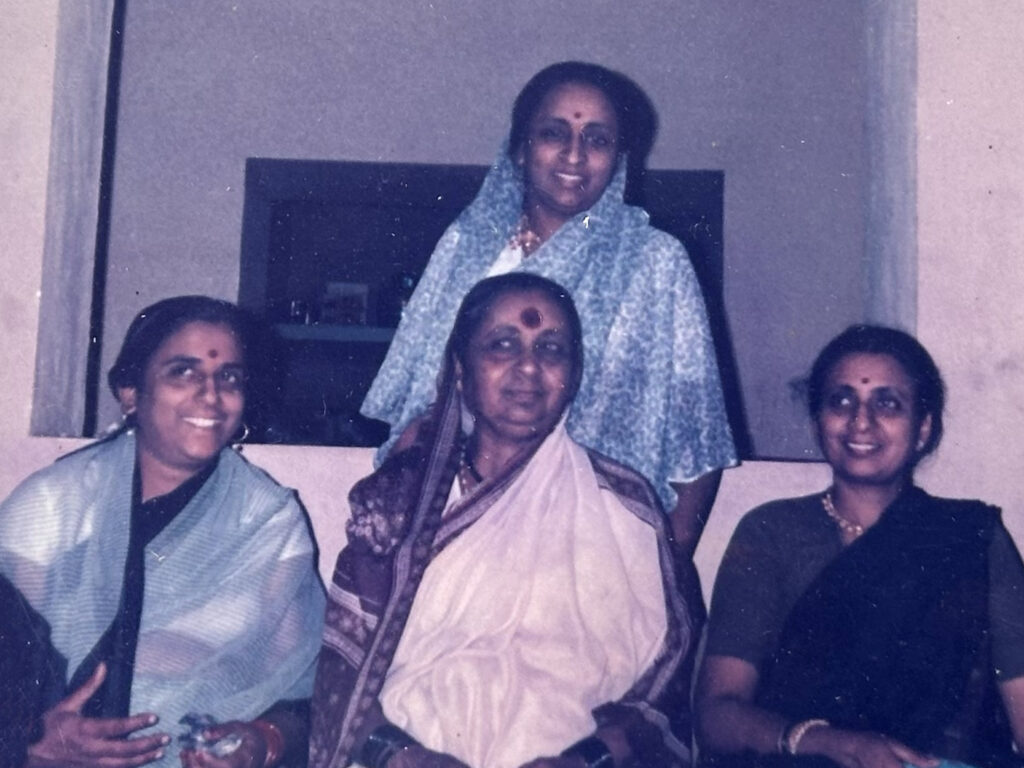
In Sangli, her husband, Sadashiv Wale ran a wholesale shop in Vakar Bagh. He sold red chilli powder, jaggery, peanuts and, most prominently, tobacco, which he tasted himself before selling. The family lived in the Digrazkar Bangla and business prospered. Highly respected in the business circuit, Sadashiv purchased a plot of land for 250 rupees—a considerable investment to build their dream home.
But this prosperity did not last. A betrayal within the family cost them their land, their shop, their savings and their gold. By then, Shantabai and Sadashiv had five children to raise—four daughters, Malan, Shalan, Bharti and Vasanti, and a son. The prosperity that was snatched away gave way to years of hardship.
My grandmother, Bharti Hosmani, remembers the strength with which her mother bore these losses. Shantabai had never learnt to read or write, but everyone speaks of her intelligence. My grandmother’s eyes moisten when she thinks about those years – while her two elder sisters were married off, she helped care for her younger sister, Vasanti, watching her parents pool every rupee to keep the house afloat, and overhearing their late-night conversations, heavy with worry and tears.
Yet neither parent allowed their children to feel the weight of their circumstances. Bharti studied at Dhadge Girls’ High School and trained diligently in Hindustani Classical Music. Somewhere in the 1940-50s, to support the family in her own way, Shantabai gradually sold the brass and copper vessels—handi and tambe— she had collected over the years, parting with each one for around 40 rupees.
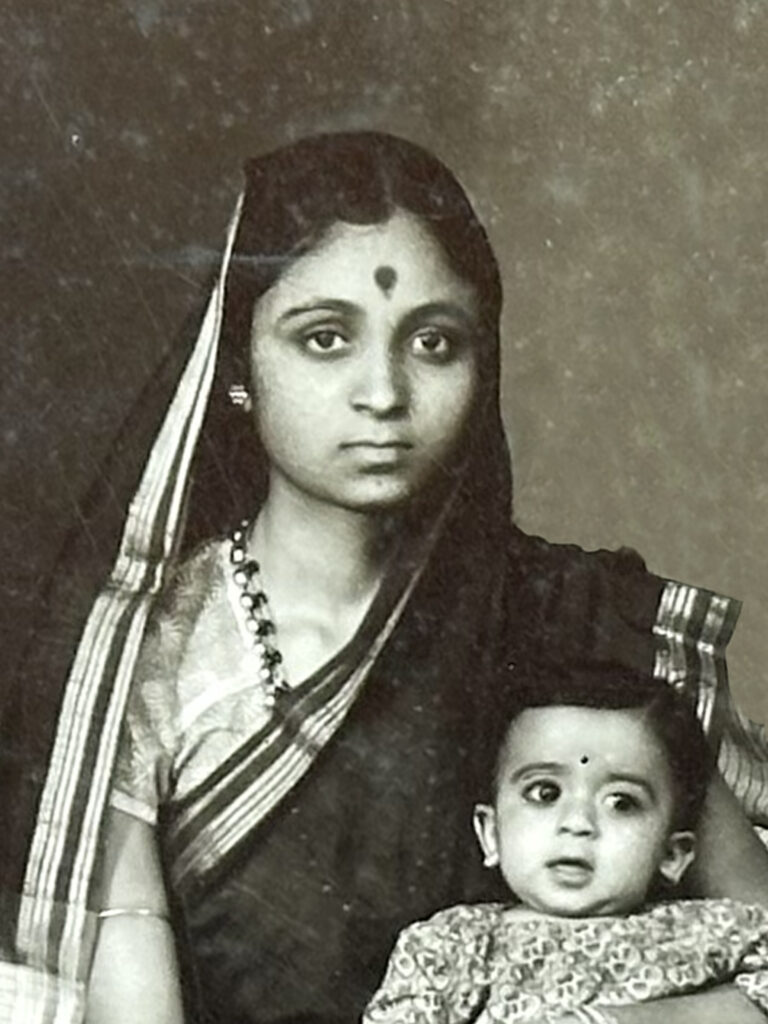
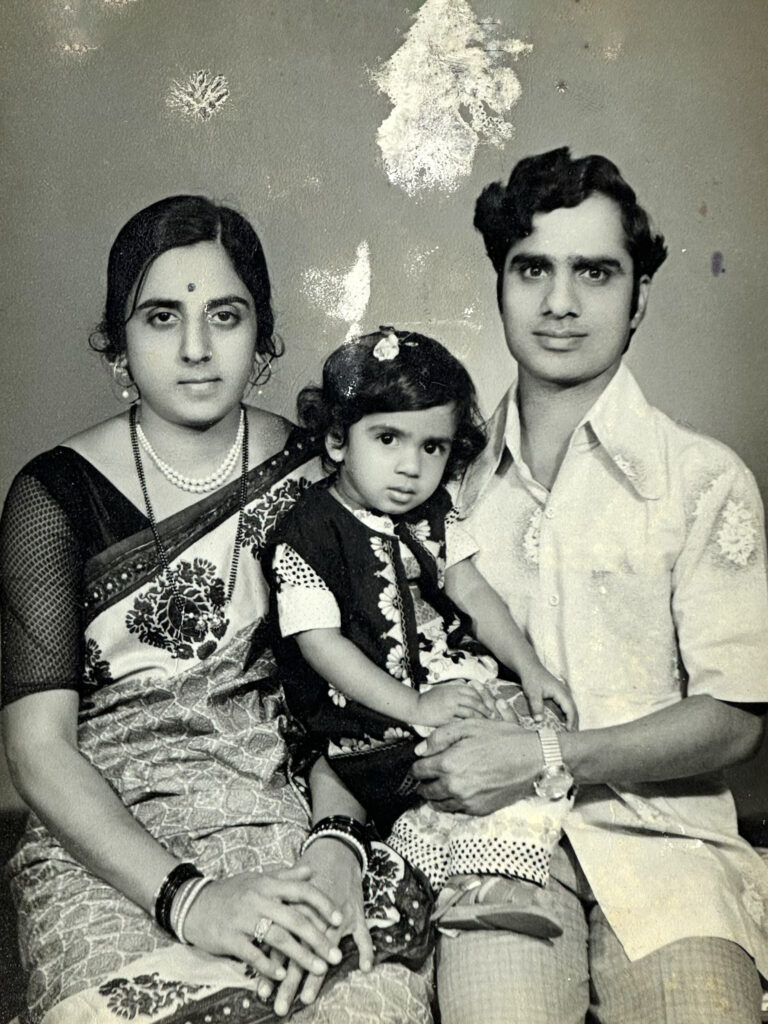
And with the steady ticking of time, while their lifestyle may have changed, every morning still began in the same simple way. She would tightly oil her hair into a neat bun before bath. Then draped in her navari saree, Shantabai would open her phaner peti for the small ritual of getting ready. Inside were the things she used every morning: a lump of men—beeswax—which she applied to her forehead before pressing kumkum onto it so it would stay in place; a small compartment of gandh, which her daughters mischievously borrowed as blush and lipstick; and a 15 paise tin of khaki powder.
Years passed, but Shantabai’s morning ritual remained unchanged: her hair oiled before bath, a crisply draped saree, and the familiar routine with her phaner peti. As she sat before its hazy mirror, my mother, Archana, would run up from behind and wrap her arms around her grandmother’s neck, peering into the reflection alongside her. Fascinated by the tiny compartments and hidden nooks, she would announce, with certainty, that one day the phaner peti would be hers.
For my mother, Sangli was synonymous with her maternal home, and remembering her vacations there still brings the warmest smile to her face. Mornings often began with the two of them gathering flowers, which Shantabai would string into a garland for the gods.
My uncle, Kiran Malage, remembers those summers with equal tenderness. He would accompany Shantabai to collect flowers before stopping by the well, where she unfailingly fed the enormous turtle that lived within, while he took a dive in the water. Once a week, when the Patwardhan’s — the Sangli’s royal family — elephant made its rounds through the streets, she would rush to greet it with food. Her generosity extended just as naturally to people. Every night, she kept aside an extra portion of the dinner for a family affected by leprosy who came to her doorstep at around half past nine. They never had to ask twice; she was already waiting for them.
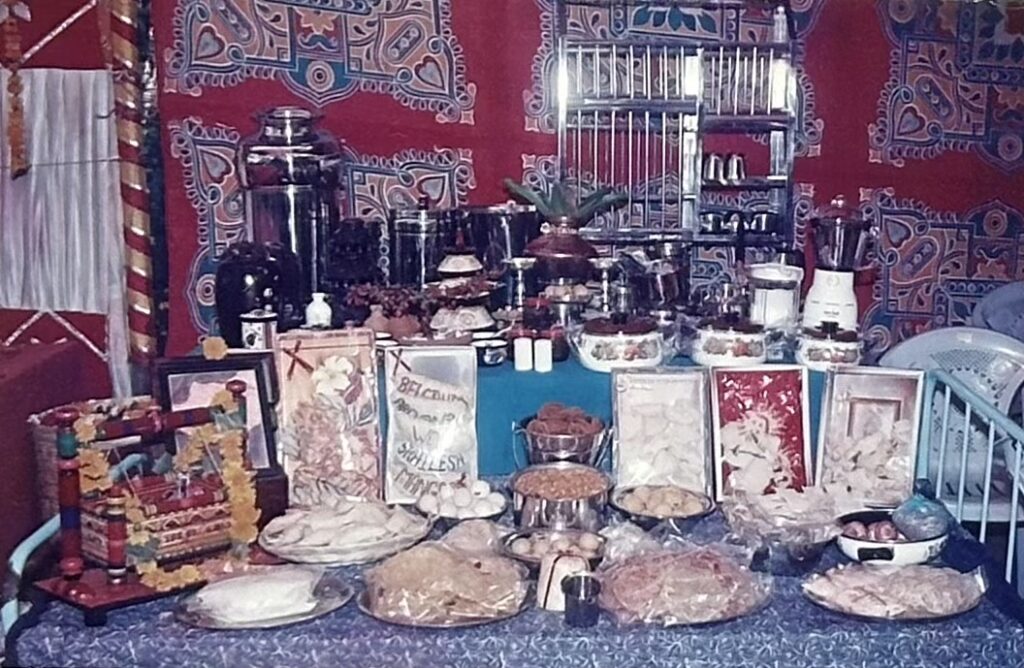
Her nickname for my mother was Papu. When it was time for Papu’s wedding, Shantabai was overjoyed with the man my mother had chosen, and perhaps even more delighted he came from the Konkan, a place she had great affinity for. She arrived in Belgaum, Karnataka, fifteen days before the wedding, immersing herself in the preparations. Alongside Ganesh, who worked in their home, she prepared trays of faral, festive snacks that traveled from Sangli to Belgaum, where my mother lived, and then onward to my father’s village, Wadghar in Maharashtra, where the wedding would take place.
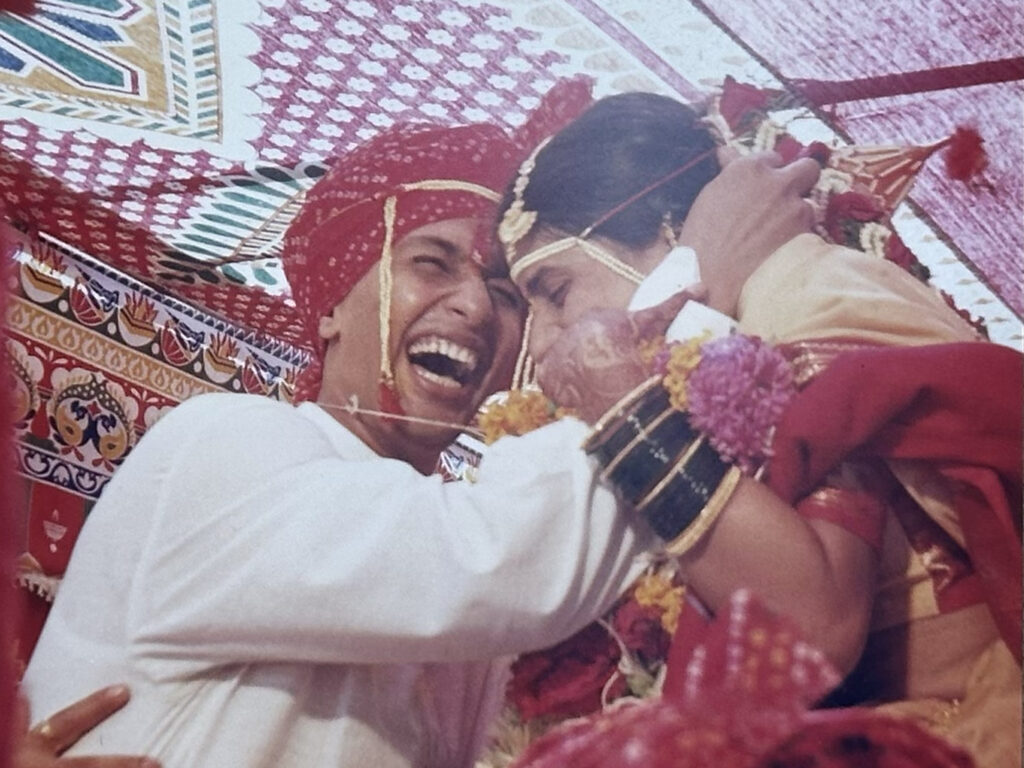
Shantabai was older by then, but no one would have guessed it from the way she threw herself into the wedding preparations. Amidst the joyful chaos of my mother’s wedding, she turned to her and asked, “Papu, What can I give you?” My mother did not hesitate.She answered with a tone of consolation and the same certainty she had possessed as a child. “The phaner peti.”
And so it was that the wooden vanity box, crafted by the local Danoli carpenter, Ganpa Sutar, at the request of Advyappa Gumanna, began its second journey as part of my mother’s bridal trousseau. What had begun as a father’s gift to his young daughter found new life as a grandmother’s blessings to her granddaughter.
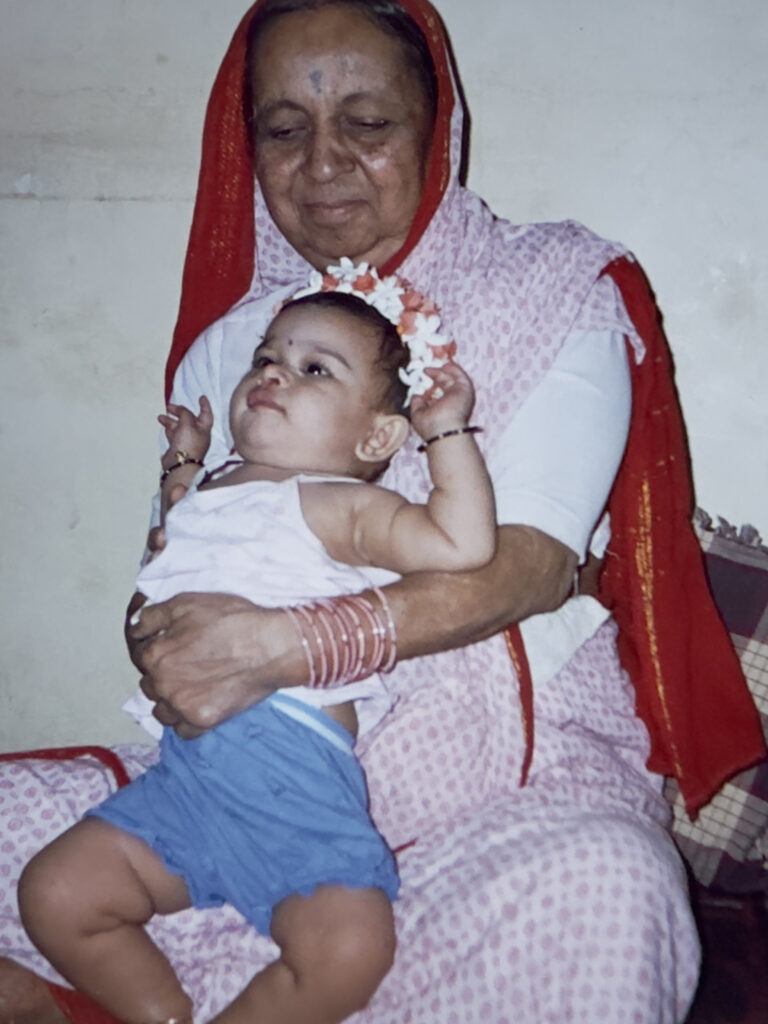
My memories of my great-grandmother are only a handful. I remember her telling us stories at midnight, and how I used to play with her hands and ears, the skin softened with age. When I listen to stories like that of the phaner peti, it makes me feel closer not just to her but also to everyone else in the family. She binds us together, to each other.
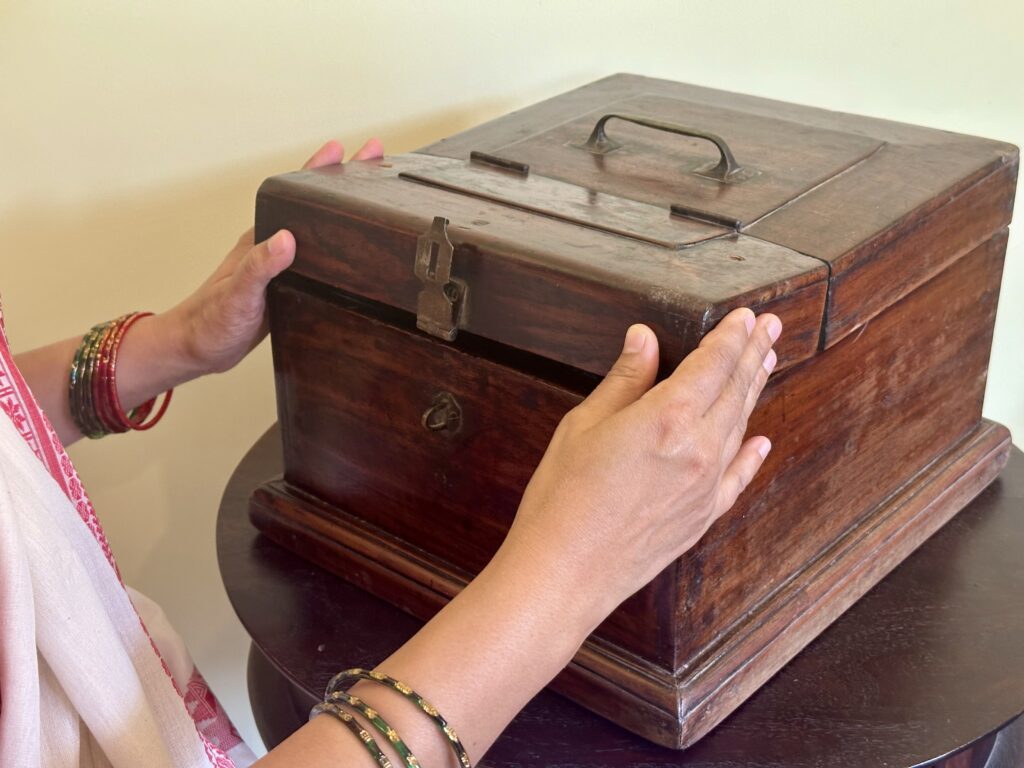
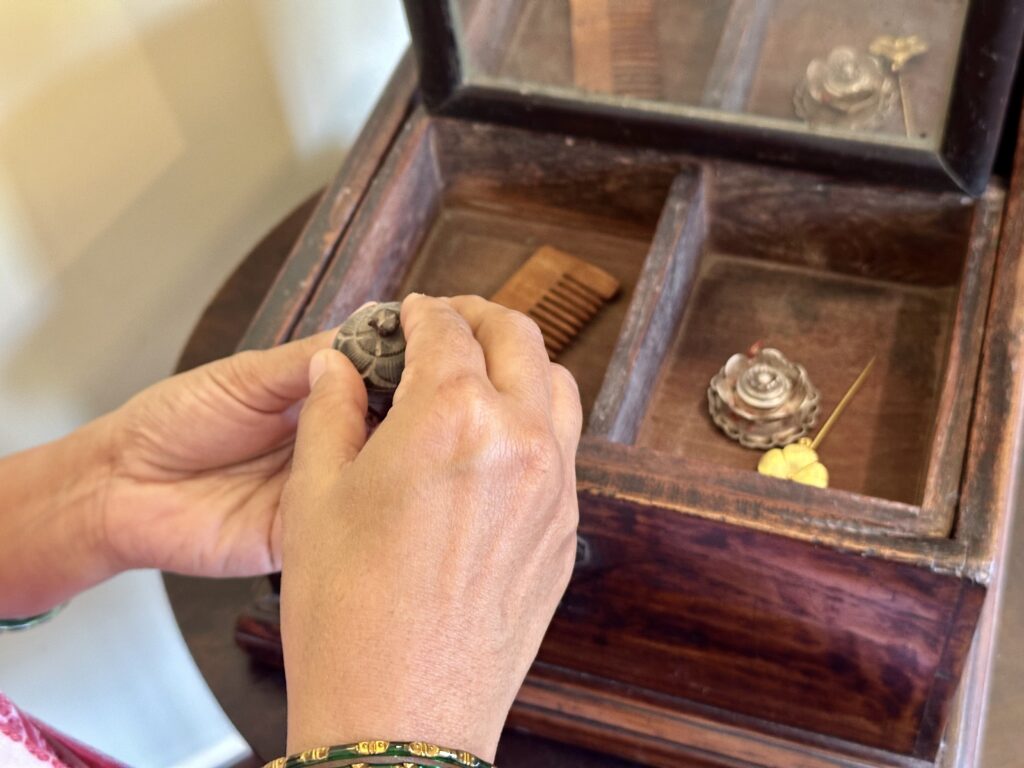
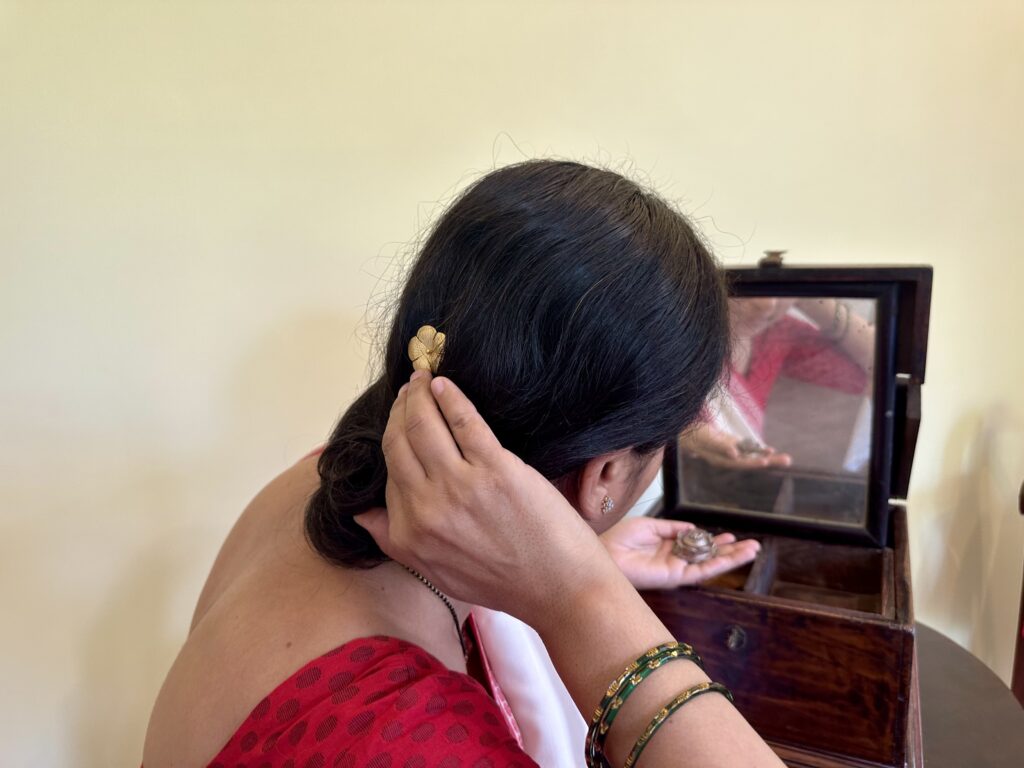
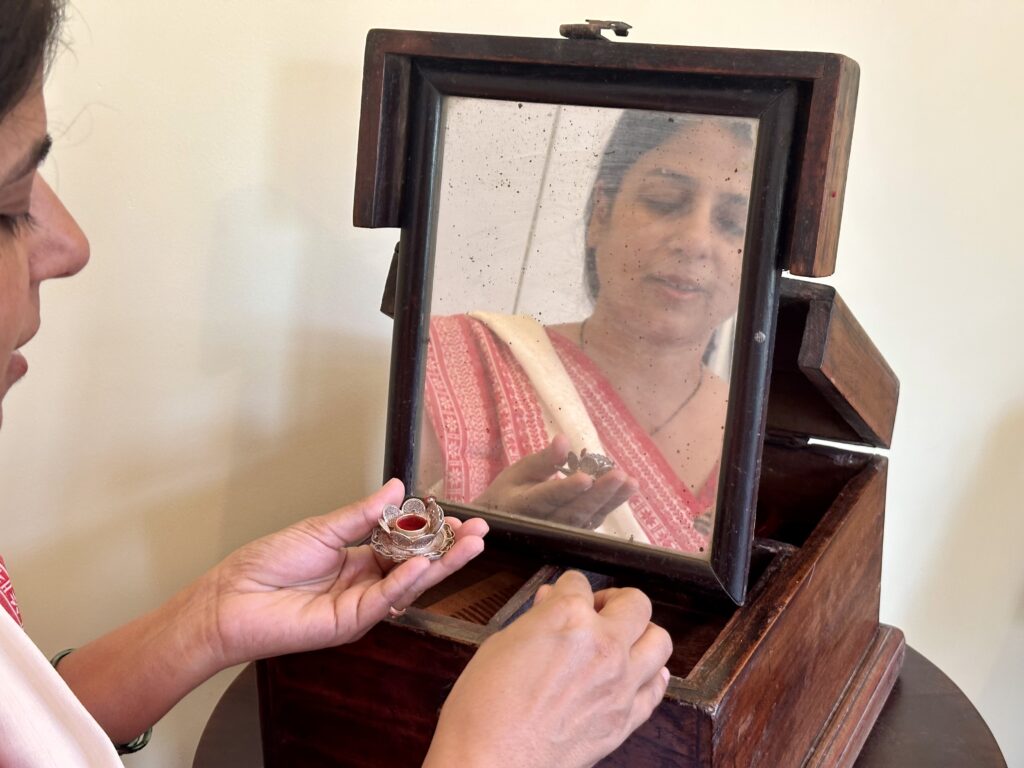
Today, the phaner peti still sits in our living room. The compartment that once held beeswax and kumkum now holds old bangles. The mirror has grown cloudy, and the teak smells faintly of dust and old wood. We smile whenever our eyes meet the phaner peti. It is no longer simply a vanity box. It is the closest thing we have to Shantabai’s presence—a record of her life preserved in wood, habit and memory.