
TEXT AND PHOTOGRAPHS BY ANUJAYA KRISHNA
Lucknow, Uttar Pradesh, India
At the outset, let it form part of the record that the author of this piece does not support the chewing of paan regularly nor promotes the habit. This piece is a memoir to historical ties.
“Beta, don’t go to the paan shop alone. I’ll come with you,” said my ever-endearing mother to me when I told her I was going to get Paan Dadi’s old paan-daan replenished with ingredients, so I could capture what a paan-daan really looks like in full bloom, before sitting down to write this piece. That is the first factor that one often hears about when it comes to paan shops- that they are not places women frequent. Now one may question the rationale for this and of course times have changed drastically, but this is how things used to be. It does make one wonder as to whether this was the reason that women used to carry elaborate paan-daans? That way they did not have to frequent the shop nor ask others to get them a paan as a favour- they could just self-sufficiently make one to their liking from the comfort of their home.
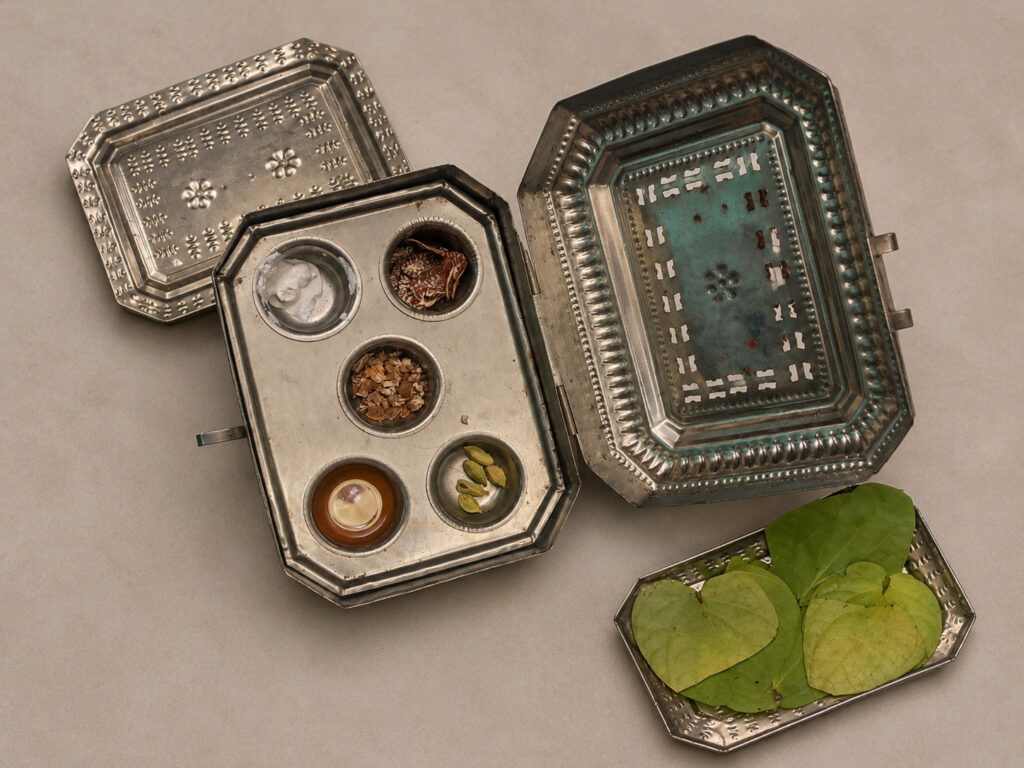
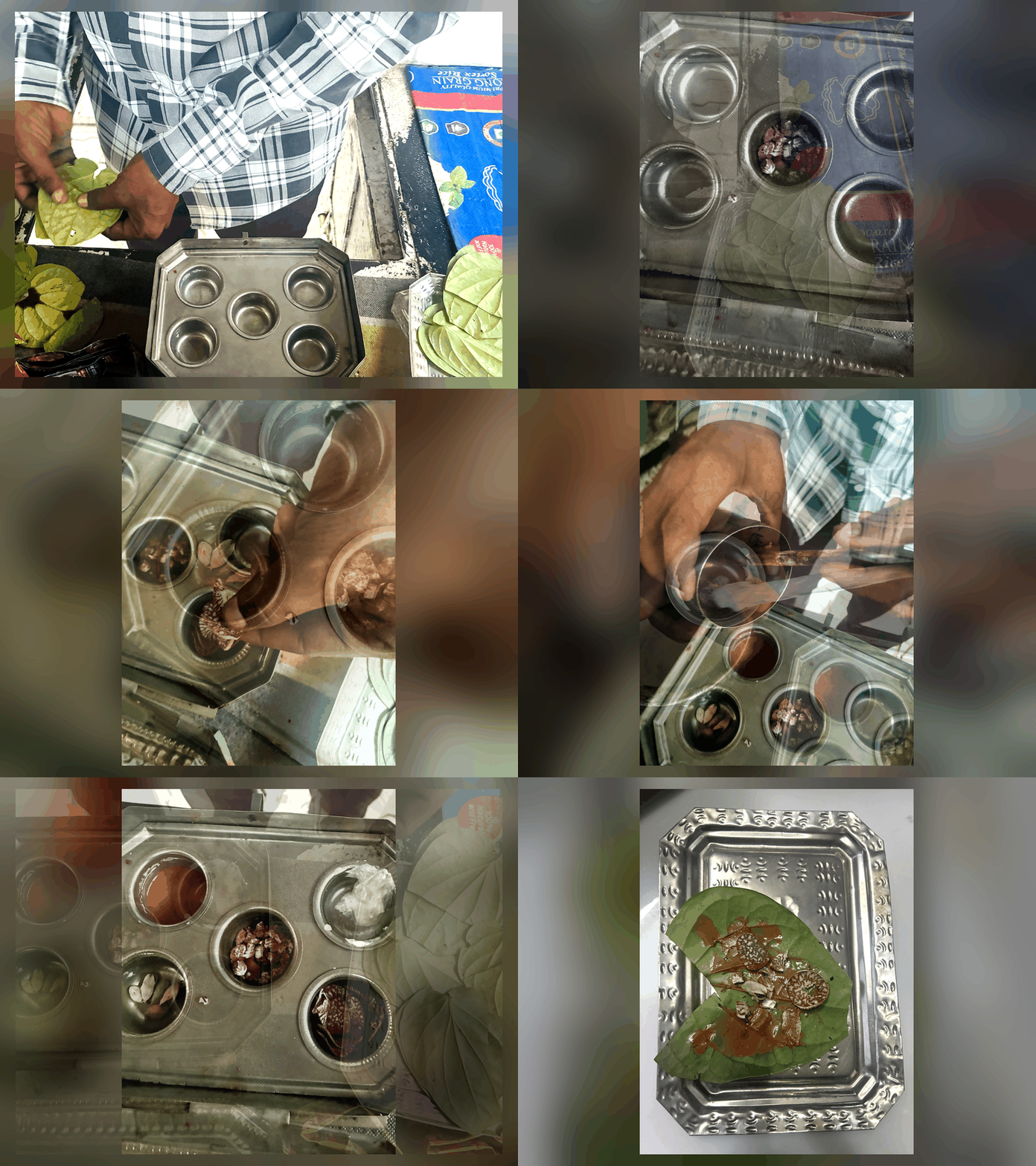
The second thing that struck me was how difficult it has become to come across paan shops that are filled with a happy vendor, his shop brimming with possibilities of toppings and paraphernalia to make a good paan. We had to scour three-four neighbourhood shops until we chanced upon one vendor who said he had the material to lay in the paan-dabba. At the other shops, there was a melee of customers coming to take sachets of tobacco and cigarettes and such like, and the vendors stated that they do not deal with paan too much as it does not yield much profit as opposed to the other things, which may be more harmful but sell like hot cakes.
So, ultimately, Sunil was kind enough to oblige us with decorating the paan-daan at his paan shanty. It made me marvel at how drastically times have changed- earlier, procuring things for a paan-daan was a no-brainer but now, it seemed that these objects had, in fact, become things of the past. And so, ensconcing one in my home for years, I felt the pull to write about it, to store it in archival memory.
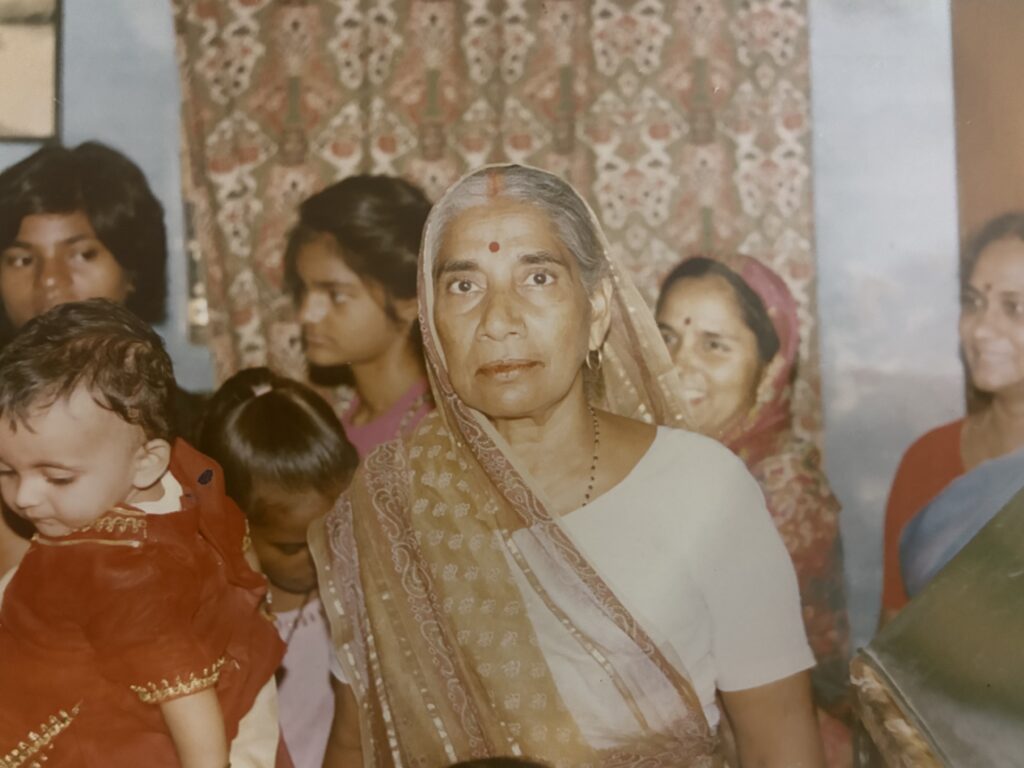
This paan-daan has been with us for around two decades now and was probably bought by my cousin Dadi, paan Dadi, as we affectionately called her (more on her later) in Lucknow sometime in the late 90s. She was my paternal grandmother, Rama Devi’s younger sister, Sushila. Paan Dadi used to visit and stay with us during summer vacation. She would sit, clad in her cotton saree and regale us with tales about her childhood, her neighbourhood and the goings-on in her life. But I especially remember her for one special thing- a paan dabba (betel leaf box, literally translated) that she used to bring with her everywhere she went. She had a large family and it seemed like the vagaries of domesticity used to take a backseat when she would stay with us, bonding with her sister and treating us to paan.
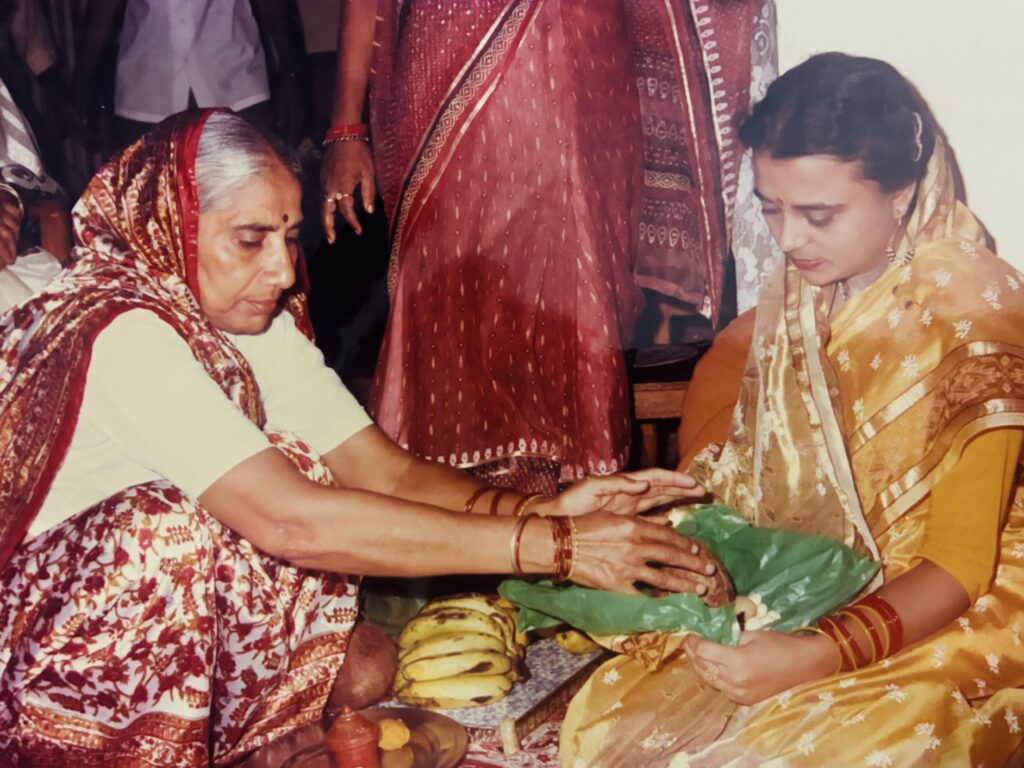
For the uninitiated, paan/betel leaf is a very typical edible item in India. It is a green leaf, resembling the shape of a heart with artery-like veins and a small stalk between the rounded edges. It has a darker tone on the underside and a pale green one on the top. It comes in various varieties- some that are bitter to taste when chewed and some that melt in the mouth when had. The leaf is embellished with some katha (also known as cutch or Japan earth) and a streak of chuna (soda lime) that gives it a slight cutting flavor. In a traditional/typical preparation, this combination is topped with supari (areca nuts), which could be put whole or loosely ground in uneven pieces or even diced, and a sprinkling of peppermint crystals, if you like. But the fancier meetha paan (sweet betel leaf) is enhanced with dollops of sweet jelly infused with a delicious scent of saffron (commonly known as gulkand) and sugar-coated fennel seeds that augment the riot of flavor and colours. This is often followed with a spot of a brown powder-like mouth freshener which, when had by itself, is a burst of a minty-me-up! And if you are lucky, the vendor, an artist at work on the betel leaf with his nimble fingers, will add some coconut powder or coconut shavings to create that perfect carnival in your mouth.
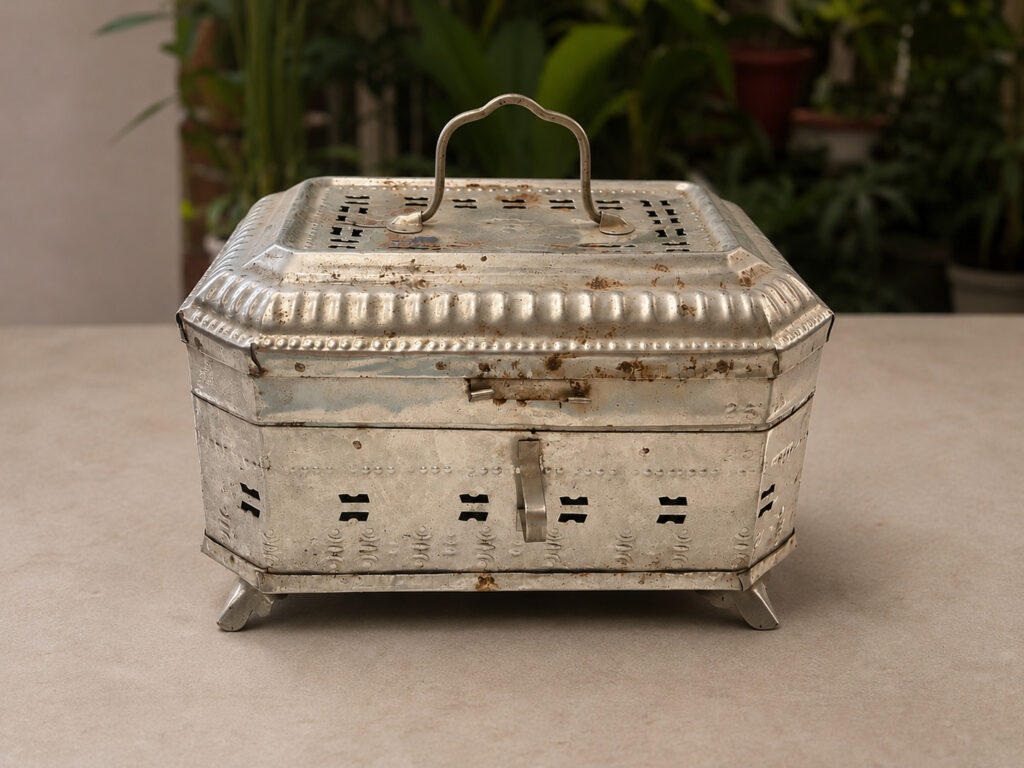
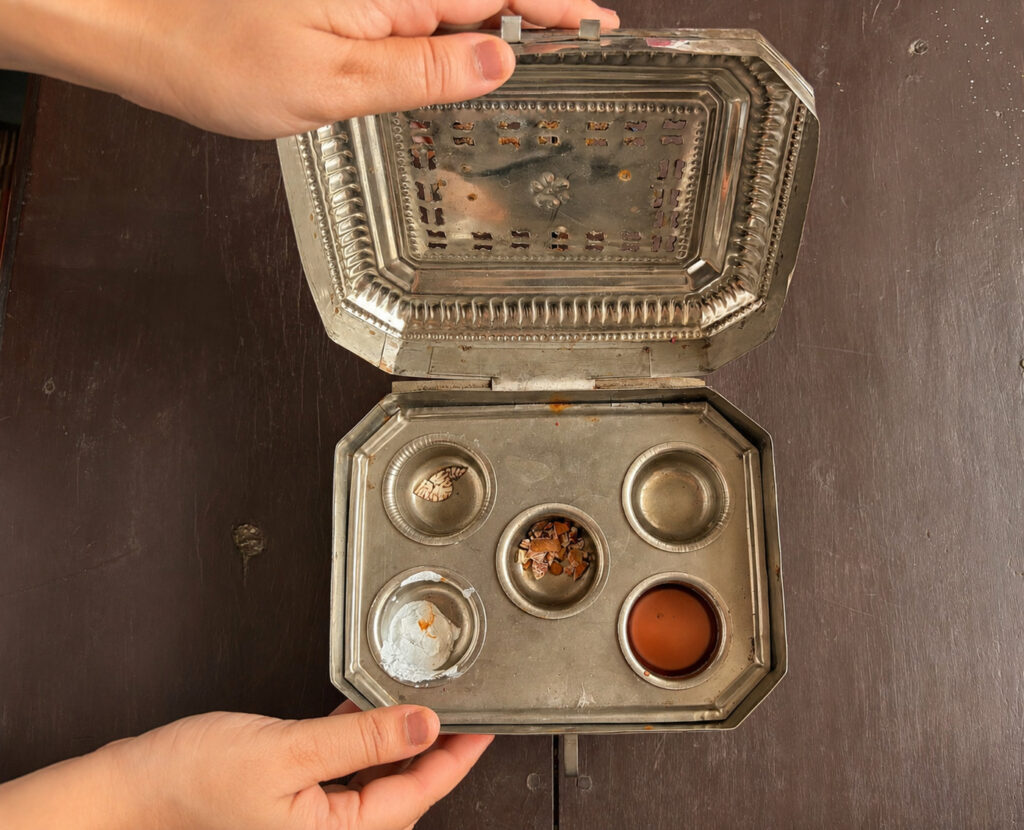
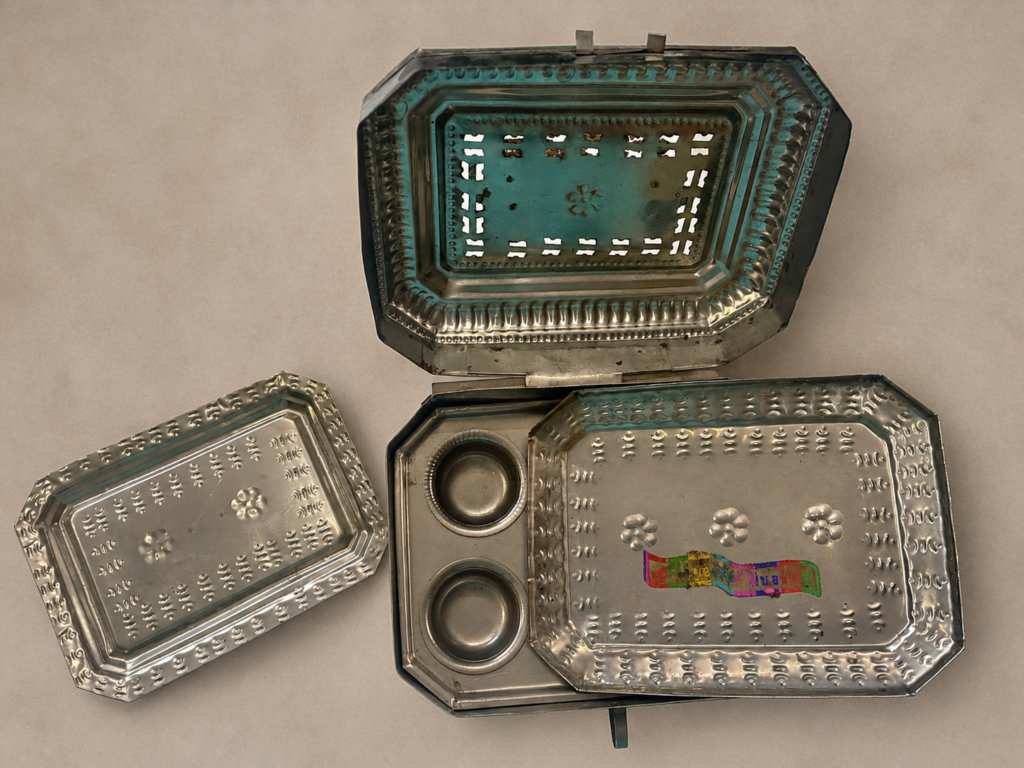
Now this paan-daan is a silvery-looking tin box and when she used to open it, it was a thing of acute wonder and astonishment for me. The inside was covered with a thin plate on which she would store six/seven betel leaves, carefully wrapped in a piece of wet, red cloth. Underneath this lid was a ‘mezzanine floor’ of sorts. It was occupied with small, round metal bowls systematically inserted in deftly carved holes in the metal, just above the base. One bowl was filled with the katha, another with chuna and yet another had areca nuts. To bring these nuts to an edible proportion, grandmother would keep a pruner-like device. Another bowl had cloves while parts of green cardamom occupied another bowl. The last bowl was usually empty but grandmother would fill it with whatever condiment I desired on my paan when she visited. Even today, when I look at the empty paan-daan and lift its lid, memories of the earthy smell of paan and its accompaniments waft around, transporting me back to those carefree summer days- hot loo blowing outside, me sitting perched on top of Dadi’s bed, listening wide-eyed to the sisters bonding, waiting for paan Dadi to open that silver box by her side and eat a paan.
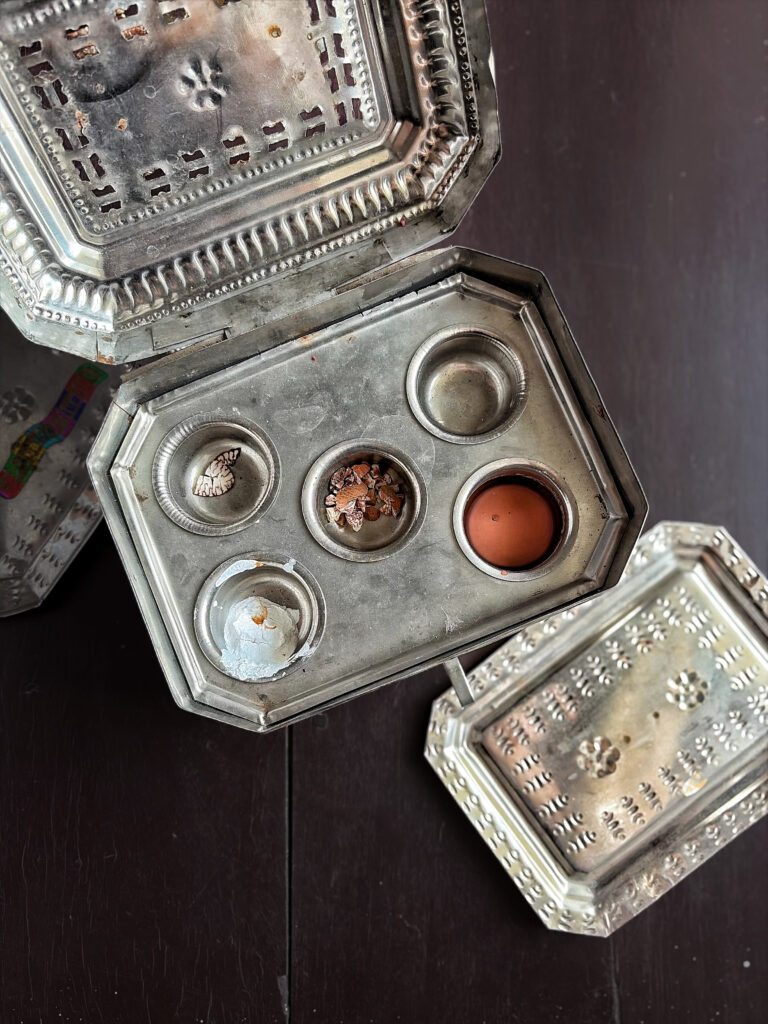
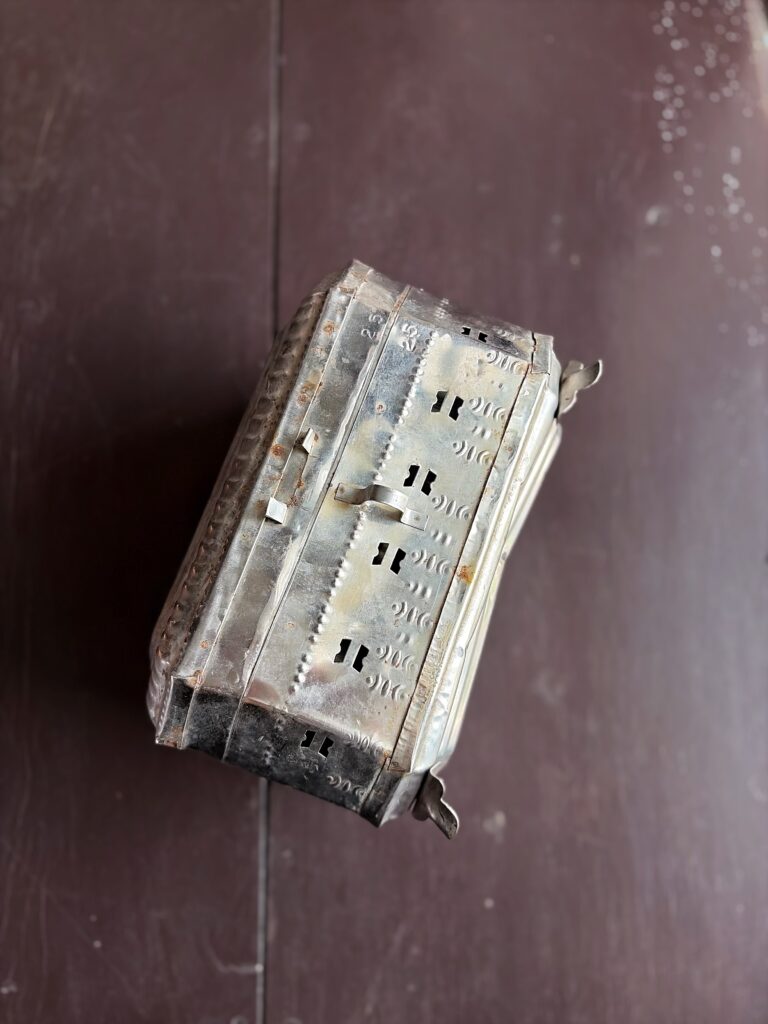
Whenever she used to make a paan for one of us or for herself, she used to be deeply engrossed in the process and yet be smiling at the sheer pleasure of it- it was like watching a magician at work. Of course, being a child, I was not given much of that betel leaf to relish but it was always a much sought-after and a very welcome delight. No wonder then that I nicknamed her ‘Paan Dadi’!
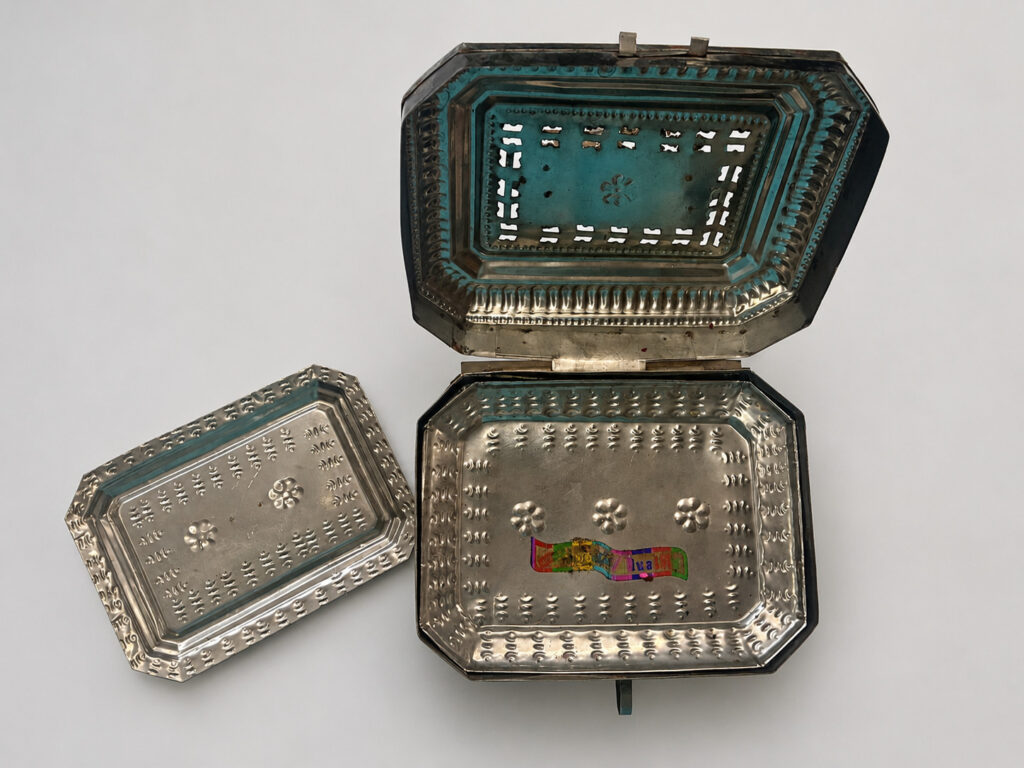
Today, the paan-daan gets dusted every now and then, but some parts of it have corroded with time, the shiny silvery top giving way to streaks of brown rust here and there. When I got it refurbished for this piece, it seemed like an old, dilapidated haveli had been redecorated and restored to its former splendour.