
TEXT AND PHOTOGRAPHS BY SANAAH MEHRA
Agra, Uttar Pradesh, India
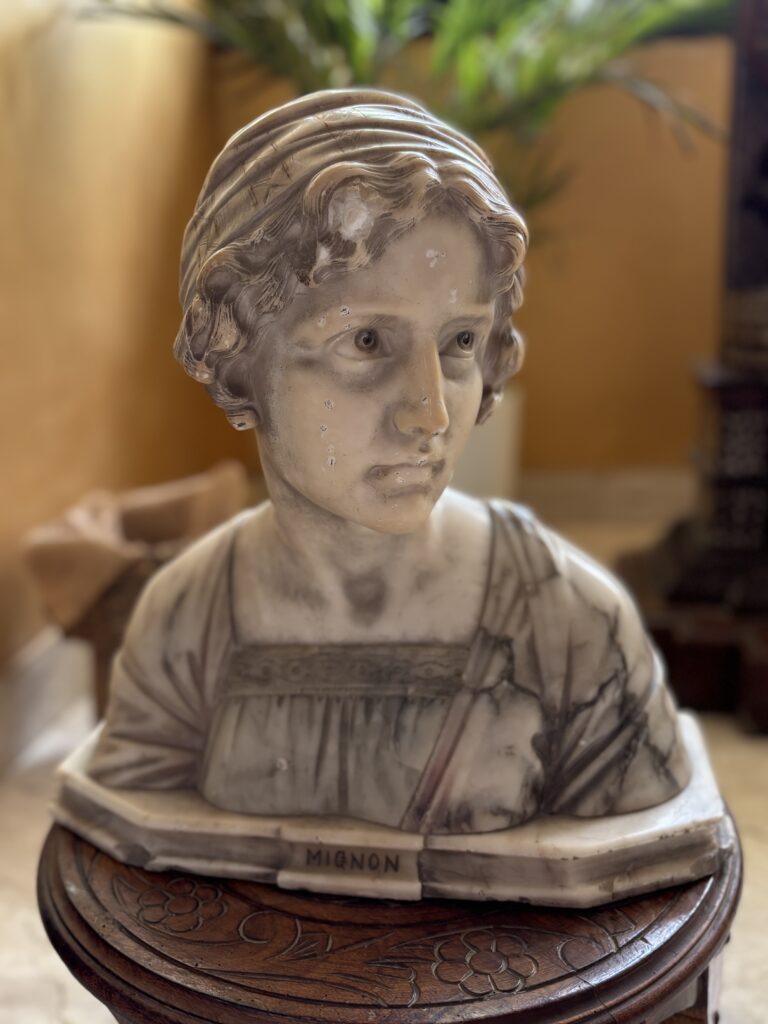
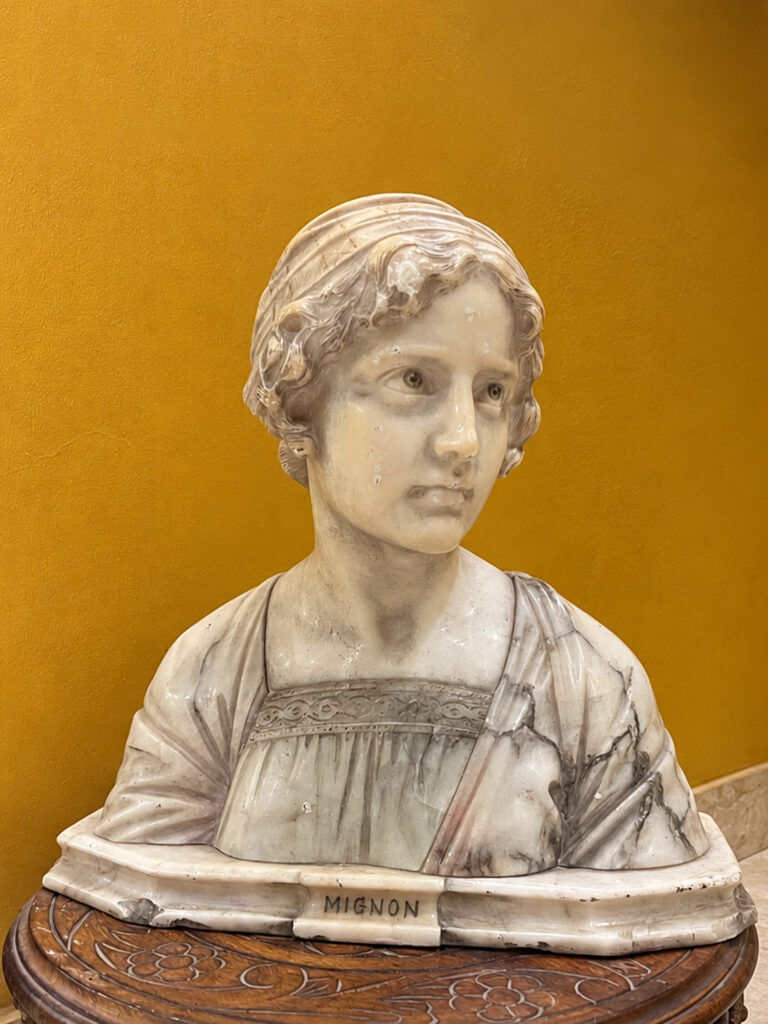
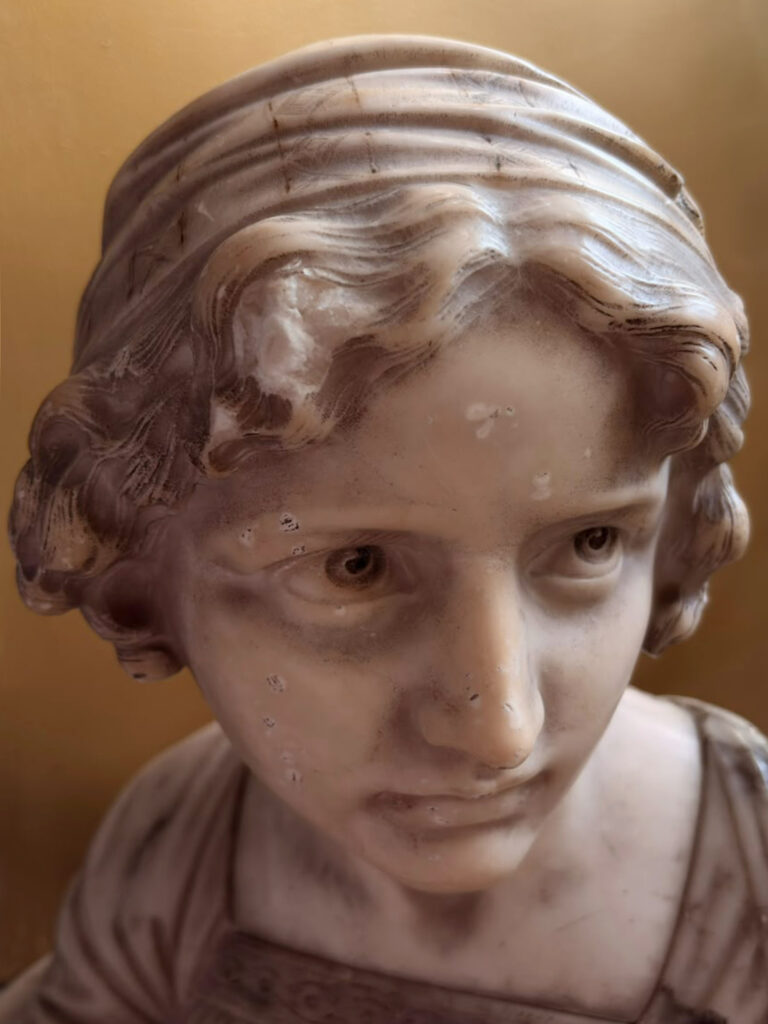
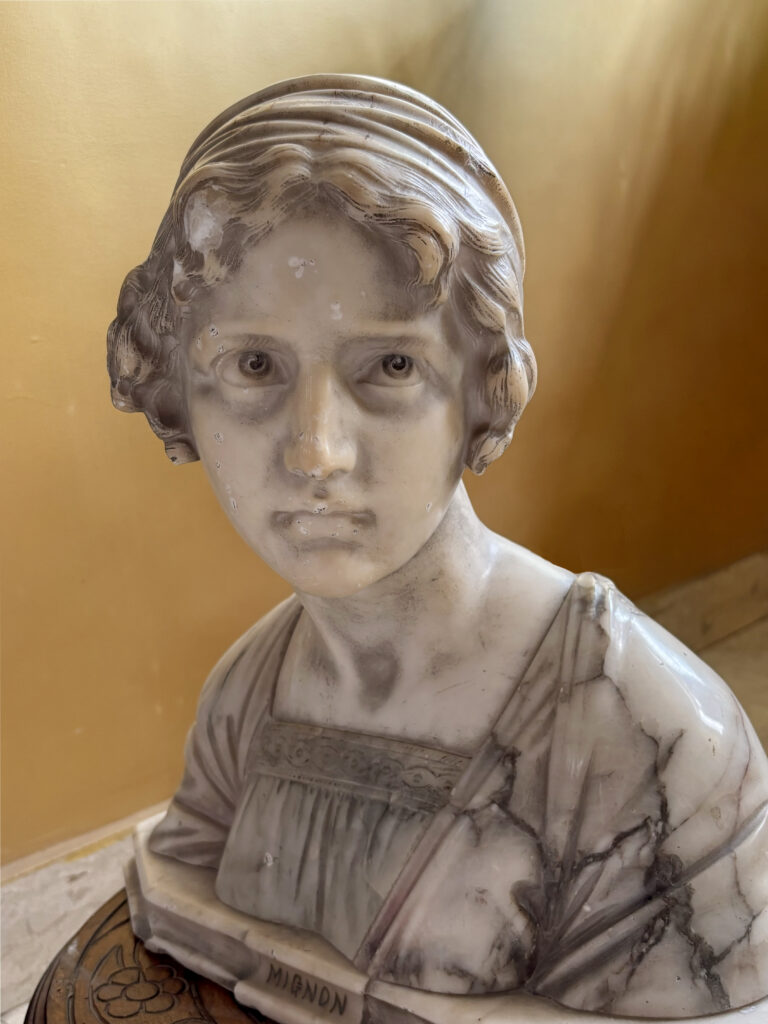
Mignon. A common household name when I was growing up. We pronounced it MIG-non. Only recently did I discover the correct pronunciation to be mi-non. We had many statues in our house growing up, so she should have been just another one, taken for granted and ignored. But we couldn’t do that. My cousin, Sakshi and I had an unsaid rule, especially while playing hide and seek – Don’t lock eyes with her for too long. We were seven-year-olds, scared that the Mignon bust was doing something other than evoking a feeling of joy within us. How dare she look at us with those eyes? Those grievance-ridden eyes, always looking upwards. There was something in her gaze that just held you there, rather uncomfortably. As we got older, it turned into more of a silly little joke, being scared of a statue. But even today, holding her gaze takes a small act of will.
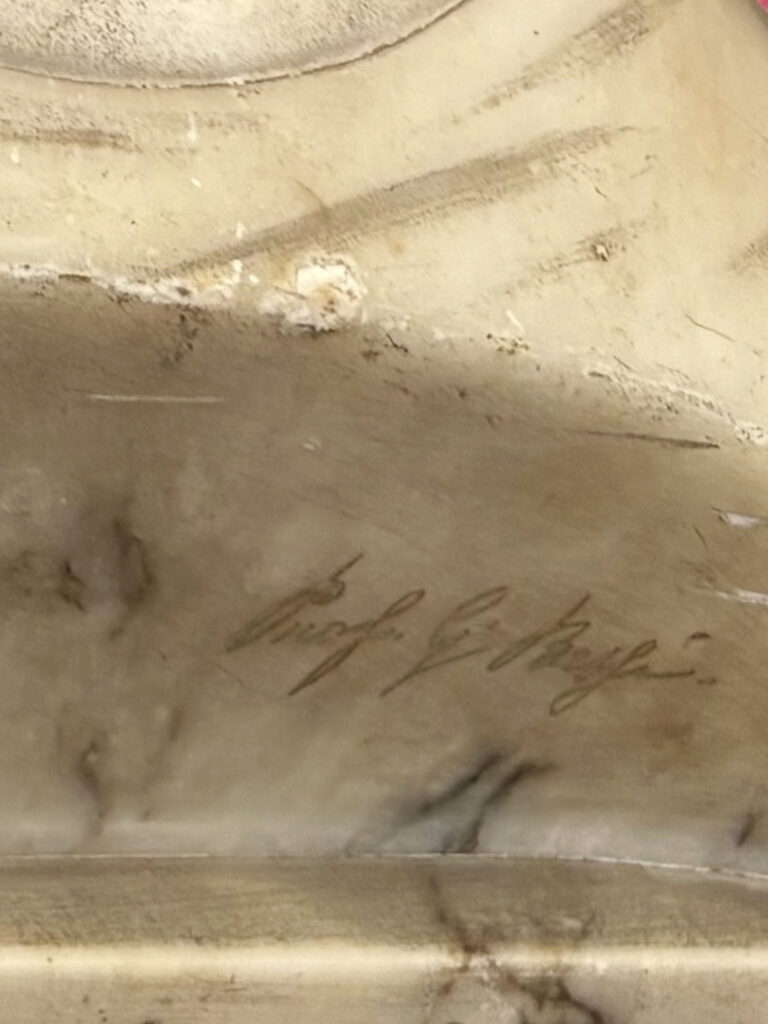
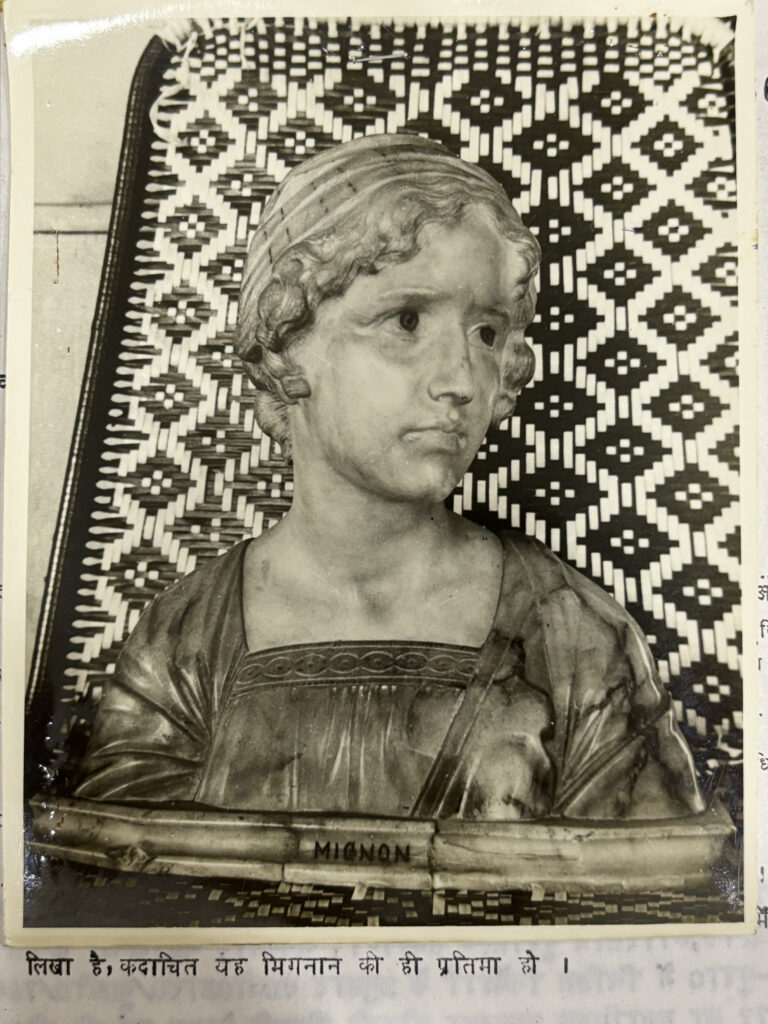
She has lived at the entrance of our home in Agra for as long as anyone can remember. A white marble bust, 38 by 37 centimetres, with wavy hair arranged carefully around her face and a draped cloth across her chest. At her base, carved into the stone in plain English letters: MIGNON. When the government of India registered her under the Antiquities and Art Treasures Act in 1977, the officer wrote in Hindi in his notes that she was an “Angloindian figure”, approximately a hundred years old and then added, “pratima ke niche mignon likha hai, kadachit ye mignon ki hi pratima ho,” which translates roughly to “‘Mignon’ is written beneath the statue; perhaps this is indeed a likeness of Mignon”, suggesting she might possibly be Mignon.
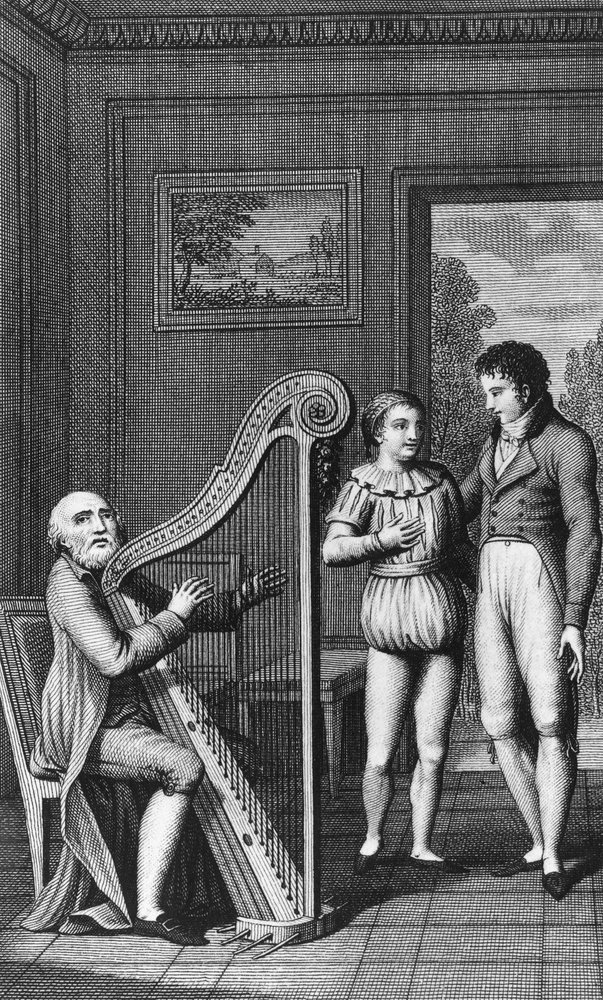
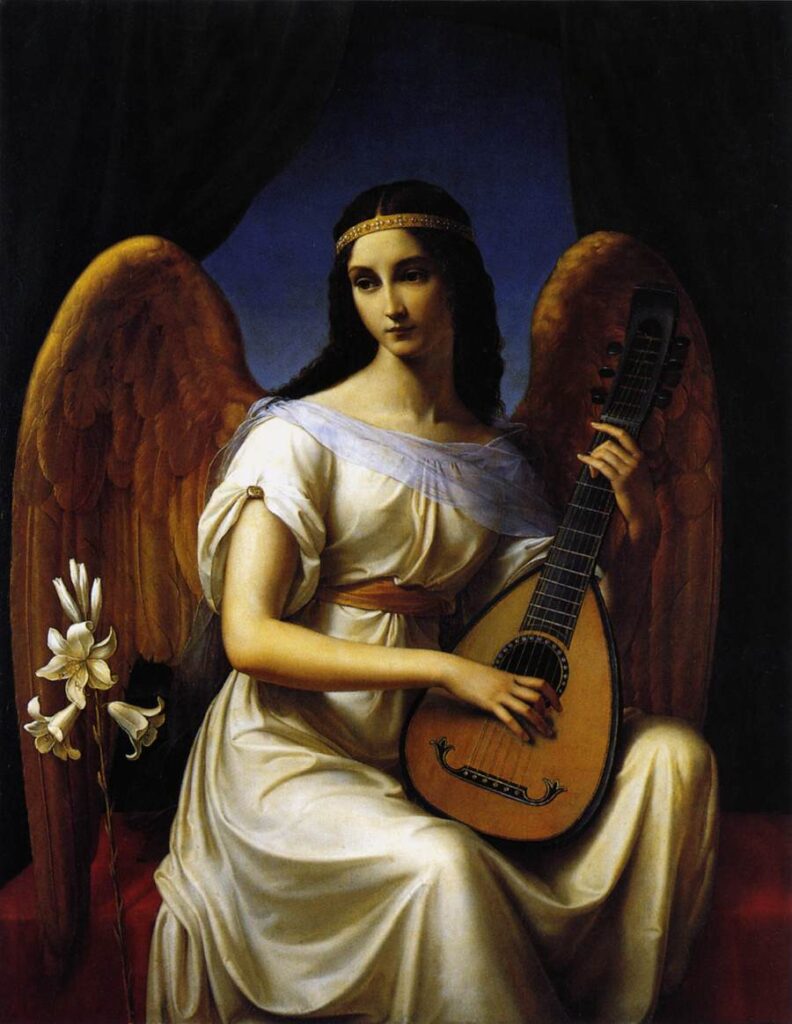
Mignon, from the French for ‘darling’, for ‘cute’, for ‘small beloved thing’, is a character from Johann Wolfgang von Goethe’s novel Wilhelm Meister’s Apprenticeship, published in 1795-96 in German. She is a child kidnapped from Italy and raised almost as a servant, longing all her short life to return to the land she was taken from. She never makes it back. By the time this bust was likely carved, she had become something of an obsession across Europe, turning up in operas and paintings and parlour songs. The Labubu of her time, if you will.
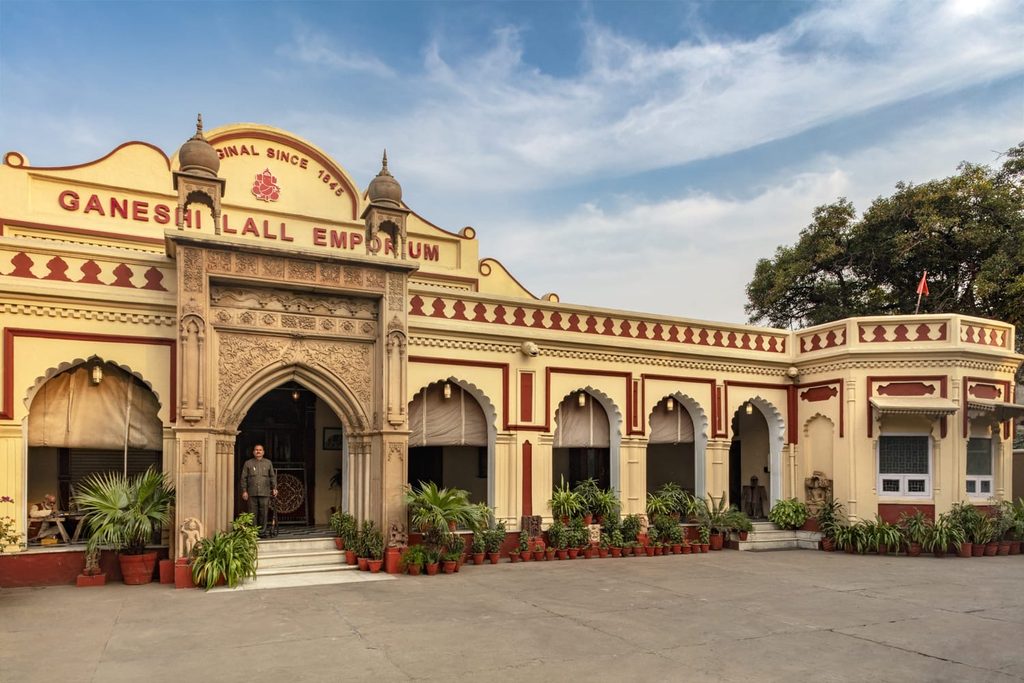
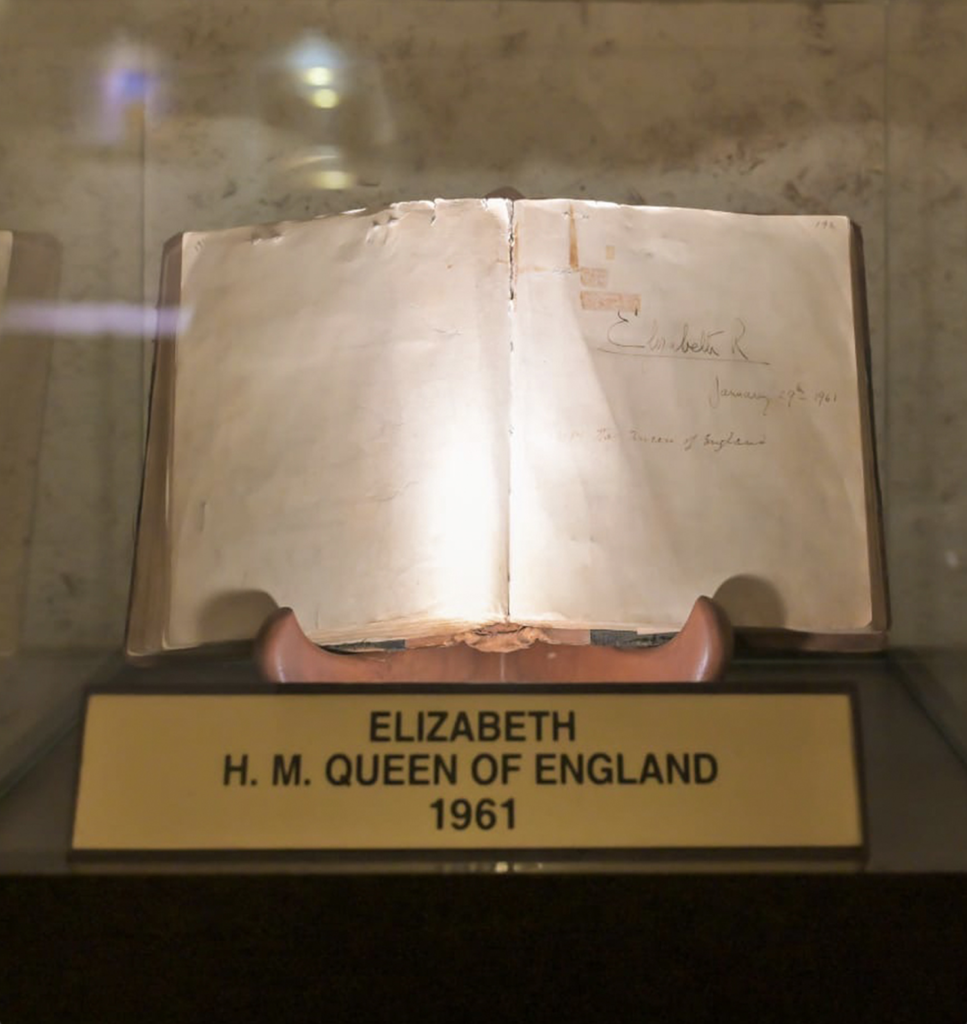
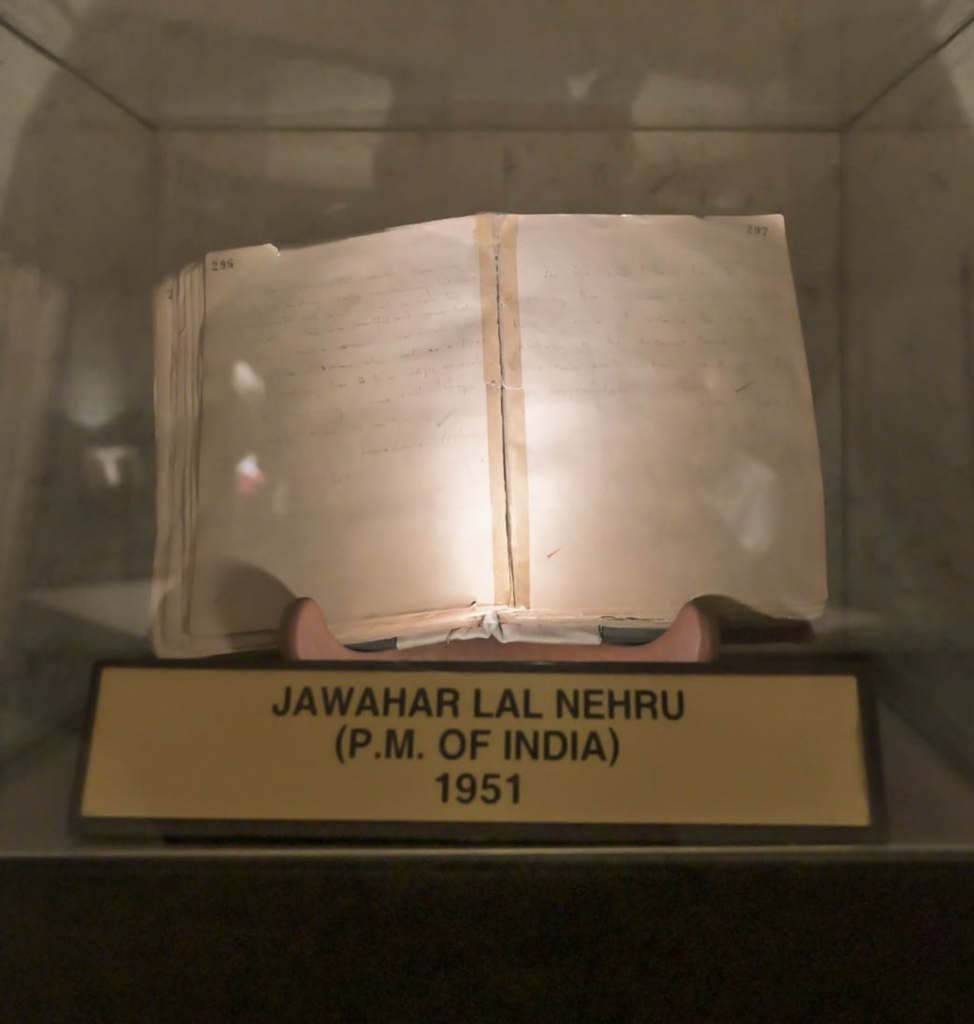
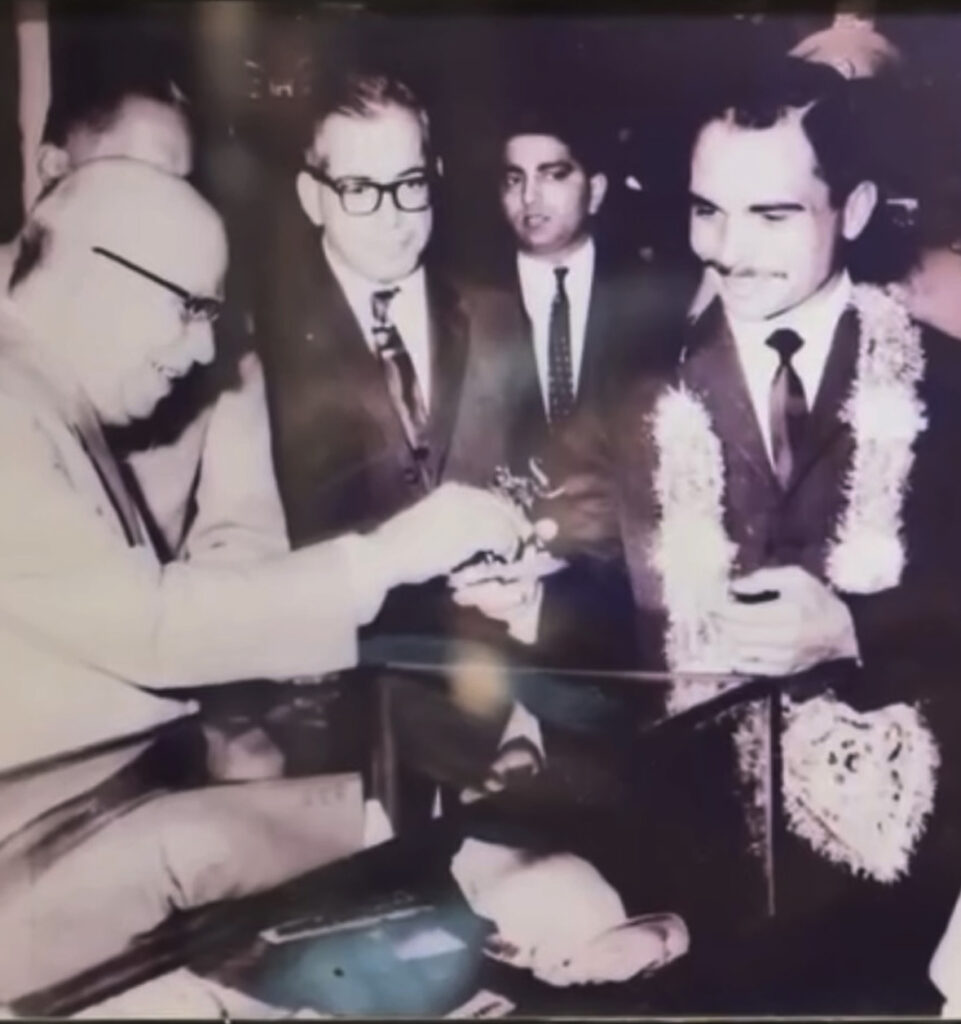
For most of my life I never bothered to wonder how she ended up in our house. When I grew some interest and found out that she had been in our family since the time of my great-great-grandfather, Sri Brijmohan Lal, I assumed that he must have seen her in a European drawing room and wanted the same. He travelled often, so I wondered if it was a mimetic desire to have what the British had, to display it at your entrance so everyone who visited would understand that you too moved in those worlds. Mignon was displayed in our family’s tiny in-shop museum. Ganeshi Lall and Sons, established in 1845, an antiques and jewellery shop in Agra that has, over the decades, been visited by Queen Elizabeth, Prince Charles, Jacqueline Kennedy, Shahbanu of Iran, and a steady stream of European travellers. I assumed she must have invoked some sense of homeliness in them, a familiar European face among the marble and the silver
But my investigative research, aka speaking with my father’s uncle, Mr. Gyanmohan Lal – Brijmohan’s grandson, who as a young man had accompanied him to buy Mignon in the 1960s – revealed something more ordinary. She was just a part of a lot. A few items acquired together from a local vendor for the small museum my family kept inside the shop. Nobody chose Mignon specifically. She was simply not not-chosen. My grandfather’s generation worked mainly through vendors and dealers who imported such pieces into India. So there was no particular reasoning for why she was bought in, just that she came as part of a lot.
But she stayed. Survived it all. Through the first “partition”, as my family calls it (the word borrowed, perhaps too heavily, for what was really just the dividing of property and houses), when the assets of Brijmohan Lal’s family were divided and went to my great-grandfather Hardwari Lal ji’s family. And then through another, when my grandfather, Inder Mohan Lal’s family received her. Through the years when my father’s and his two brothers’ families lived together, twelve of us under one roof, Mignon stood at the main door, watching everyone come and go. Through my cousin and me learning to avert our eyes after dark. Through the second “partition”, when the three families separated into different houses, she went to our chachu’s house, and Sakshi and I stood there trying not to look too relieved.
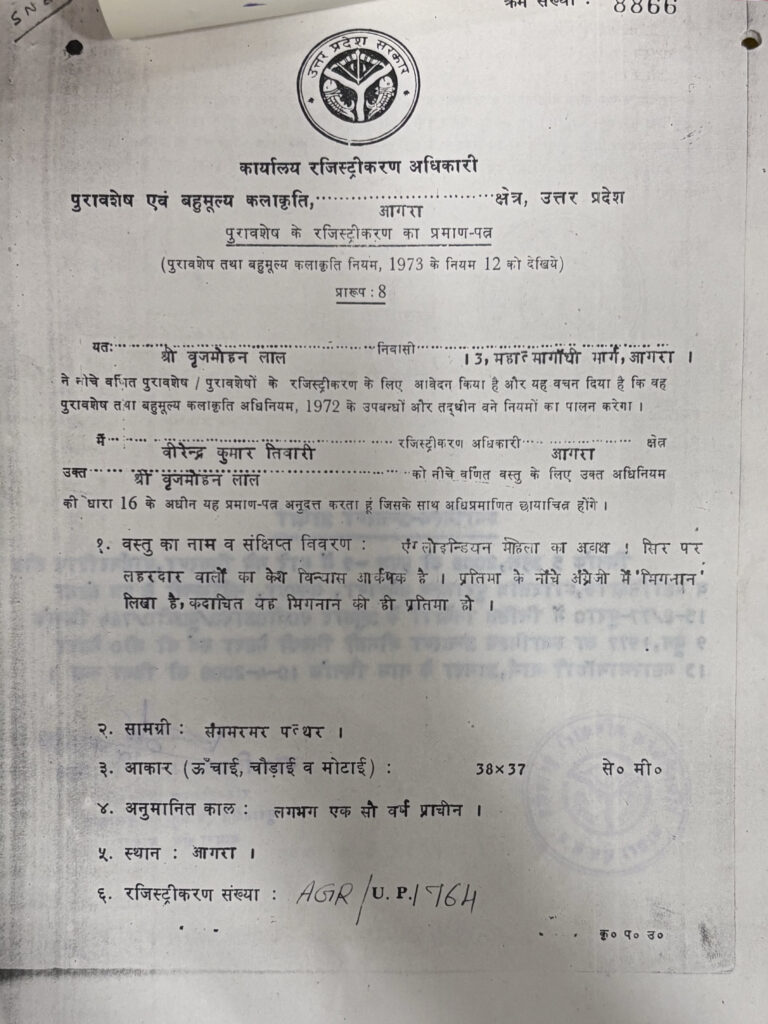
Mignon survived all of it without anyone particularly wanting her to. That is what I find myself pondering over now. My father, Vishesh Mehra, got all of these artefacts we had at home registered under the Antiquities and Art Treasures Act. Some of the other objects in that registered collection, the Vishnu sculptures, the Jain figures, the Shiva, had a reason to be kept. They had devotional logic and cultural weight that I can read into four generations later as well.
Mignon had none of that. She was a marble woman from a German novel that nobody in my family had read, bought as part of a lot, placed at a door, and never moved. She persisted through sheer dormancy and mild, unexamined fear.
I think about this when people talk about preservation and heirlooms. Mignon has market value, she’s a registered antiquity, marble, a century old. But she has no attachment. Nobody loves her. Usually, we assume heirlooms are the things we’re attached to. Mignon is the opposite, valuable but unloved, and she survives anyway. So maybe survival isn’t about either value or love. Often what we choose to keep holds no logic, just years of being within familiar walls. Most of what survives in a family may have no grand reason. The reason for their survival ends up being the fact that they have witnessed so much. They know too much. Can’t be rejected now.
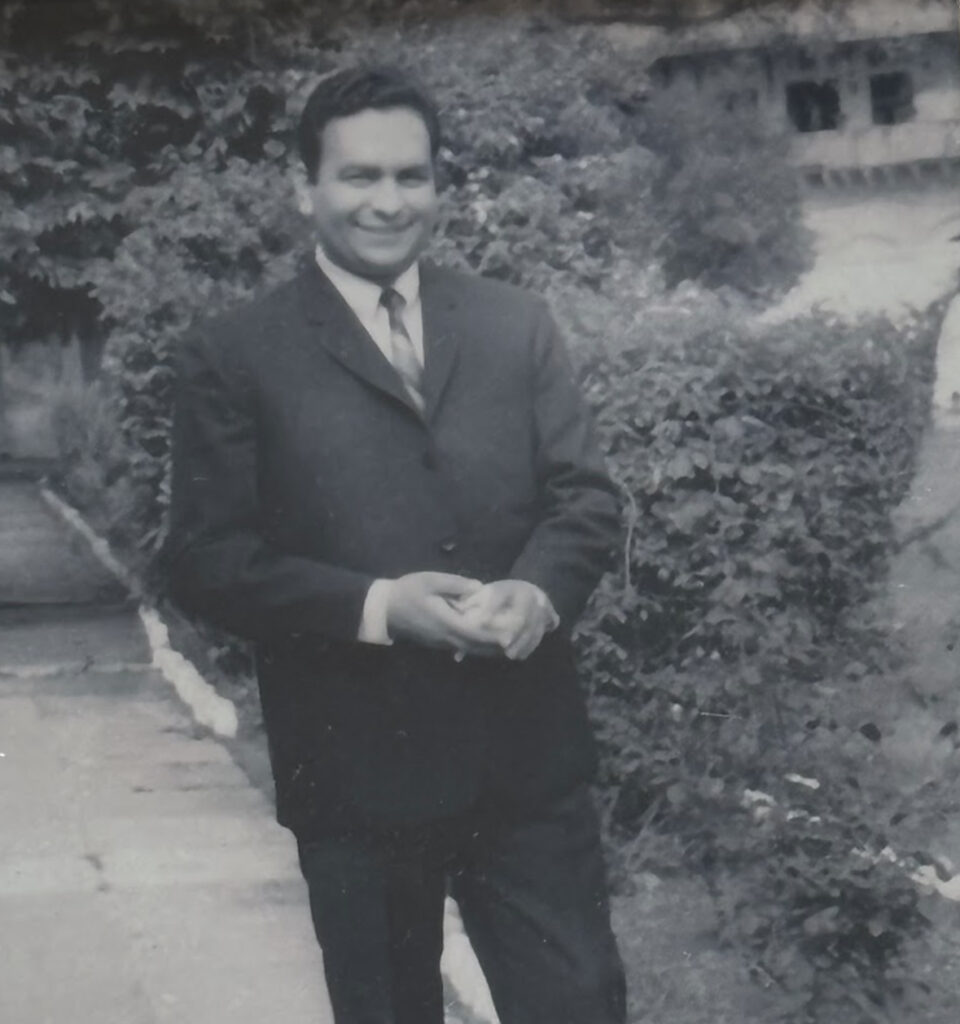
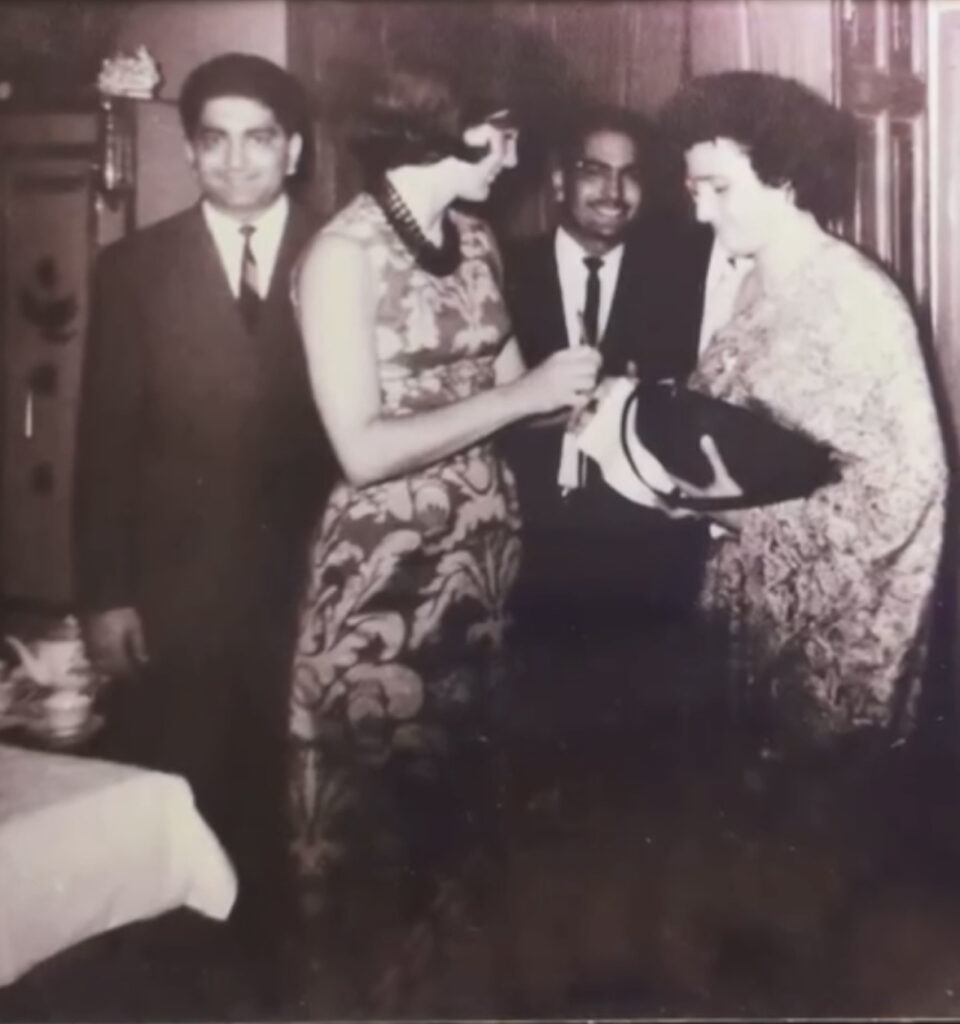

Perhaps we like to think we choose our objects deliberately, we curate, we display intention. But maybe in fifty years the little figures we queue and pay too much for today will be exactly this, sitting at our great-granddaughter’s door, unexplained, mispronounced, frightening a child, kept only because nobody got around to letting them go. As for Mignon, she remained an outsider in our house full of Indian artefacts. She is, after all, a character who spent her whole life longing for a home she never reached.
I came in knowing absolutely nothing about the subject and honestly, artefacts have never been something that caught my interest. But reading this felt like a breath of fresh air. Loved how you wove together storytelling, historical context, and philosophy to make a rather compelling point: just because something is archaic doesn’t mean we need to force meaning or value onto it. Sometimes, things can simply exist without needing to be glorified. Really enjoyed this. Awaiting more articles in the series ✨
What a story
Really enjoyed this and excellent writing style.
In Jerome K Jerome’s Three Men in a Boat he ponders adjacent sentiments. How one generations utilitarian objects lose their context over time and become cherished antiquities for future generations
Wow great loved the way u have expressed and linking with historical event is remarkable keep it up ❤️hoping to read more such articles