TEXT AND PHOTOGRAPHS BY HIRA. M. ABRO
WITH INPUTS FROM KHALIDA ZAREEN AND KHALIDA NAHEED
Karachi, Sindh, Pakistan
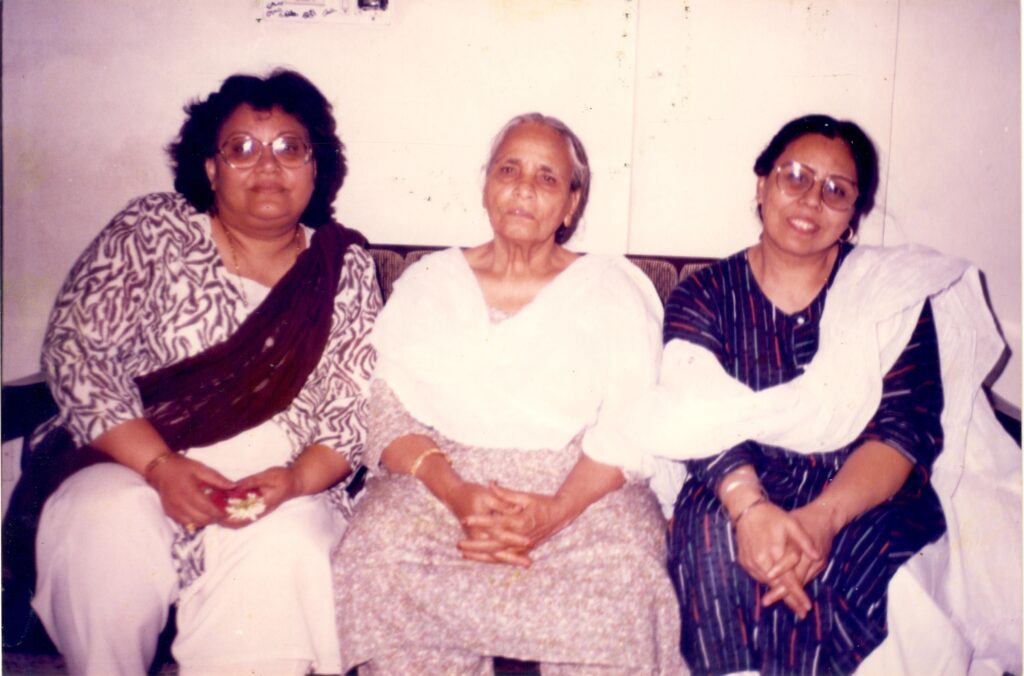
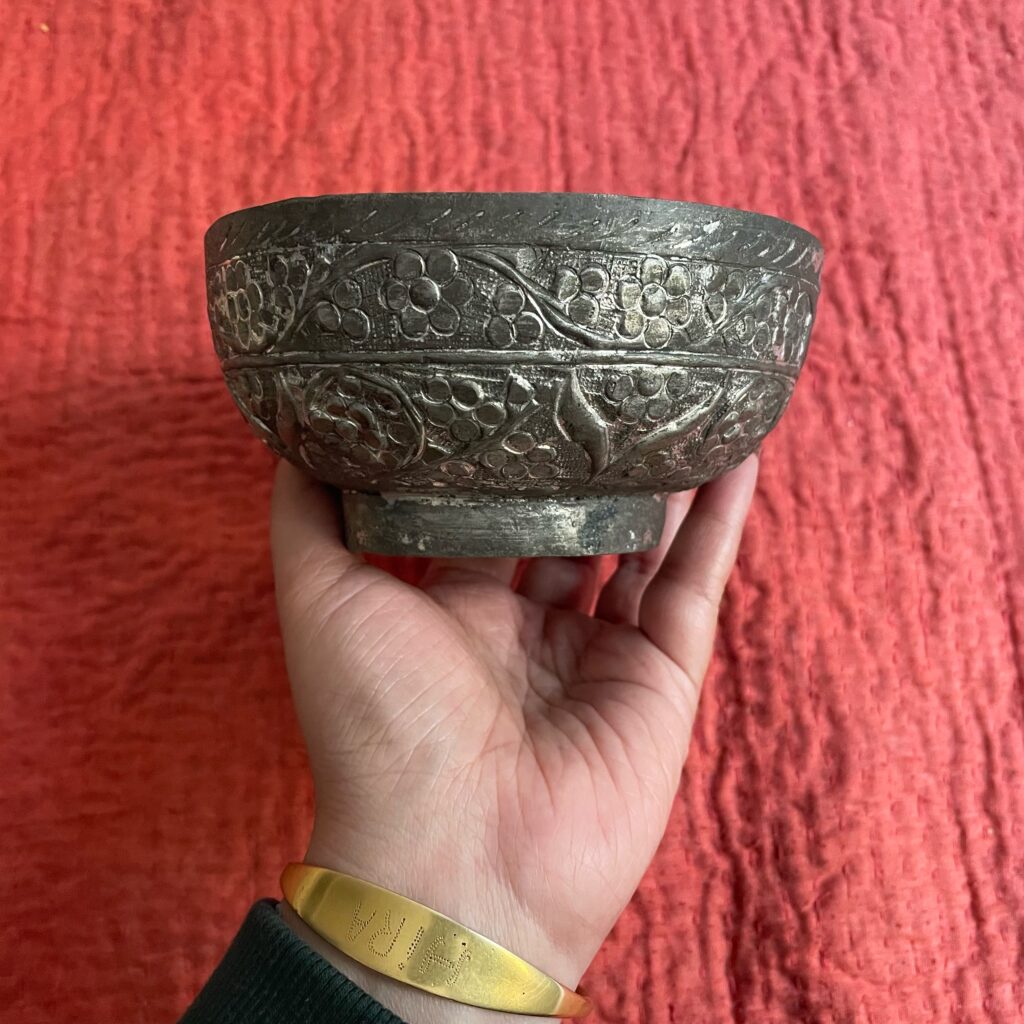
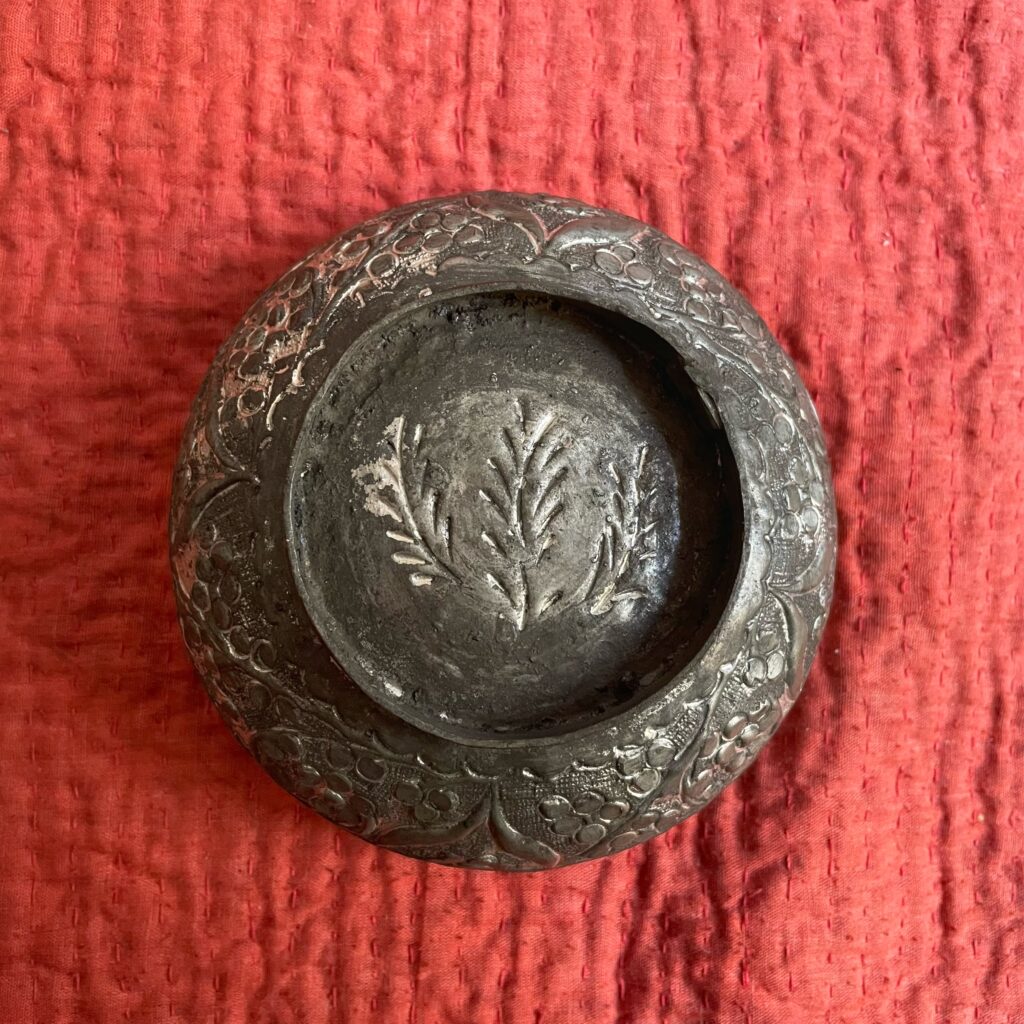
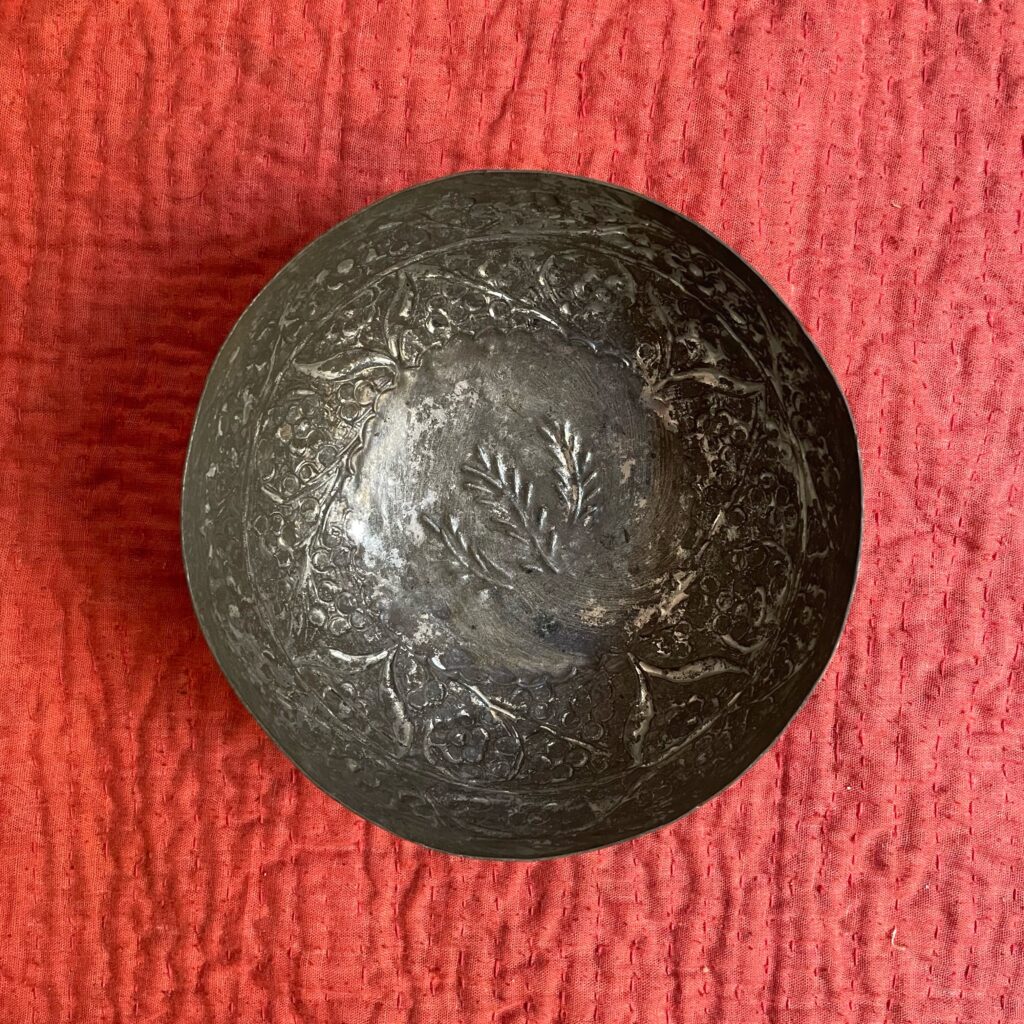
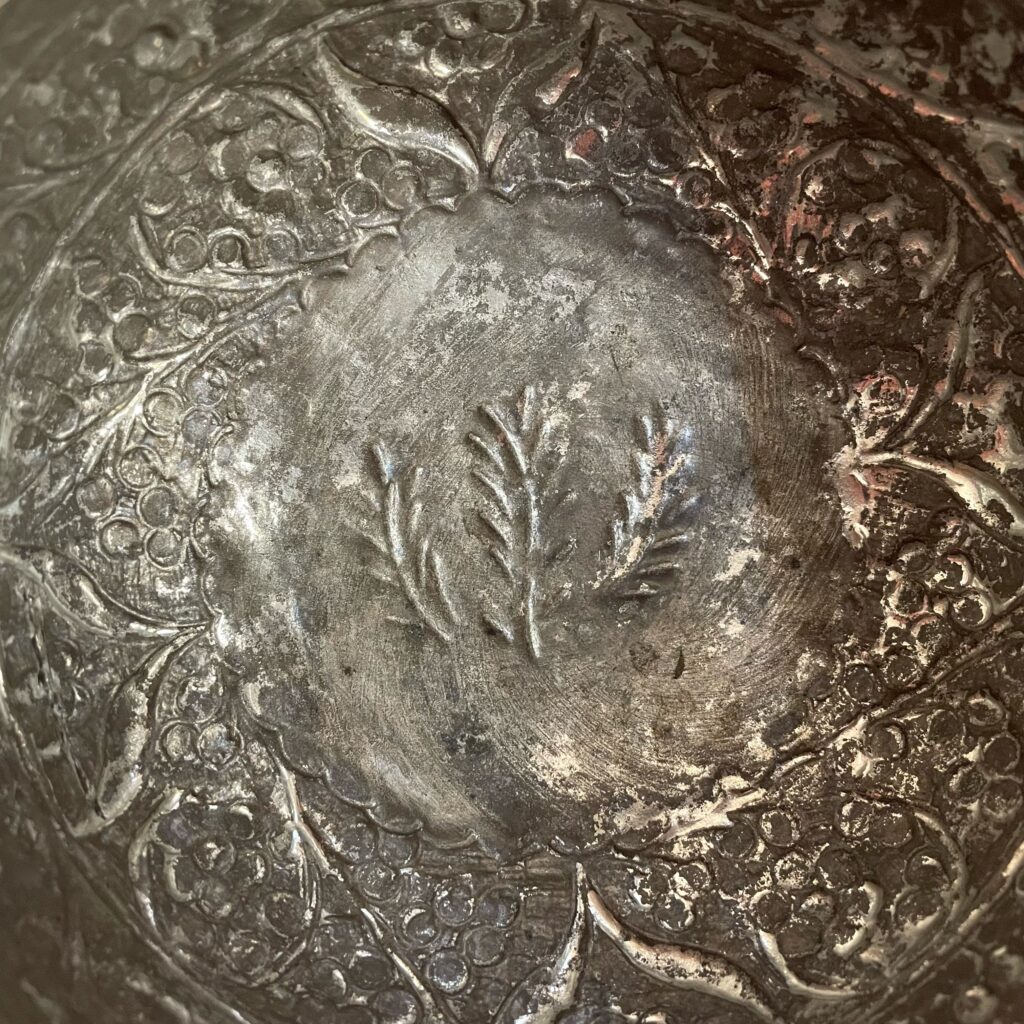
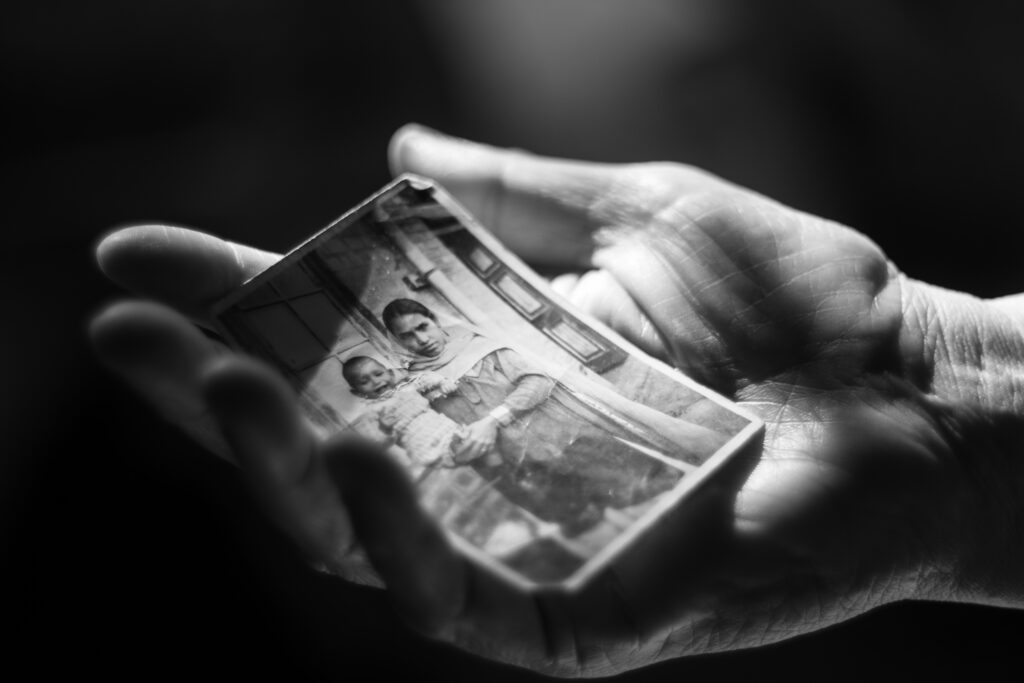
When an object witnesses the largest human migration in history, it ceases to be ordinary. Carried from one place to another across a manmade border in 1947, it absorbs the events of Partition and migration. In the case of my maternal grandparents, the objects were a framed portrait of my nana, Syed Muhammad Ahmed, snapped in Delhi somewhere in the 1940s, his personal diary now lost, and a silver drinking bowl. There was a photograph of my nani, Razia Ummul Baneen, holding her first born, my uncle, in her arms. The family also carried a folding wooden chair, a sewing machine, its table and motor, some clothes, and a tarazu – a medicinal scale and weights – belonging to my great grandfather. All these made the journey from Delhi to Karachi.
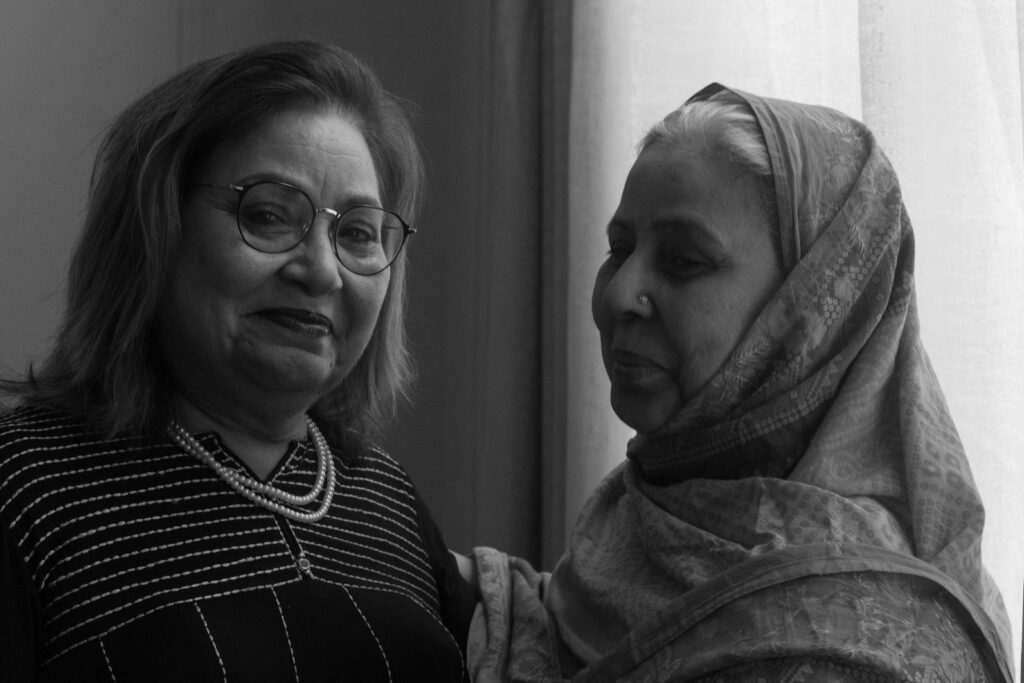
Having traveled through time and bequeathed as memory, these objects became footprints into my maternal history. I remember the quiet afternoon when I asked my nani specifically about the diary that she kept in a safe-lock in the cupboard. As she picked up her unfinished embroidery, continuing to make neat patterns of flowers, she told me the contents of that diary and to whom it belonged.
“My father was a zamindar and owned land outside of Delhi, and I was the youngest of all my siblings. In our time, back in Purani Dilli, we never use to travel without a doli, a veiled carriage. Our faces were always covered, we used to wear ghararas and tie our hair in long braids. I was young when I got married, and never saw your nana before our wedding day. He was from Lucknow, but later settled in Delhi. He was a fine man, very organized, and that diary belongs to him.”
She unlocked her cupboard and from the safe, extracted a worn-out, dark brown leather diary. I was probably just in grade 2, but I remember being filled with excitement as I sat cross-legged on her bed, watching nani carefully open the diary, her wrinkled hands handling the prized possession of her beloved. She simply turned the pages without saying much. Memory, if not recalled or narrated from time to time, fades away with the passage of time, and so too did my memory of this diary and the conversation with my nani. She passed away in the summer of 2012.
From the very early years of my childhood, the name India resonated with me through these stories. Delhi and Agra were the first one to take shape in my imagination. Just like any other child, I was interested in storytelling, but was particularly fascinated about the history of the region of India and Pakistan. My curiosity only grew with time, as did my questions about India – the places where my family used to live, the streets of Chandni Chowk and Mehrauli, the forts and palaces of old. My nani would offer us small glimmers of these moments from her childhood and I would try to fit them together like a puzzle in my head.
Amidst the tumult of migrating to Karachi, navigating life in a new city after Partition, and nana’s sudden illness and untimely death, many gems of family history were lost. Sometimes, the objects lost their importance, or perhaps it would be more apt to say that the memories associated with them became a painful reminder of the past, and were kept away from daily recollection. The diary must have been one such object, emblematic of loss. Nana died of tuberculosis when he was only 35 years old, leaving behind my 28-year-old nani to raise their five children. My mother was three years at the time, but her eldest sister, Naheed Mushtaq, still recalls the diary and its contents.
She tells me that Abbi [which is what they called their father], use to love poetry. In that diary, he noted down everything from the dates and places of birth of his children, the major events of their life, including the death of all his 5 sisters due to unknown illnesses or news about Partition, appointments, and poetry. To this day, she remembers his handwriting to be elegant. Sadly, the family lost many of nana’s belongings in the old apartment. And then when nani was diagnosed with dementia, she could no longer recall the items she’d brought from India to Pakistan, from her beloved Purani Dilli to Karachi.
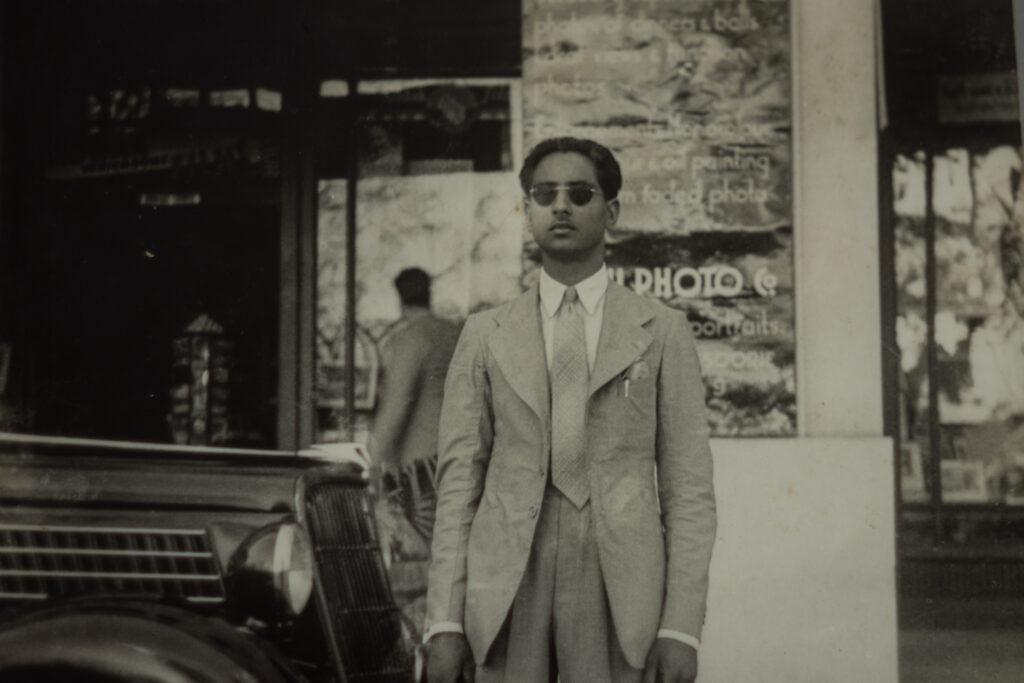
My mother, being the youngest, had very little memory of her father, compared to her siblings. So if I ever asked nani about life before Karachi, both she and my brother would often sit beside me. Together, we learnt about the family’s migration in 1947 during the unfortunate divide of the subcontinent. At the time, my nana was a civil servant working in the Government Trading Sector, and so unlike most refugees, he was given the extraordinary privilege of travelling via aeroplane from Delhi to Karachi. I imagine this must have been the reason the family came across unharmed, when so many others were not as lucky. My aunt recalls how many family members and friends went missing and never reached their destination. I believe the pain of not knowing what happened to these loved ones never truly left my grandparents, and was passed down to the next generation.
In the safety of their migratory route, the family must have been allowed some cargo, since they chose to carry the table-fitted sewing machine and its chair. This became a tool of survival for many refugees like my grandmother, allowing them to restart their lives in a new nation. And in that sense, for me, the sewing machine symbolized both the traumatic displacement as well as resilience of a community.
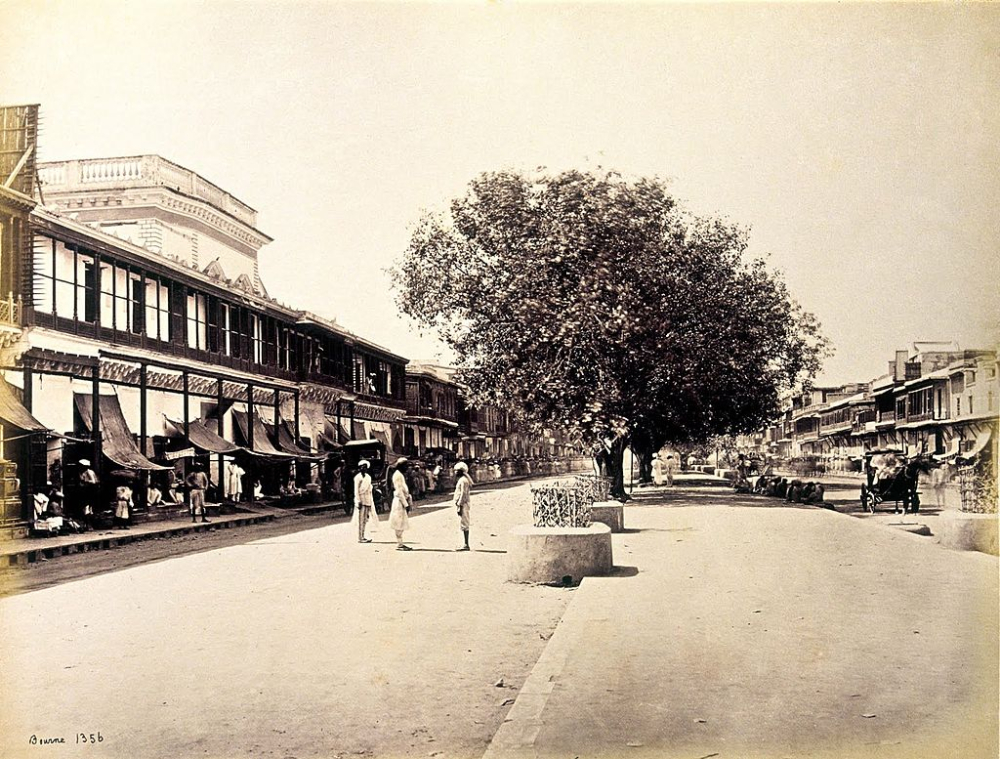
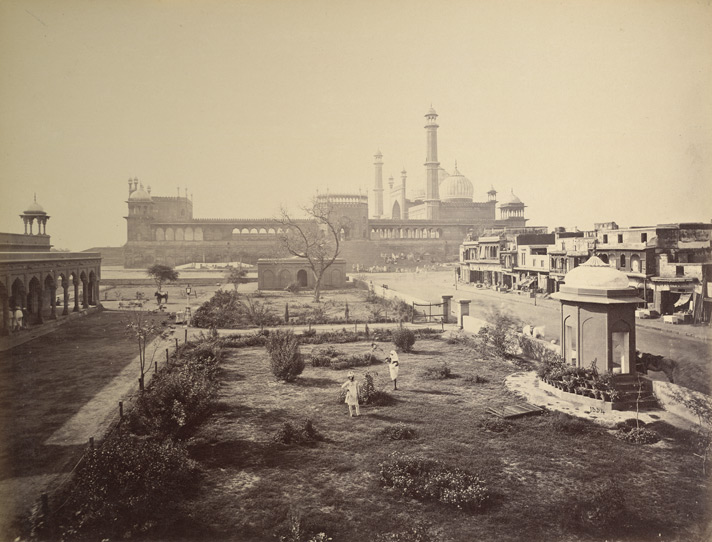
Once in Karachi, they were allotted a government housing quarter at the Martin Road. But even though they were safe, Partition continued to be a thorn-like memory for my nani. Some of her family had stayed behind in the Chandni Chowk area of old Delhi and for a long time, nani used to visit these relatives in India each year, taking a train from Lahore across the border to Amritsar and further to Delhi. My mother recalls a trip across the border when she was around 8 years old. What remains in her mind is Zafar Mahal and its surroundings areas – their relatives were caretakers of the Dargah of Qutubuddin Bakhtiyar Kaki (RA) in Mehrauli, and my mother still has memories of playing in the ruins of the courtyard with her cousins and siblings. There was an old well somewhere near the dargah as well, from where they fetched water for drinking and cooking.
During another one of these visits to Old Delhi, nani took my aunt and uncle to show them where they used to live. Even though she would call herself fortunate for being able to cross the border unharmed and that too, in a plane, like many other refugees, they had left behind an entire life. When they arrived at old residence, a Sikh family greeted them and humbly invited her and the children inside. As per my elder aunt’s recollection, they told them, “this is still your home.”
They sat on the same wooden charpai which had once belonged to my great grandfather, but the silver covers from the foot of the cot were now missing. As was common with the homes that people left during Partition, my grandparents’ house too, was looted. The humble Sikh family told my nani that many of the valuable possessions had be sold – for they too, having left their own home on the other side, were in dire circumstances and needed resources. But I don’t think nani cared for all those things, for it was the house itself that was her most beloved possession – the first home she had shared with my nana, built and furnished with love. It remained cherished to her till the day she died.
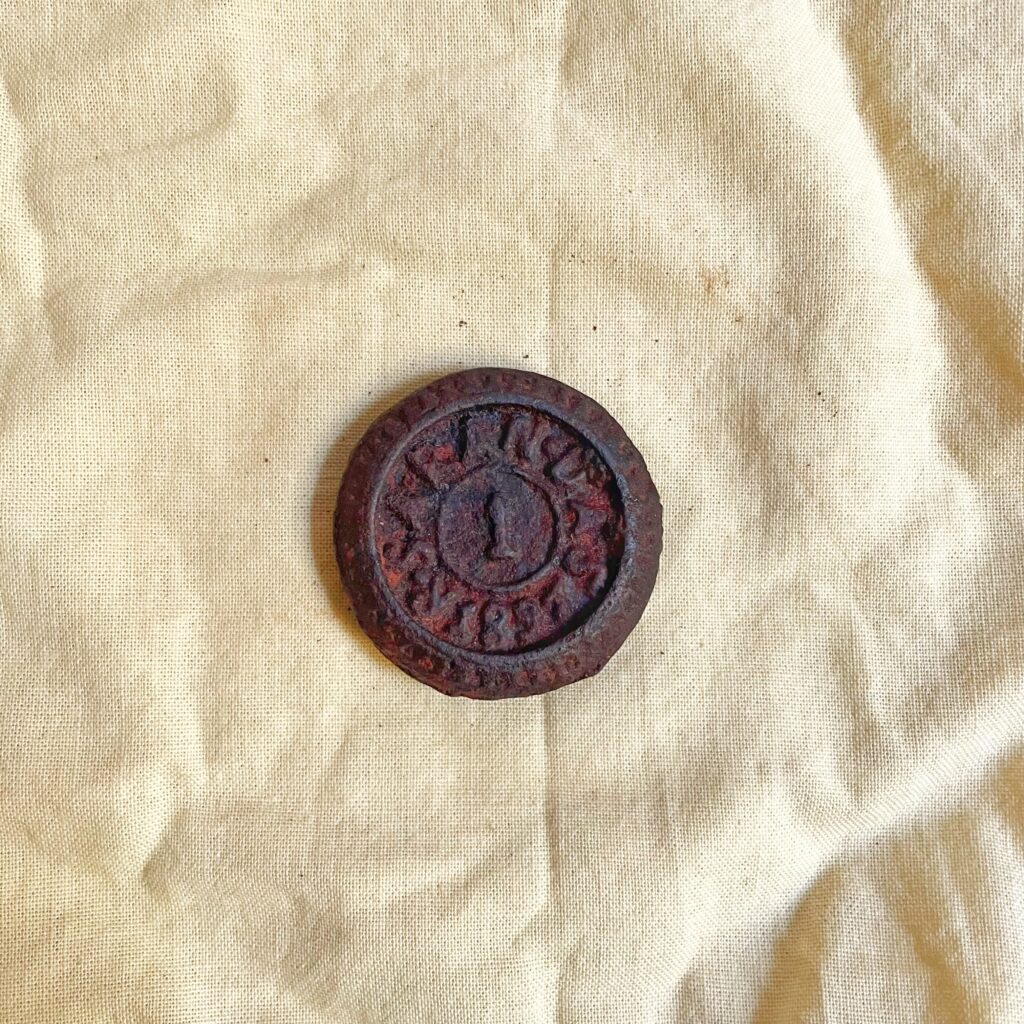
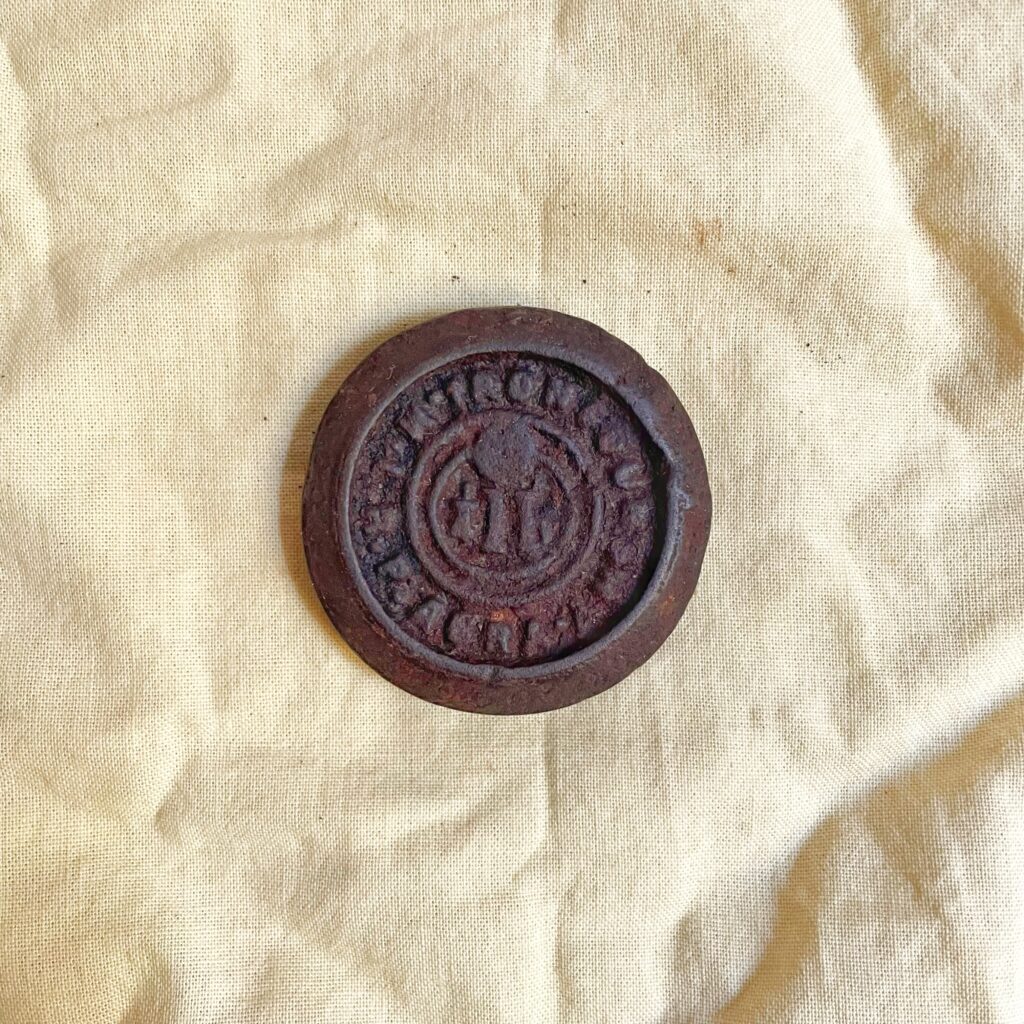
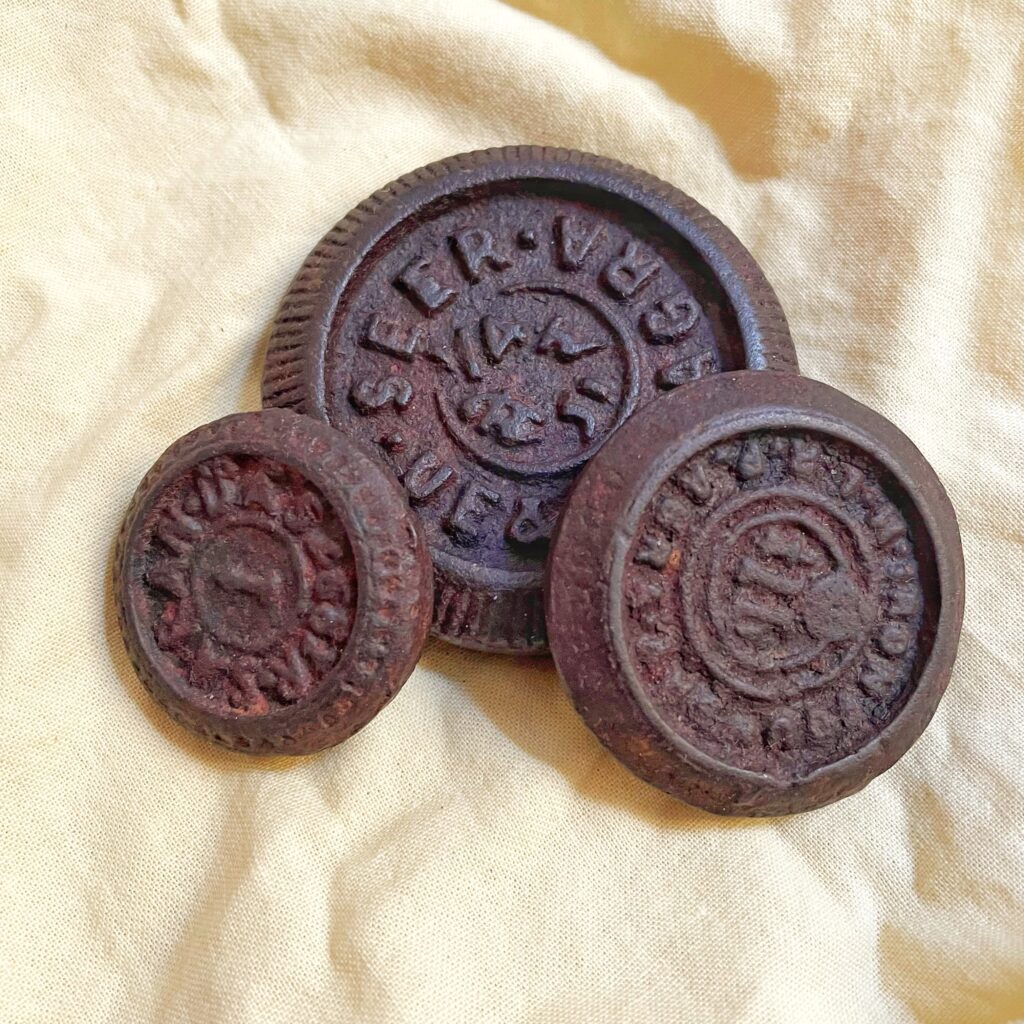
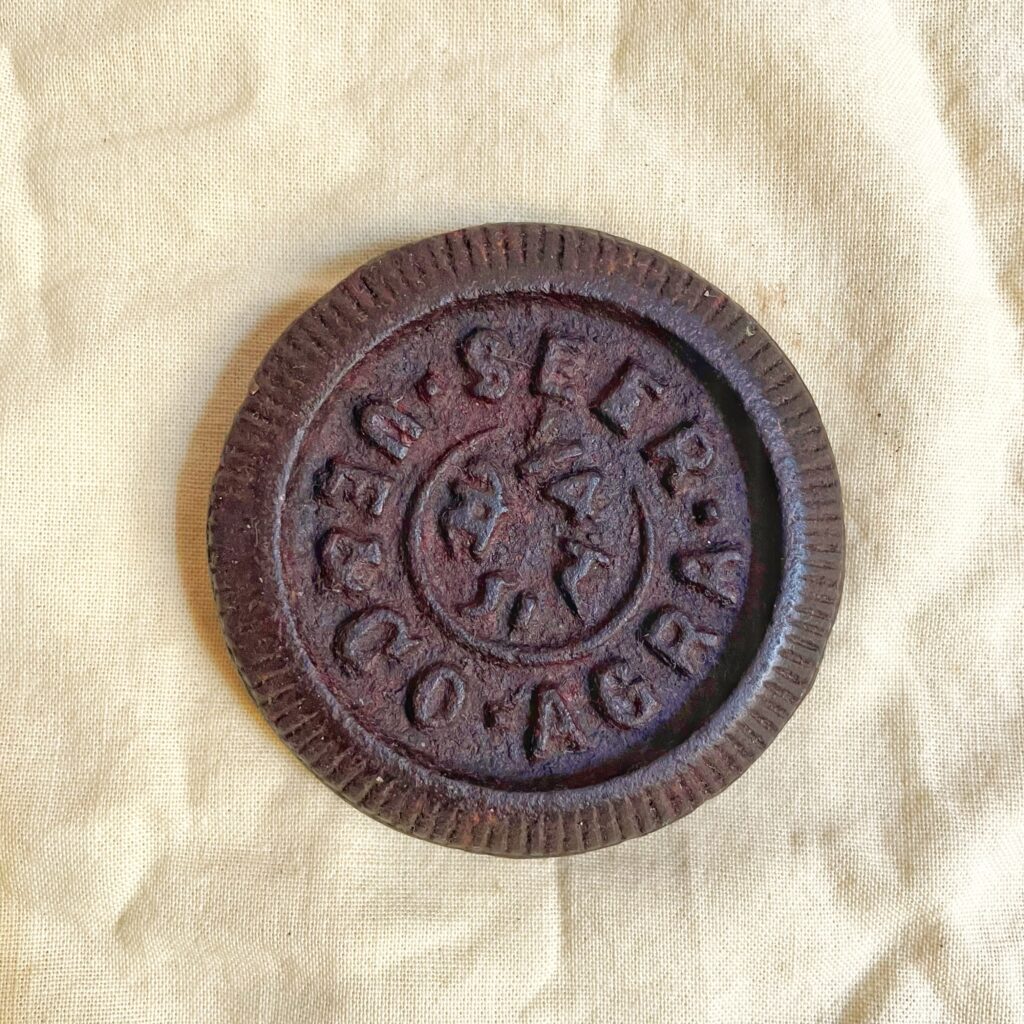
In Delhi before Partition, my nana’s father, Syed Dr Muhammad Ashfaq Ahmed used to be a Hakeem, a physician and practitioner of traditional herbal medicine. The tarazu – scale and iron weights – carried to Karachi in 1947, would have been integral to this work. The unit of measurement on these weights – now obsolete in India, but equivalent to a litre – is a ser. The smallest weight is engraved with the number 1 and year 1891, along with the words K. SARAN. DAS. Upon doing research, I learnt that this person may have been a merchant during the British time. The middle weight is labelled ¼ 1 L along with the words, M.L.R.P AGRA IRON, which meant it was originally from a foundry in Agra. The largest one has ¼ Ser written in Hindi, along with the SEER AGRA UE & CO – again, likely the manufacturer’s initials. It was using these very weights that my nana’s father would have measured herbs and mixed them into concoctions and tonics.
We’ve heard stories about how he also used to teach Quran to the neighbourhood children without charging any fees, or anytime someone was sick, Ashfaq Sahab would give proper consultation. Later in Karachi, with growing age and weak health, he stopped his practice, but always welcomed anyone seeking advice for health-related issues. He also had the knowledge of treating animals, so many would bring their sick animals – on whom their livelihood depended – to him.
After the death of my nana, my nani looked after his father. Though she was not educated, she understood the value of his work, even more so after migration, when the healthcare system had not yet been made accessible – especially to people with little or no means. When he died the very next year after his son, she continued to kept his belongings safe. With time, many of these things were also sold or given away, but she kept the tarazu along with its weights safe, perhaps as a memory. For me, these weights remain a crucial trace of my great-grandfather’s service to his community.
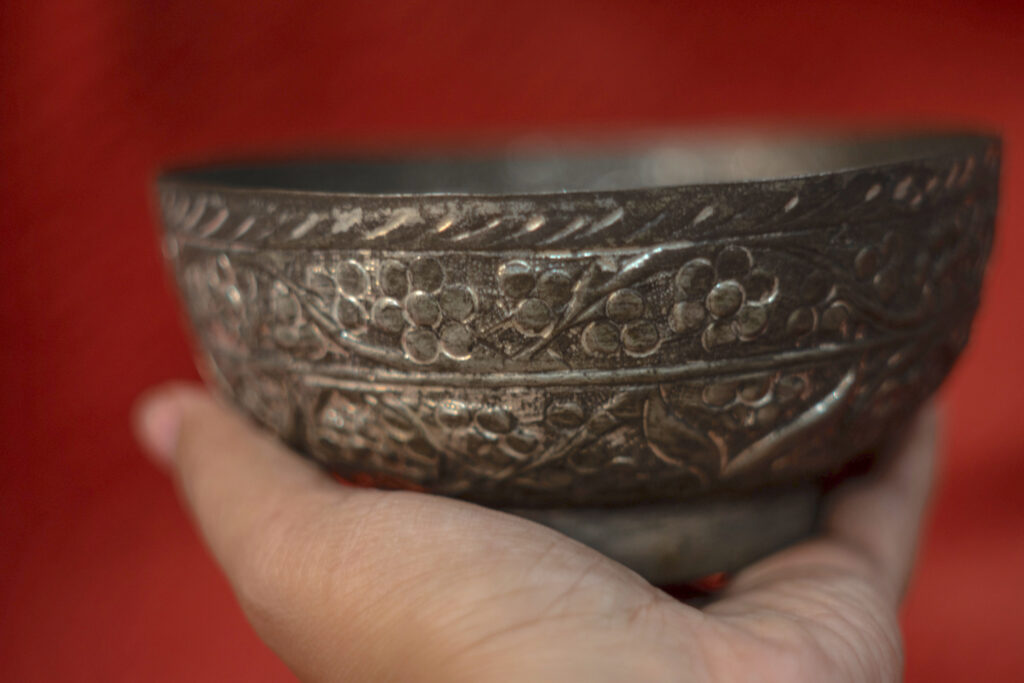
In 2022, ten years after my nani’s death, my mother gave me a light yellow potli that once belonged to her. When I opened it, I found the old iron weights, along with a silver bowl, corroded and withering with time. Though it was just a piece of silver, I felt it more as a living object and couldn’t help but imagine all the places it had seen, conditions it had been in – quenching thirst during difficult times, hot summers, long days, illnesses, loss. With time, just like nana’s lost diary, the tarazu was also went missing when we moved from one home to another. But what was left in my possession were its three weights.
I see these objects as rare and precious pieces, igniting one’s imagination, allowing us to travel back in time by merely holding the objects, or remembering stories associated to them. When I began documenting my family’s heirlooms, the deeper I dug, the more I felt attached to these pieces of my identity. They became my gateway to another realm, as if I was transported to a different era. Whenever my nani use to narrate stories from her beloved Chandni chowk and other places of the past, one moment, her eyes would twinkle with joy and excitement, and at the very next, she fought to hold in tears, but always failed. In honouring these objects, I keep a piece of every ancestor, every face and time attached to them safe.