
TEXT BY JABA SEN MENON, WITH REFLECTIONS FROM VENIKA MENON
PHOTOGRAPHS BY VENIKA MENON AND NAVDHA MALHOTRA
New Delhi, India
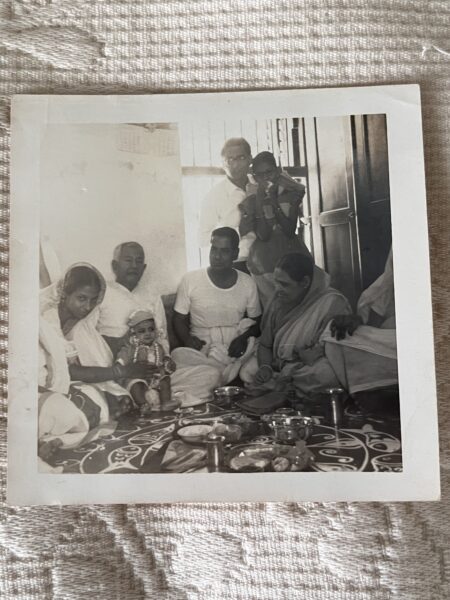
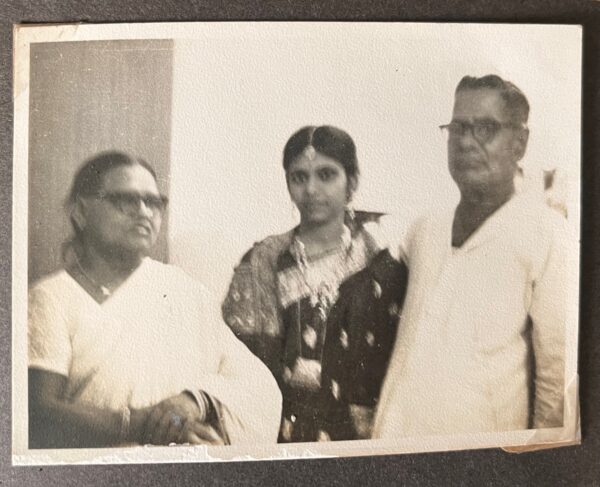
Some of my earliest inherited memories are tied to the carpets stitched by my grandmother, Pushpamoyee Gupta. Though she passed away in 1981, when I was around 15 years old, I have distinct memories of her, and her presence has endured in our family through these hand-stitched, which carry not just her labour but also her time, discipline, and imagination.
She raised seven children, largely on her own, while my grandfather served as a magistrate in Bihar. After my grandfather passed away, she lived with my uncle, a surgeon, in Bardwan, West Bengal. The house also accommodated a private nursing home, making it a place of constant activity. By that stage in her life, many of her household responsibilities had eased, and within this busy environment, she carved out a quiet, consistent space for herself through her work.
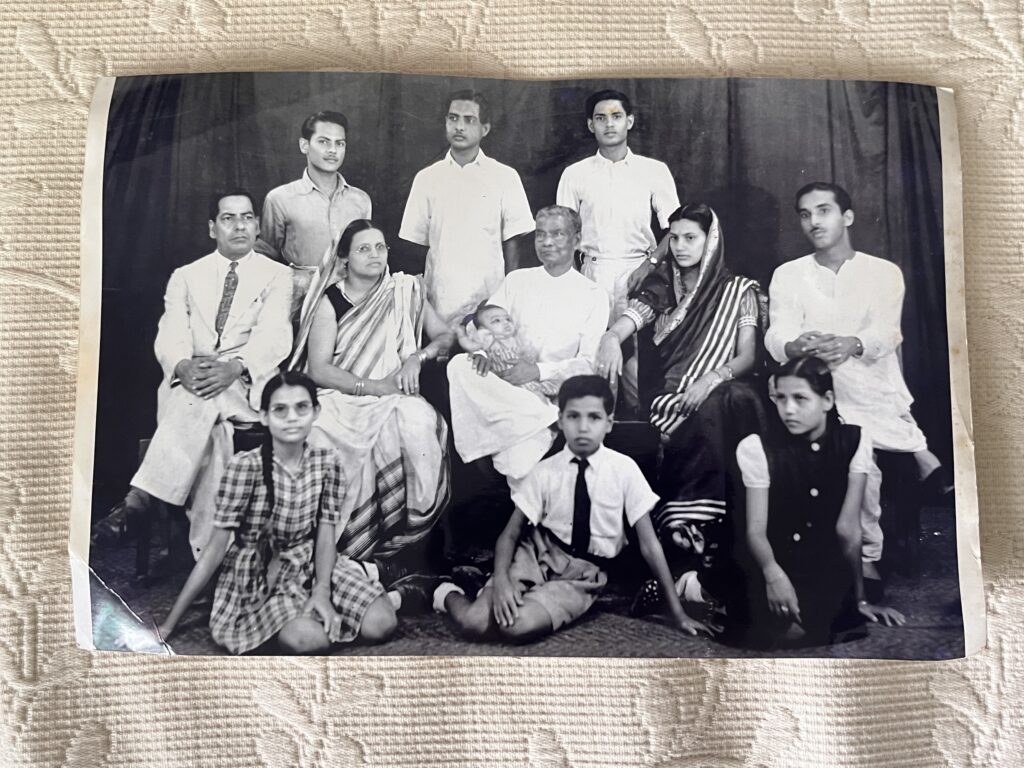
At home, she spoke Bengali with ease and familiarity. She was formally educated and could read and write both Bengali and English, though she was more fluent in her mother tongue. Those who remember her speak of her as a disciplined woman, methodical in her routines and deeply committed to whatever she undertook. This temperament found its fullest expression in the carpets she stitched by hand during the 1960s and 1970s.
There’s two particular memories of her that stand out. I have a few distinct memories of her. When I would walk into the house, she’d often be chopping vegetables for the entire household. I don’t recall her cooking, but she would be there cutting and chopping a pile of vegetables. Another is of family holidays- we went on quite a few vacations with her and the full family during Durga Pujo, where, regardless of where we were, she’d carry her raw jute and thread and cross-stitch these rugs. “She worked on plain jute and didn’t rely on pattern books or digital guides; the designs emerged from her own imagination.” Her eyesight was weak and she had diabetes, so the work was intuitive, a ‘household trait’ passed through her hands.
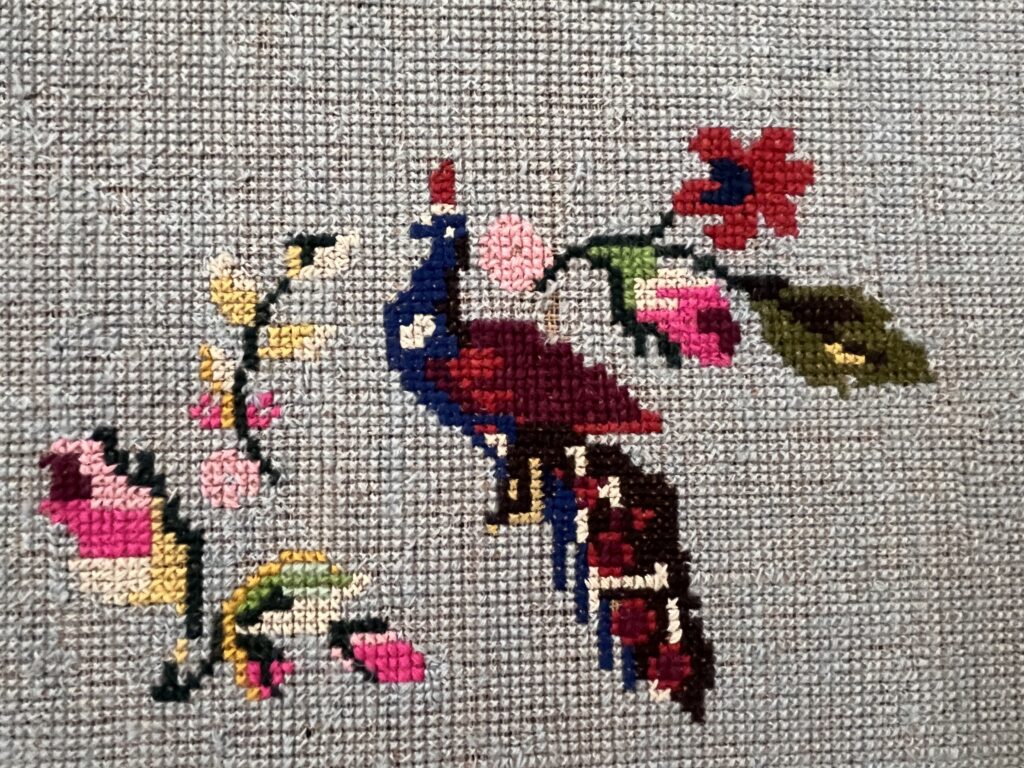
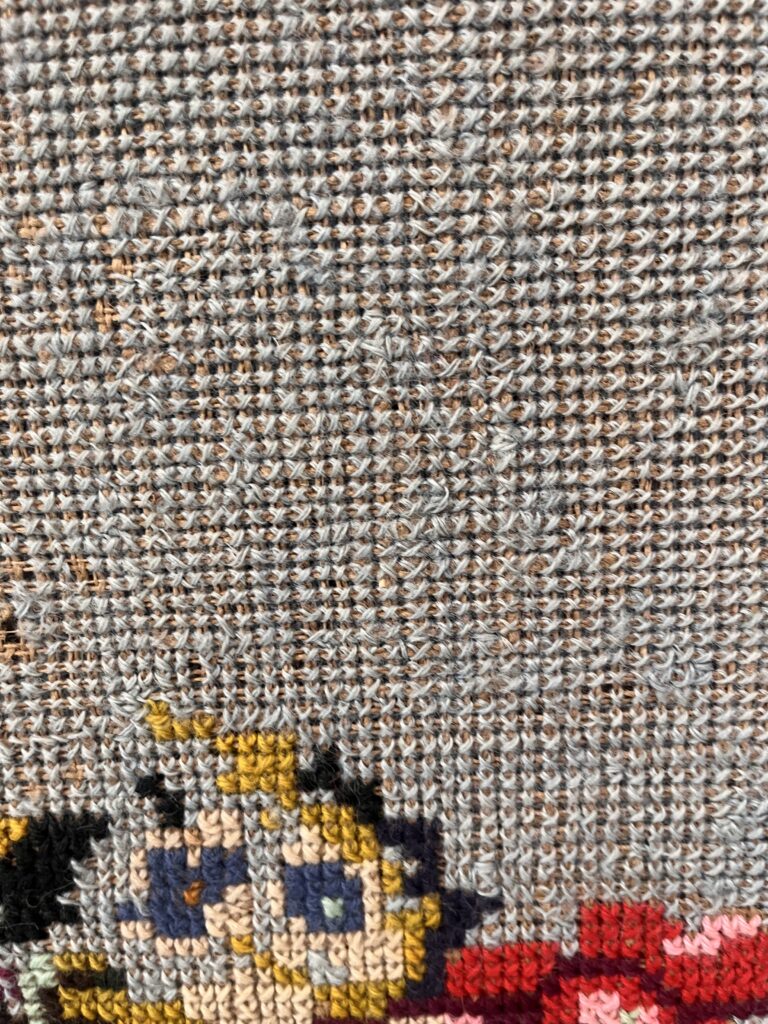
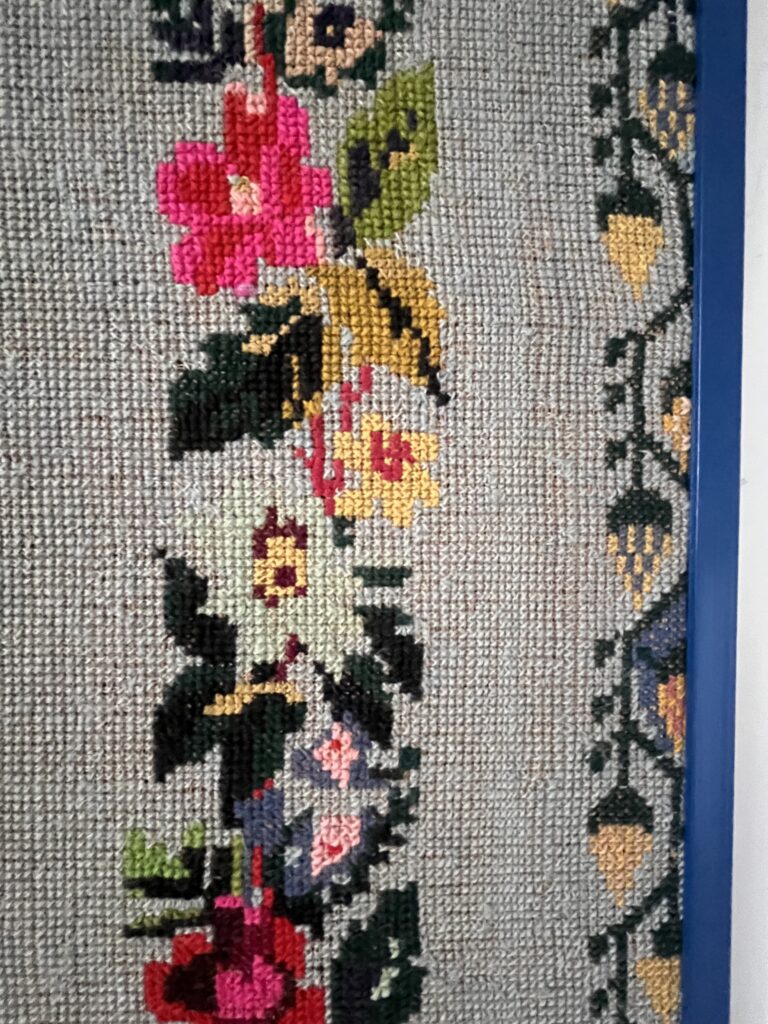
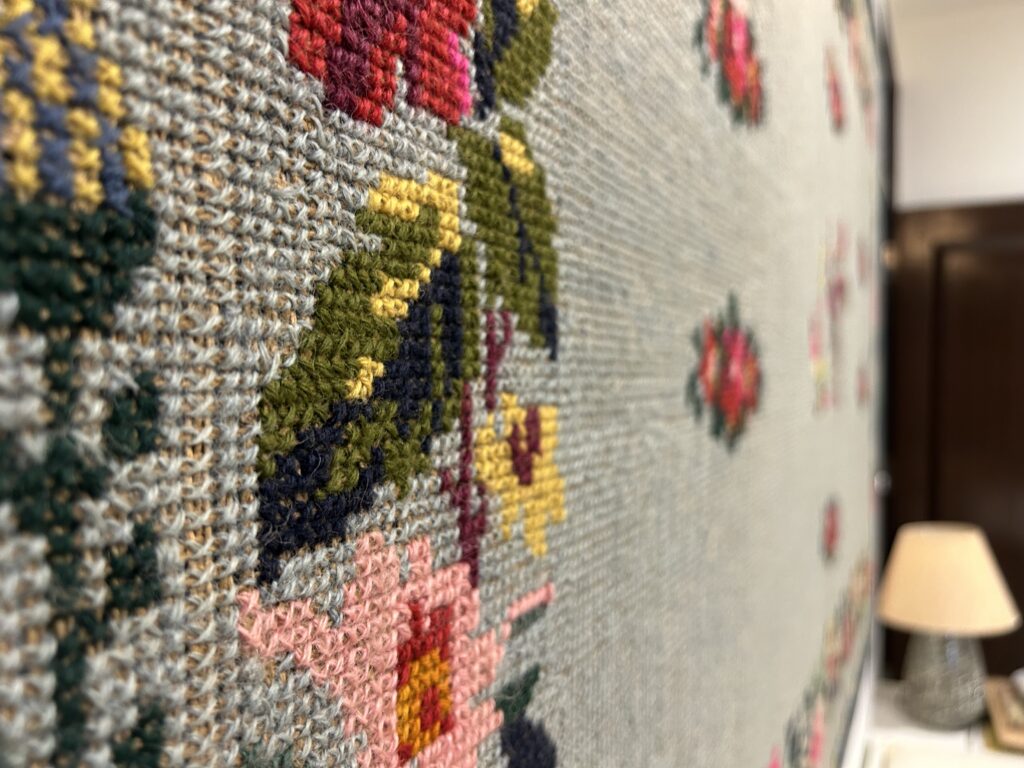
“What I really enjoy about both the carpets is that they are clearly handmade. There are mistakes. They’re not symmetrical, the spacing isn’t perfect, she kind of runs out of space at one point and then squeezes everything together, which all of us, when we’ve written in notebooks, have done when you run out of space on one line,” says Venika, Pushpamoyee’s great-granddaughter. “The colours, the pinks and the blues are also quite contemporary for their time.”
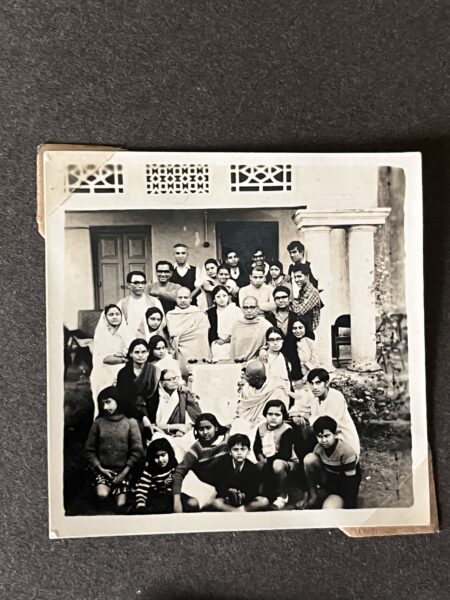
My mother, Reba Sen Mazumdar, was her favourite child, and as her children, we received a lot of love. Whatever little money she could save went to my mother so that she could have a nice life. My uncle would bring chocolates from abroad, a luxury not available in India then, and she wouldn’t eat a single one. She would hoard them in her Godrej almirah, saving them for us until they sometimes passed their expiry date. She didn’t care for the luxury herself; she only cared that her daughter and grandchildren would have it.
“Maybe it was because my parents didn’t have the most harmonious relationship, so my grandmum felt more for her- that she felt that she had to protect her daughter in whatever way she could.”
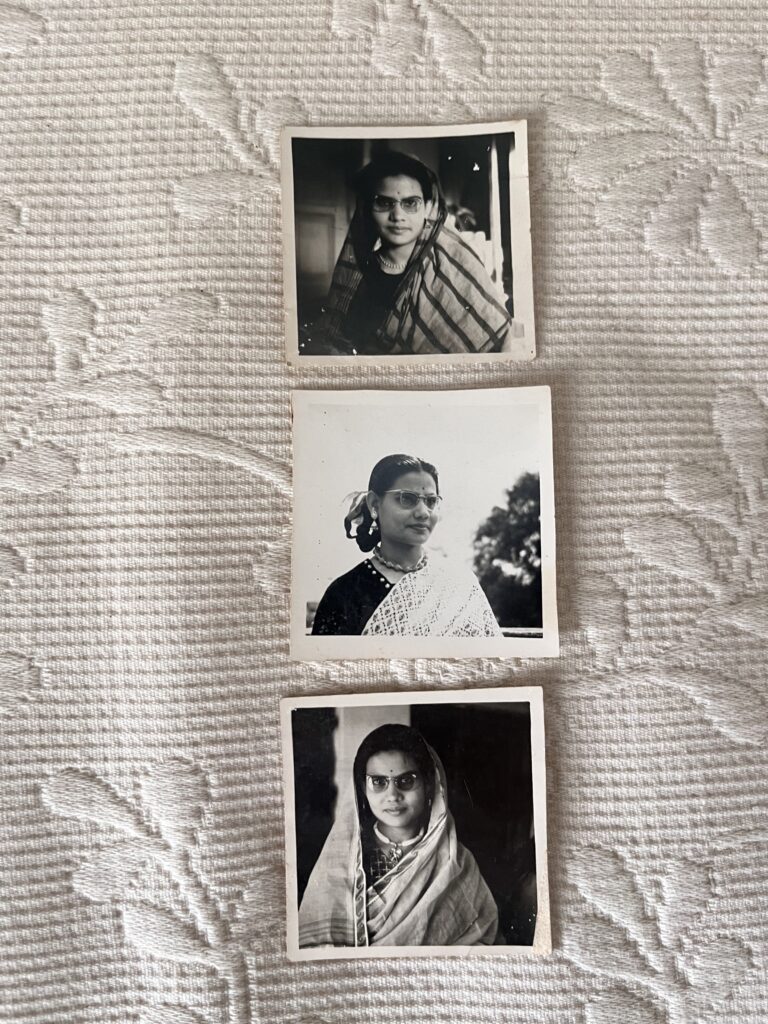
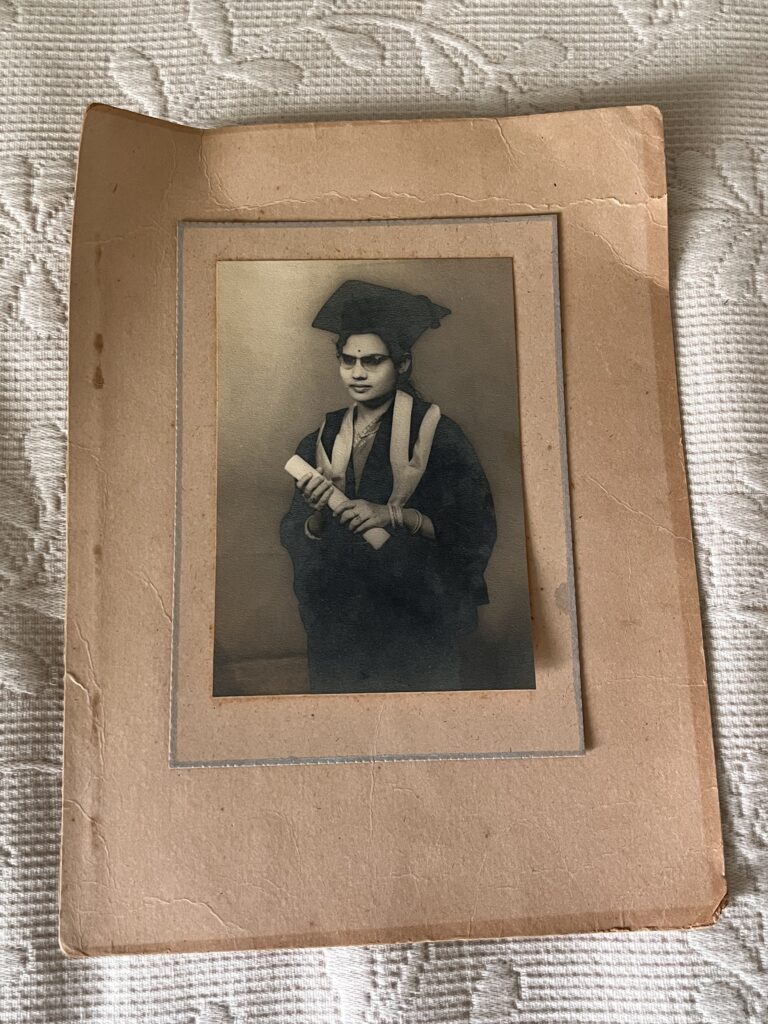
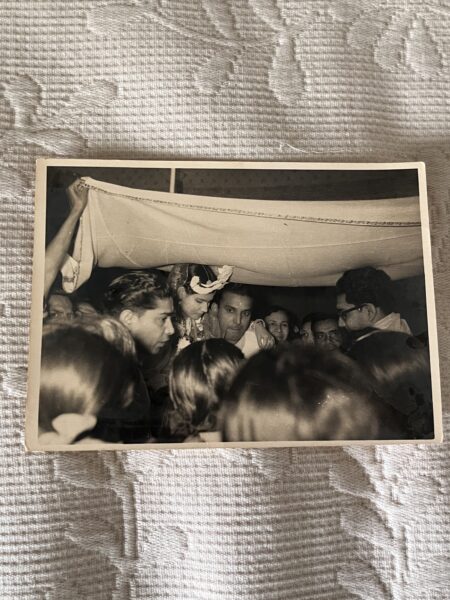
Alongside these carpets, many of the sarees in our family also came to my mother through inheritance, passed down by her mother. Over the years, she accumulated a large collection of sarees, some inherited, others acquired across different phases of her life. Together, they formed a wardrobe that carried personal taste, family history, and continuity across generations. Some of these sarees had been worn by three generations of women in our family. They belonged first to my grandmother, then to my mother, and later came to me after she passed away in 2016. Each carried not only material value but emotional inheritance, moving across bodies and time in much the same way as the carpets.
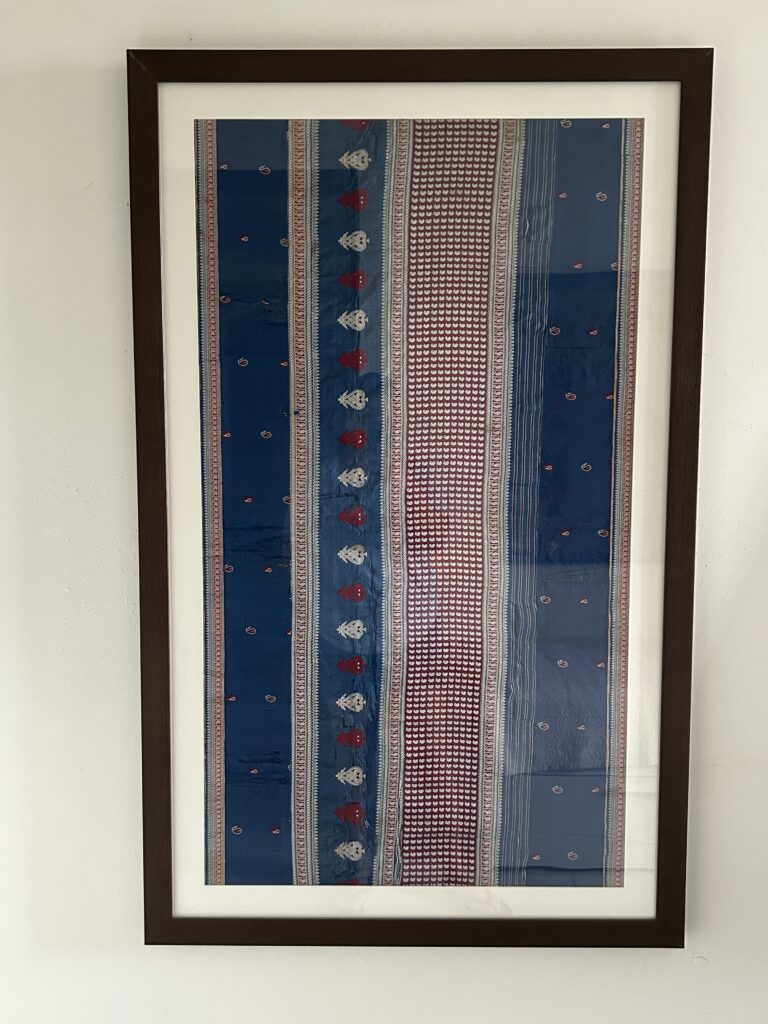
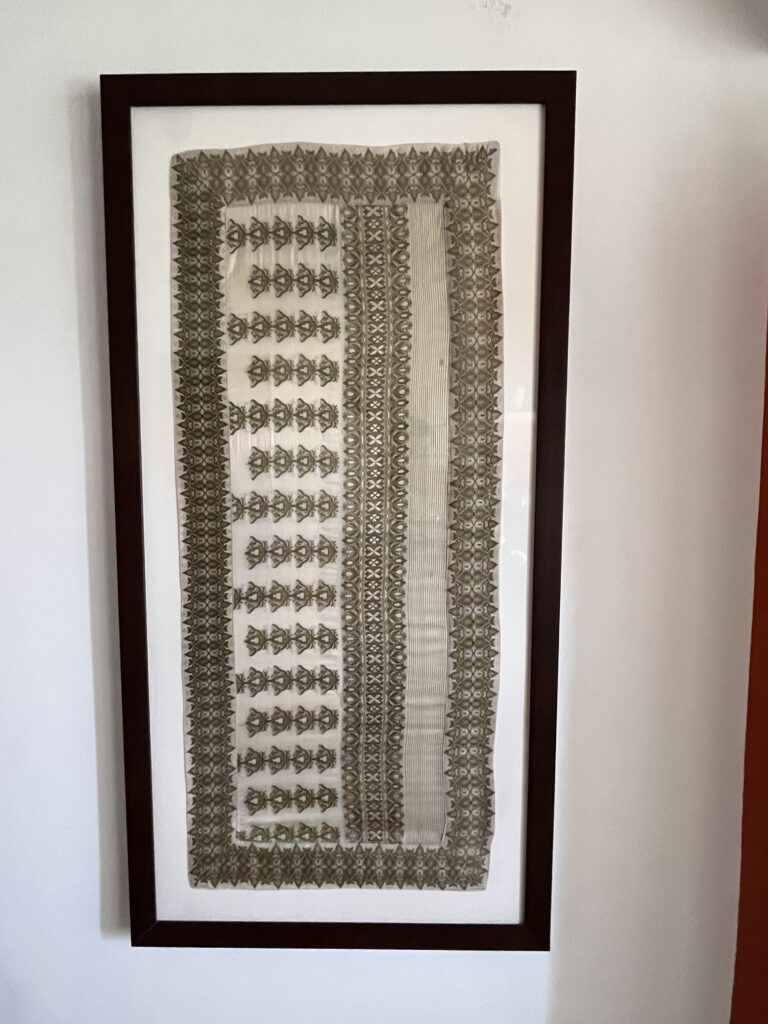
When I was younger, I saw the carpets being displayed on diwans and sofas during family occasions while I was growing up. What stands out is the scale and consistency of her output. Over time, she stitched close to forty carpets, enough to give at least one to each of her children and grandchildren. Stitching was not confined to one room or one house; it was something she returned to whenever she found the mental space to focus.
The carpets were simply gifted when they were completed. There was no need for an occasion. Completion itself was enough. “I don’t know what inspired this hobby of hers, but I think it gave her a lot of joy since so many of my relatives have received one.” I always sort of felt it was my birthright to receive them. It was an unspoken deal that I would get them and in fact my mother passed these two onto me while she was alive.
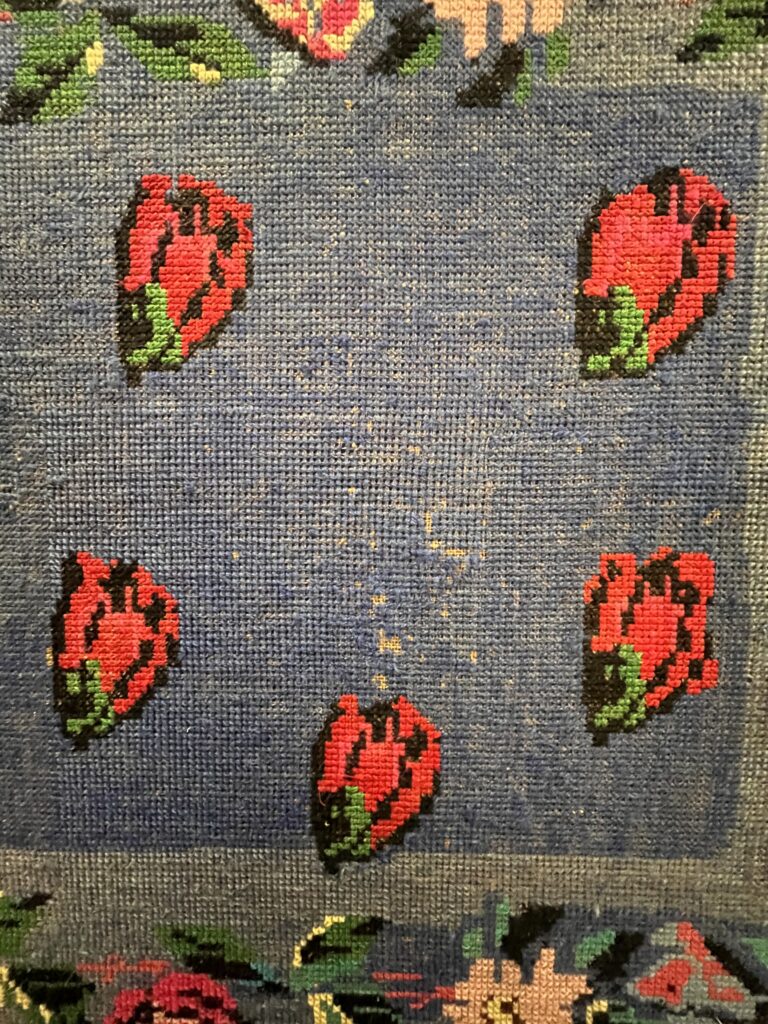
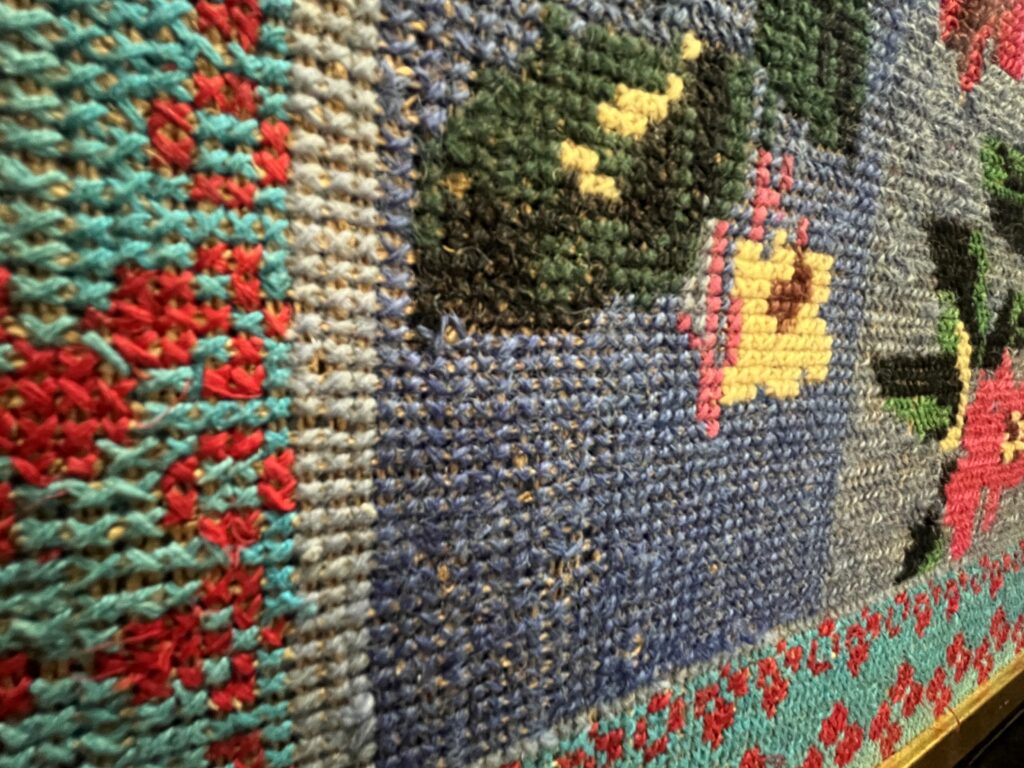
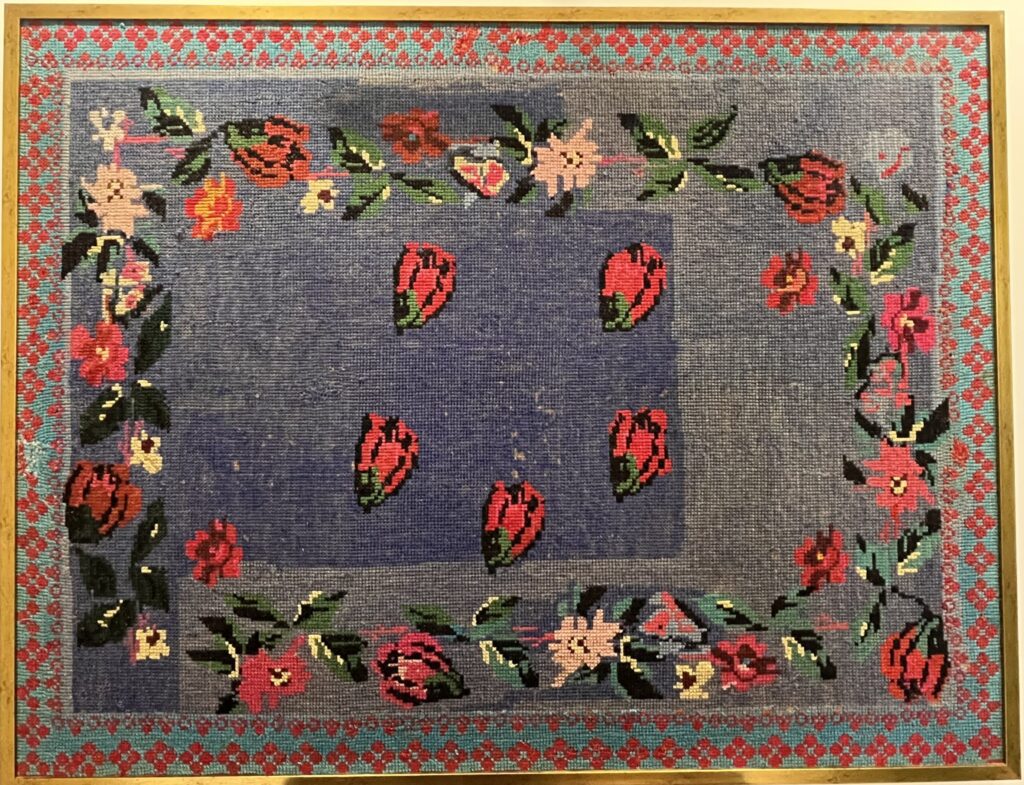
The bigger carpet, with the peacock motif and the blue frame, is 45.5 inches in length and 71.5 inches in width, while the smaller one with the five flowers is 40.5 inches in length and 52 inches in width. “I’m kind of amazed that not only was this avenue available to her but that she was actually able to produce such big pieces… I have no idea how she sourced all her equipment,” adds Venika.
Until last year, when the house was renovated, they remained in storage boxes. Because they were rarely used, they have survived remarkably well. Decades later, they show little sign of deterioration. Although the colours are fading a bit, they remain strong, the stitches intact, and the jute firm.
“I think it was just a happenstance that my mom did not give these away. She loves getting rid of things and I just feel very grateful that some of this we were able to accidentally preserve”, adds Venika.
During the renovation, I had certain objects I didn’t want to put back in the bed box. Either they would be discarded and given to just anyone who is interested, or they had to be used well. I’m very grateful to the designer who worked with us briefly and encouraged us to use these carpets and sarees as part of the home. Eventually, we made the decision to frame these carpets and hang them on the walls of our home. We chose not to use glass, so that the texture of the raised jute and the stitches would remain visible and that they wouldn’t become too heavy.
We found ourselves asking similar questions with the sarees as well. After my mother passed away, we inherited hundreds of them. Though the colours, patterns, and threadwork remained extraordinary, the fabric itself had grown fragile and could no longer be worn. Discarding them was never an option. “Instead of storing them away again, sections were carefully selected and framed, some formed the background for family photo collages and three are framed as is”. What once moved with the body now occupied architectural space, much like the carpets on our walls.
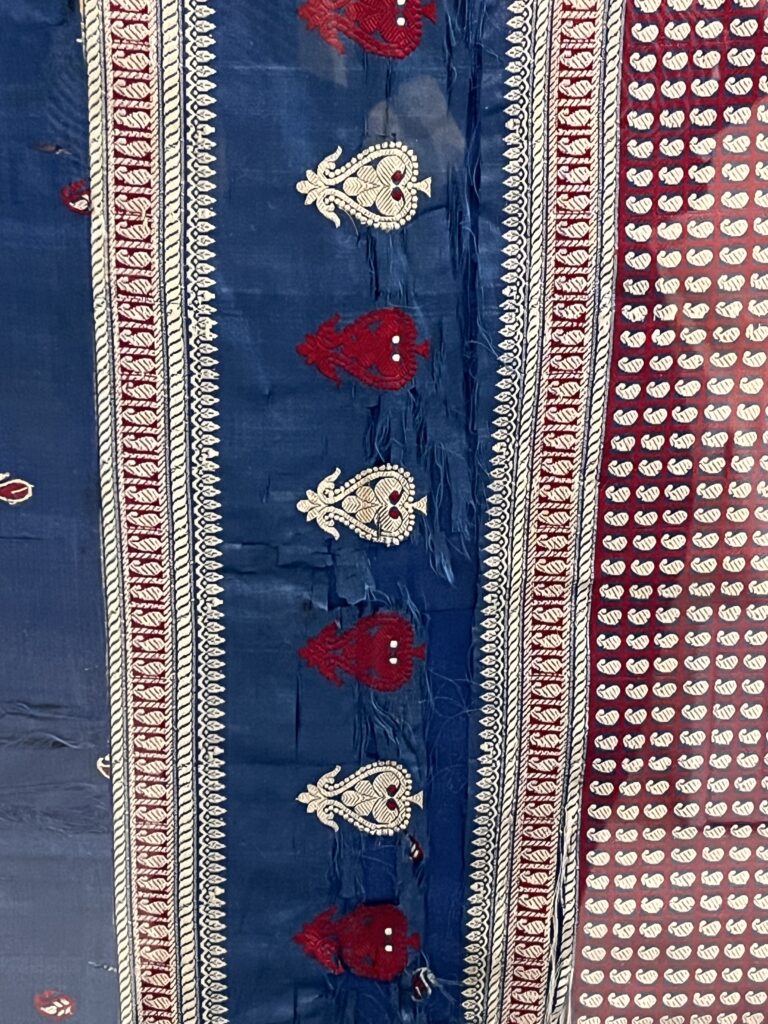
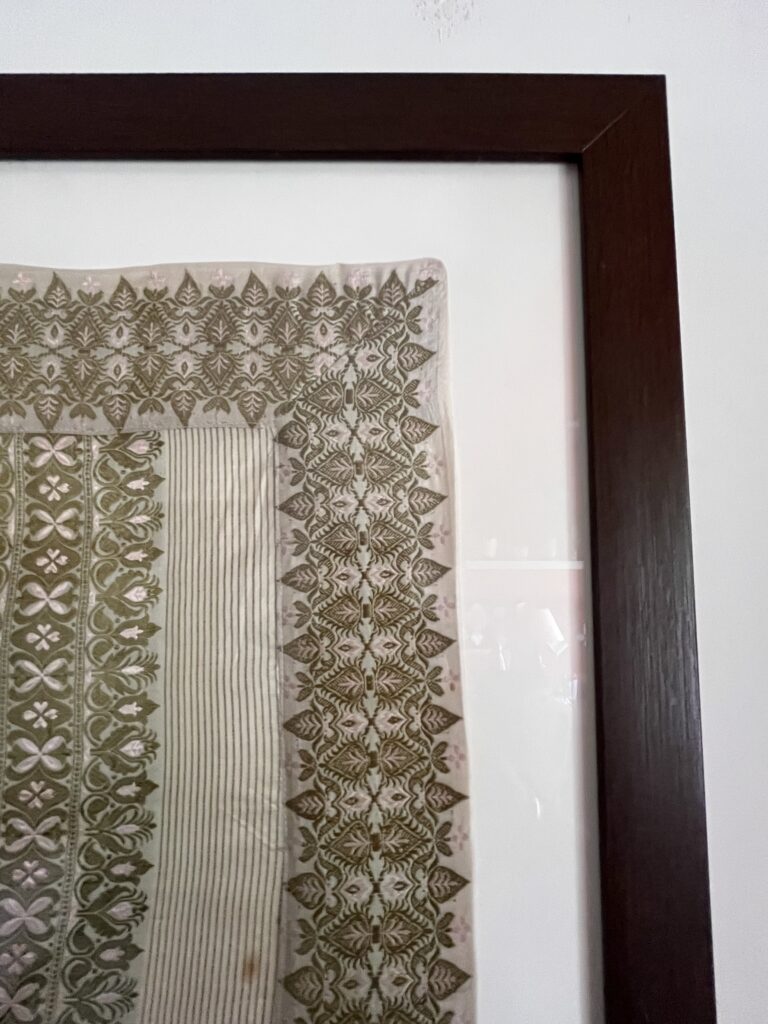
I love the idea of these objects being used because I’m not a fan of preserving anything. I’ve lost too many people I’ve really cared for. So if people don’t live long enough, I don’t see any reason why objects should live on forever. Even though displaying them shortens their life, I’m not concerned about that. If they become shabby, I’m happy to take them down, just as we discard sarees or shoes or dresses. Objects like these, for me, are serving a purpose of bringing people alive to me. They don’t have any purpose beyond that. They are far more precious than the best artwork in the world because they are associated with people who really played a very significant role in my life.
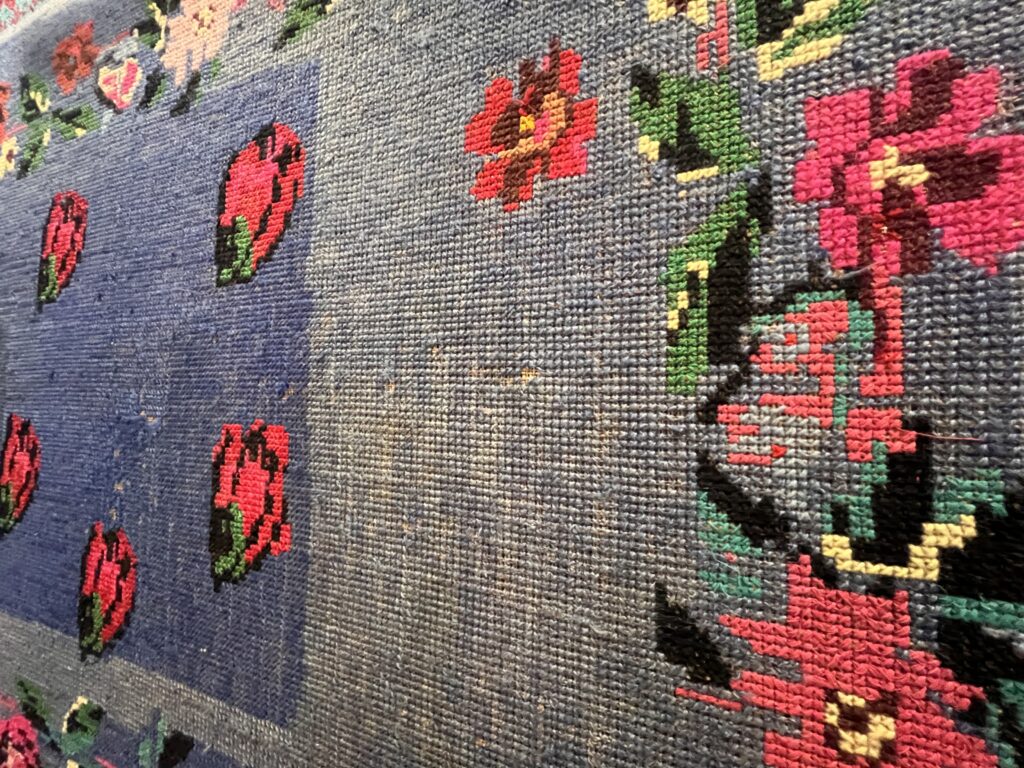
I see them on a daily basis but I don’t always notice them because they have become a part of my life, but I feel very proud. I feel very happy talking about them, because no matter who comes, they always ask where they came from. “I don’t really think of it as like oh this belongs to someone I’ve never met. I’m very grateful that future generations are being able to talk about it.”, says Venika.
Seeing them on the wall now evokes a deep sense of pride and gratitude. These walls now hold a form of living archive. Instead of fading away in cupboards, the carpets and sarees have found a new role. They hold their history openly, without being burdened by nostalgia, reminding us of a woman who, after a lifetime of caregiving, chose to create quietly and definitely on her own terms.