
TEXT BY RAJITA BANERJEE
PHOTOGRAPHS BY RAJITA BANERJEE AND AANCHAL MALHOTRA
Kolkata, West Bengal, India
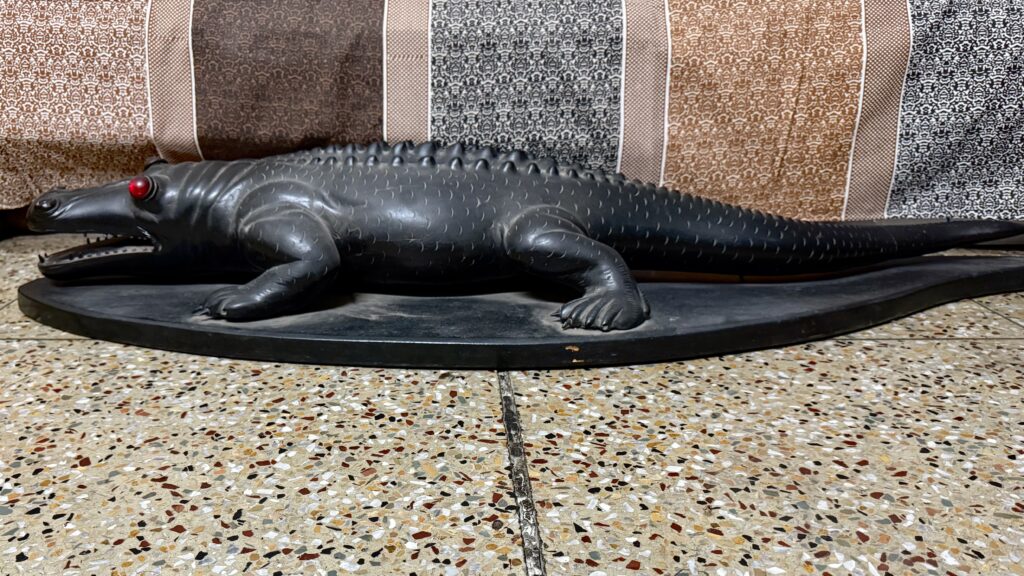
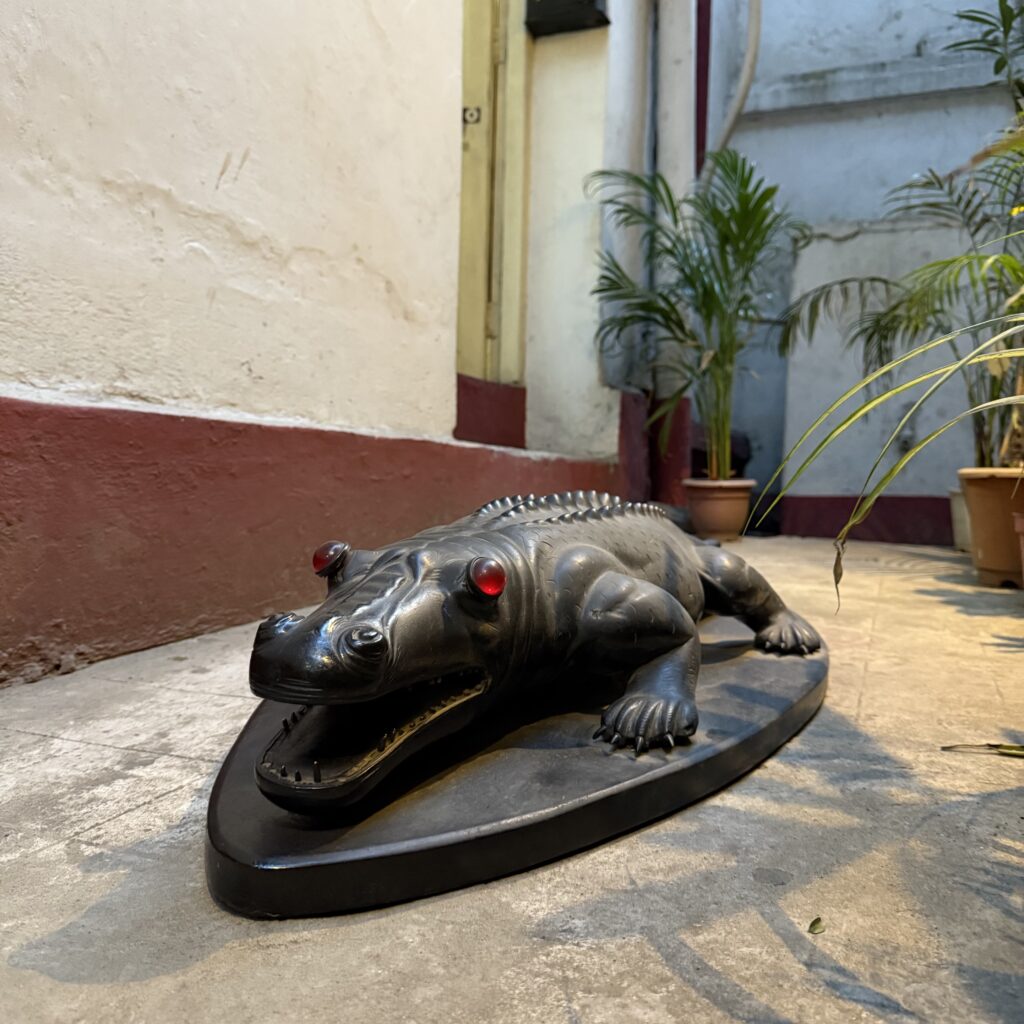
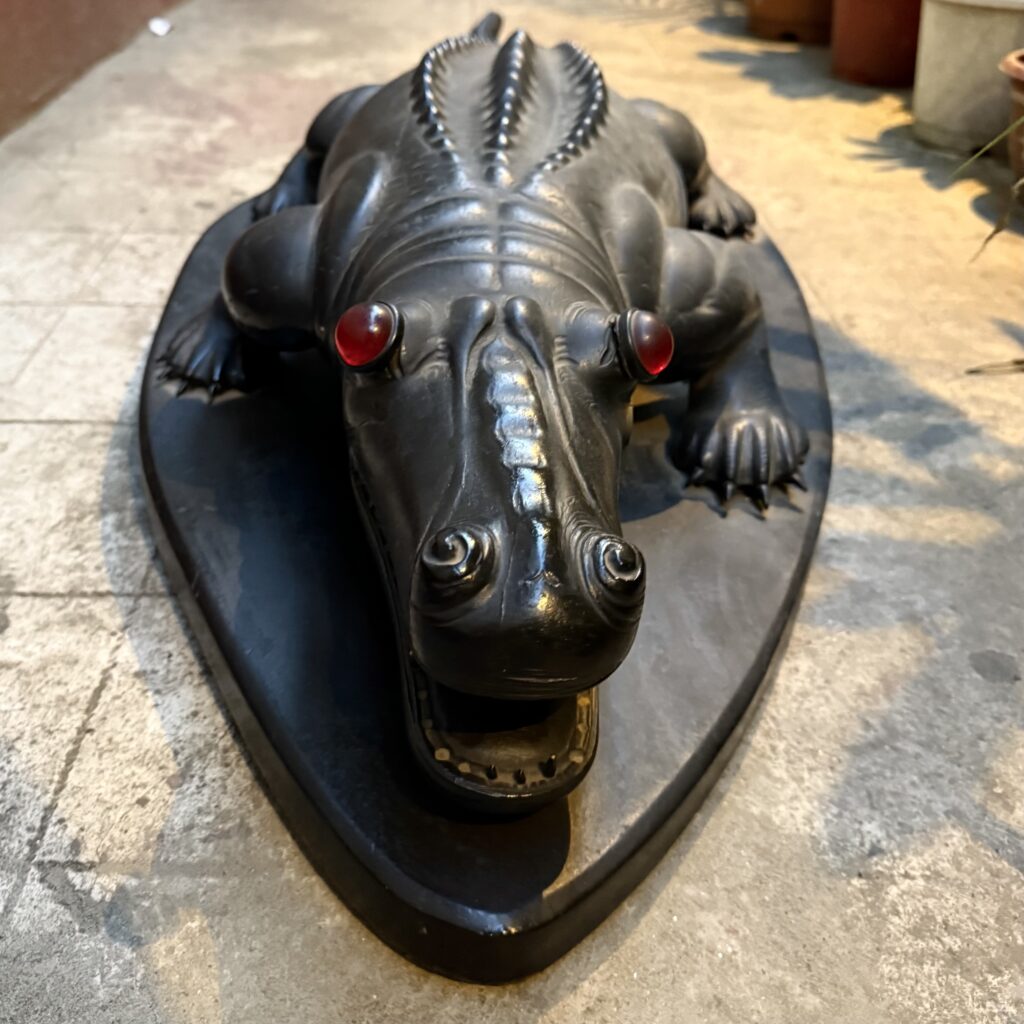
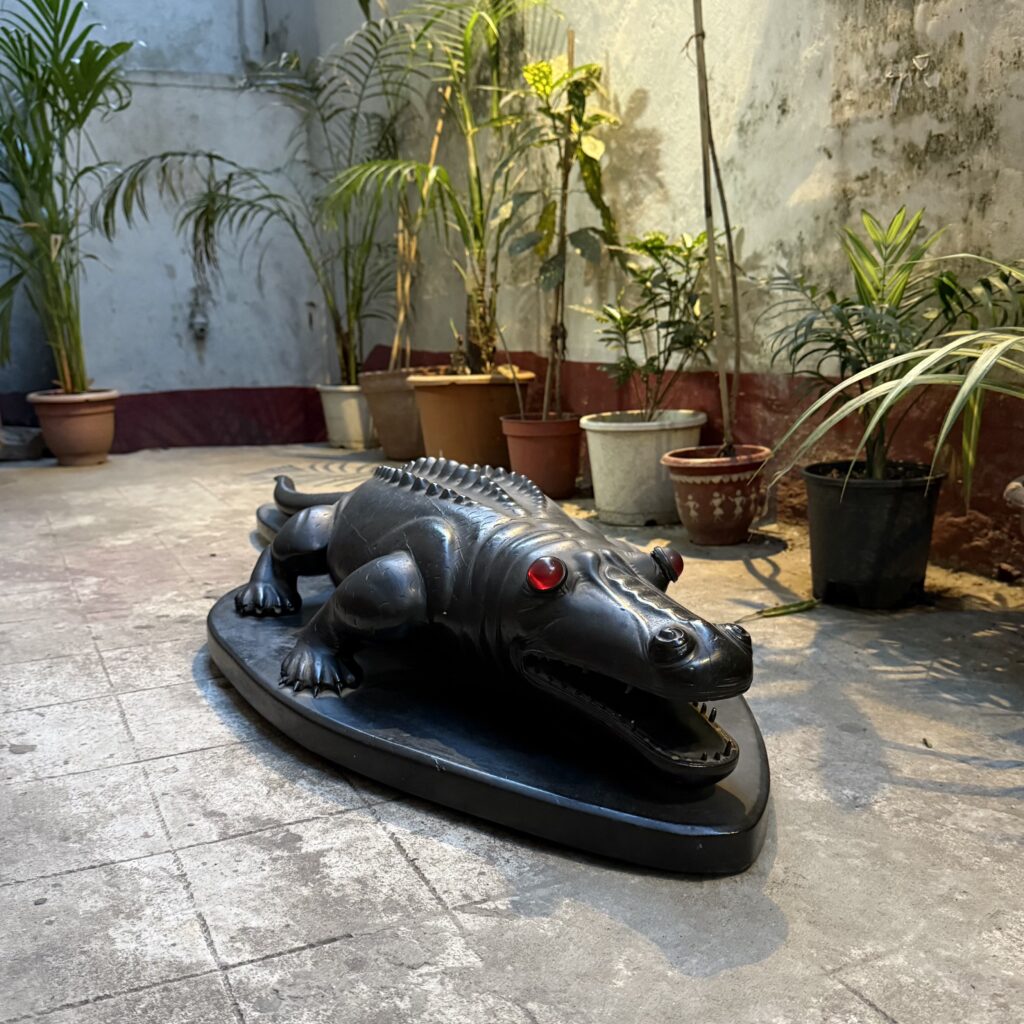
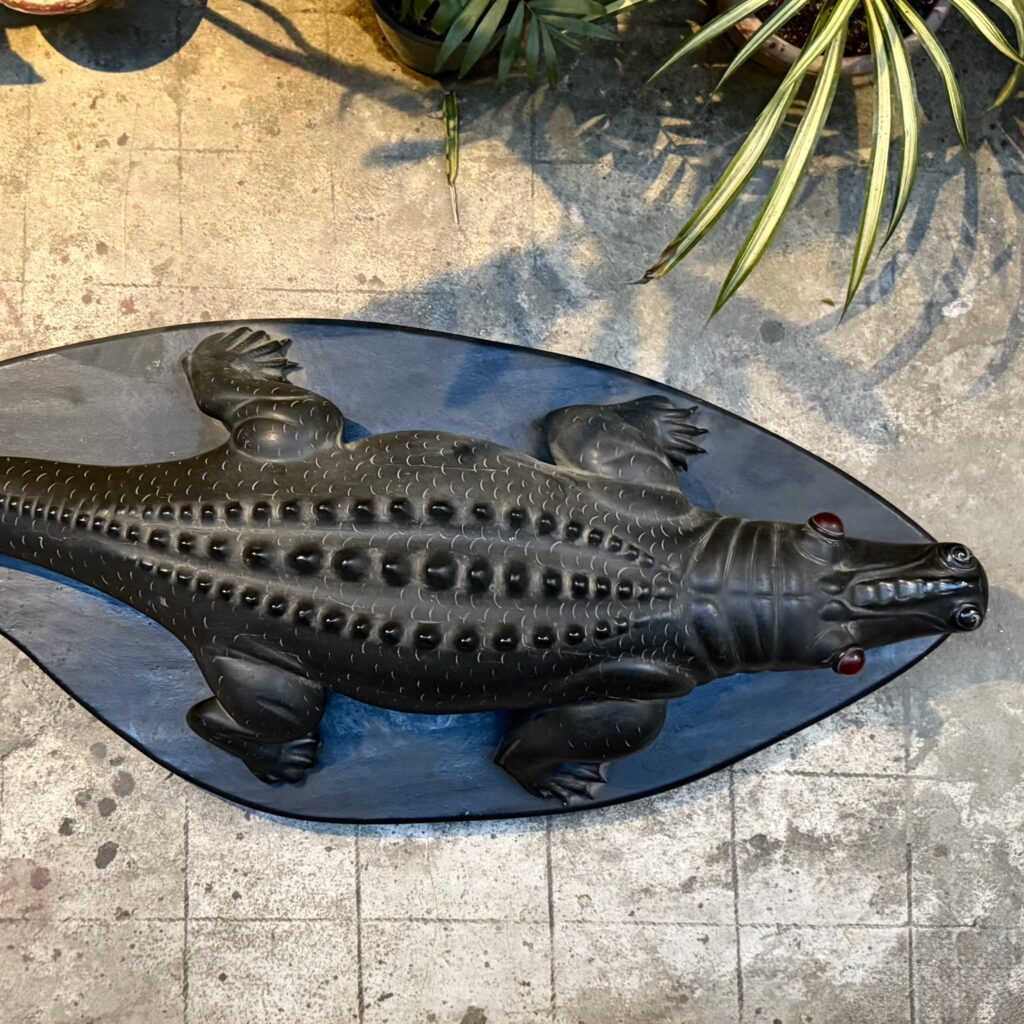
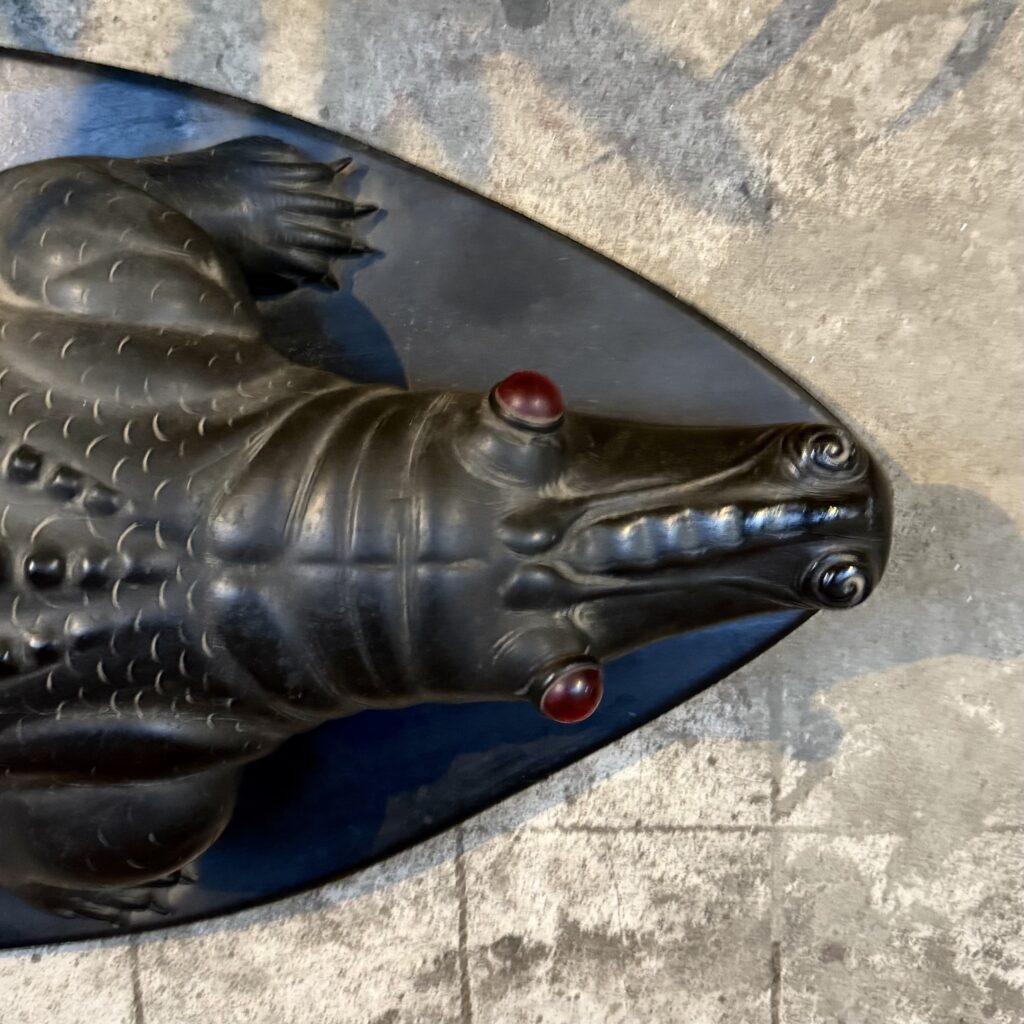
I have seen the wooden crocodile crouched under my mama’s shelf for several years now. I had noticed its pair of gleaming red eyes early on, but I must warn you about that little detail. My mother’s cousin, my mama, Joy Chatterjee, owns a plethora of accessories including reflectors, which he attached to the wooden crocodile, giving it the two eyes visible in the picture – the crocodile that sits among his belongings, rarely posing a threat like the actual reptile does. In Bengali culture, chokkhudaan is a ritual associated with the festival of Durga Puja, where the third eye of the goddess is painted. It seems that my uncle had a different take on the ritual, as he decided to bestow the wooden crocodile with a pair of red gleaming eyes.
In his living room, you will find many curious objects, like a silver hookah pipe, and a huge grandfather clock with an oscillating pendulum. Many of these can be traced back to Sarat Chandra Chatterjee, the renowned literary figure whose contributions to Bengali literature have been immense. His works have served as source material for several Indian film productions, most notably Devdas, adapted more than 20 times across the screen. Sarat Chandra Chatterjee spent years living in Burma, working as a clerk, having undertaken that journey via the waters of the Bay of Bengal. These lived experiences later found their way into his novel, Srikanta (published in four parts from 1917-133), where the protagonist makes a similar journey to Burma.
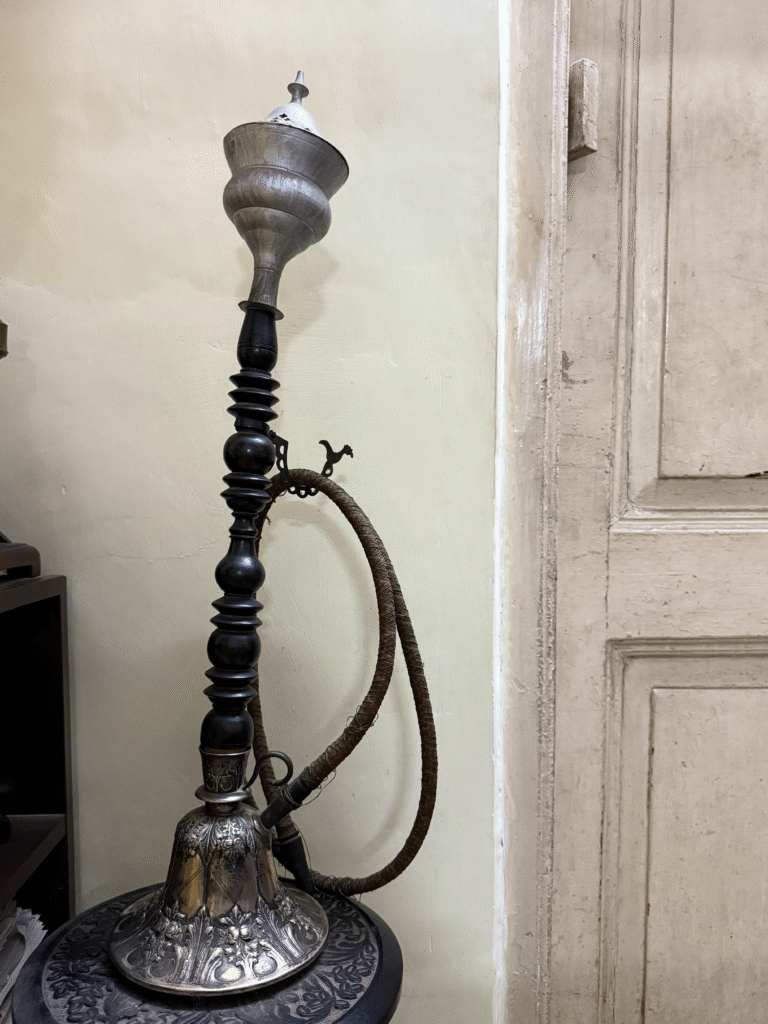

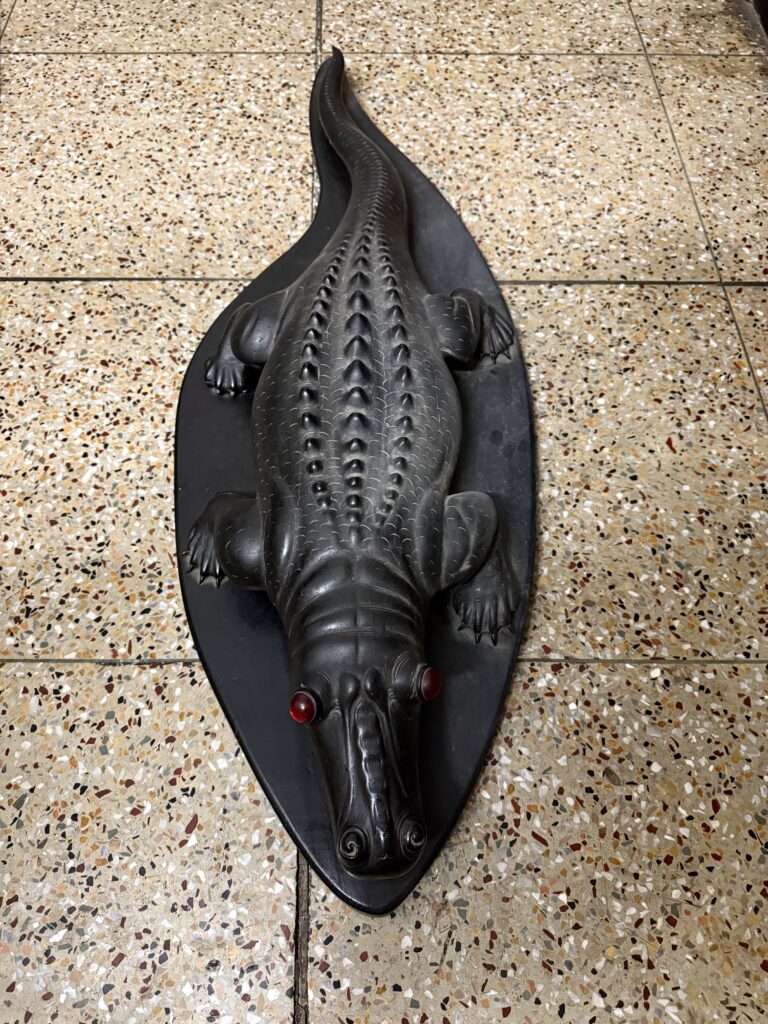
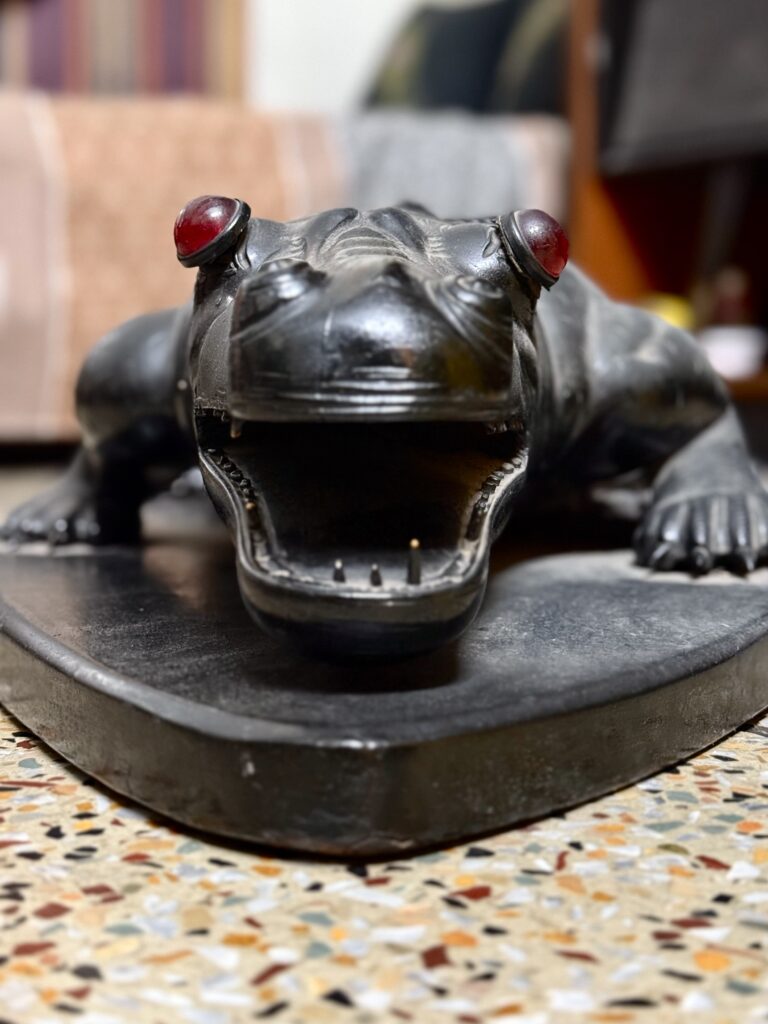

Joy Chatterjee is the son of Sarat Chandra Chatterjee’s nephew, Amal Chatterjee. It is through this familial connection that the Burmese crocodile entered my life, prompting me to think about the significance of collecting souvenirs, both small and large, and how people brought back pieces of the worlds they’d travelled through. There is, however, a notable lack of evidence when it comes to tracing how the wooden crocodile came into my mama’s possession, beyond the fact of inheritance. Sarat Chandra Chatterjee had two other significant residences: one in Deulti, a village in southern West Bengal, and another on Aswini Dutta Road in Kolkata. My mama continues to be in charge of the residence at Deulti, which now serves as a repository of the author’s personal belongings, including furniture. Some objects, like the crocodile and other gifts that Sarat Chandra Chatterjee received in his lifetime, are now with my mama at his home .
INDIANS IN RANGOON AND BURMA
The economic historian and author, Ian Brown discusses how labourers from Madras and Bengal travelled by the sea to Burma to work on rice plantations. When Sarat Chandra Chatterjee lived in Burma, the territory was administered as part of British India, and this political arrangement profoundly shaped how places like Rangoon [mostly pronounced Rengoon by Bengalis], circulated in the cultural imagination of people across the subcontinent. This became increasingly pronounced when Lower Burma was annexed by the British, leading to many migrant communities settling in and around Rangoon.
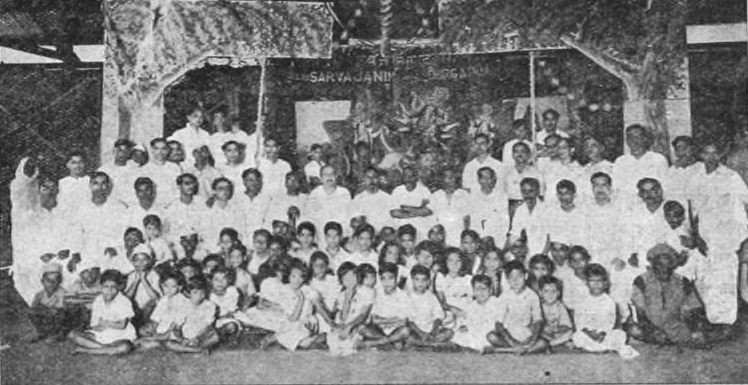
Bengalis were the second most populous, with a majority having made their way from Chittagong in present-day Bangladesh. Free to set up their own educational institutions, follow the religions they grew up with, and be legal subjects governed by the religious laws that pertained to them, the minority communities in Burma grew up distant from the local cultural, religious and linguistic influences.
As historian Sam Dalrymple notes in Shattered Lands: Five Partitions and the Making of Modern Asia, Burma’s separation from India involved its own forms of rupture, displacement, and political reordering. Burma remained part of British India until the Government of Burma Act, 1935, which finally led to its separation in 1937. Dalrymple also highlights the growing resentment that many Burmese locals felt toward certain Indian migrant communities, especially moneylending groups like the Chettiars, whose extraction of wealth had long-term consequences for rural Burmese farmers.
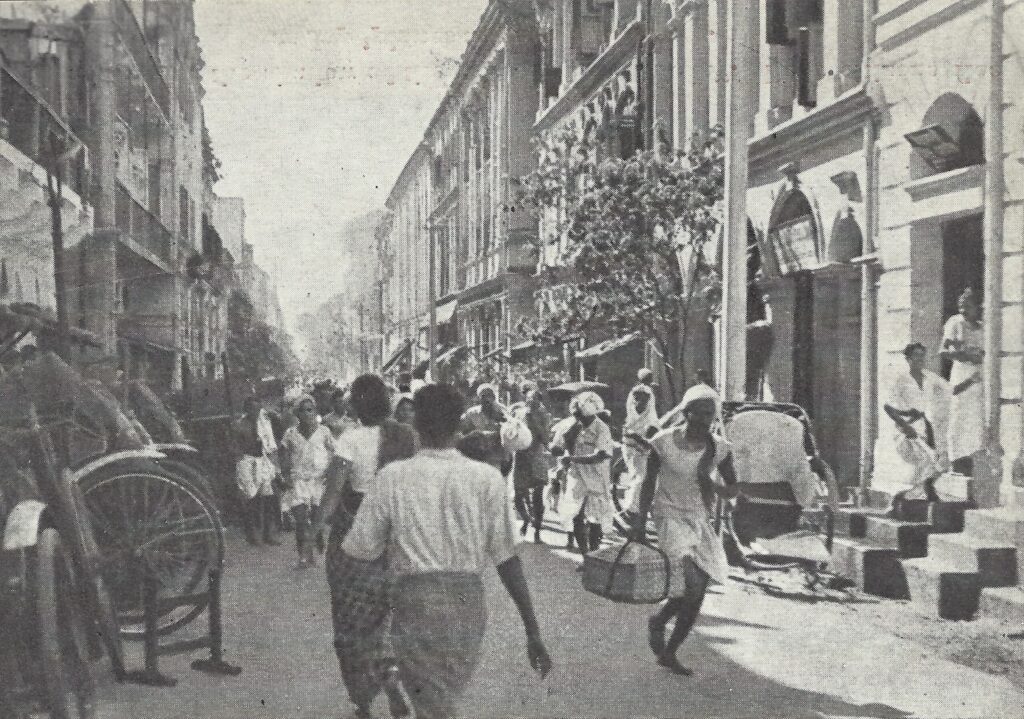
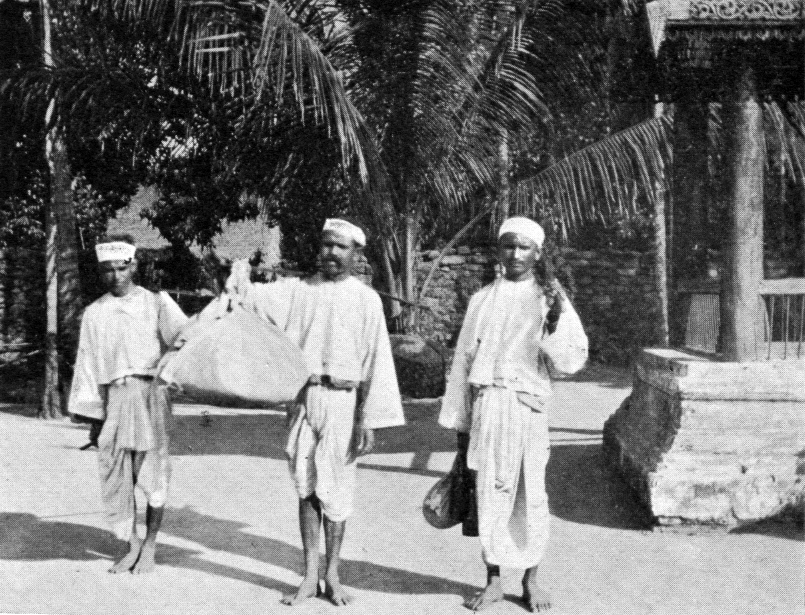
(Right) Brahmins in British Burma, circa 1900, From Vincent Clarence Scott O’Connor – The Silken East
This economic entanglement sits alongside a much broader demographic movement – as Brown documents, large numbers of Bengali and Tamil laborers were transported to Burma by sea under colonial labour regimes. Migration was also seen as a way of filling administrative and military roles, which directly led to Sarat Chandra Chatterjee’s appointment as a 27 year-old clerk in the Government offices around 1903-04, and later in the Burma Railway Accounts Department until 1916.
SARAT CHANDRA CHATTERJEE AND THE IDEA OF BURMA
Burma has long occupied a place for itself in the Bengali imagination, appearing casually, yet quite evocatively across literature and popular culture. References surface in films and books, like Leela Majumdar’s Padipishir Bormi Baksho, and in Sukumar Ray’s poem Gaaner Gnuto, part of Aabol Taabol, where a man’s singing voice is imagined as travelling impossibly far, from Delhi all the way to Burma. Such imaginative familiarity was hardly accidental, shaped by Burma’s long incorporation into the British Indian Empire, which allowed it to enter Bengali cultural expression with ease.
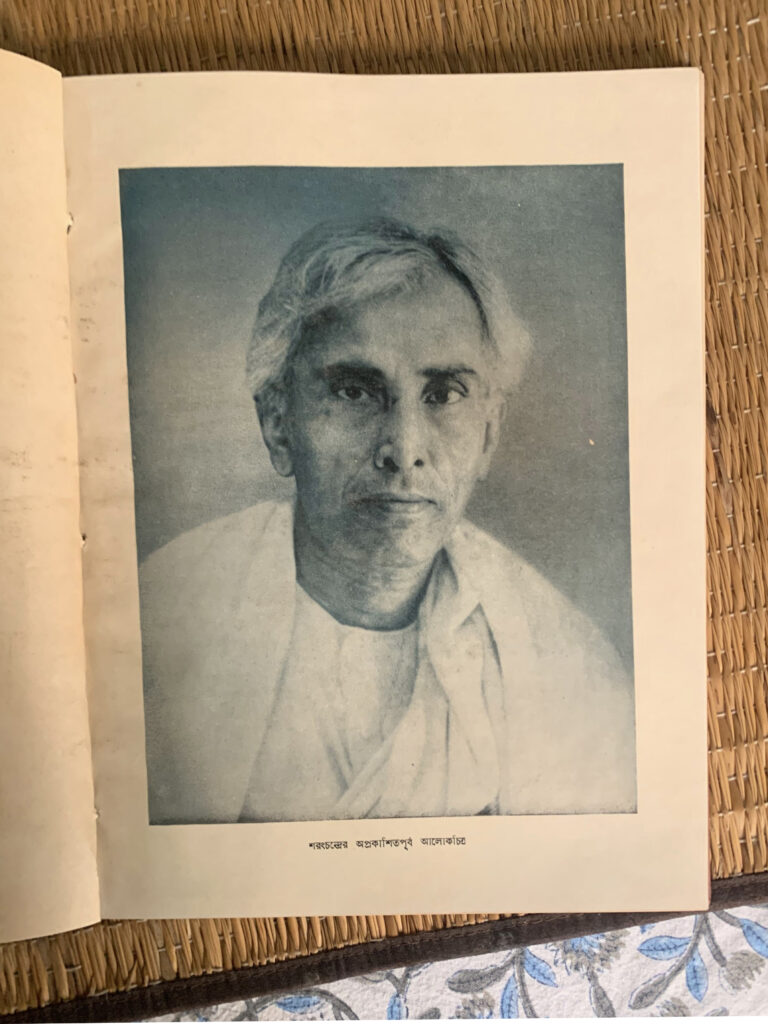
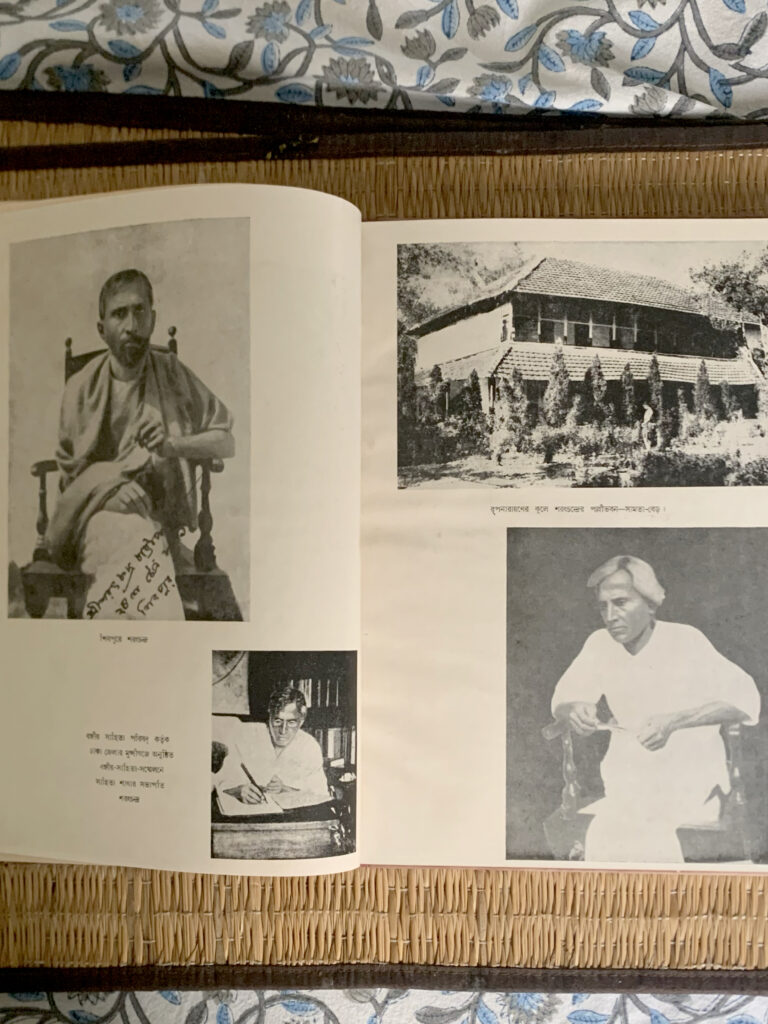
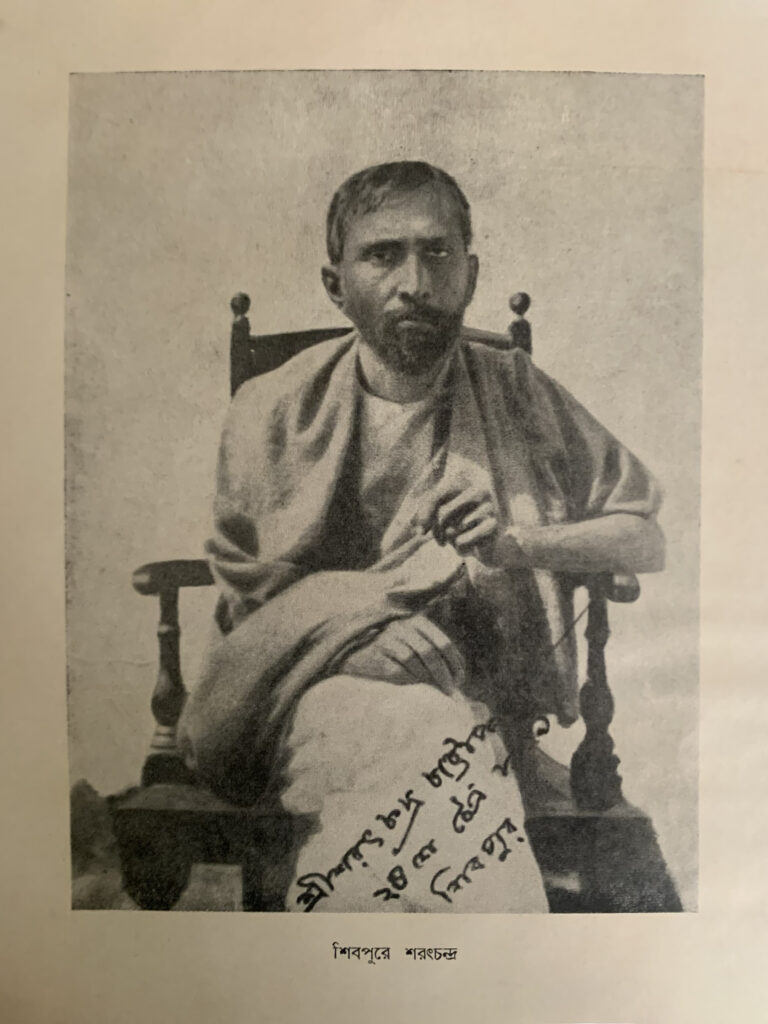
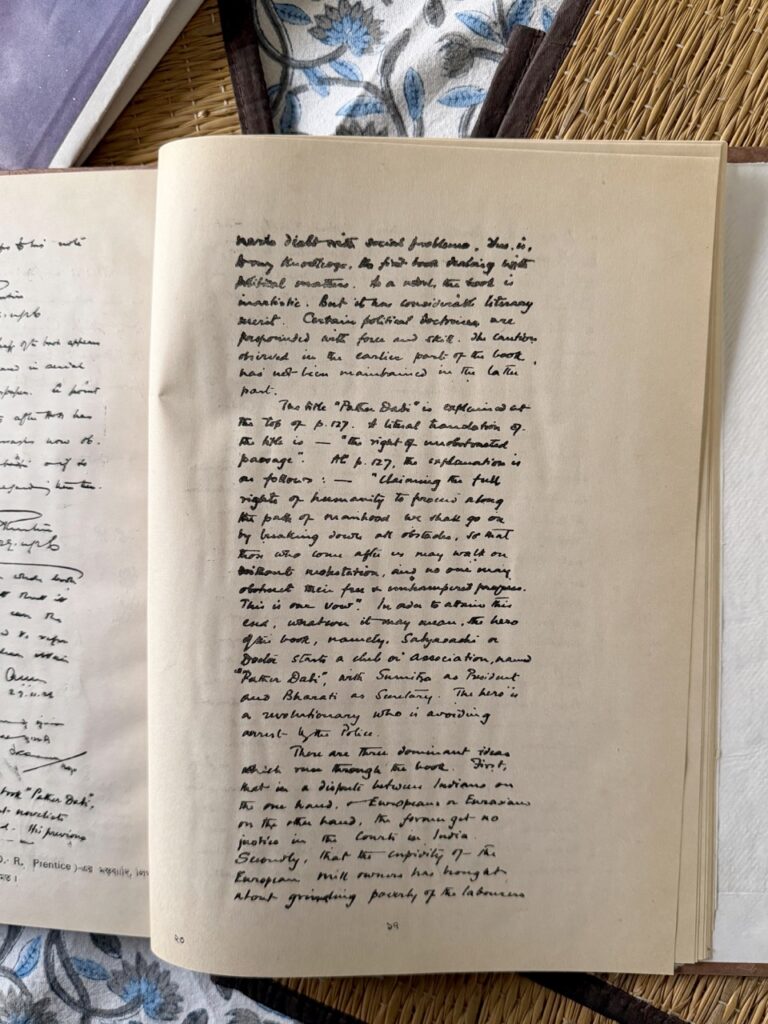
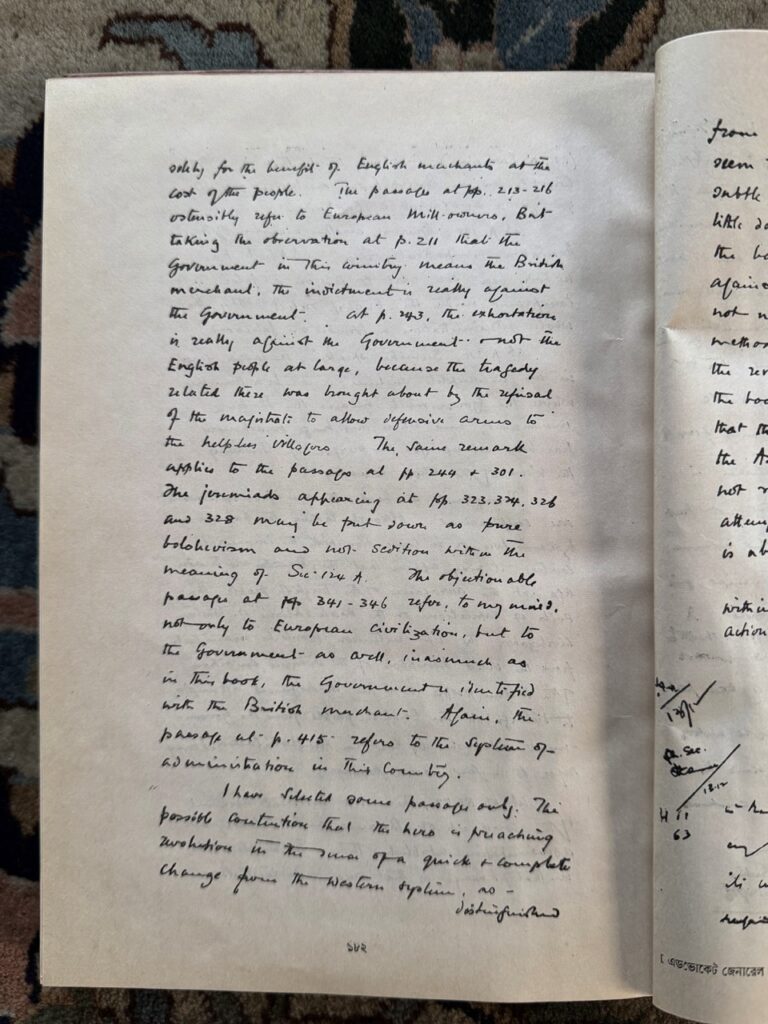
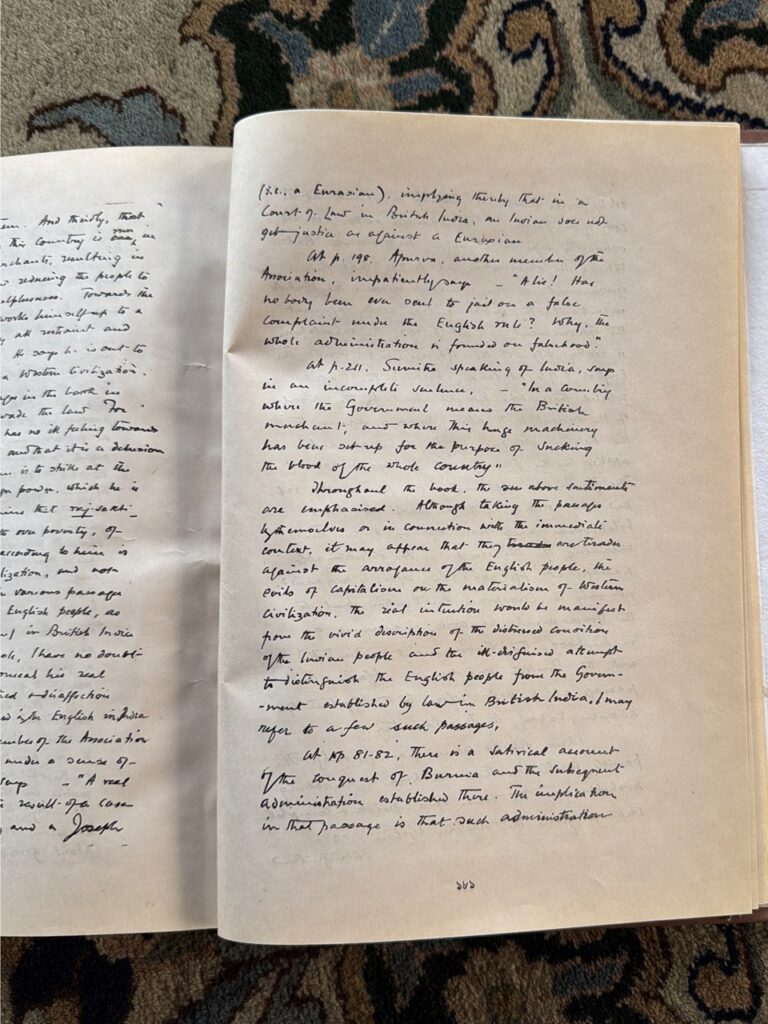
In 1926, after his return from Burma, Sarat Chandra Chatterjee published the novel Pather Dabi, which was subsequently banned by the British colonial government under Section 124A of the Indian Penal Code. In official correspondence, the Advocate General Sir B. L. Mitter referred to the novel’s satirical depiction of the “conquest of Burma and its subsequent administration,” suggesting that colonial governance served English commercial interests at the expense of local populations. More tellingly, the correspondence accused Chatterjee of being “out to destroy Christian civilization and Western civilization.” Burma thus, appeared not only as a setting in his work, but as a site through which colonial authority, morality, and power were sharply questioned, shaped by his years of residence and observation there.
CROCODILES AND THE BATTLE OF RAMREE IN THE SECOND WORLD WAR
But our story is about Chatterjee’s wooden crocodile, which brings us to Arakan, known today as the Rakhine state and historically as Rakhangyi. This is a narrow coastal region in western Myanmar along the Bay of Bengal, marked by dense, jungle-covered hills and a climate that made it highly malarial, posing serious logistical and health challenges to military operations. It is in these landscapes that the crocodile moves from living creature to idea. Captain W.E Johns, who wrote a series of adventure books called the ‘Biggles’ from the 1930s-60s, detailed how he encountered ‘bloated foot-long centipedes, freshwater crocodiles, and a snake of enormous dimensions’ during his travels. Such a description certainly gave the region a formidable reputation.
During the course of the Second World War, Arakan assumed significant strategic importance. By 1942, the entire region had been captured by Japanese forces, placing the eastern coast of India at risk of invasion. The Japanese navy’s dominance in the Bay of Bengal made Arakan a critical forward base, particularly the ports of Akyab and Ramree, which were vital for Allied operations. The Battle of Ramree, fought in early 1945, has since become inseparable from stories of the island’s mangrove swamps and their most fearsome inhabitants: saltwater crocodiles.
As British forces pushed Japanese troops into the dense wetlands surrounding Ramree Island, many soldiers vanished into the hostile landscape of mud, disease, and were said to have been attacked by crocodiles. Several newspapers sensationalised these crocodile attacks, although whether they actually happened remains historically contested. The episode nonetheless helped cement an association between Ramree, war, and crocodiles in popular memory. It is not difficult to imagine how such stories traveled, lodged themselves and later surfaced in objects and imagery.
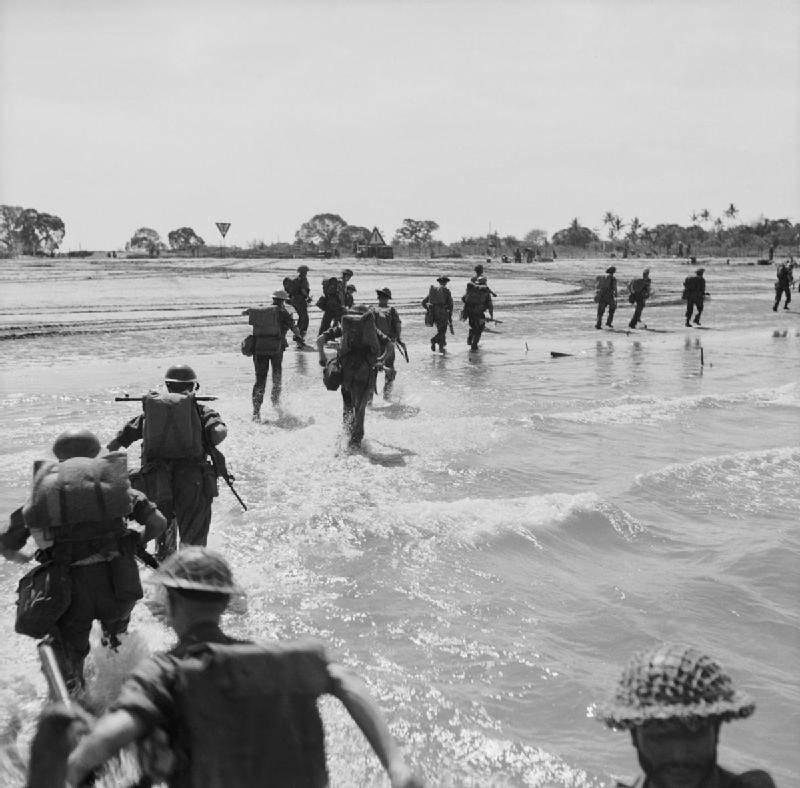
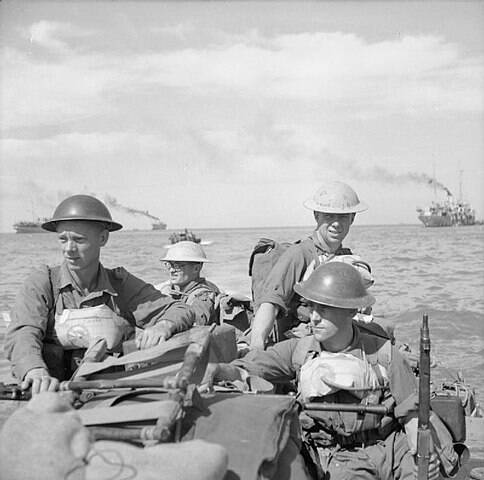
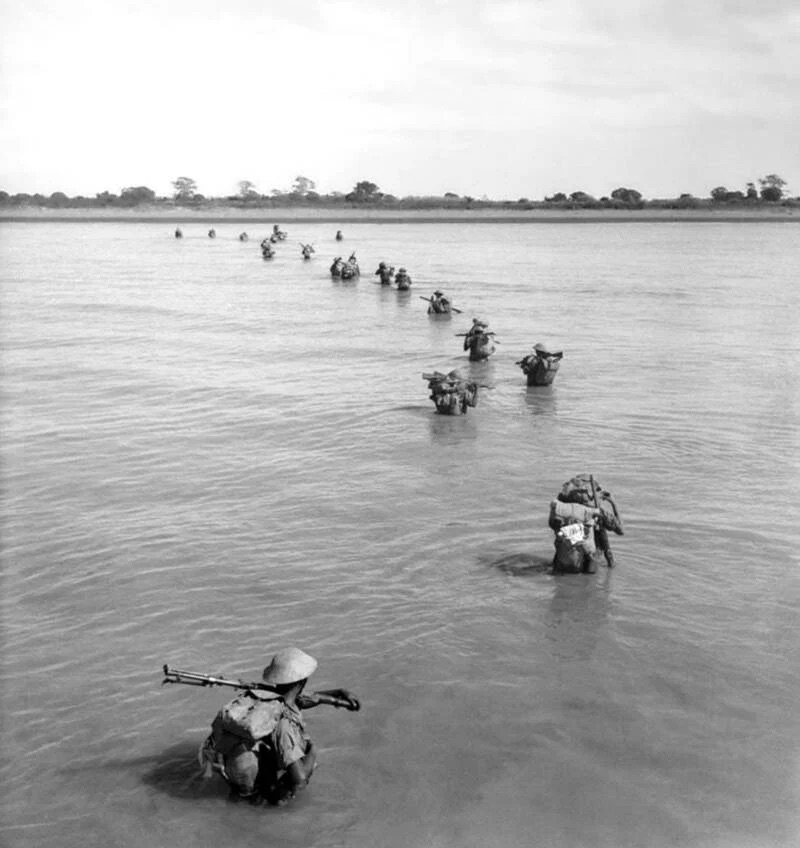
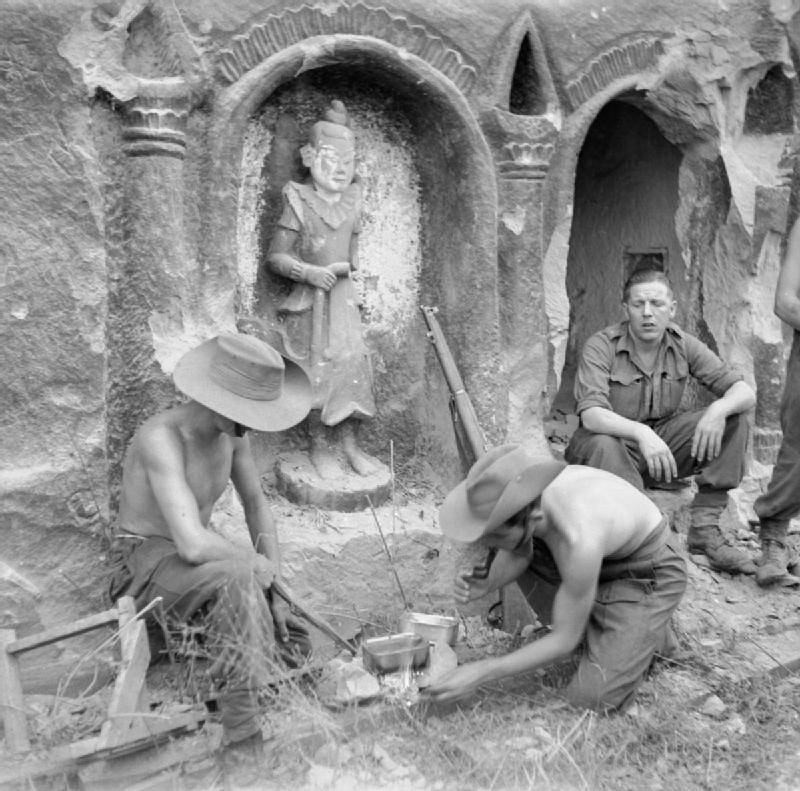
Clockwise from top – British Marines landing on Ramree Island in January 1945 at the beginning of the six-week battle / British troops make their way ashore during the Battle of Ramree Island on January 21, 1945/ By the end of the Ramree Island crocodile massacre off the coast of Myanmar in February 1945, as many as 500 Japanese soldiers were allegedly devoured / British troops sit near a temple on Ramree Island (Photographs from Wikimedia Commons and History/Universal Images Group via Getty Images, found in ‘A Cacophony Of Hell’: Inside The Ramree Island Crocodile Massacre by William DeLong)
Beyond wartime lore, crocodiles hold a deeper resonance in Burmese cultural and ecological landscapes, particularly in riverine and coastal regions, where humans have long coexisted with them as both threat and symbol. An American anthropologist, Reverend Harry Ignatius Marshall, or W.H Marshall, studied a tribal community in Burma called the Karen people, and produced a work entitled, The Karen People of Burma: A Study in Anthropology and Ethnology. In a series of his photographs from Burma, two images show ‘itinerant Burmese musicians’ handling a harp shaped like a crocodile. Another entry from a book titled Picturesque Burma, features the image of a crocodile guitar. Seen in this light, the carving of a wooden crocodile begins to feel less incidental. It can be read as part of a recurring motif, integral to Burma’s ecology, culture and visual imagination.
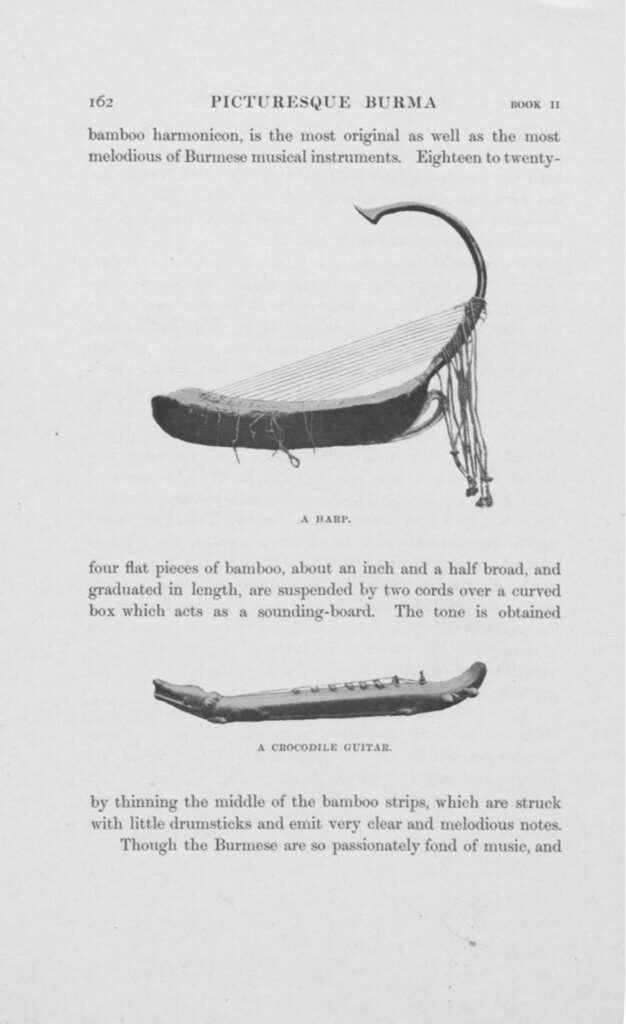
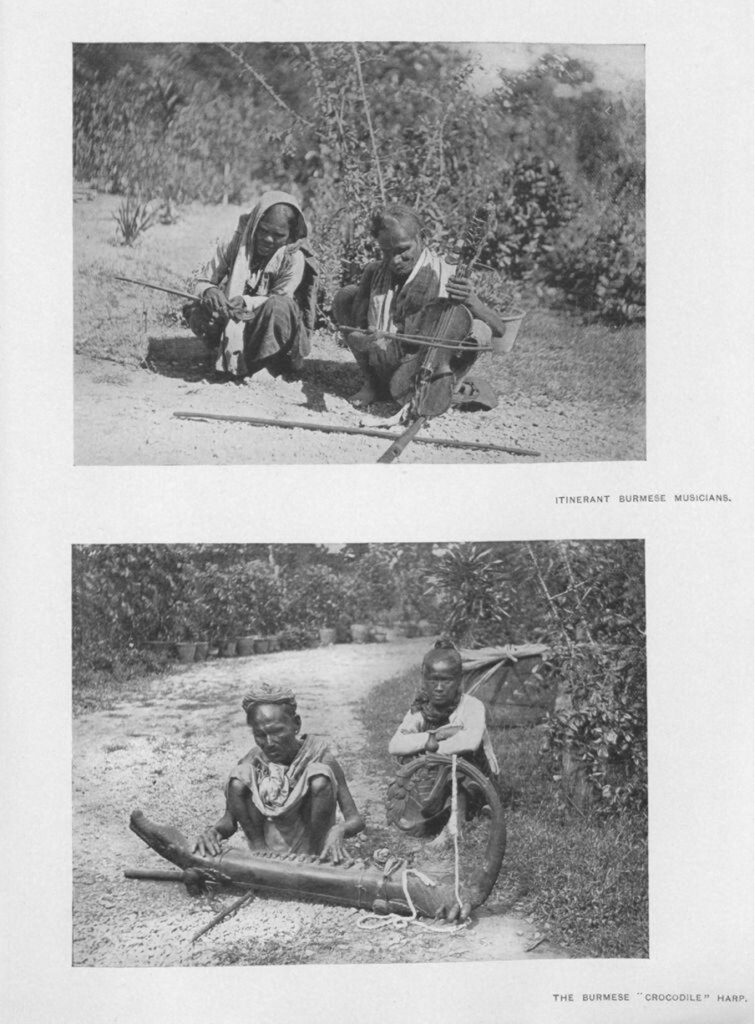
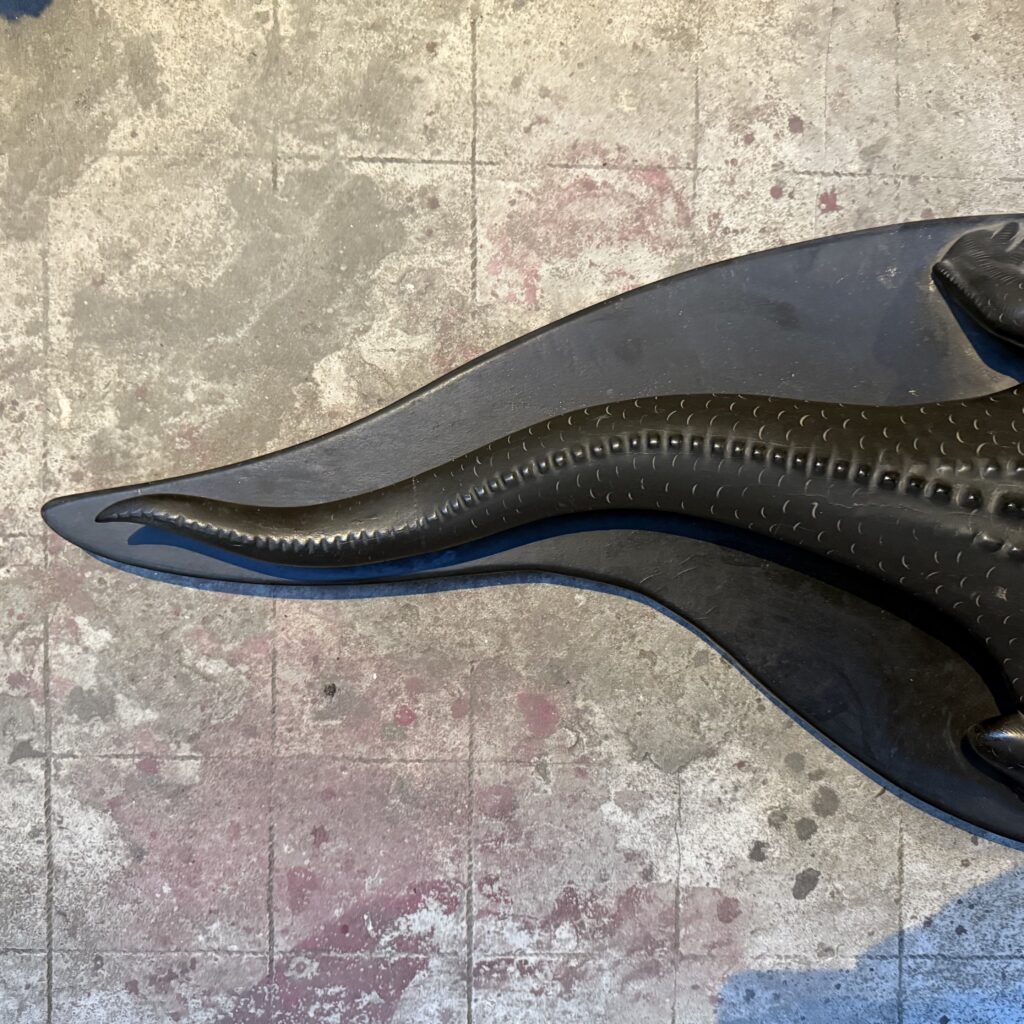
It is easier to say with some confidence that Sarat Chandra Chattopadhyay’s years in Burma shaped him deeply, both personally and in his writing, than it is to claim the same kind of influence for the wooden crocodile. The object itself is difficult to explain. It is heavy, not something one could carry easily. It is made of Burma teak, highly valued at the time, and it’s possible he saw the carving as precious, worth bringing back simply because of the material. But no one seems to have asked why or how he managed to bring it back. All that remains is the knowledge that it was carved in teak, and that the family has kept it ever since. In that sense, its meaning may lie less in his intentions and more in its afterlife as an inherited object.
Perhaps the sculpture allowed him to hold on to something of Burma in a more physical way. Crocodiles appear often in Burmese folklore and river life, associated with power and danger. They belong strongly to the landscape, but did they ever appear in his writing from the region? I find myself wondering whether somewhere in Sarat Chandra Chatterjee’s Burma-related work, there is even a passing reference? If one were to search the archive closely, would a crocodile appear in the literary landscape, or does the sculpture remain outside the text, lying in wait on my mama’s shelf?
The whole story may always evade us, owing to the lack of documentation regarding its passage to Bengal. No witness exists, not even the crocodile itself, because it was never given the gift of sight. Perhaps all we can do is imagine that the wooden crocodile once had eyes, and to write of its journey.
References
- Brown, Ian. “Tracing Burma’s Economic Failure to Its Colonial Inheritance.” The Business History Review 85, no. 4 (2011): 725–47. http://www.jstor.org/stable/23239422.
- Singh, Uma Shankar. “INDIANS IN BURMA (1852-1941).” Proceedings of the Indian History Congress 41 (1980): 823–31. http://www.jstor.org/stable/44141910.
- Kumar, C. K. India Quarterly 12, no. 1 (1956): 88–89. http://www.jstor.org/stable/45068026.
- A Harp. 1890/1899. Southeast Asia Visions: John M. Echols Collection (Cornell University Library). Artstor. https://jstor.org/stable/community.12182035.
- Marshall, W. H., and Publisher: C.J. Skeet,. Itinerant Burmese Musicians ; The Burmese Crocodile Harp. 1900/1909. Southeast Asia Visions: John M. Echols Collection (Cornell University Library). Artstor. https://jstor.org/stable/community.12195072.
- ‘A Cacophony Of Hell’: Inside The Ramree Island Crocodile Massacre by William DeLong and edited By John Kuroski, published February 7, 2023