
TEXT AND PHOTOGRAPHS BY SUMAYYA USMANI
Glasgow, Scotland
Did the sound of these ghungroos once break the humidity of a Punjabi summer? In her footsteps, was there a quiet resistance and ritual? I imagine my Baebaejaan walking on sun-baked clay floors, moving effortlessly from her sleeping quarter to her courtyard kitchen, silver pazaibs on either ankle – weightless with tradition, acquiescence and music.
When I moved from Pakistan to Britain many years ago, my mother gave me a silver pazaib that belonged to my maternal great-grandmother, my Par-nani. My Nani had bequeathed this to my mother before she passed away. Perhaps this was my mother’s way of saying: hold on to your heritage, and never forget the sacrifices of your ancestors. Everyone in my family called my Par-Nani ‘Baebaejaan,’ and her own children often called her Bae jee for short. In Punjabi, ‘Bae-bae’ means mother, (written as بےبے in Urdu), and she was the mother figure, irrespective of generational hierarchy. I must admit, I’ve always felt strange calling her Baebaejaan, as if not having met her means I have less of a right to call her by this family name.
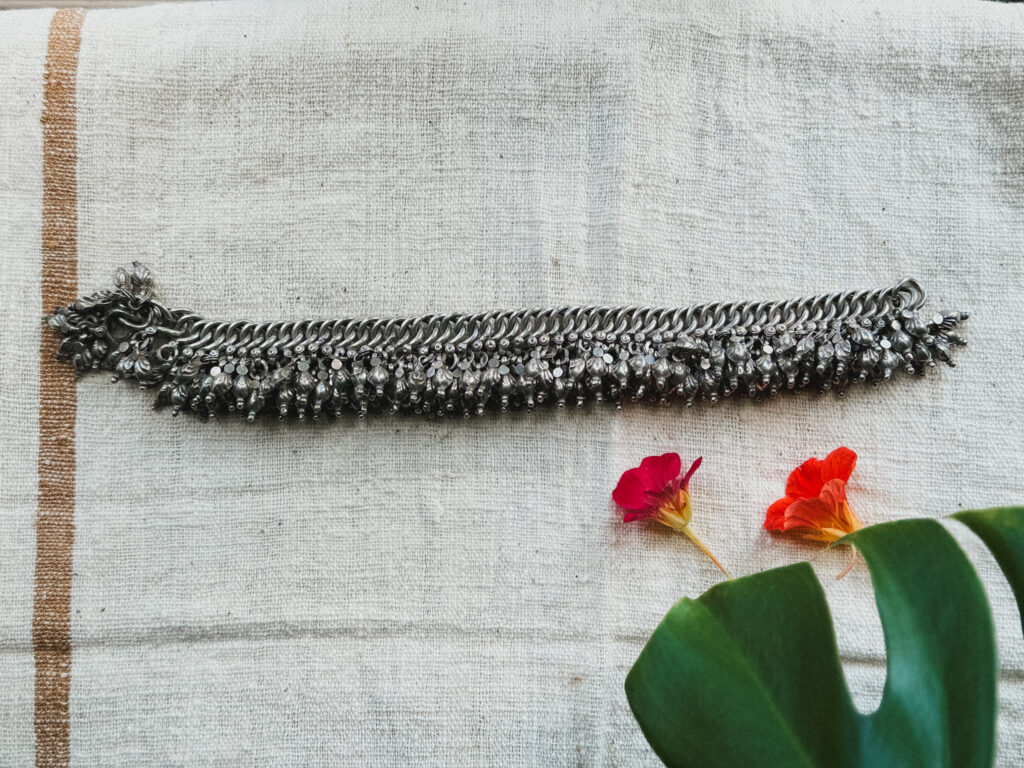
Until recently, the pazaib was slung across my dressing table mirror. My mother had fashioned it into a necklace soon after my Nani gave it to her. She had strung a black woven cord on either side and I saw her wear it often with her chiffon saris when I was growing up. In my possession, the disregarded silver had begun to oxidize, matching the hue of the string. The pazaib faded away into the decor of my bedroom, much as the stories of its owner had faded away as each elder left us.
Since I began my writing career I have yearned for the stories of my family’s past. I brought the pazaib back to life, hoping that I might find clues to who Baebaejaan was, by understanding what this pazaib meant to her. When I first got the pazaib in the form of a necklace, I was taken by its weight – it was heavier than any necklace I had ever worn. My neck felt burdened and I wondered how my Par-nani wore two of these on her ankles.
The main chain that carries the ghungroos looks like knitted silver that forms a crisscross design, creating a pliable chain. There are many small ghungroos that hang from the main chain, their bells bounce off each other to create music. A small silver ‘S’ shaped clasp on either end brings the two corners together. Ever since I took off the black cord, I have worn it often as a pazaib on my left ankle and walked around my house. Wearing it, I am overcome by nostalgia for a time that I have never known. I think of how family memories and a sense of belonging can be carried through generations in a piece of jewellery. I am fascinated by inherited possessions, and the way ancestral histories lie within these material portals – living history, mingled with fragments of imagined memory, holding the power to recreate lost lives.
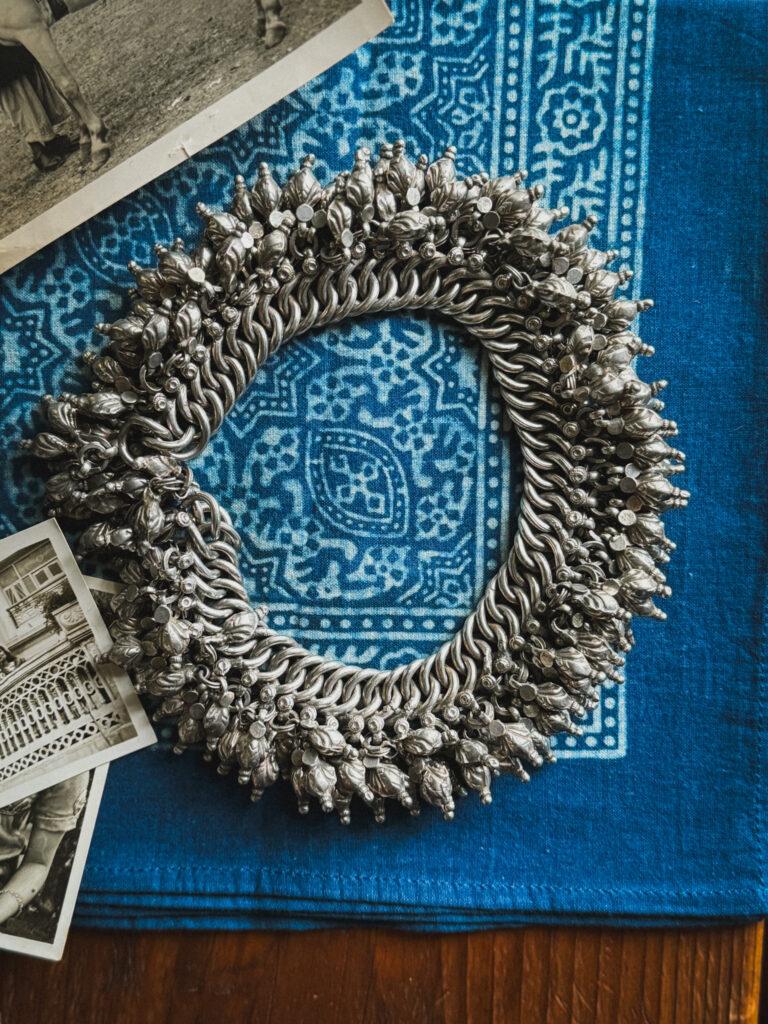
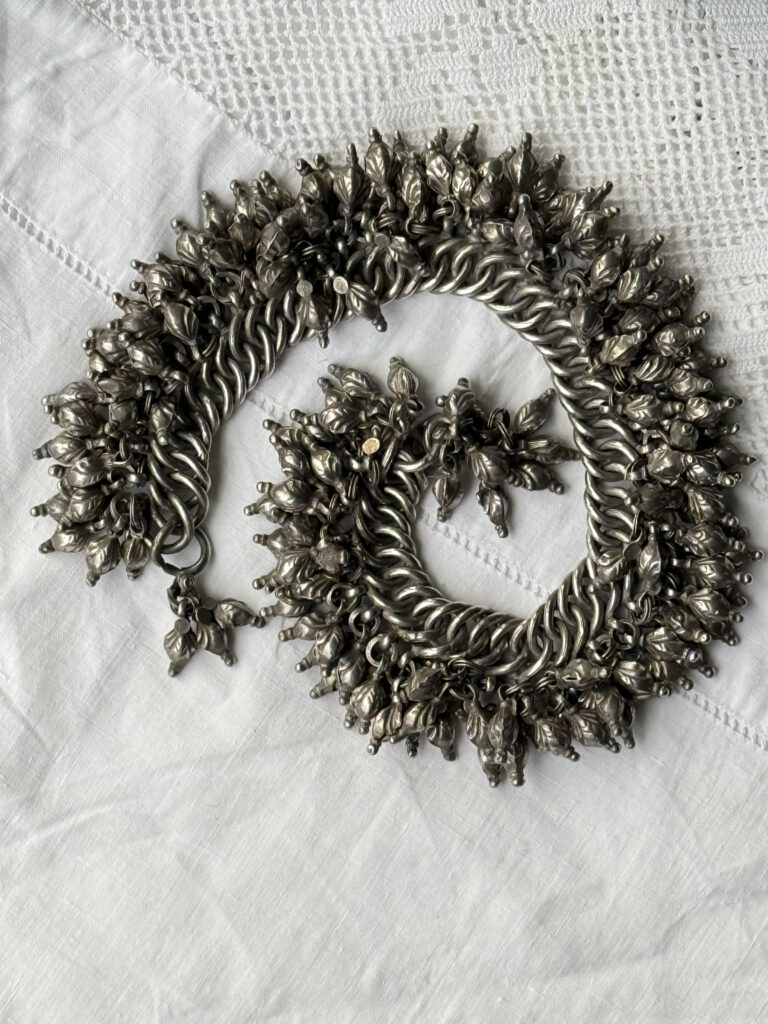
Both sides of my family migrated to a newly formed Pakistan from different parts of India in 1947, but my grandparents didn’t speak about their journey to Pakistan or the upheaval and loss they had encountered. Sometimes during conversations with my Nani, nostalgic recollections brought tears, but then she’d brush away the sentimentality with stoic reasoning. I wonder if perhaps she brushed this away because remembering too deeply threatened to undo the careful stitching that held her new life together and she couldn’t risk unraveling, not when so many depended on her staying whole. I find myself playing back these stories like a film on repeat, searching for something I might have missed.
My mother is the last remaining female descendant of my maternal family, but knows little about the pazaib; who got the other of the pair, and who had given it to Baebaejaan – maybe it was a part of her dowry or she bought them for herself. Perhaps there is no romanticised history, and it was merely an adornment for the ankles, reaffirming Baebaejaan’s motherhood, femininity and a marker of marital status. But within it lies a story that deserves a voice, even if it’s merely a whisper.
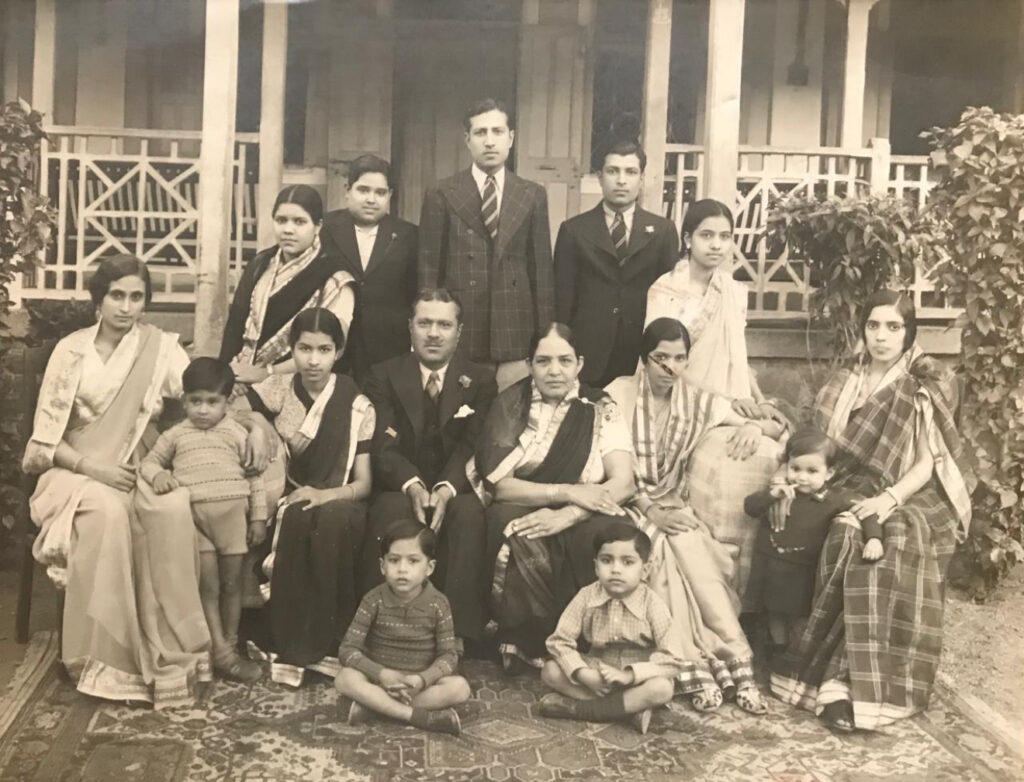
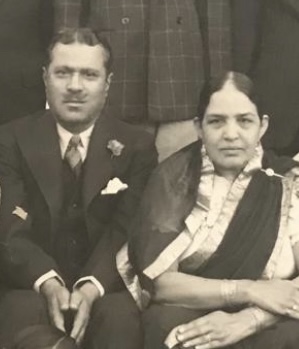
The family after Partition in Rawalpindi, with Baebaejaan in the centre
Though my mother was only eleven when Baebaejaan passed away, she remembers her affectionate nature, love for the latest fashion, and beautiful shoes. My mother recalls a lost photo that showed Baebaejaan sitting crossed-legged with elegant red patent court shoes, a glittering shalwar kameez and a confident smile – wearing this pazaib.
Baebaejaan’s blood runs through me, and in the only photo I have of her, I see a glimpse of myself. Her name was Ayesha, she was born at the turn of the nineteenth century in Sialkot, British India. Married at thirteen to Abdul Hasan, who worked as a civil engineer in the military engineering service, and called Abbajaan by us all. Baebaejaan bore thirteen children from which three died young. They gave their children a good life, most of the sons went to study abroad, and the girls were all married into respectable families.
My great-grandparent’s moved around India because of his career in the civil service, and before Partition, migrated from India’s Central Provinces to Karachi. Abbajaan’s government position must have forewarned him about the unrest that was to follow Partition, so the family of eleven at the time made their way to Karachi by train without any incidents. Upon arrival in Karachi, they were allotted an elegant house in then affluent Shikarpur Colony for a year before they built their own home. This house had belonged to a rich Hindu family that fled during Partition, leaving a fully furnished home with their personal belongings.
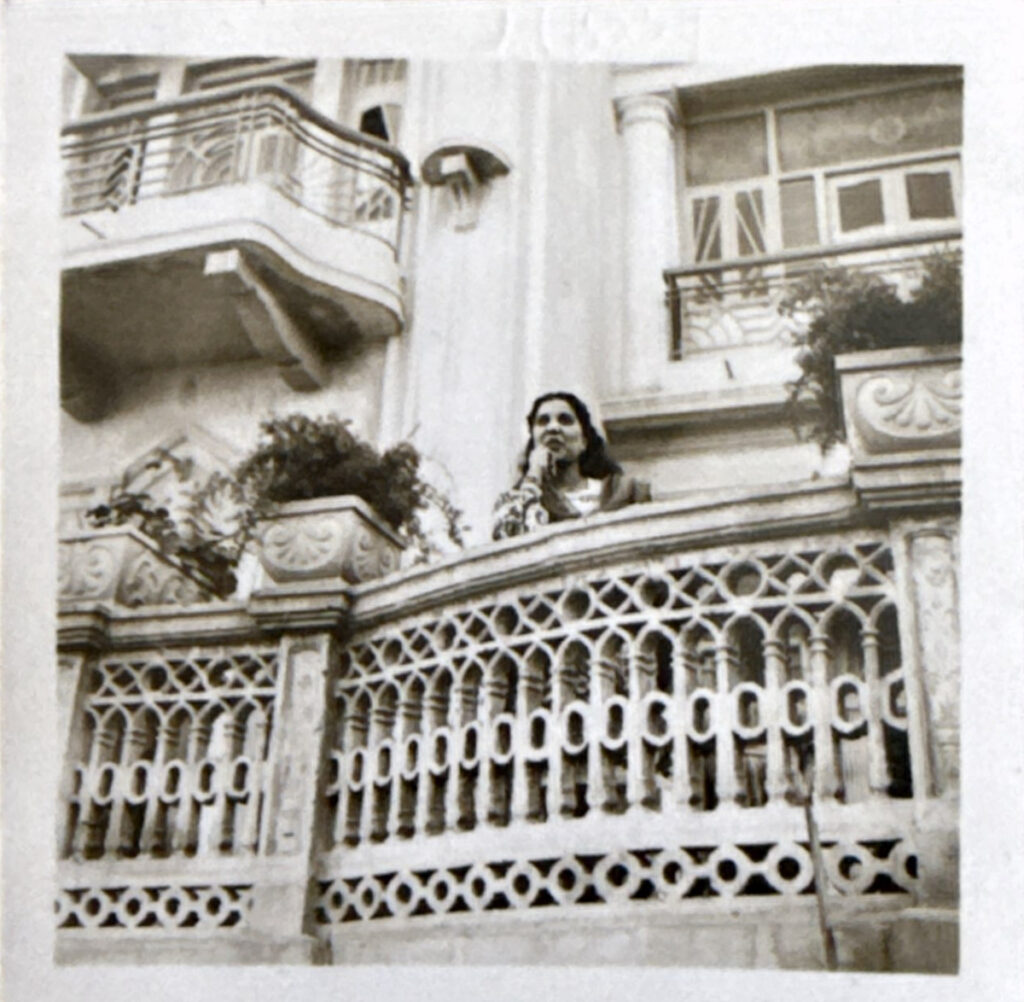
I often wonder, did Baebaejaan come to Karachi with the pair of these pazaib? Did she perhaps give one to another daughter? Or sell it to start a new life? I was fortunate enough to have spent time with my great-grandfather, Abbajaan, who lived until the age of ninety-seven, but never asked him questions about these early years of his life. I was a teenager at the time and I moaned about spending Sunday afternoons with him, being forced to accept his sloppy affectionate kisses on my cheek for the offer of stale sweet boondi that had been lying in his musty rosewood almirah.
Baebaejaan passed away suddenly from a heart-attack in her early fifties, leaving behind her husband and children, who went on to thrive and build lives around the world. When I hold this pazaib in my hands, I can almost hear her voice speak to me through the silver crevices. I imagine Baebaejaan dancing with the paziab on both ankles, perhaps humming a Punjabi folk song by the Kaur sisters, as my Abbajaan admires the grace of his wife. Both unaware that one day, these silver anklets will find themselves across a man-made border, separated from one another, and eventually in the hands of their great granddaughter, who would take it across oceans to another continent.
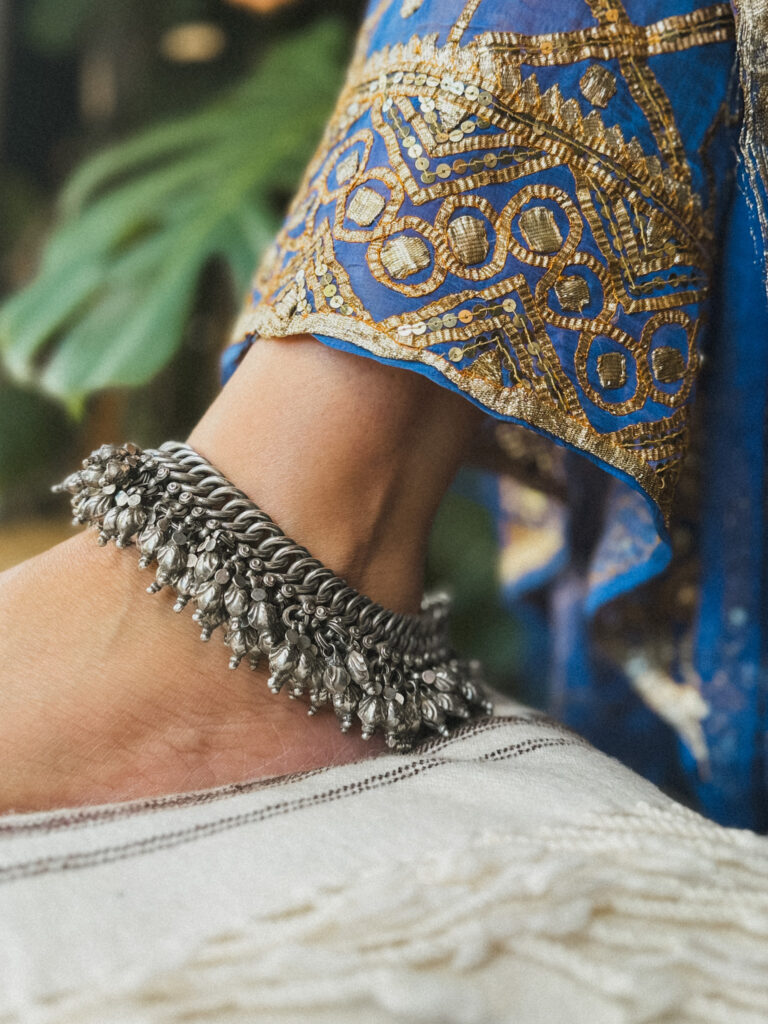
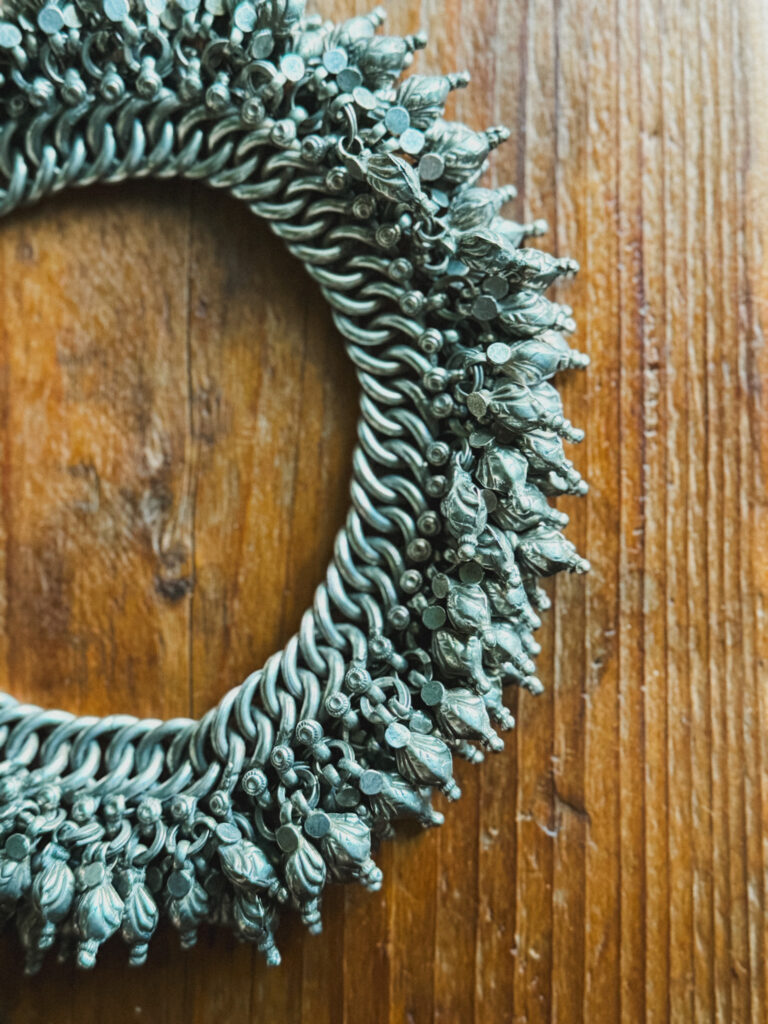
The lost story of this pazeeb mirrors so many Partition stories of that time. Through fragmented family narratives, I have painted a picture of a woman I will never know, and a past I will never fully understand. Heirlooms such as Baebaejaan’s pazaib carry a forgotten truth. As I document my mother’s memories, I collect my history, piecing together who my family were.
This is eloquent nostalgia. Loved this writing piece from you dear Sumayya! I am so glad I read and see your journey through these stories as you complete your book.
Thank you for the story and photos! What an evocative family portrait.