
Text and photographs by Siobhan Andrews Kapoor
Somerset, England
My family know very little about the years my great-great-grandmother spent in India. This tea cosy is one of the only remnants of the four decades she lived away from England, and so we have had to fill in the gaps. I also had no idea that when the tea cosy came into my possession in 2019, gifted to my husband Ashmeet and I by my father on our wedding day, that it would mark the start of an exciting period of research into my ancestors’ past.
My great-great-grandmother’s name was Sarah Andrews (née Filmer). Her story begins in 1892 when, at just 23 years old, her husband Francis, my great-great-grandfather, was posted to India from Britain with his army regiment, the Royal Artillery. They had been married for just over a year when they arrived in Kirkee cantonment (now Khadki) near Pune, and we assume it was the first time either of them had been to India. After four years in Kirkee and a short break in England, they then moved to the north in 1899, where they spent the rest of their time at Sialkot Cantonment near Rawalpindi, before Francis retired after 18 years of service in 1907.
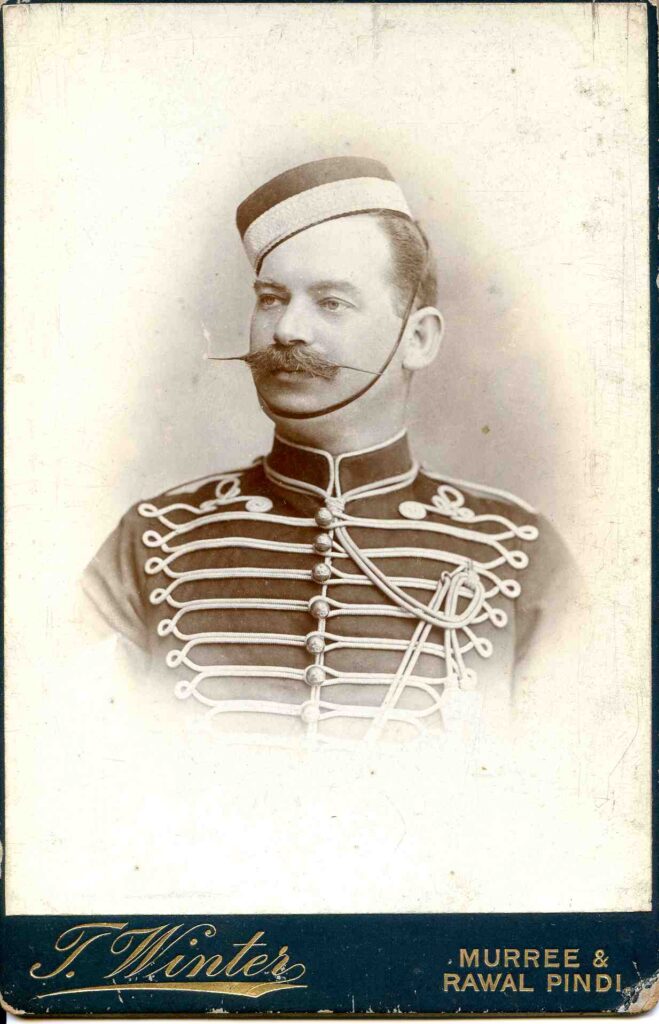
As a military wife, Sarah would have followed Francis wherever he was posted. When I started my research, and before I was even aware of the existence of the tea cosy, we knew from family stories that they had remained in India after he retired, but we didn’t know where or for how long. Luckily my dad is the family historian and guardian of all our documents and stories, so he had been able to establish some basic facts from his own research through the archives in Britain. But I was determined to find out whatever else I could, and began scouring Indian archives and repositories.
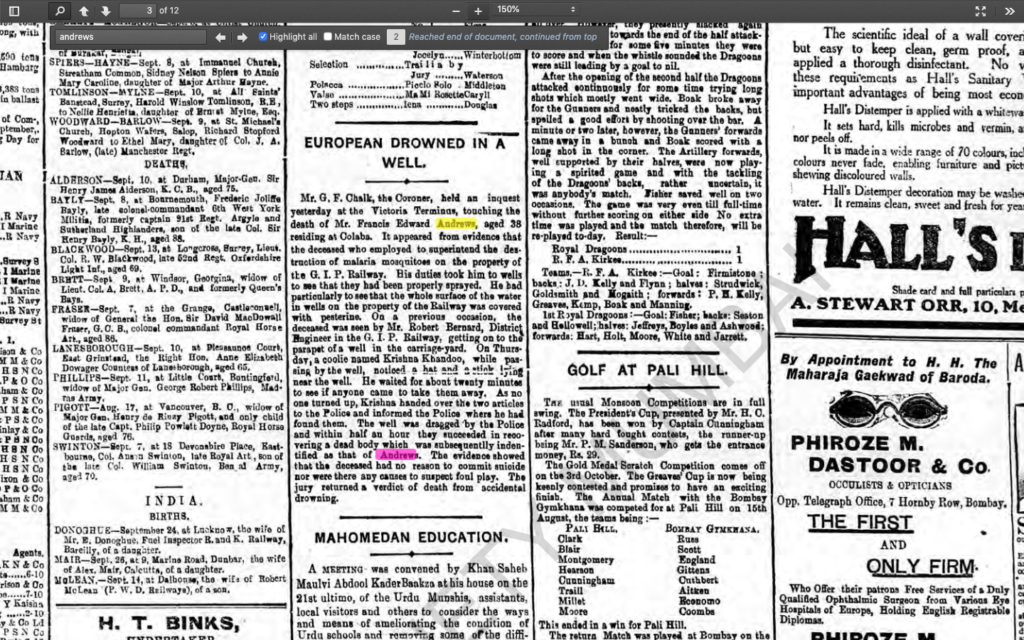
Eventually I came across a newspaper article dated 2nd October 1909, that had been published in The Bombay Gazette, which reported the details of Francis’ death. Again, we knew from family stories that he had died in India, but neither when nor where. Not only did this article give us the details of how he died – by accident, falling down a well – but also information on the inquest that followed. The article told us that he had been working for the Great Indian Peninsula Railway (GIPR) in Bombay at the time. Prior to this, we had no idea that he and Sarah even lived in Bombay, or that he had worked for the railway, but now I knew that he was based at their headquarters at Victoria Terminus Railway Station (CSMT). Further research uncovered more facts – that he was buried at Sewri Christian Cemetery in Bombay – which led me to take a trip to visit the grave and see his name in the burial records for myself.
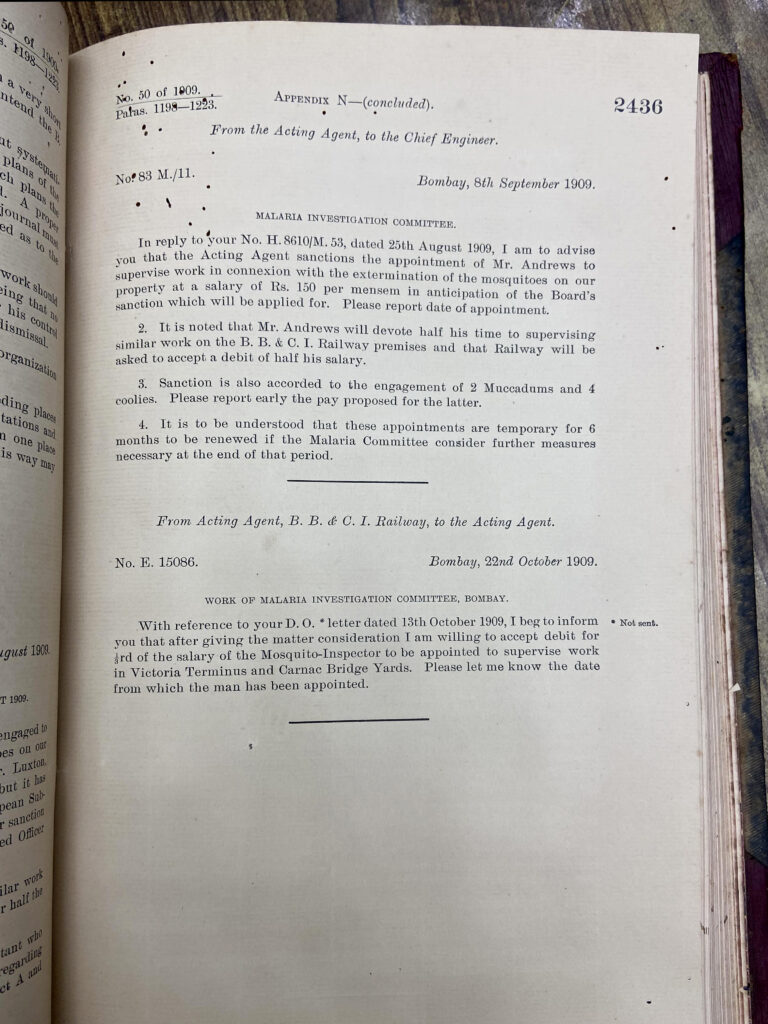
It wasn’t until 2019 when we were gifted the tea cosy that I began taking my research more seriously. Suddenly I found myself holding a physical object that linked me to my ancestors and a moment in the past, which had until then felt abstract and opaque. I wanted to know more, and the tea cosy inspired me to keep searching. Aware that Francis had worked at the GIPR, I made a visit to Bombay to view the archives at the CSMT Heritage Museum. Here I discovered a letter in the GIPR Company correspondence that announced Francis’ appointment as ‘Malaria Superintendent’ on a salary of 150 INR per month. His job was to inspect all the wells on railway property (of which there were many!) to help curb the spread of malaria, which scientific developments at the time had recently linked to the presence of mosquitoes in stagnant water. My research was slow, but a picture of my great-great-grandparents and their life in India was gradually becoming clearer.
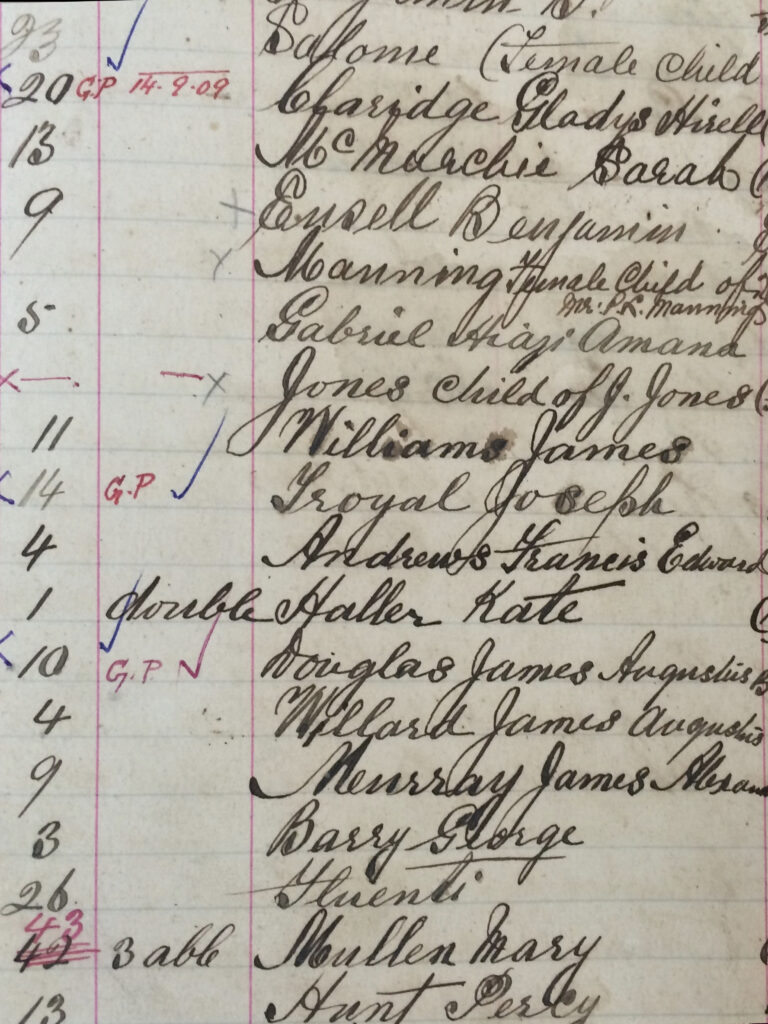
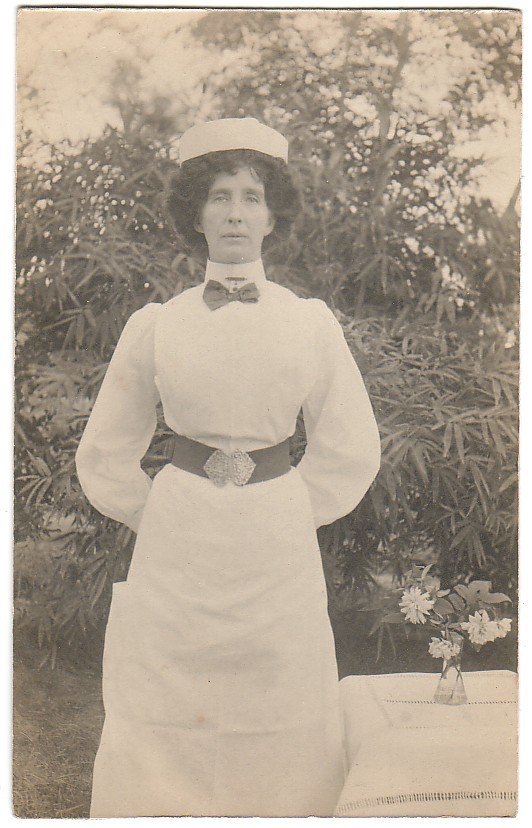
But what about Sarah? Sadly, my research has shed less light on her life. When Francis died, Sarah was left a widow at just 38 years old, alone in India with two teenage sons. We don’t know how she spent her time before Francis died, but we do know that at some point she became a hospital matron at Jutogh Family Hospital near Shimla, and we are lucky to have a few photographs in our family collection that show her in her nurse’s uniform, perhaps taken in Shimla. Years passed after Francis’ death, and we think Sarah finally came ‘home’ to England sometime in the 1930s, after what would have been almost 40 years in India, likely bringing the tea cosy with her. We don’t know when she bought it or when it was made, but we do know that it must have been before 1945, as she died in England that year.
With so many gaps in her history, I’ve been left with endless unanswered questions: was my great-great-grandmother fond of tea, and how often did she drink it? Did she have Indian visitors calling on her at home, as well as British? Considering she spent so many years in a country that, since the introduction of tea-growing practices by the East India Company in the 19th century, was producing copious quantities of the crop it seems probable that taking afternoon tea would have been a daily occurrence. I like to imagine that Sarah’s days had a comfortable rhythm to them, and perhaps drinking tea with friends and others was a part of that.
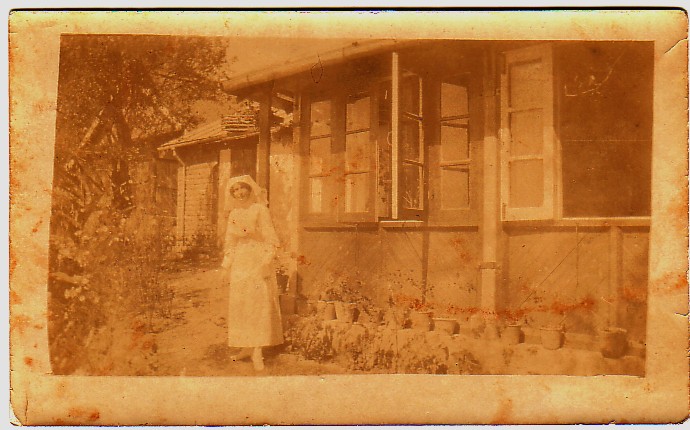
After Sarah died, the tea cosy was passed to my great-grandparents, Albert and Alice May Andrews. Growing up, my dad had a close relationship with them, and visited them at their home on weekends, where he remembers seeing the tea cosy in a wooden chest that was kept on the first floor landing at the top of the stairs. Eventually, my dad inherited the tea cosy along with various other family heirlooms and furniture. He kept it stored until 2019, when he brought it back to India for my wedding. Like my great-great-grandmother, I grew up in England, but by the time I got married, India had also become my home.
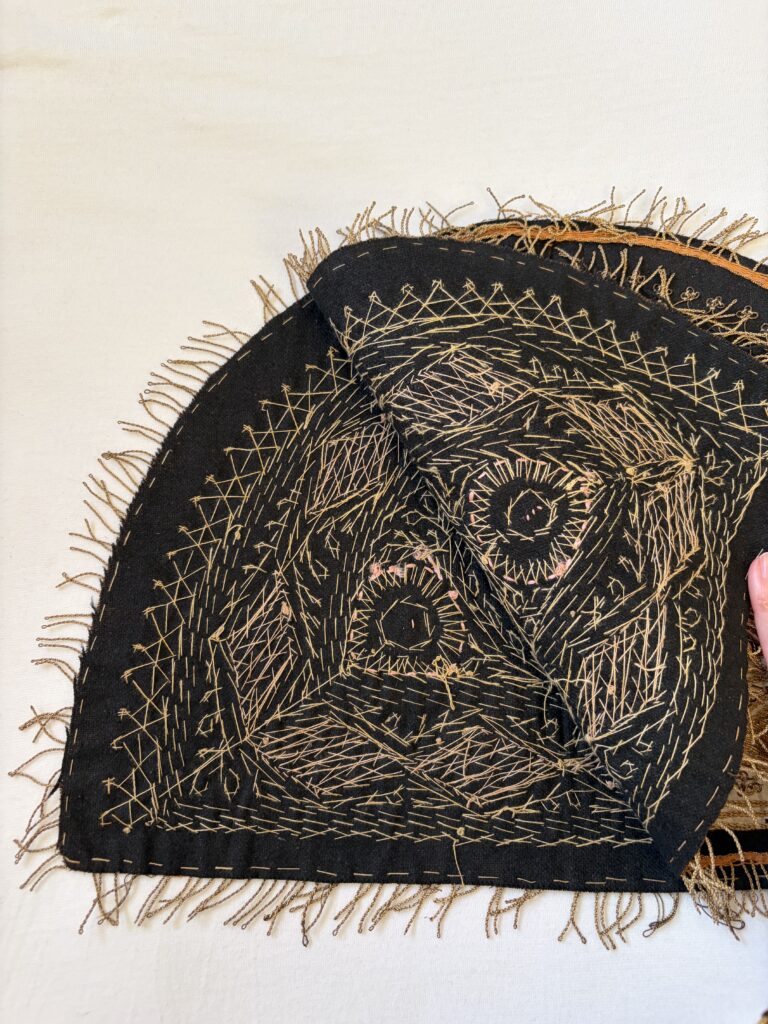
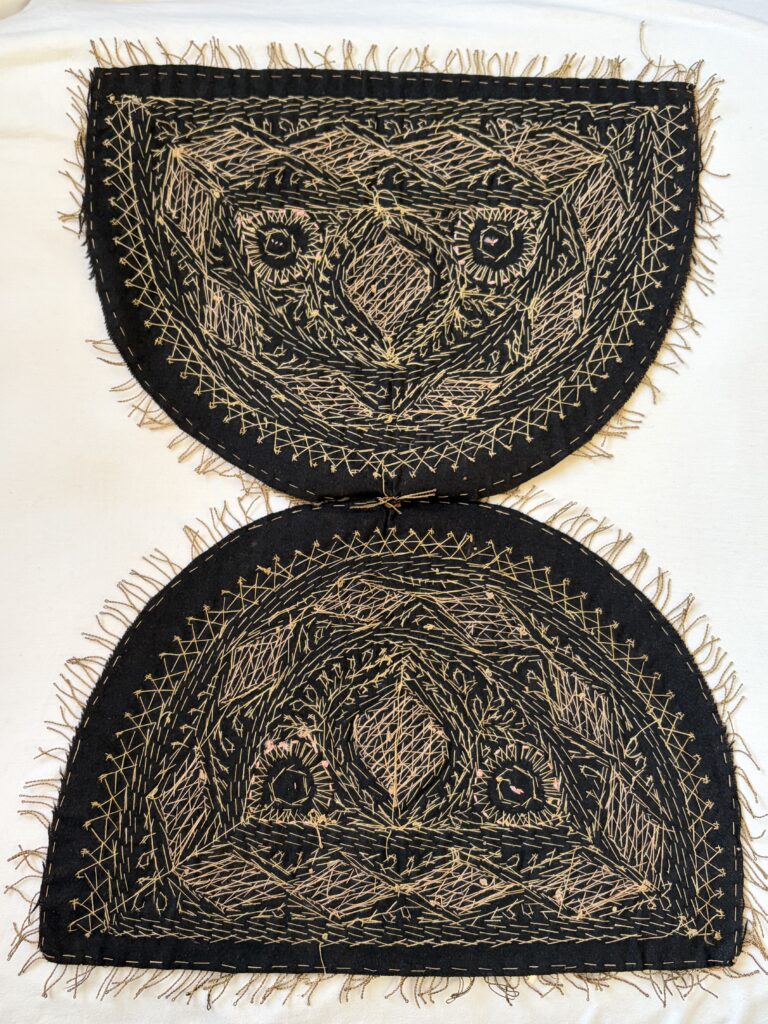
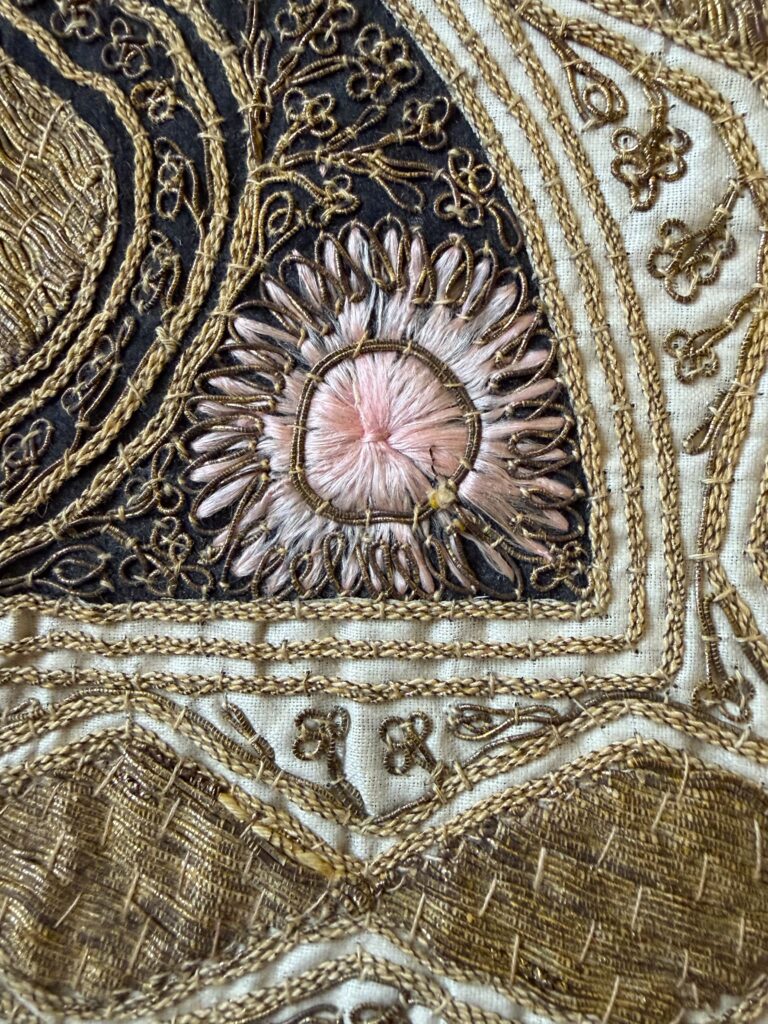
The tea cosy is made of a black fabric, slightly rough to the touch, that feels like cotton or perhaps linen. It has been cut in the traditional dome-shaped design that would cover a teapot, but it lacks the layer of stuffing it would need to keep the tea sufficiently warm. Occasionally you still see tea cosies used in England today, but it’s believed they were first introduced in the 19th century in tandem with the increase in tea production, which had made regular tea-drinking accessible. The presence of tea cosies only increased as the Victorian era in Britain continued – a trend which I’m sure many British expats brought with them to India.
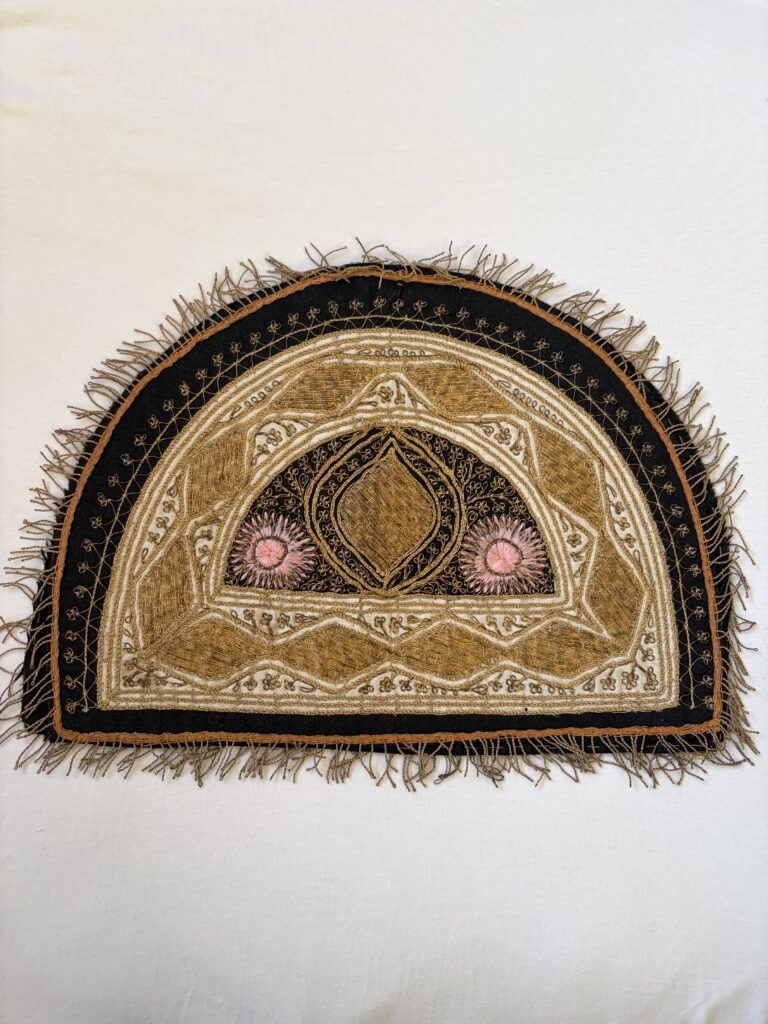
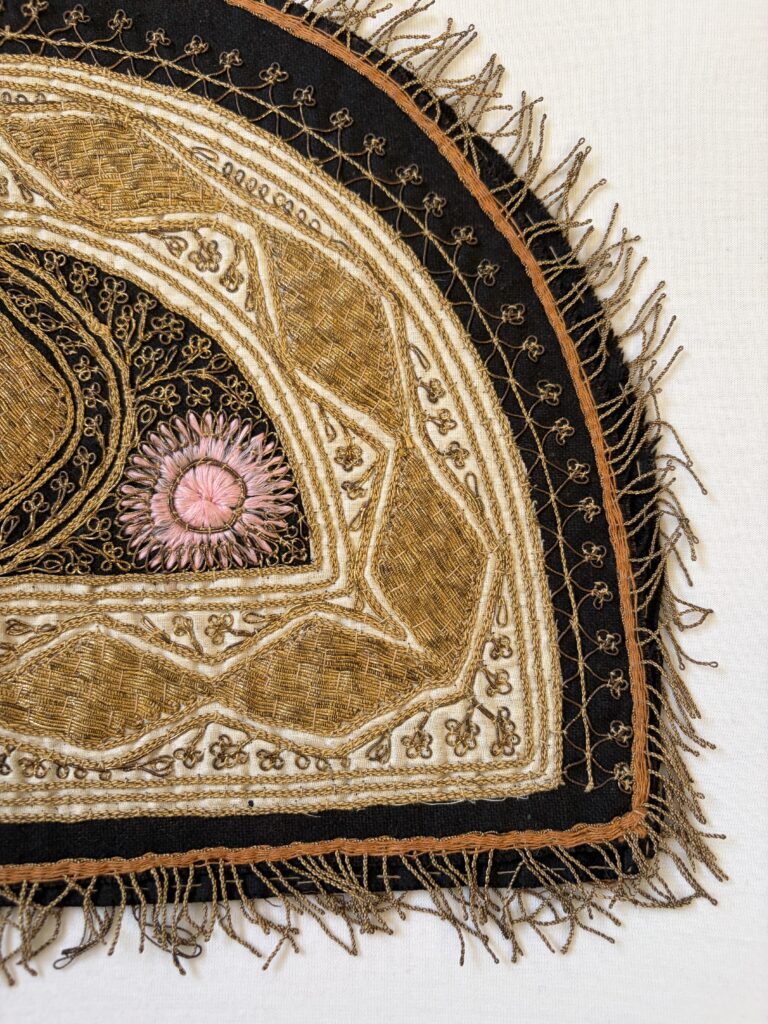
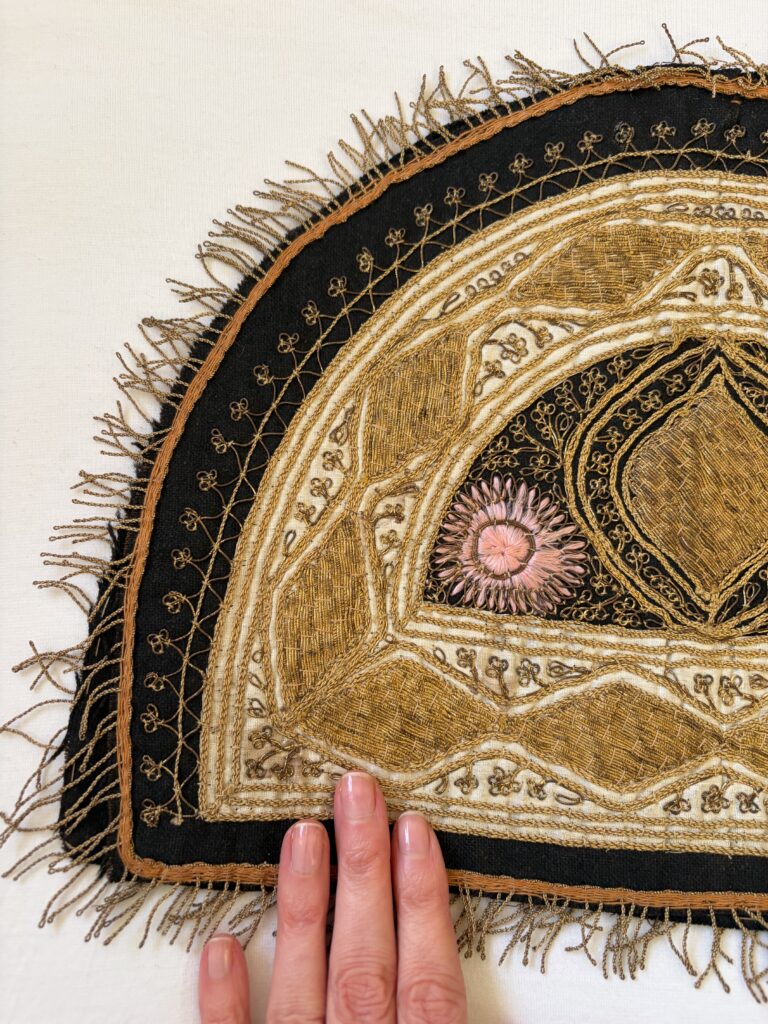
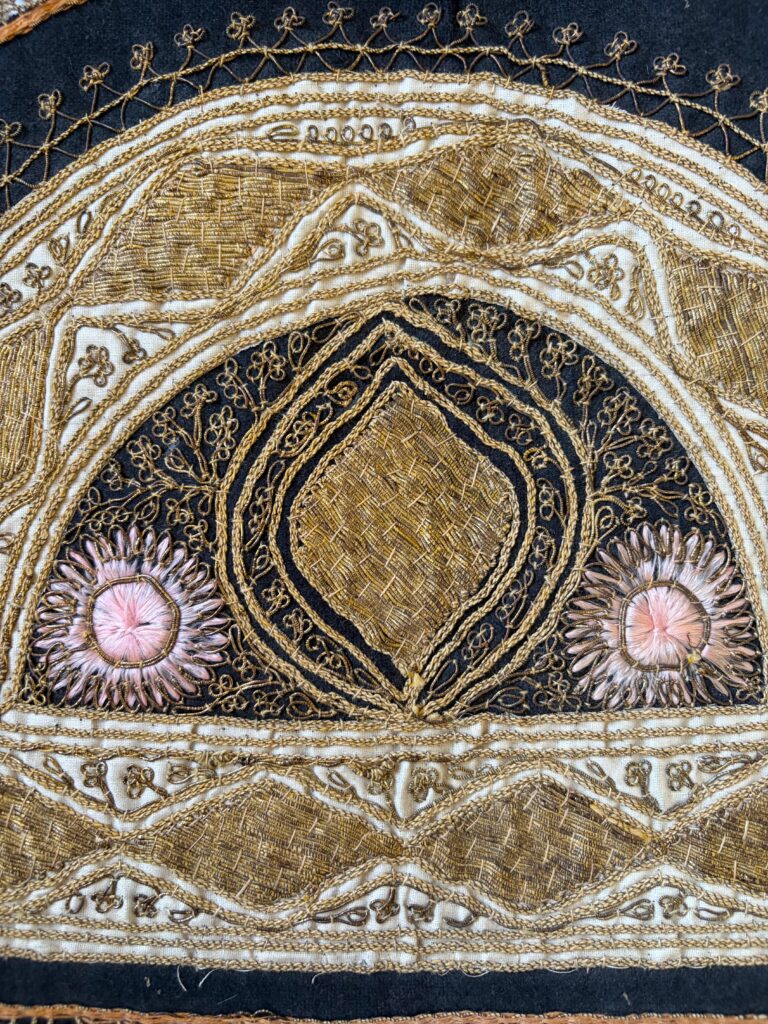
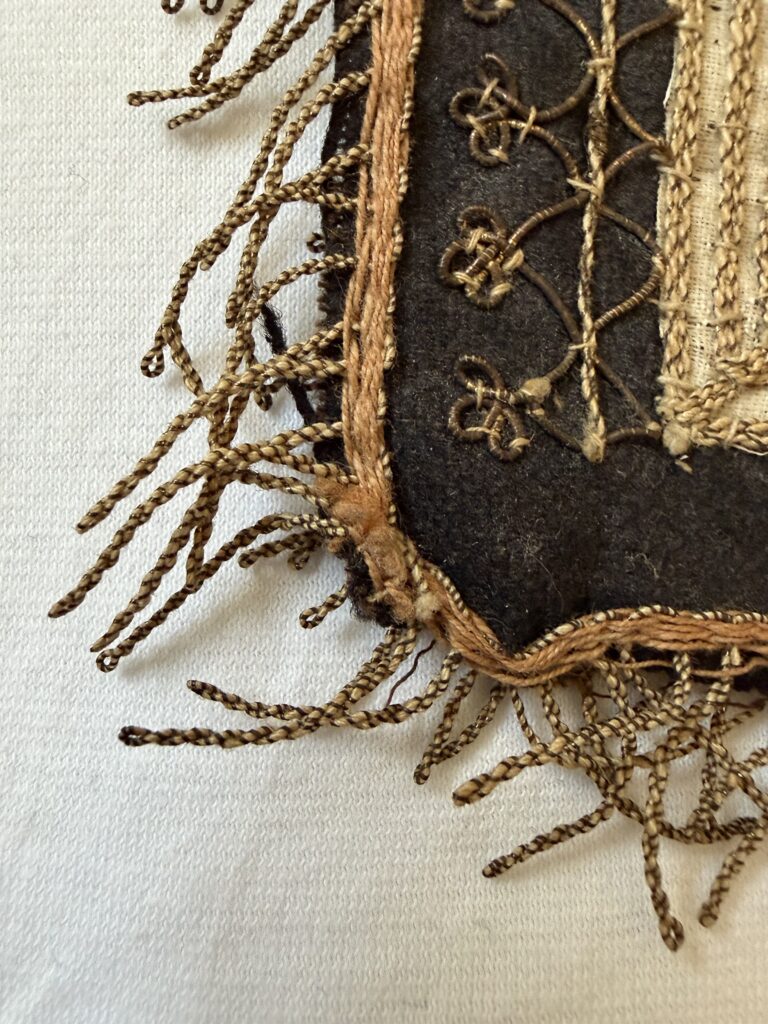
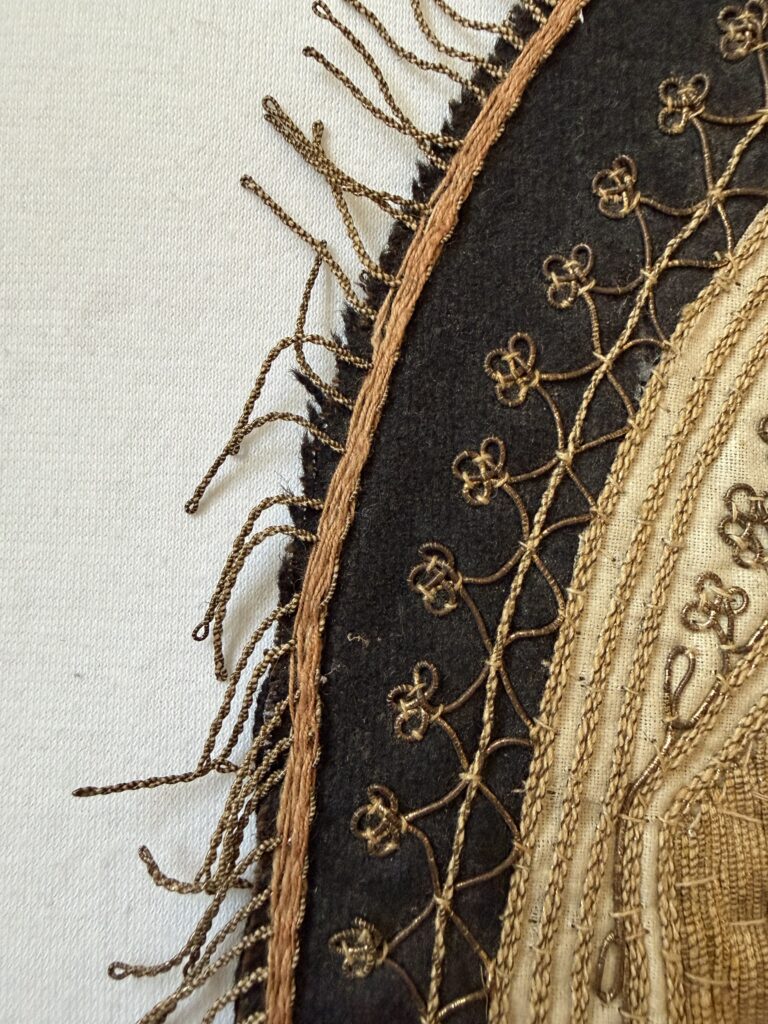
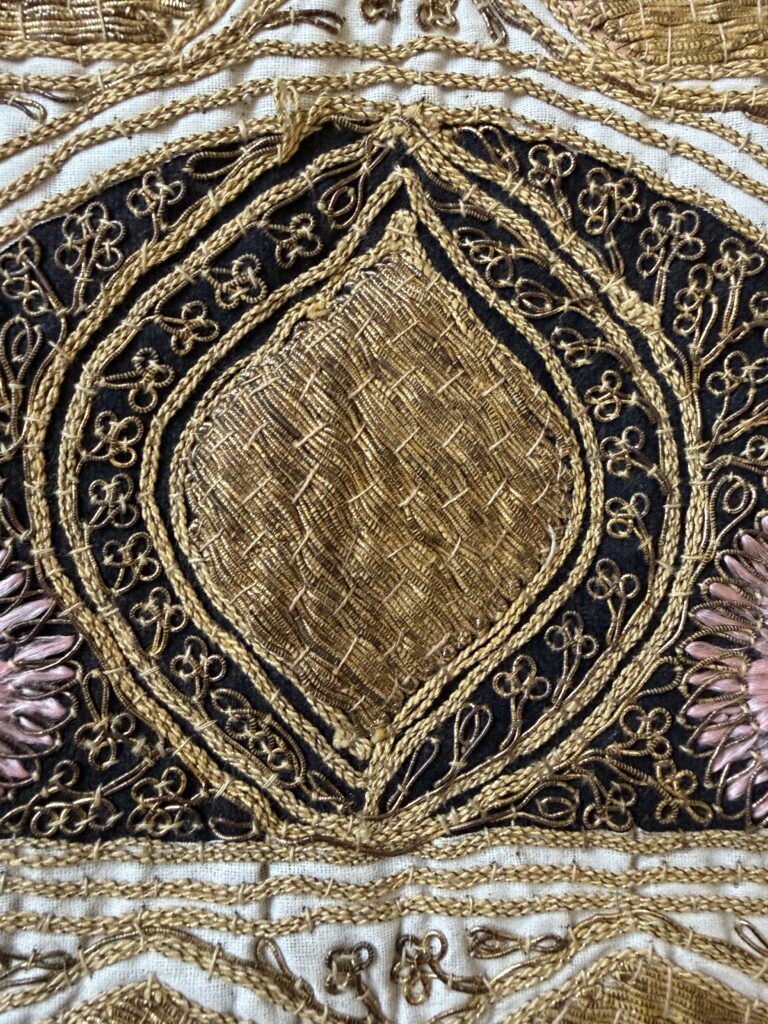
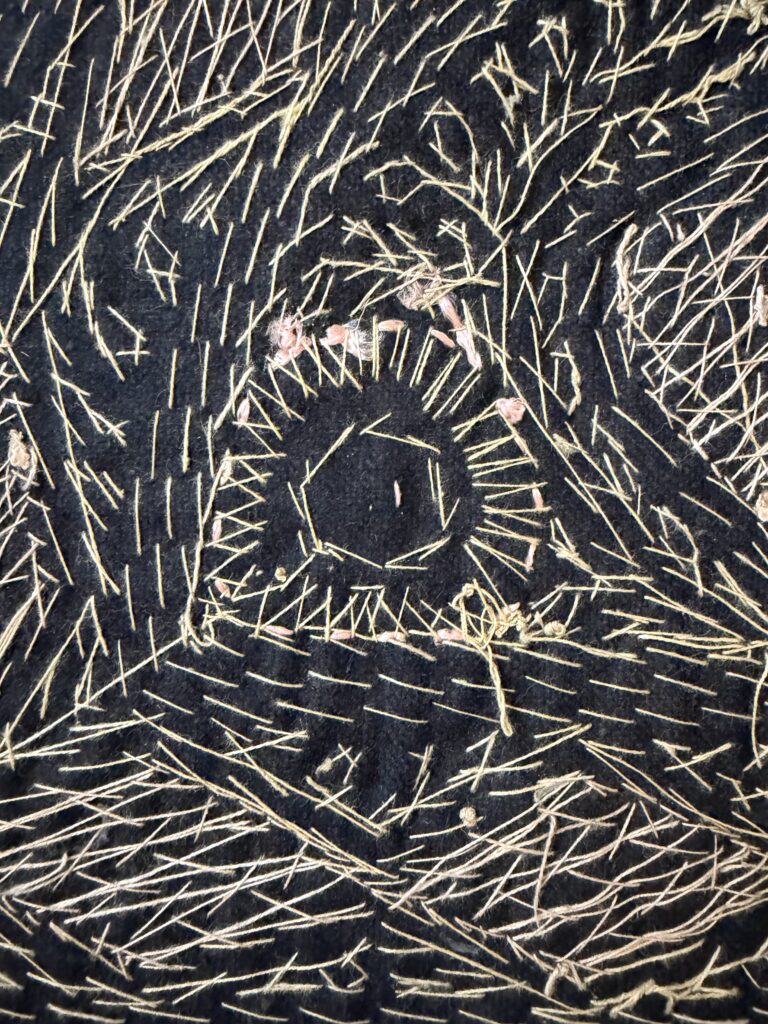
Both sides of the cosy are covered with embroidered metallic and silk threads stitched by hand, in the Zardozi embroidery style. The edges are trimmed with tassels of twisted thread, and the central motifs, which include two light pink flowers, are raised and feel rough to the touch. I find the juxtaposition of such a quintessentially English object combined with motifs and embroidery techniques that are so distinctly Indian to be very interesting. It makes me wonder whether such objects were simply a colonial import, made by local craftspeople to sell to foreigners, or did Indians adopt the use of tea cosies at some point too? It seems likely that they might have, especially given how widespread tea became in India under Imperial rule.
Intriguingly, the tea cosy has been left unstitched – the reverse side is attached to the front with a single stitch at the top – and without the stuffing inserted, it feels like the ghost of a tea cosy. I can now only imagine why it was never used: perhaps it was a gift that was never given, or maybe my great-great-grandmother thought it was too precious for daily use and was saving it for a special occasion that never happened. Or maybe it was simply stored away and forgotten about altogether. Perhaps Sarah had a simpler, less decorative tea cosy she used while she lived in India? Taking a moment to consider these possibilities brings up so many questions for me, and I desperately wish I could know the answers.

Now, at home in England, I mostly keep the tea cosy tucked away in a cupboard in a protective box and sleeve. The fact that is has never been used for its intended purpose gives it an aura of redundancy. It feels odd to keep it stored in a box, but I couldn’t bring myself to use it now, especially as I don’t drink tea and I don’t own a teapot!
Occasionally I’ll take it out to look at it, but otherwise I don’t hold it in my hands very often – I’m too scared I might lose my only connection to my great-great-grandmother by damaging it. But when I do hold it, I can’t help thinking of her hands holding it too. I wonder where she might have bought it, and the unknown house in India where she first kept it. Did she have similar objects like it? I can only imagine what the rest of her belongings would have looked like. It seems extraordinary that she held this object in her hands a century before I did, and that somehow, against the odds, it found its way to me. That is the magic of inherited objects – they connect us to people we feel we know well but have never met, and to places we can only hope life might lead us to.