
TEXT BY ASHISH KOUL
PHOTOGRAPHS BY NAVDHA MALHOTRA
New Delhi, India
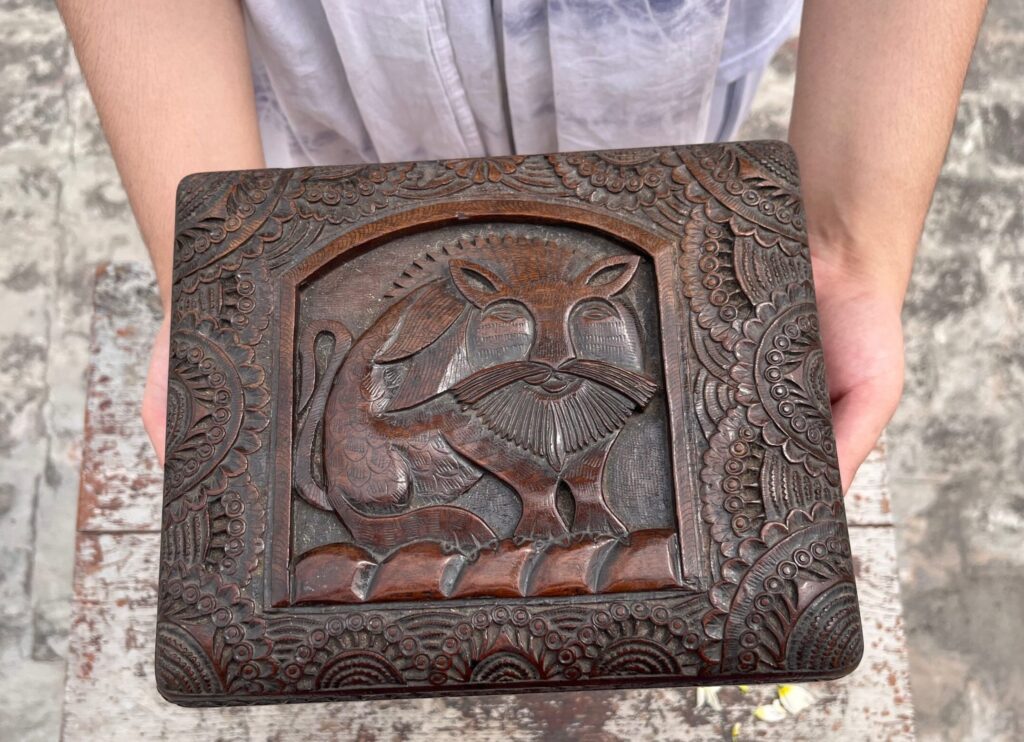
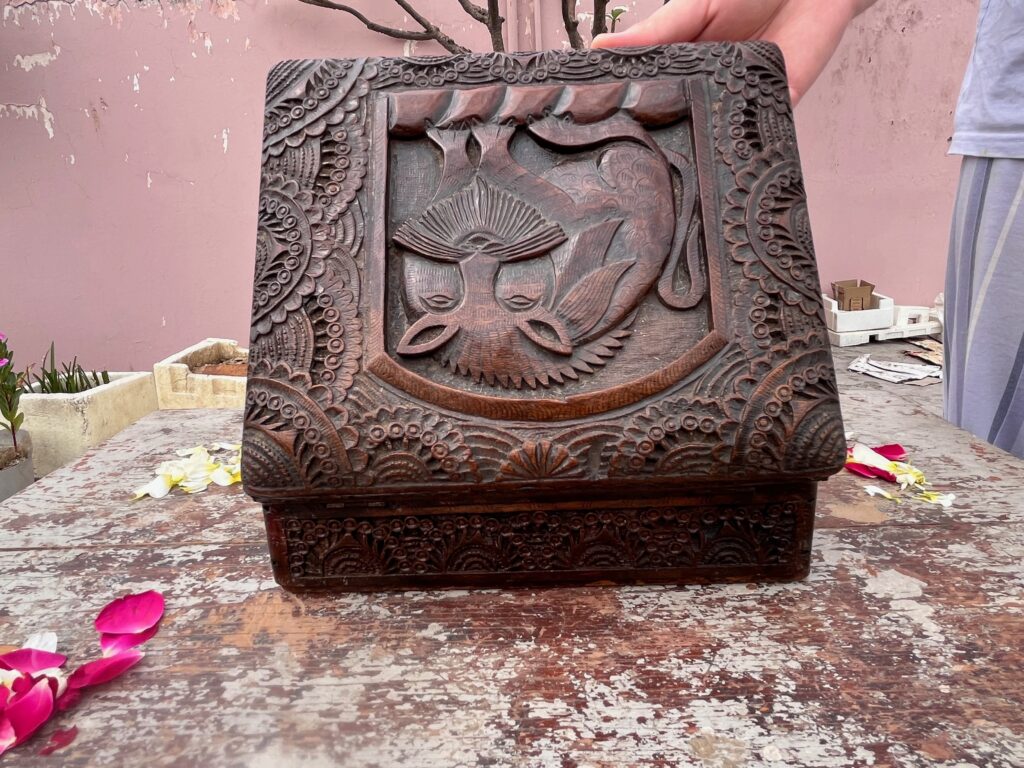
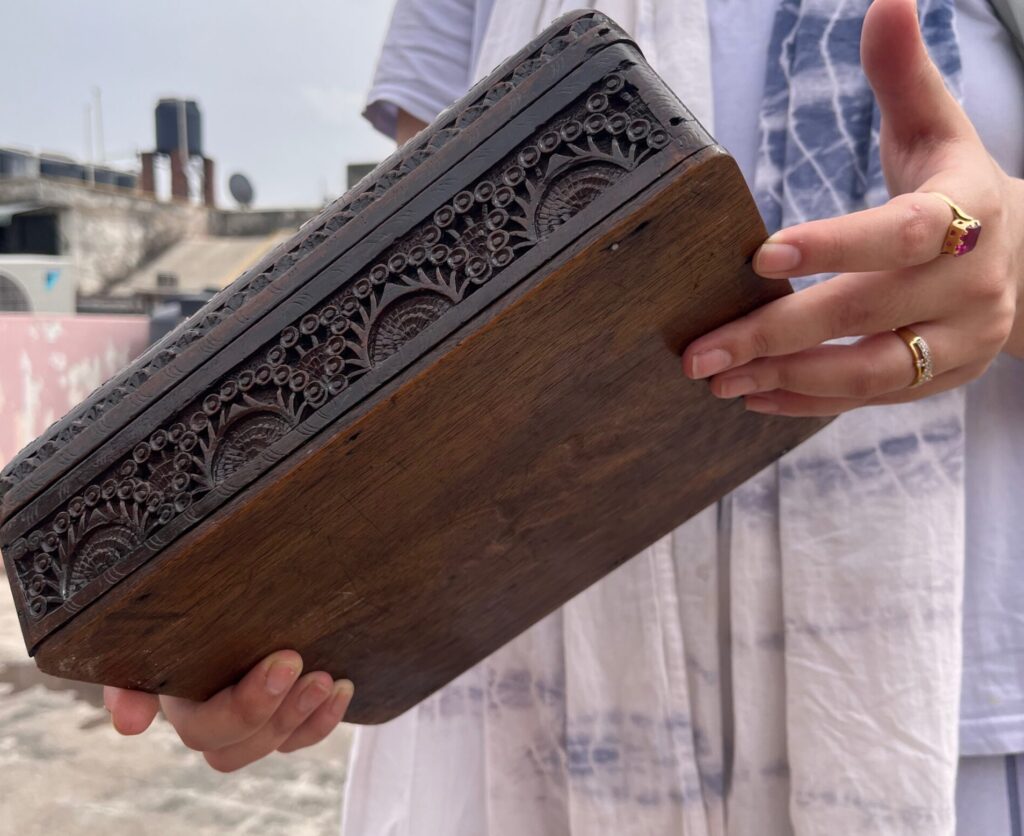
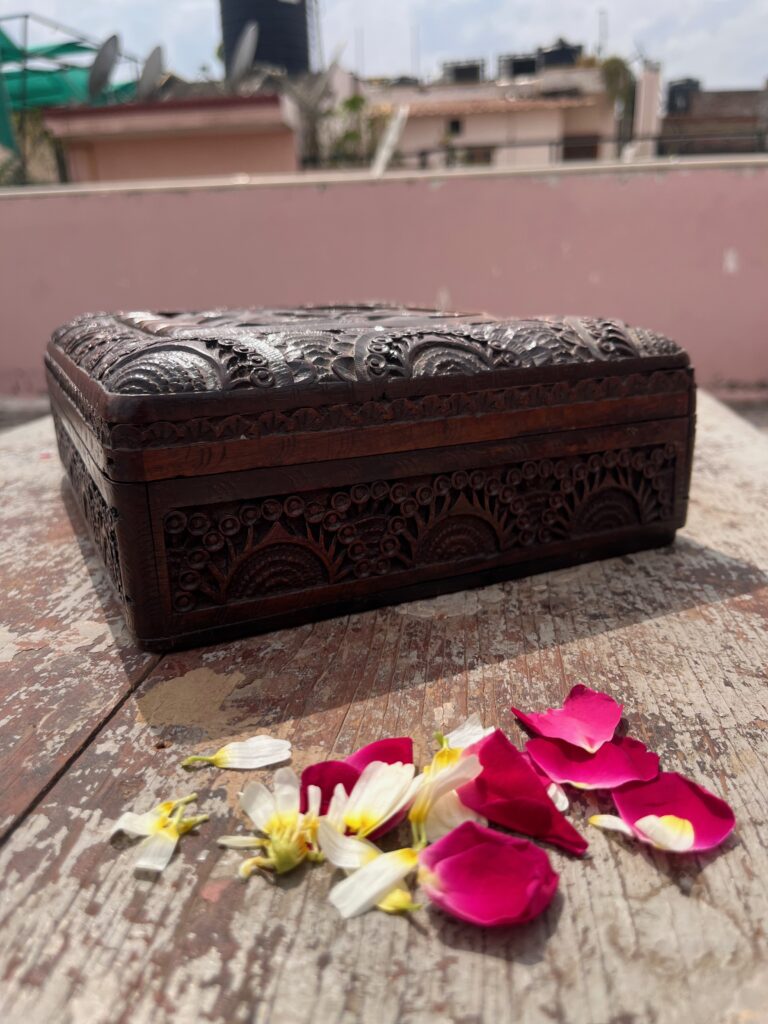
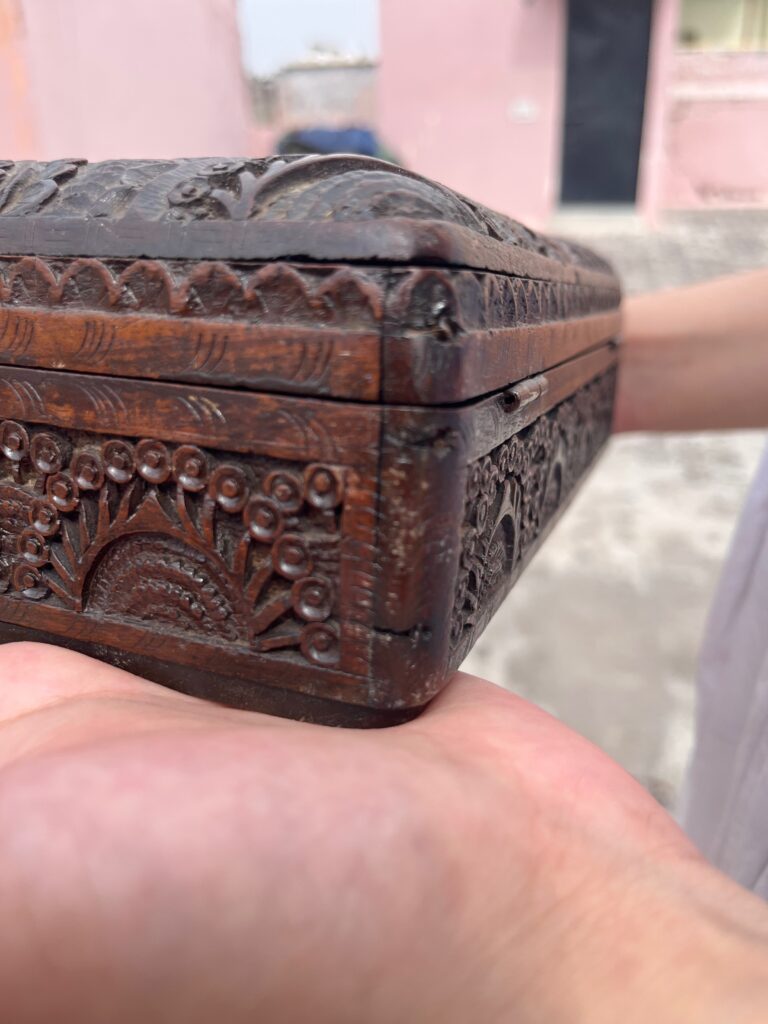
A squarish walnut wood box. About 11 inches long, 10 inches wide, and a little more than 3 inches deep. Unknown date of purchase. Likely hand-carved by an unknown artisan in what used to be the riyasat of Jammu and Kashmir in colonial India.
On the lid, a boldly carved lion with a somewhat outsized head, staring back at the viewer. A toy-like caricature with facial hair akin more to feline whiskers than a leonine mane. Base and interior uncarved. Dividers inside create some square, some rectangular spaces. At least two coats of paint have given it a smooth, rich, chocolate brown exterior.
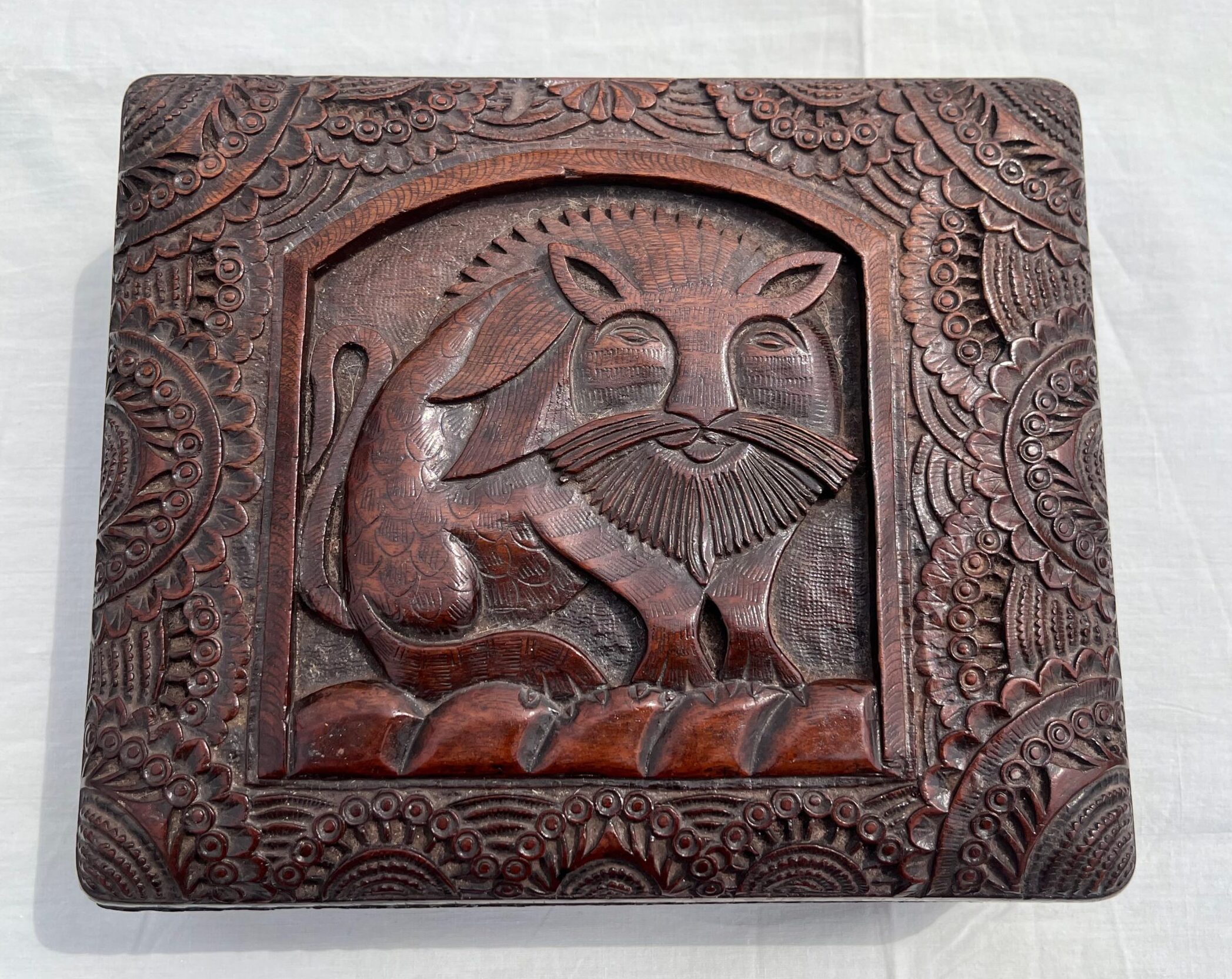
I decided to ask my father about this box last winter, after a lifetime of knowing that it came from our ‘real’ home in Sirinagar city, the summer capital of what was the state of Jammu and Kashmir in India until 2019. From Papa I learnt that the box has been in our family for more than seventy years. My paternal grandfather—Bobji to our family—purchased it from papier mâché artisans in Anantnag. As far back as Papa can remember, Bobji used this box for storing his shaving supplies, even though it was intended as a jewelry box. When Bobji passed away suddenly in October of 1971, Papa decided to continue using it for the same purpose. As a young man then on the cusp of fatherhood himself, the box brought him a transcendent sort of solace, a continuity that felt like fatherly love preserved despite Bobji’s absence from the physical world. In Papa’s words: “My father [Bobji] did not have time to pass it on to me. He died all of a sudden…this is the only souvenir (yadgar) of my dad.” 1
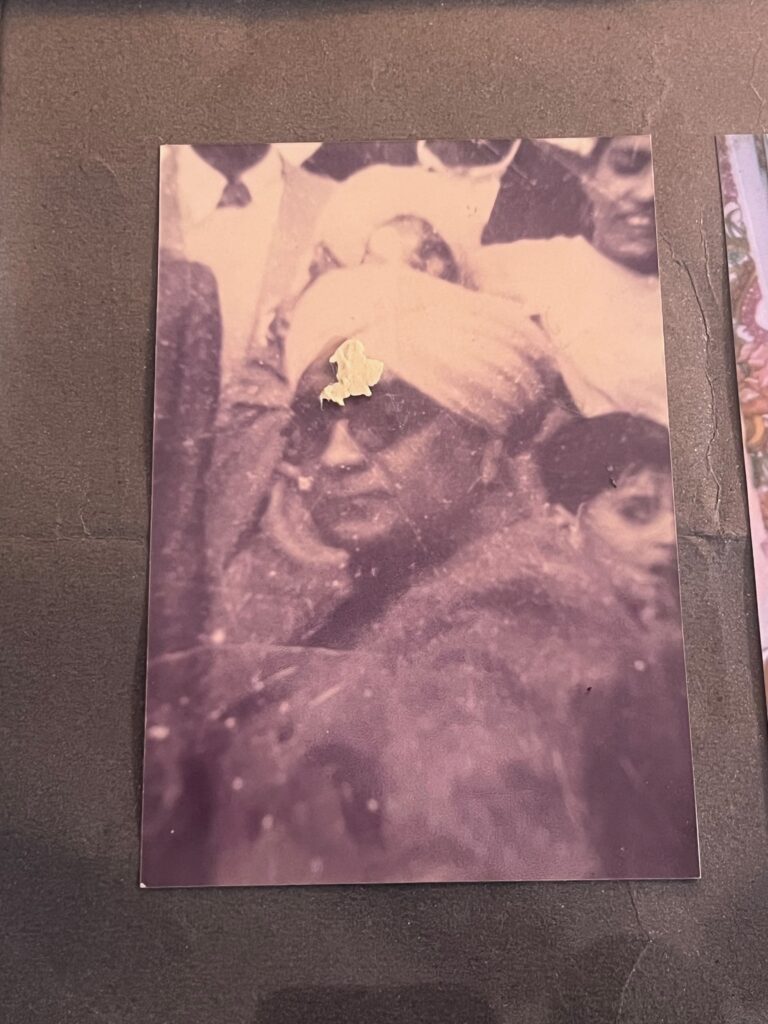
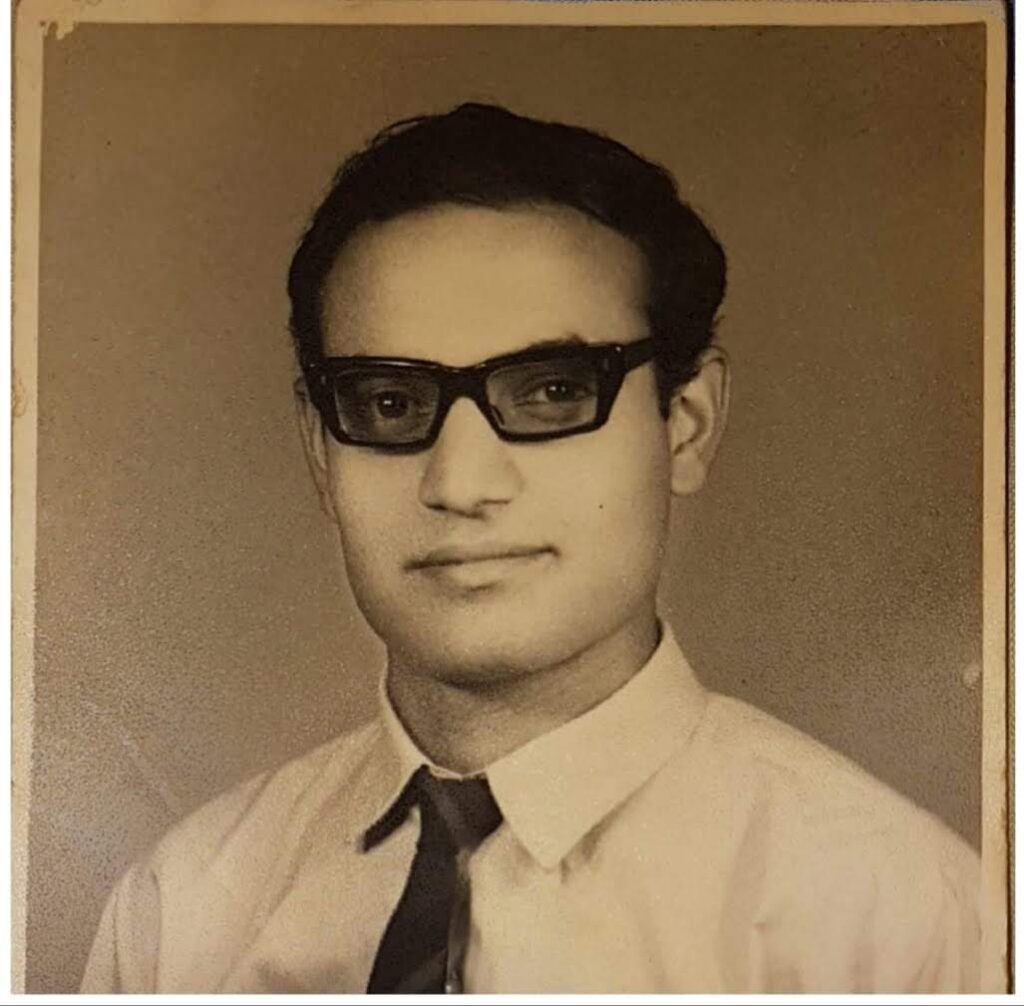
In April 1990, Papa was forced to leave this box and the only home he had ever known. Like other Kashmiri Pandit families at the time, we packed some clothes and sought refuge in Jammu, the winter capital of the-then state of Jammu and Kashmir, and the nearest city familiar to my parents. Papa had spent some years working in Jammu during the mid-1970s.
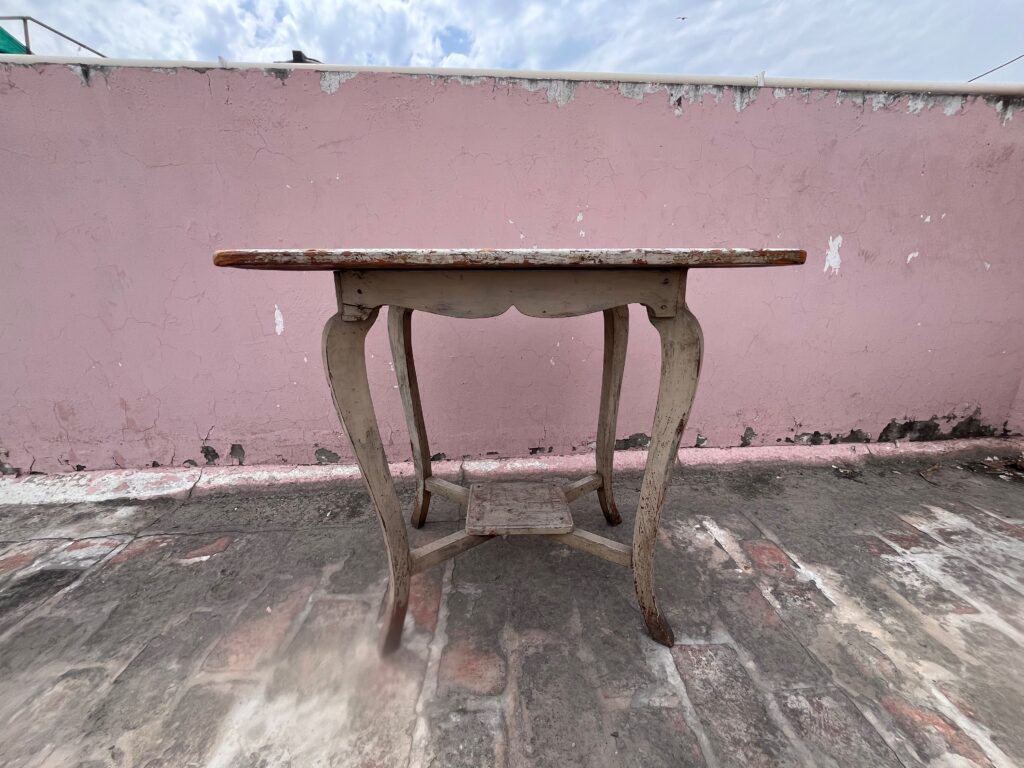
Two years later, on a rainy winter night in 1992, Papa brought over an assortment of household objects from our Sirinagar home to our rented rooms in Jammu. Bobji’s shaving box was one among these, alongside some utensils from the choke (kitchen); two kaelin (rugs), an almirah, and a side table from a bedroom; three takhtposh from the vott, the living room.
Until a few years ago, Papa stored his shaving razors, brush, and cream in the box. Opened and used at least three times a week. An artifact in exile from his ‘real’ home, a presence from the world he can no longer live in. A tangible, textured node for conjuring a lost home in alien places.
Today the box is in a Delhi apartment but no longer serves the same quotidian purpose. Papa keeps some images of the elephant-headed god Ganesh in it, along with a couple of unused combs, and old sacred threads (yauni) he is yet to consign to a body of flowing water, as he believes these should be.
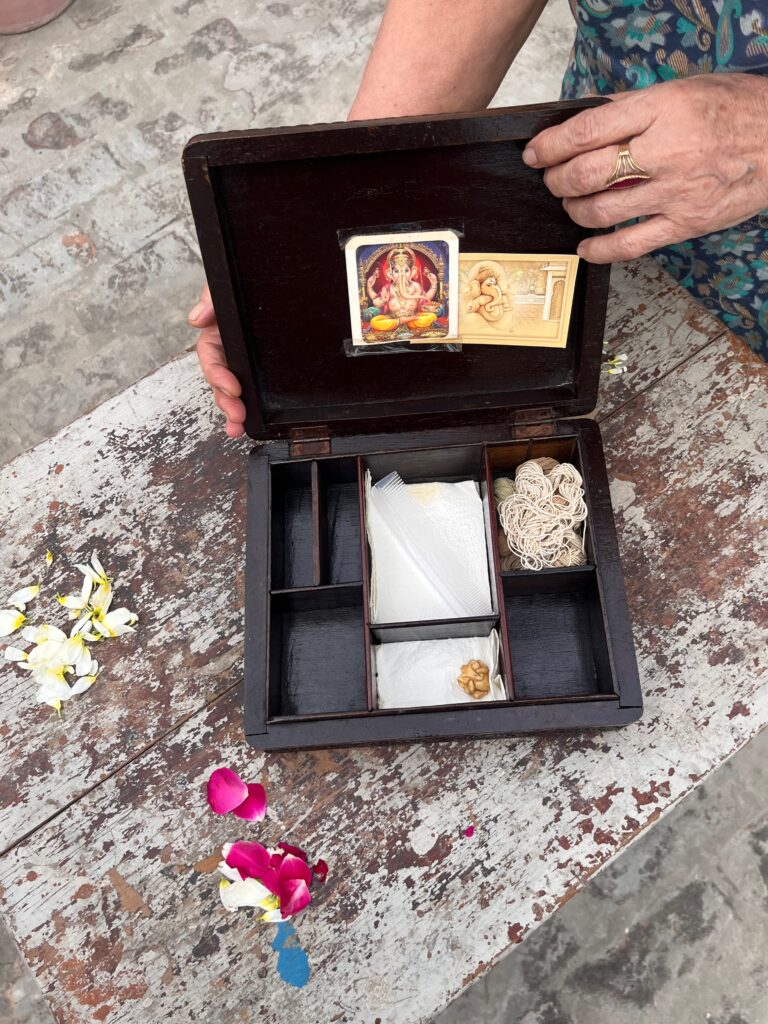
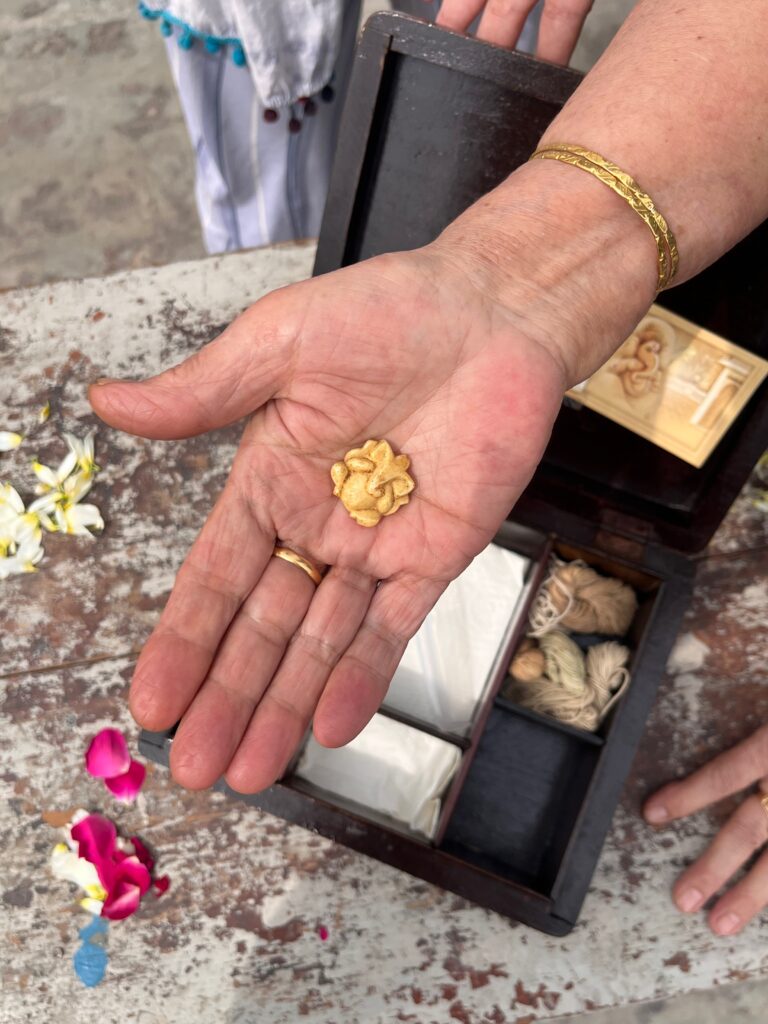
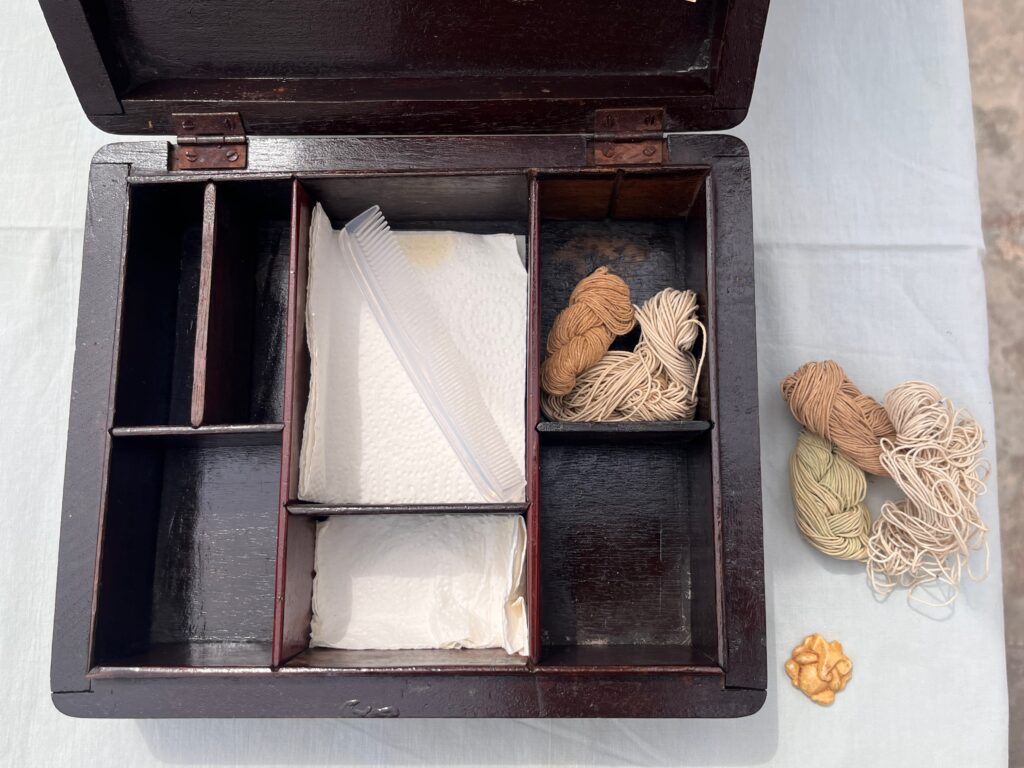
Now it is a box that holds cross-generational emotions. A ritual thread emblematic of patrilineal, brahmanical masculinity abuts a set of plastic combs, the god of new beginnings in a box made in a Kashmir older than Papa. Although its hinges look beaten and tired, the box itself shines with a painted newness that envelops lasting emotions and alterable routines.
Papa did not want to leave Sirinagar. In 1942, Bobji built the home where he grew up. Childhood, youth, education, marriage, parenthood—all in this one home. But his world shifted during the late 1980s when decades of political disenfranchisement and socio-economic grievances fueled an armed, popular movement against Indian sovereignty over Kashmir—a struggle for azadi or freedom that devolved into violence disappointingly soon. Halat—conditions—in the Valley were refusing to let up. Wrestling with a collective fear and a tenuous hope of a quick return that gripped thousands of Kashmiri Pandits like them, my parents brought us to Jammu.
In subsequent years, however, they were forced to accept the unlikelihood, if not the outright impossibility, of return. Instead, my parents focused on rehabilitation, setting their emotions and memories aside.
But the wounds of homelessness run deep. More than three decades later, when I asked Papa about the decision to leave home, a palpable urgency permeated his voice. “When we left in 1990, I told my neighbors this [his home] is under your protection now. I told them I am leaving…I cannot live here with my small children, that too, only girls…I feel a threat to my life. I found out that my name was included in a kill list posted on a lamppost outside the local mosque…I want to take my family to a safe place.”2
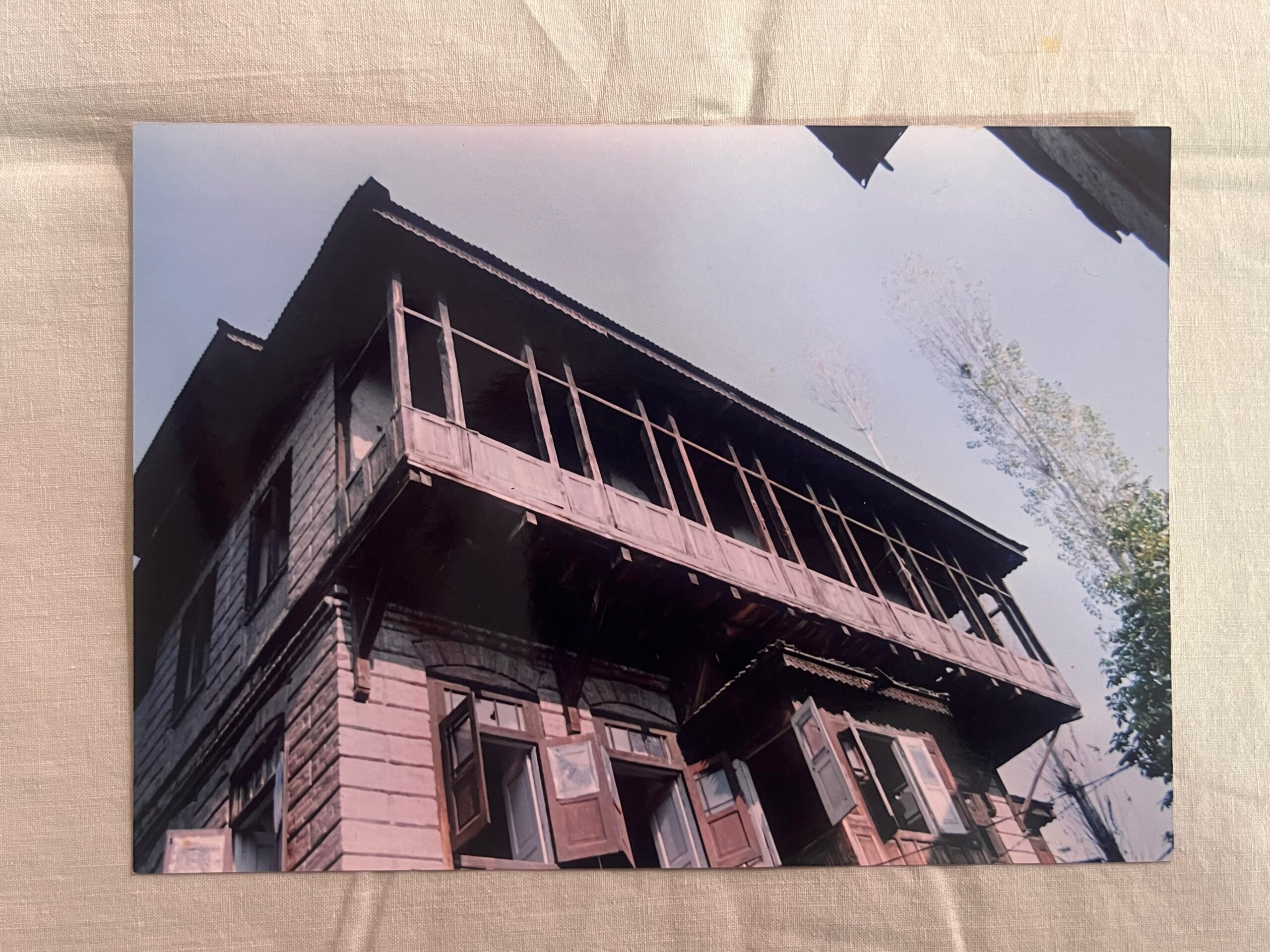
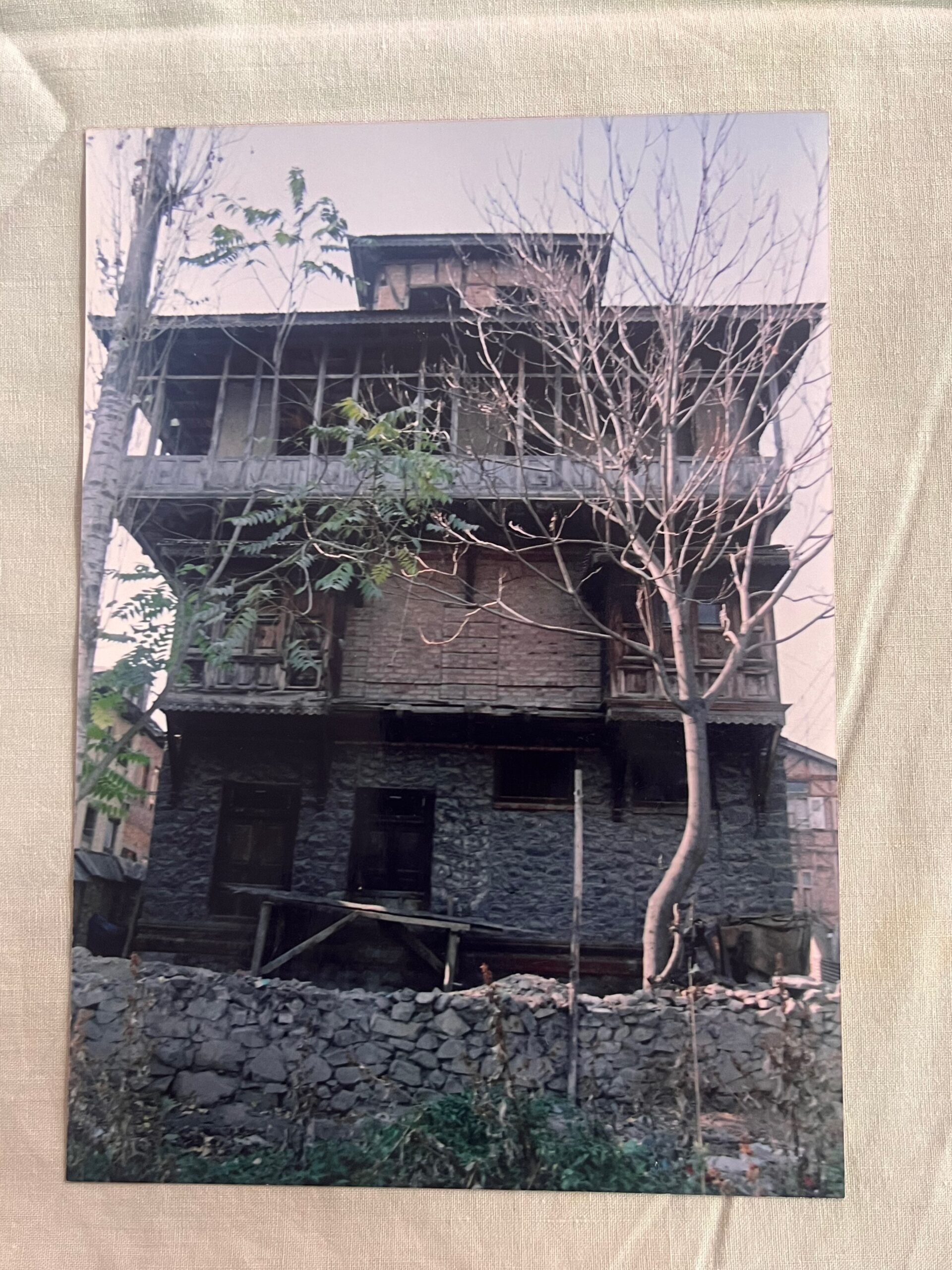
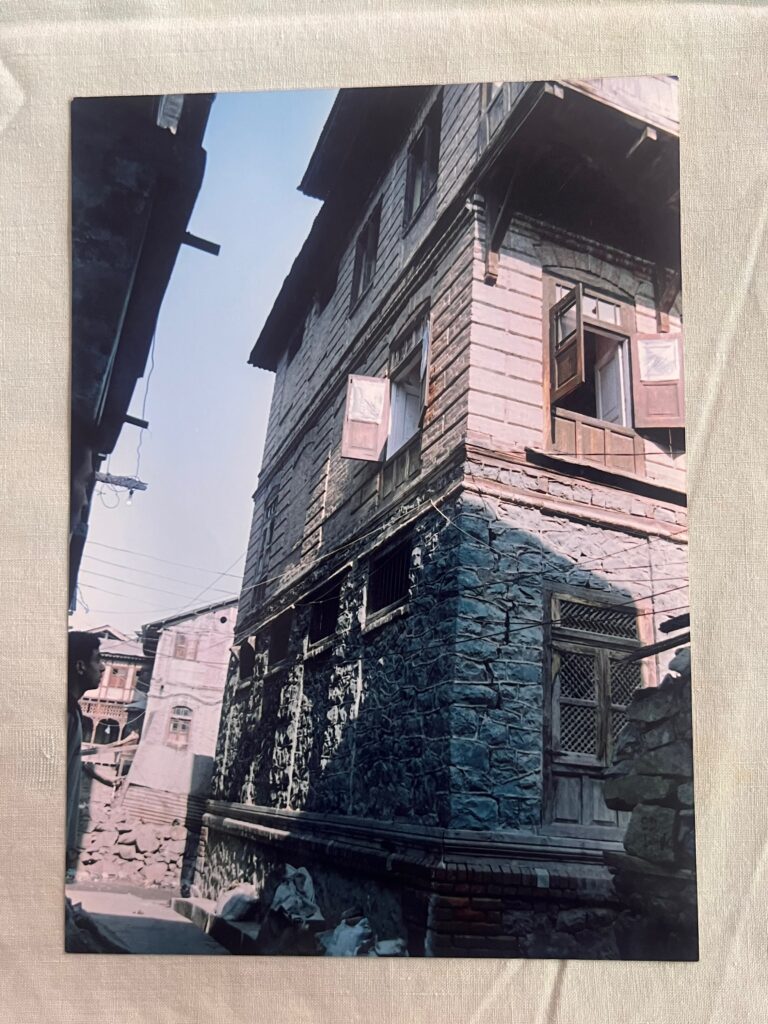
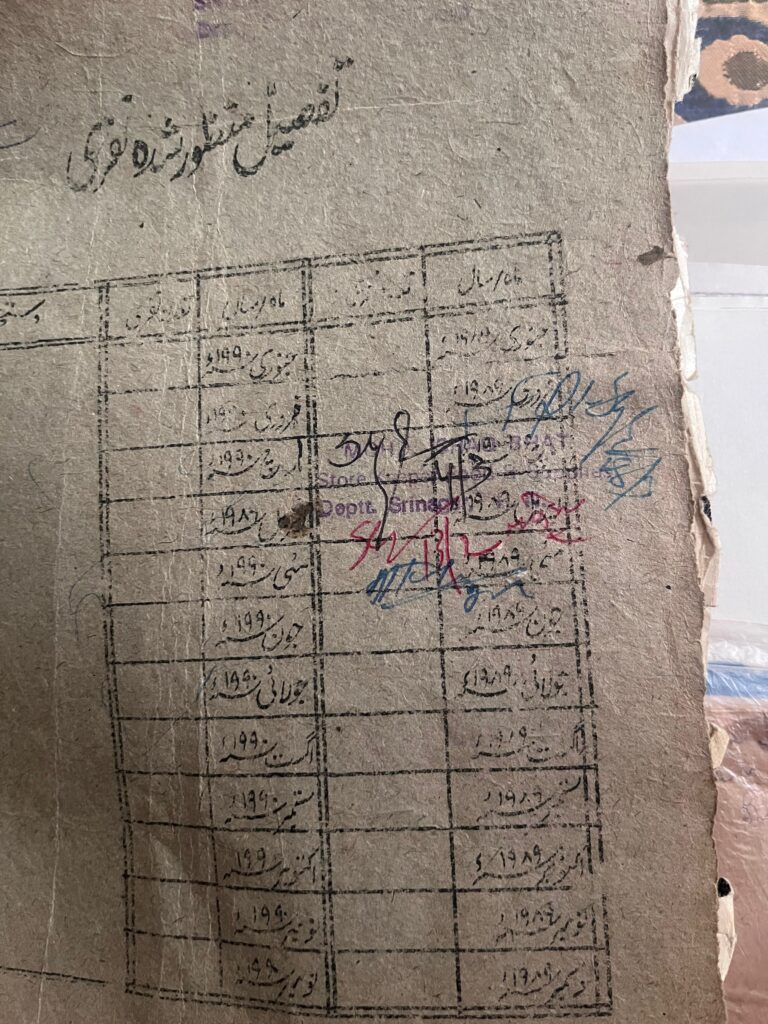
Less than two years later, Papa was back in Srinagar working as one of the employees keeping the State Bank of India branches running under the protection of local police and paramilitary forces. While there, one of our Muslim neighbors visited his workplace and informed him about a crackdown in our neighborhood. Papa was told that despite the neighbor’s pleas that security forces contact him, the home’s owner, they had forcibly broken in to search the house and taken away a radio and my grandfather’s books. The neighbor came to tell him that they could no longer keep an eye on his home because those men had left the doors wide open. That communication triggered what would become Papa’s last visit to his home.
A friend arranged a truck, driver, laborers, and policemen for security. With them, Papa arrived home and, with tears in his eyes, started gathering things—including the shaving box from Bobji’s room. The laborers, he says, picked up whatever was in front of them—this was how the almirah, the takhtposh, the side table, kitchen utensils, and the rugs entered the truck. As he moved hastily through his childhood home, his past appeared like “a screen showing me everything…the drivers of the truck and the laborers said why are you weeping so much. I said, you don’t know what it is to leave our home like this. Then I did my last namaskar to my dwelling…I call only that my home.” 3
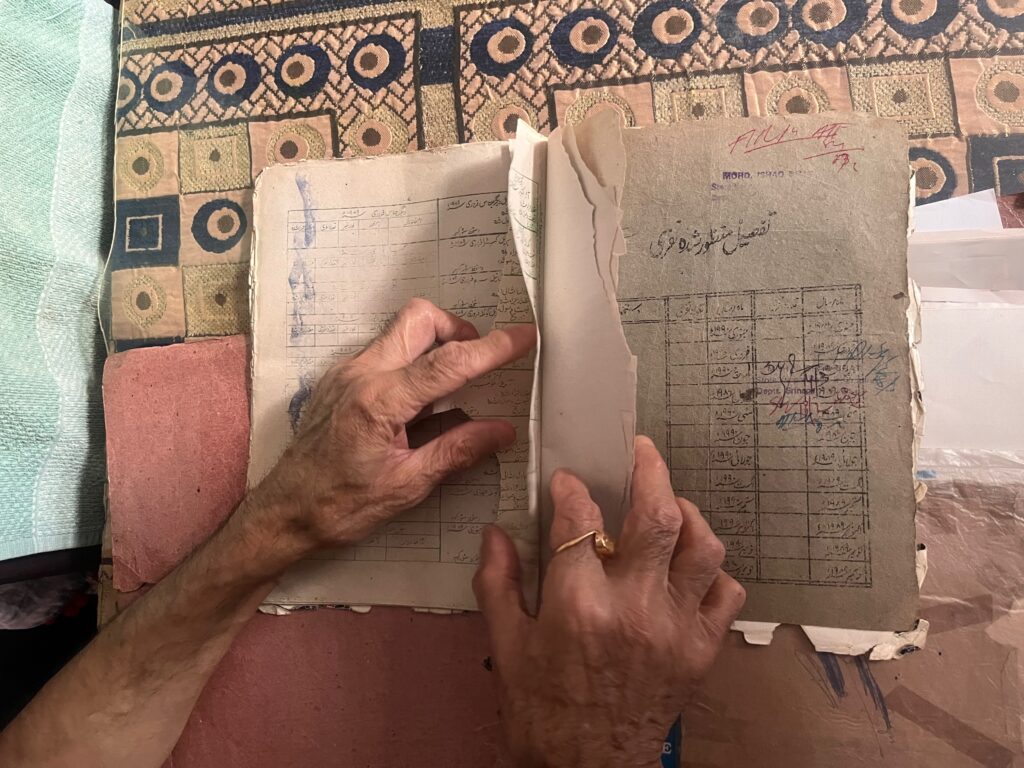
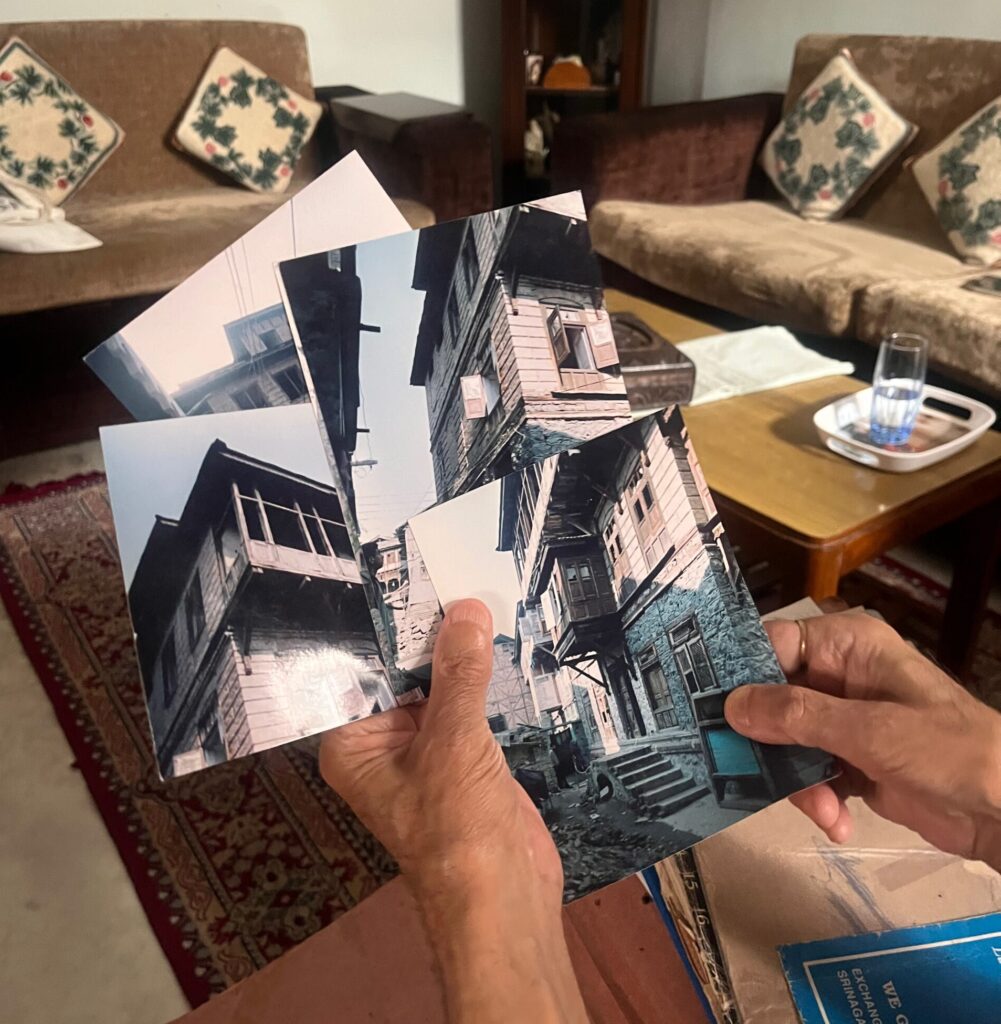
taken in 2006
The raw emotion in Papa’s words made me wonder how many times he had relived that day in his mind. In talking of home while telling me about the shaving box, it felt like he was finally letting a breath out.
The chunky lion on the lid of “Papa’s shaving box” is one of my core childhood memories. A visual, material anchor of joy during years otherwise marked by anxieties I could not have named then. As a child growing up in Jammu of the 1990s, my world felt fractured. At home, my family’s deeply felt desire for cultural continuity determined every choice, big and small. My parents were willing to move heaven and earth to preserve the social and spiritual dimensions of our life in Srinagar, despite the jarring cultural and environmental differences between Srinagar and Jammu. In the world outside, the evident inter-ethnic hostility between Kashmiris and Dogras and a hyper-visible military presence on streets shaped everyday existence. Here, a biting remark from a Dogra landlord—you kashmiris use too much water! There, a lewd gaze from a Dogra boy—o fair-skinned kashmiri girl, come with me! In the bus to school—you live in Jammu and you have not learnt Dogri yet? Outside my school—a leering, rifle-bearing soldier watching us alight from the bus. Nonetheless, life went on.
Living in this world, most Kashmiri Pandits—including my family—were convinced that cultural insularity could preserve our dignity, help us weather homelessness as a community. Not to mention the latent but palpable expectation of returning to our ‘own’ home. If we changed while in exile, then how could we re-inhabit the home that used to be? And if the much-anticipated return never took place? Why, then preserving our unique Kashmiri culture was an even bigger imperative.
In moments that I spent watching my father shave, with his box in front and often, a small mirror balancing on its lid—life felt lighter. I remember tracing the lion’s face with my fingers as I answered his inevitable questions about what I was reading or why I disliked arithmetic. As he swung his shaving brush from one cheek to another, I listened to his stories and impromptu jokes. Amid unhurried conversations, he would sometimes pretend first to smear my cheeks with shaving cream and then ‘correct’ his own ‘mistake.’ My sisters humorously warned me that I might end up with a manly stubble if the tiniest bit of Papa’s shaving cream found its way to my face.
To my historian’s mind today, these joyful memories appear rich with other meanings. Clearly, shaving was men’s business, no matter how riveting I found Papa’s routine to be. His playfulness communicated gendered codes of behavior, as did comical commentary from my siblings. Underneath it all lived deep-seated notions of what roles men and women must embrace so social orders might persist.
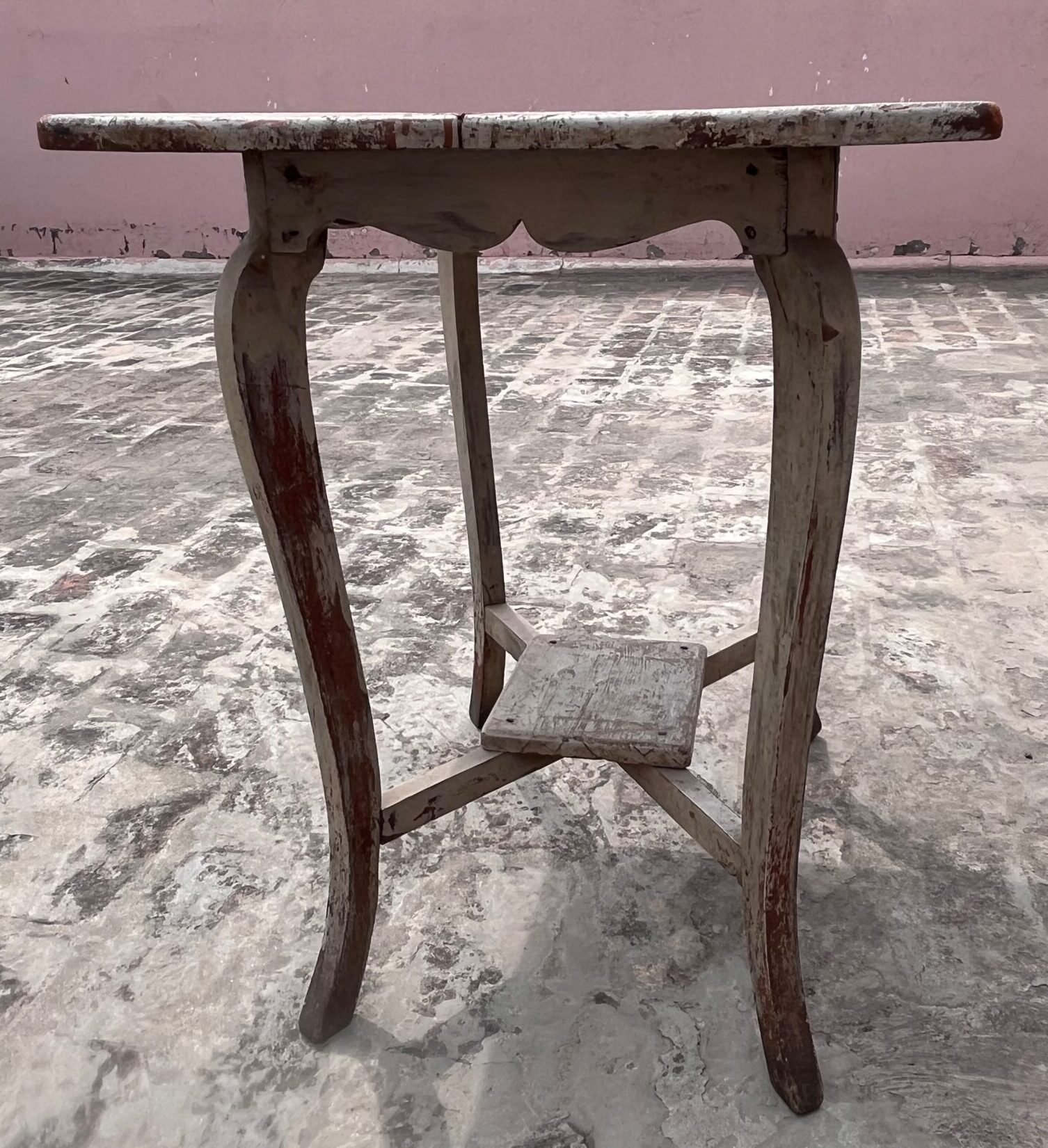
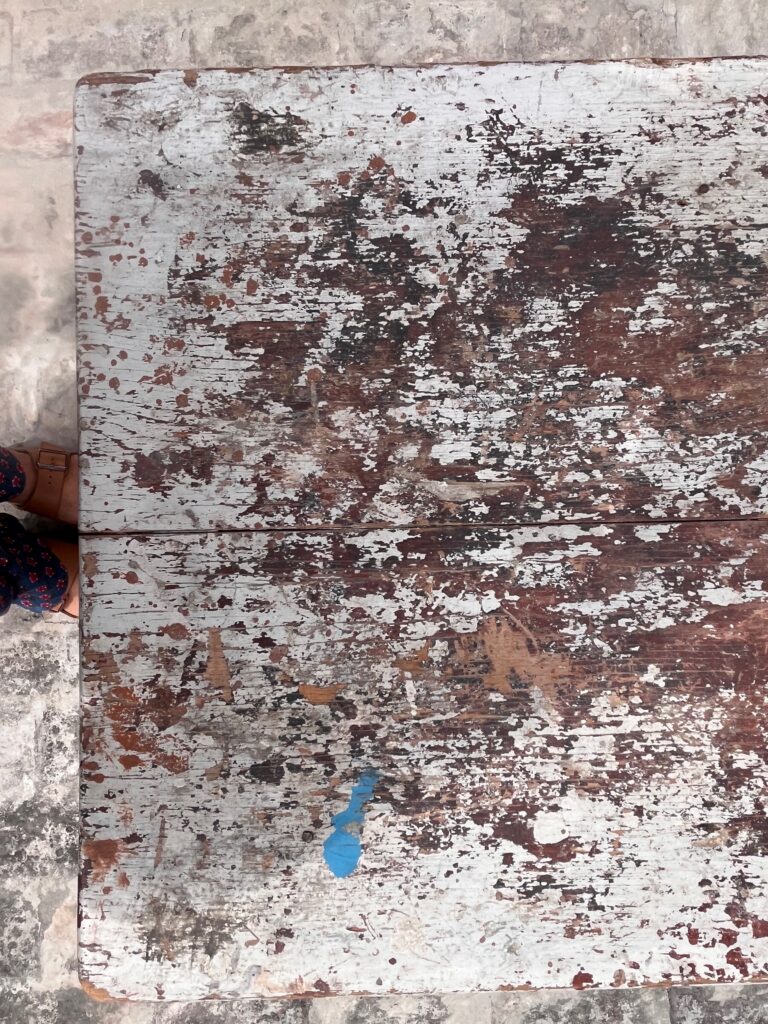
Equally clearly, life at home left no doubt in my mind that we ought to treat Dogras and Kashmiris as incommensurate peoples, no matter their shared faith. Then as now, we lived with the objects that Papa had brought over from Srinagar—for decades, the takhtposh have been beds, the side table has held odds and ends, the utensils have been reserved for symbolizing the divine (vatuk) every year on hayrath. 4 And we spoke Koshur almost exclusively, despite knowing Hindi and English as well. Everyday routines, humor, songs, emotions all articulated in this language of home. No matter how much our Dogra neighbors ridiculed it, Koshur was our zaban—the language we shared with other Kashmiris but one that Dogras neither spoke nor understood.
For me, the shaving box signifies a particular kind of familial intimacy expressible only in Koshur to this day. Making jokes in Koshur while living around it re-established an intangible connection between my child-self and a lifeworld lost to her. When I speak Koshur today, it is as though the very act of speaking the ‘mother tongue’ while moving through varied, newer phases of my life preserves our troubled past.
My parents have lived in Delhi for nearly twenty years. But the city still feels foreign to them, even if it offers more anonymity than Jammu. As Papa said, our home in Srinagar “was full of love, full of respect, it was the soul of our family. We had the blessings of saints and mystics who would come to our house, stay in our house, meditate in our house…I cannot still leave those memories [behind] and those memories will not leave me…till I am no longer alive.”5 None of this, he meant, was accessible in their Delhi apartment. The shaving box, aside from being an object from his real home, today holds “that respect and that love that will not change” for him. Sometimes, he says, when he touches it today, the box gives him “an image of my father.” 6
In Jammu, I grew up implicitly believing that living away from one’s ‘true’ home was a universal human condition. At least until I started meeting people who had never left the cities of their birth, willingly or unwillingly, and who expressed an oblivious sort of belonging to sites and spaces that I saw as marked by fear, destruction, and violence. When my father’s lifeworld imploded, perhaps the box was something solid to hold on to. When he spent decades striving to rebuild, the box became something from home that could serve newer purposes and hold newer sentiments. To the historian in me today, the box is a reminder of how some intimate, familial objects can be surprisingly stable—even if what they signify shifts over generations—in a world transformed by forced displacement and continually reshaped by conflicting human desires.
References
1 Interview with my father, New Delhi, 15 December 2025
2 Interview with my father, New Delhi, 10 December 2025
3 Interview with my father, New Delhi, 15 December 2025
4 Hayrath is the annual Kashmiri Pandit celebration of the wedding ceremony between Shiva and Shakti, usually held in the months of February or March. Hayrath is the most important, and arguably the most symbolic, Shaivite event in the Kashmiri Pandit ritual calendar. The festival is called shivaratri in the rest of India
5 Interview with my father, New Delhi, 15 December 2025
6 Interview with my father, New Delhi, 15 December 2025