
TEXT AND PHOTOGRAPHS BY IBLINA BORUAH
Kakopothar, Assam, India
An old album of photographs, likely taken between 1970 and 1985, is one of the few things I keep from my grandmother’s working years. Somehow, it has become what I hold onto most. Aita is what I called her.
The album belonged to my Aita, Boroda Boruah, and spanned her years as a Gram Sevika in Kakopothar. Her work dealt with the education, empowerment, health and nutrition of women and children. A Gram Sevika was a government-appointed village-level worker, part of a nationwide programme that reached Kakopothar with the establishment of its Development Block in 1964, bringing organised rural development to the flat alluvial plains and tea-garden villages of upper Assam.
Aita kept her dressing simple, almost without variation – always in white or light-coloured cotton mekhela-sador, the traditional two-piece attire of Assamese women. She used to wear silver spectacles, the lenses making her grey eyes seem wider and closer than they were. She wore two gold bangles on each hand, and thuriya – heavy gold stud earrings traditional to Assam – with a floral Xilikha design.
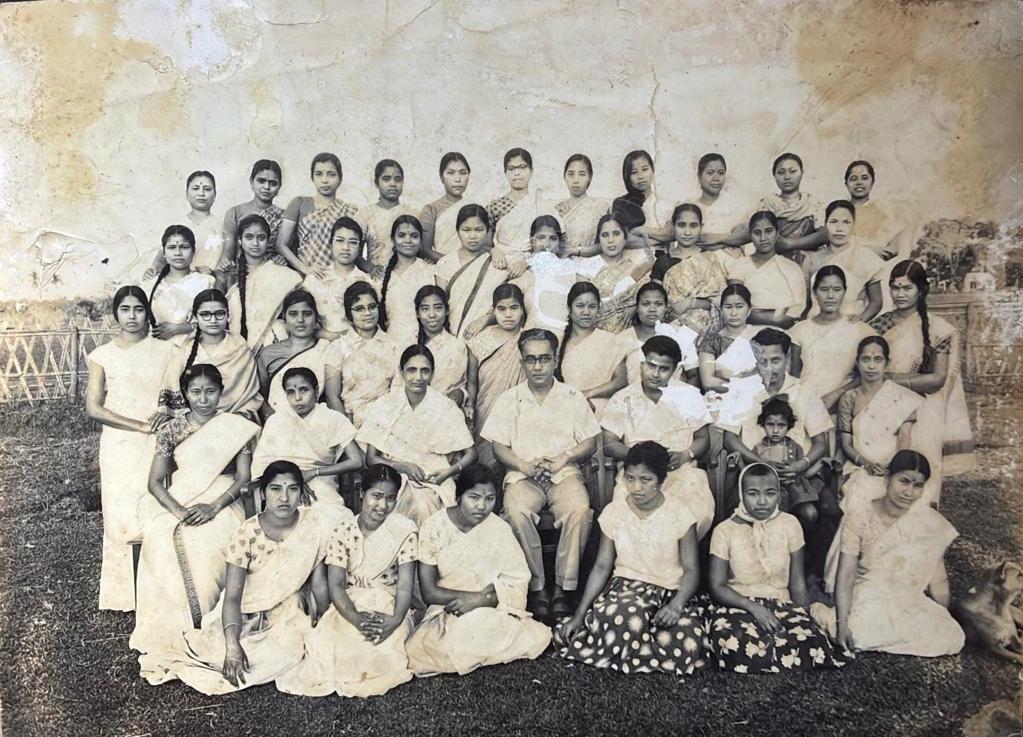
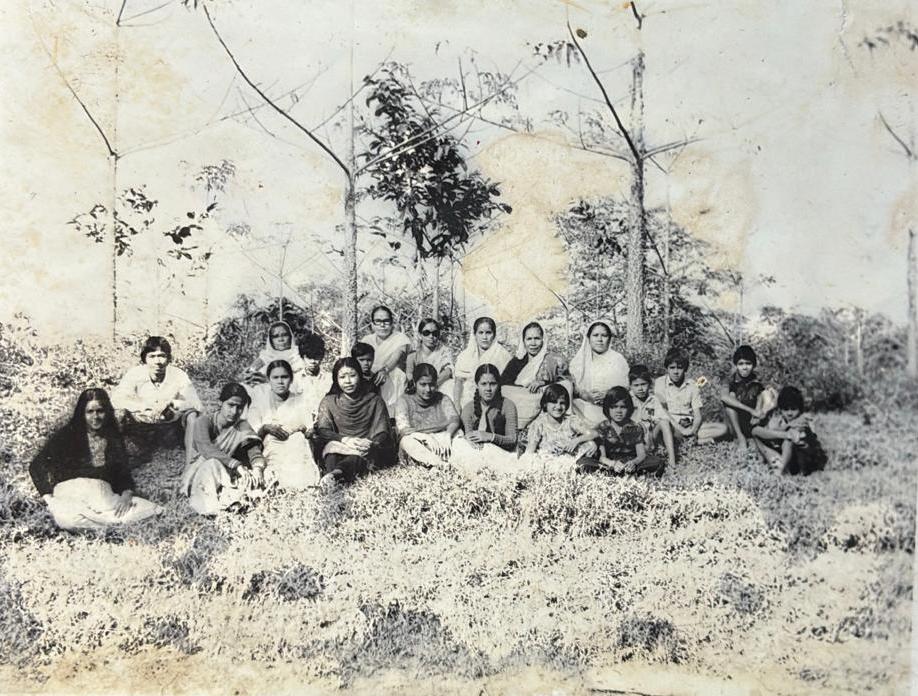
Before she retired and built a home of her own in Bamunbari (where our home is now), my Aita lived in the development block campus of Kakopothar, a small town in Assam, along with my father and aunt. At least 12-14 families lived on the campus together, bonded by work and shared days. Her office was a few minutes walk from where they lived. I don’t know the full details of her daily life there – what her desk looked like, who she sat next to, or whether her boss was cranky or nice.
My father describes her days as deeply routined. As a single mother, she would wake around 4-4:30 AM, pray, make food for everyone, and help both children get ready before leaving for work carrying a black leather handbag. I remember her waking at the same hour long after those days were over. I’d wake up early with her, and she’d make tea for both of us – hers in a large bell metal bowl, mine in a small one. My tea was mostly water, lightly coloured with tea and sweetened with sugar, because I was too young to have it any stronger. It was our ritual, and I looked forward to it every morning.
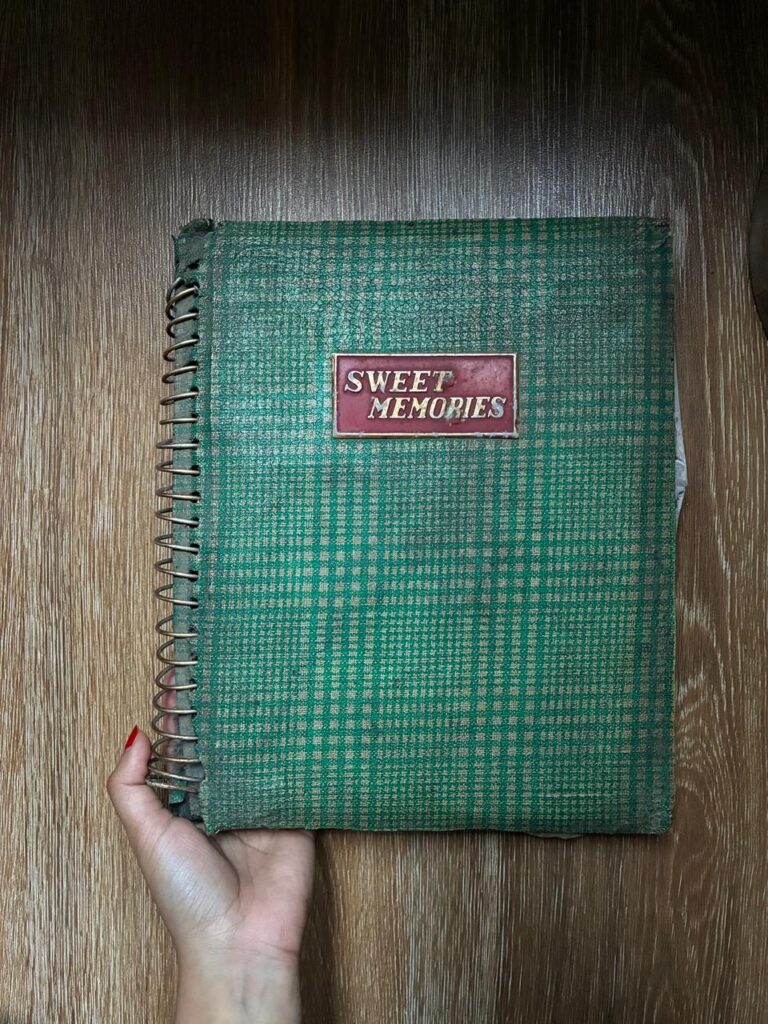
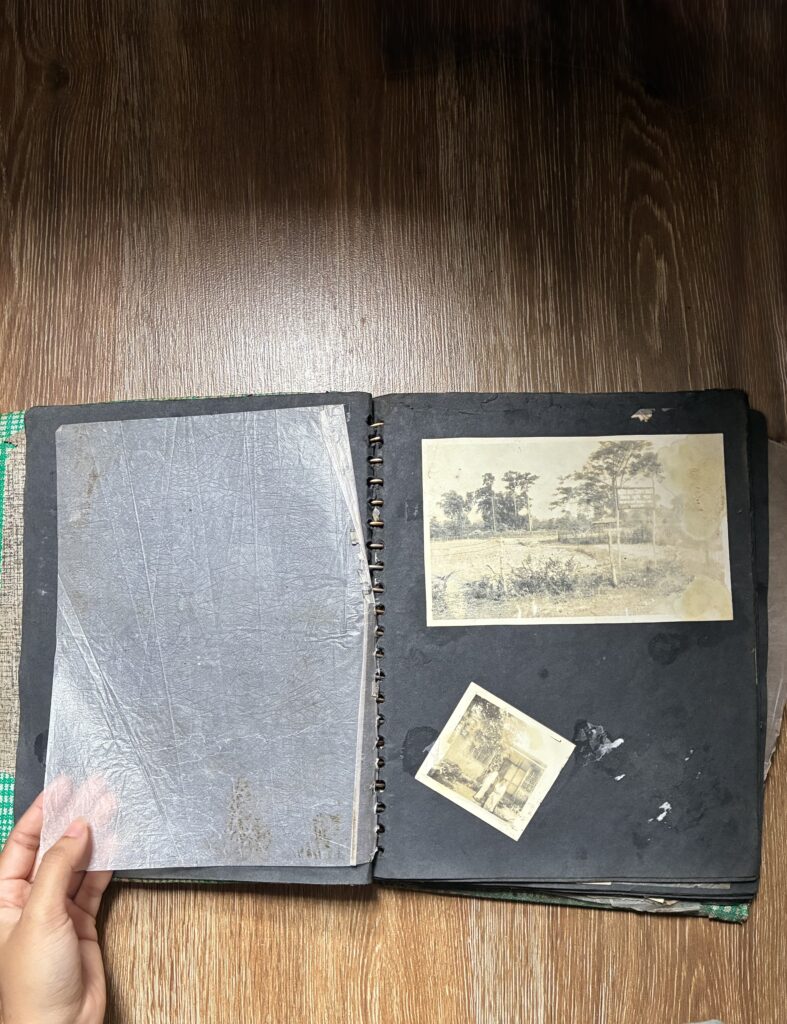
My father and aunt studied at a school near her workplace. She would come home for lunch, and her office hours ended at 4 PM. Evening comes early to the northeastern parts of India, so by the time they got home and freshened up, it was already dark outside. There was no electricity on the campus, so handlamps carried them through the evenings. The routines, the evenings, the handlamps, the campus life – everything I know comes from what my father remembers, and from the photographs.
This album is one of the few things that gives me a glimpse into her life at the time. It is spiral-bound, the cover a deep green with a small red label at the centre that reads “Sweet Memories” in gold lettering. The pages inside are thick and dark, with the black-and-white photographs pressed against them, now brittle and sepia-tinted with age. The cover is worn at the corners, and it smells the way all old books do – of being handled gently by many hands. The photographs are beginning to fade, the blacks lightening and the whites yellowing. I let it be the way it should be.
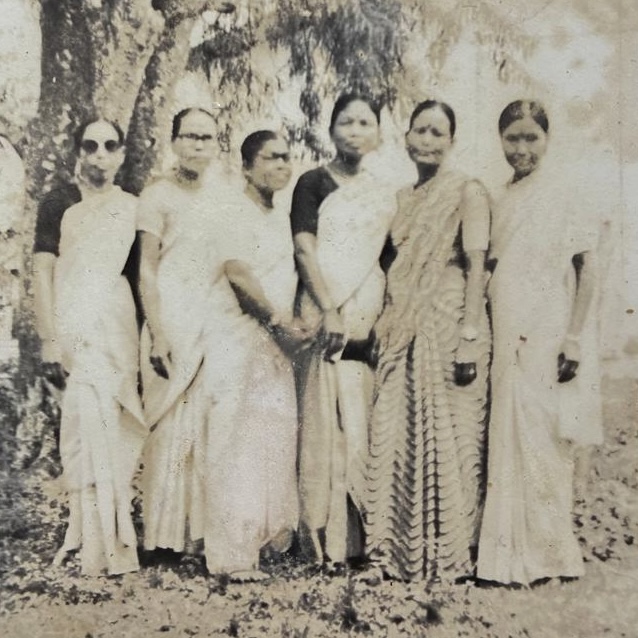
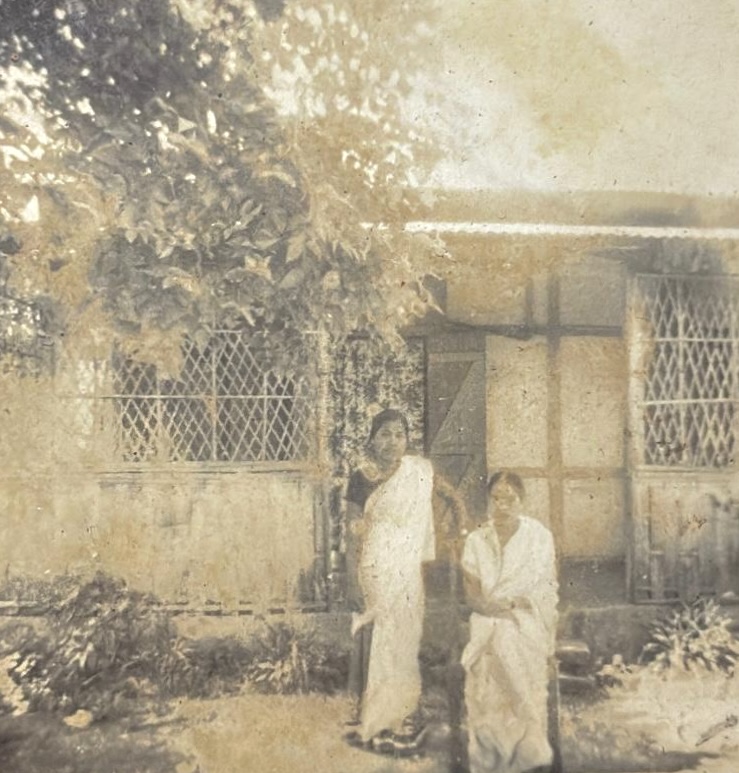
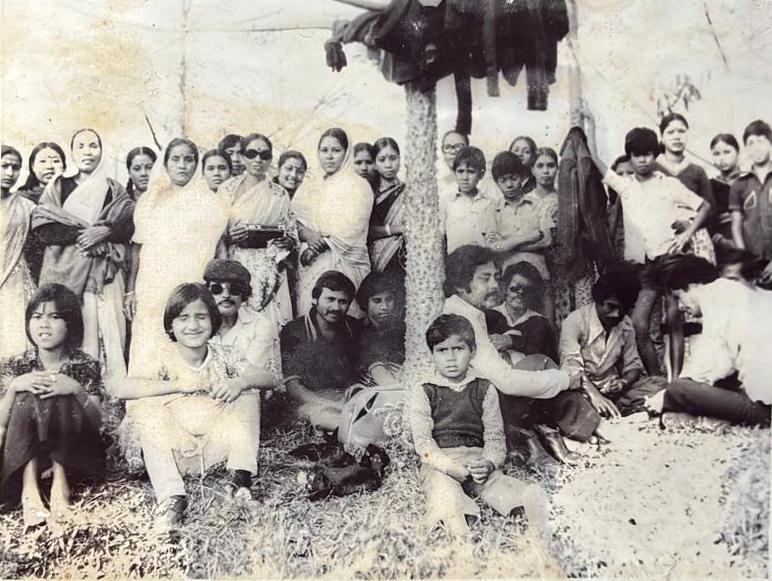
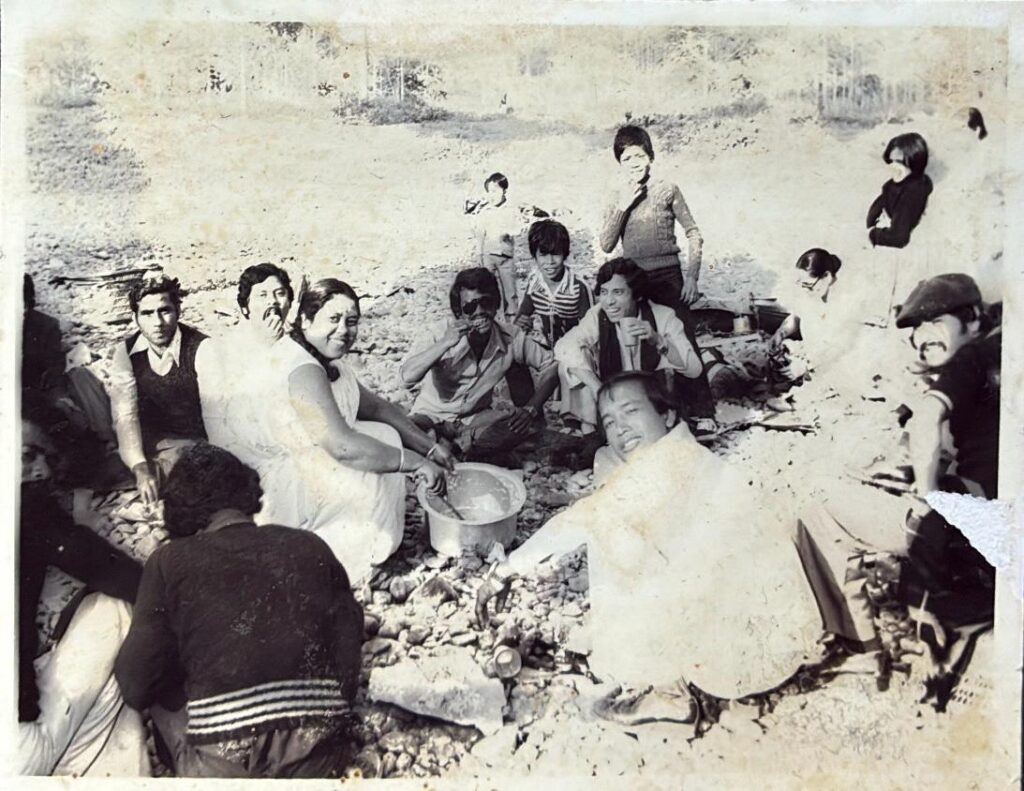
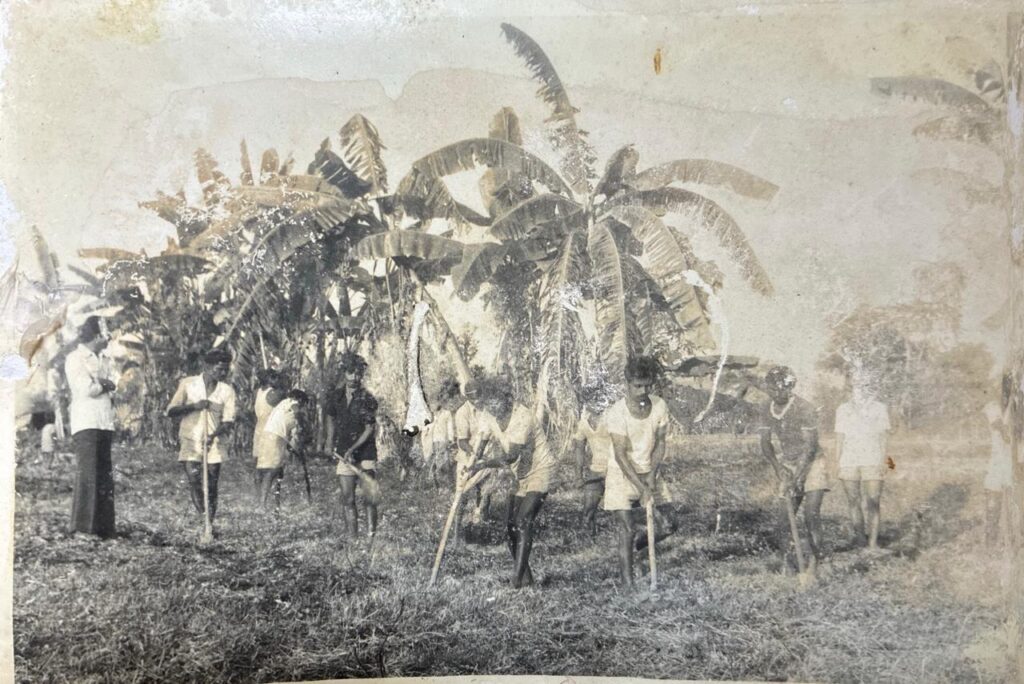
The photographs document the years I was never part of but somehow feel close to. My grandmother’s work and the campus were the centre of her daily life, and this album existed alongside all of it – Aita and her colleagues, a group of people who don’t know that their memories are safe with me. There are picnics, gatherings, ordinary moments, photographs of people farming, buses carrying them to their destinations. And then there are details that belong entirely to that decade of the 70s – men in bootcut pants, with neatly side-parted hair, prominent sideburns and well-maintained moustaches; women with hair tied in buns or braids, dressed in traditional handloom mekhela-sador, sometimes adorning large cat-eye sunglasses and fashionable cardigans over their attire.
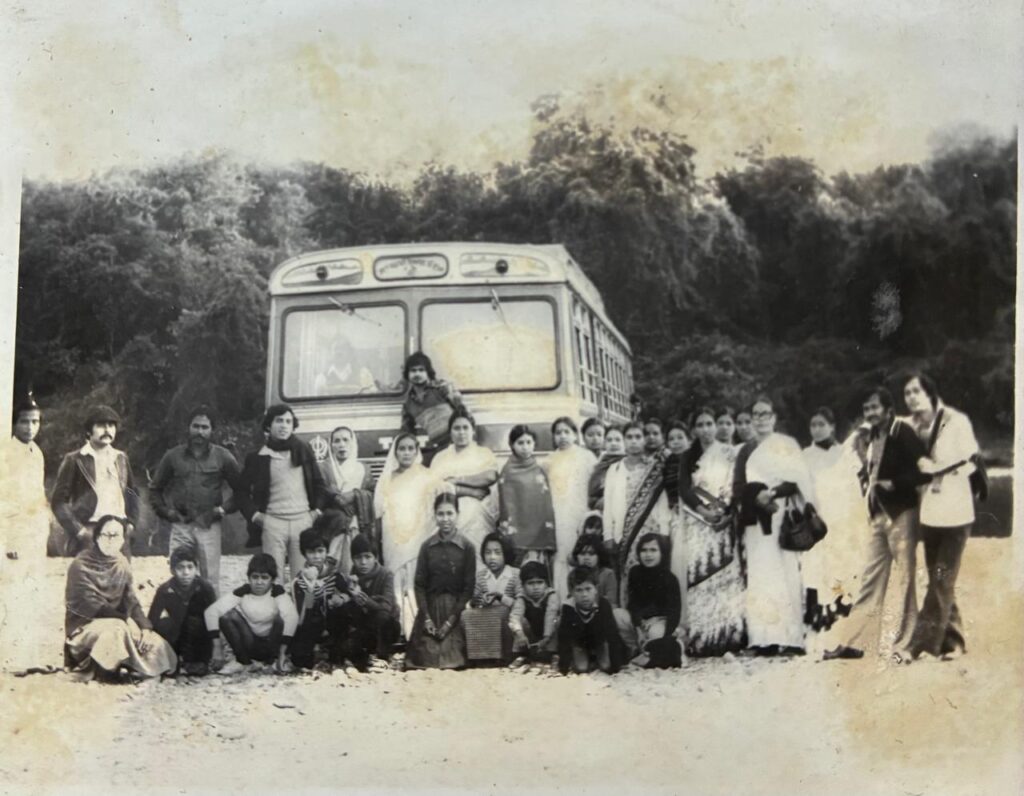
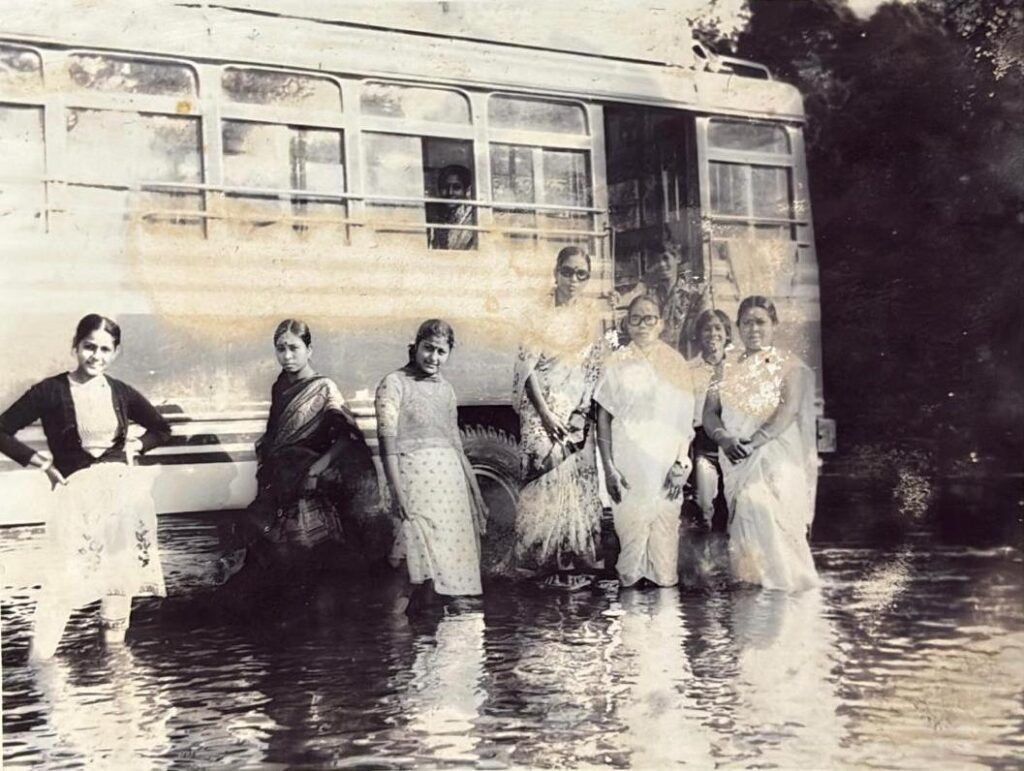
There are a few photographs taken during a campus picnic to Margherita, a town in the Tinsukia district of Assam, about 57 km from Kakopothar. The group traveled by bus, which we can spot in two of the pictures. Everyone cooked at home and brought food to share, as my father remembers. It was a feast. There is one photograph from the trip where the bus has stopped, the road ahead flooded, the kind Assam knows well. We can see a group standing by the back door of the bus, looking into the camera, knee deep in water. My father believes they crossed a flood zone on the way to Margherita. I don’t know the year, or if they were stranded, or simply stopped to take a picture.
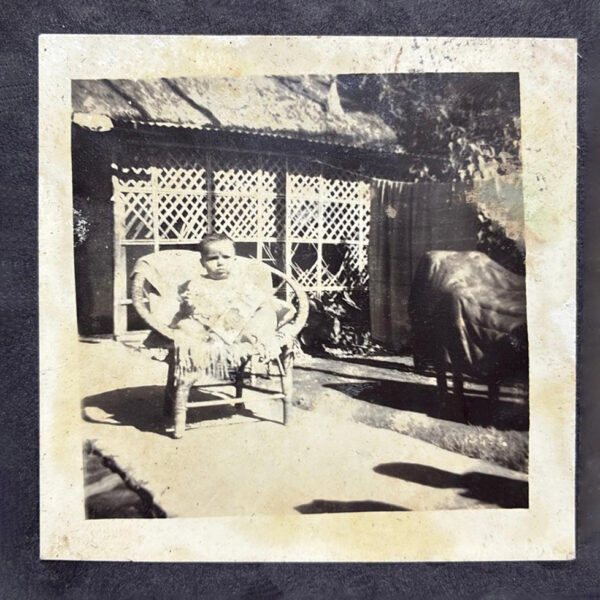
Somewhere in the album, you can find my father in his youngest years. There is one picture where he was wearing a frock, unaware of the world. It is not very clear, but he remembers vividly how my aunt used to make him wear all her frocks and make Aita take pictures of him. I have looked at the picture more times than I can count. My mother even framed a scan of this picture alongside a few of my own childhood pictures.
Aita had no extended family, only her two children, so everyone on the campus became family to her. She was the oldest among them. Lilly, her next door neighbour, called Aita her baideo (sister). My father and aunt spent most of their free time at her home, they would call her Lilly Maahi (aunt). My father was the youngest among all the children on the campus, and he remembers getting most of the love from everyone.
I don’t remember exactly how the album came to be with me. I know it was at home, and at some point, it made its way into my keeping. Now it sits on a table in my room, with all the other things that matter to me and that I like to surround myself with, not in a locker, not wrapped in anything protective, just present.
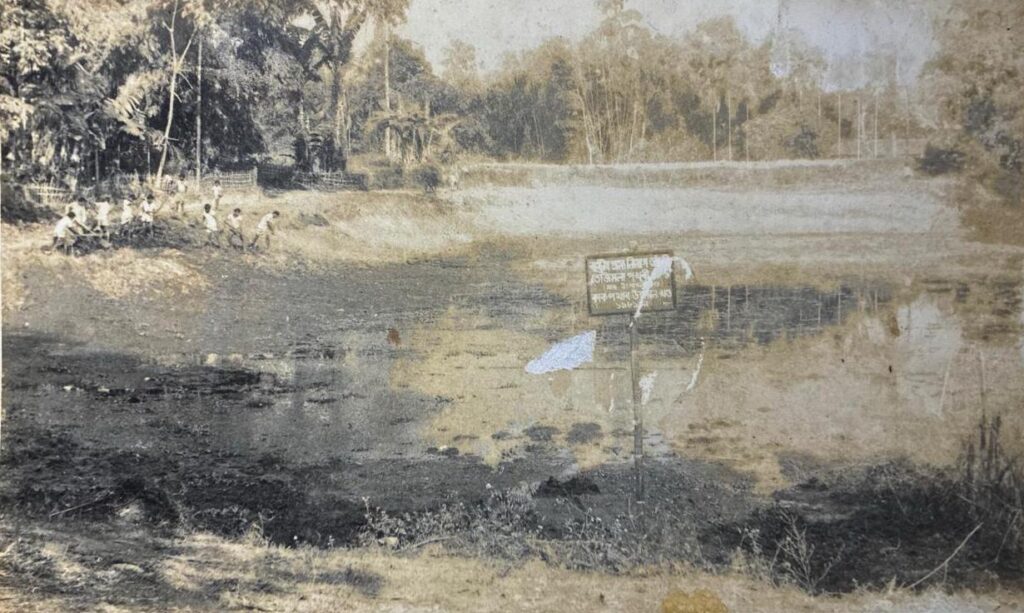
The funny thing is, I don’t know any of these people in the album, except for my grandmother, my aunt and my father. The faces are strangers to me. I never managed to learn their names. I wonder how these pictures were taken, what camera was used, whether she or someone else took them, and whether she collected some of these pictures from other people as well. If the photographs were indeed taken by her, I don’t know how she got interested in the medium, or what prompted her to preserve these moments. I wish I’d known. But even so, I hold onto the album – like I’ve been there in these memories, like I was there, part of a life I never actually knew.
love this!