
TEXT AND PHOTOGRAPHS BY SUCHARITA DUTTA-ASANE
Jamshedpur, Jharkhand, India
This is an edited version of the text originally published as “swaddled in blue white and red” in
The Relic, ed. Santosh Bakaya and Meenakshi Mohan, Haoajan Publishers, 2025
An image to begin with: Thakuma – my grandmother – sewing, needle and thread moving rhythmically through cloth and air, embroidering patterns, each movement a conversation. A clichéd image, but infused with the memory of hearth and home, of warm laps and busy hands. Of conversation flowing out of the cloth and into it, drawn from shared gossip and banter, stories heard and forgotten, grievances aired and kept aside for the time being, laughter that erupts, then lingers in the eyes.
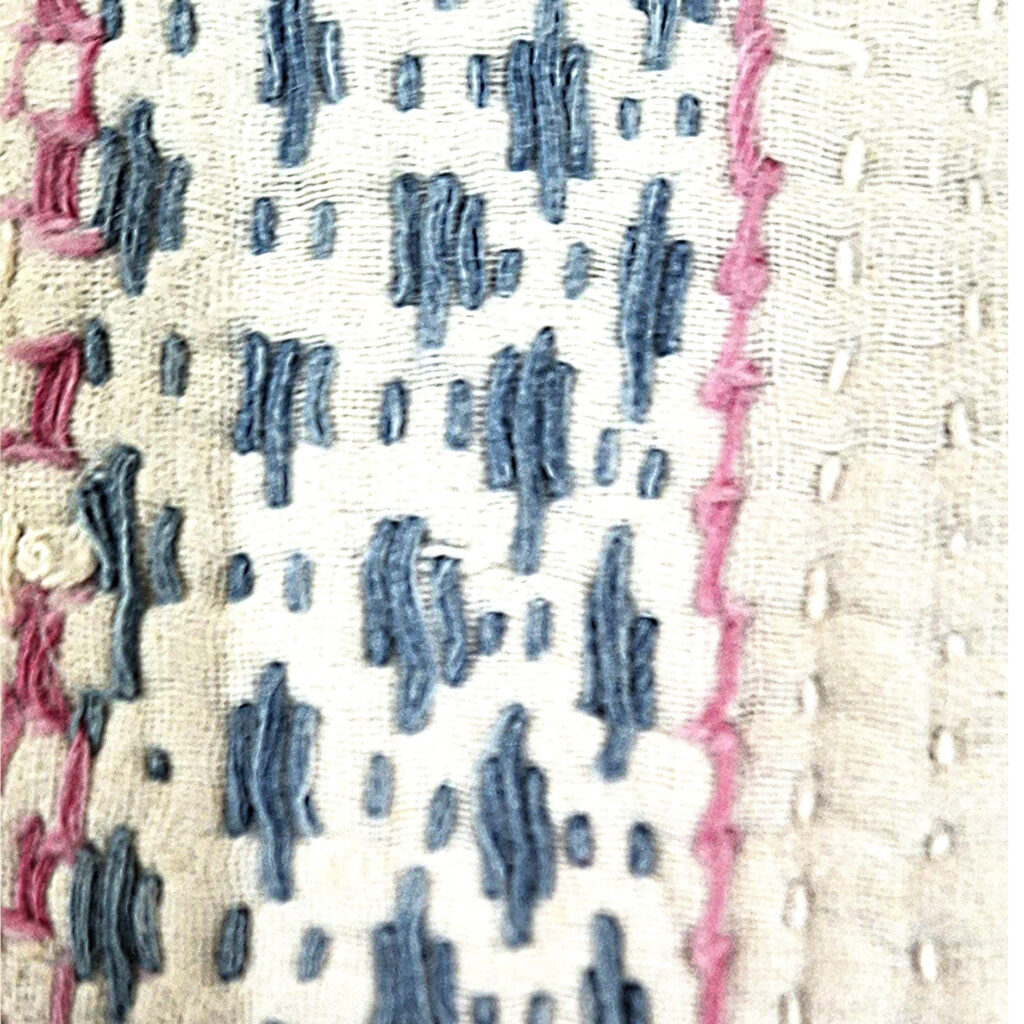
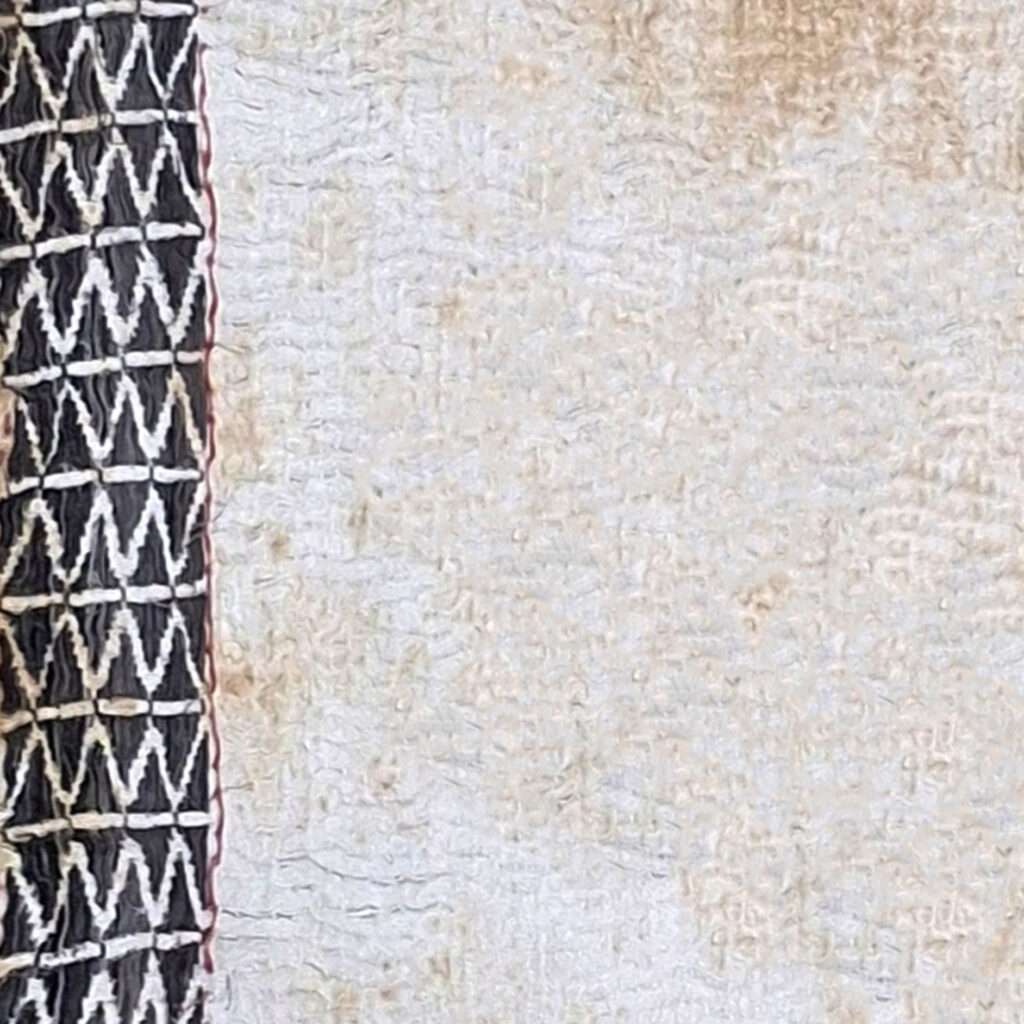
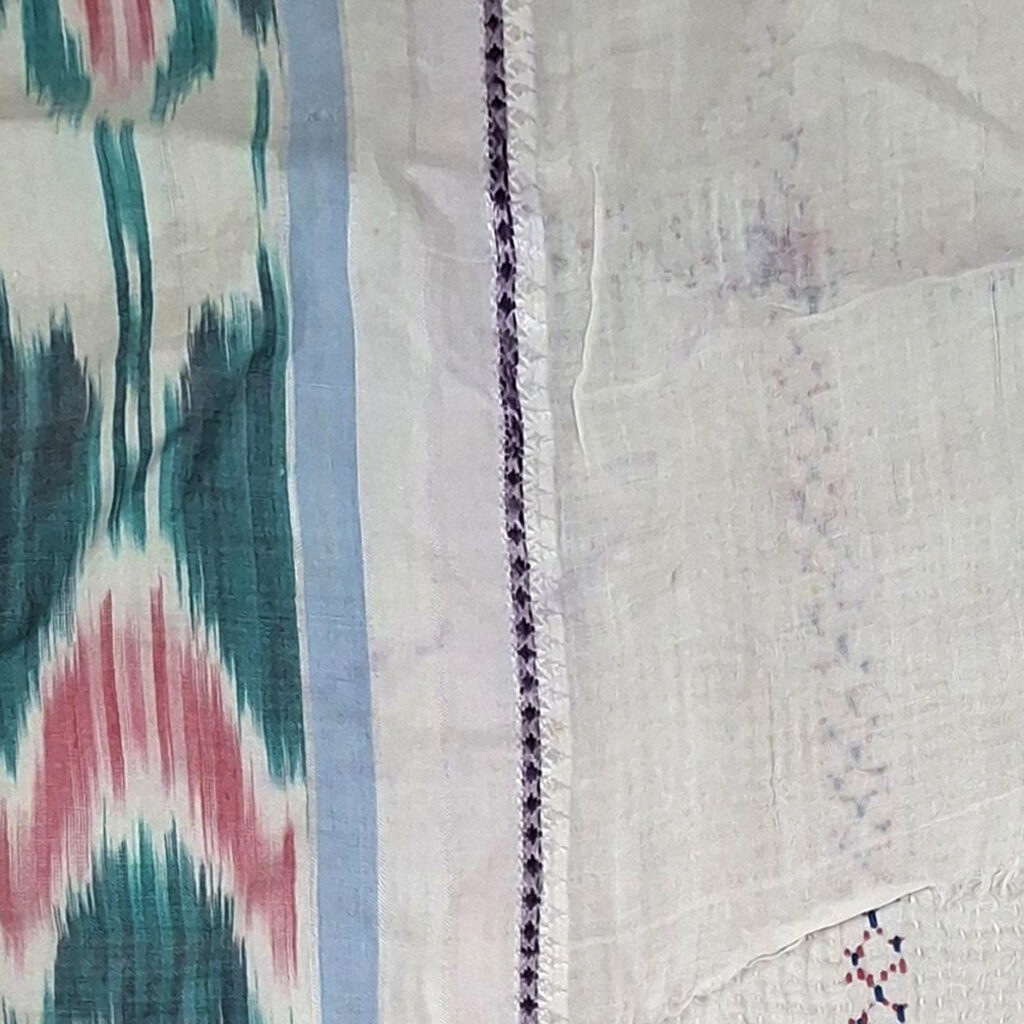
Thakuma making kaanthas, the cotton spreads on which babies are laid or swaddled, made from layers of the soft cloth of old sarees and dhotis, stitched together, then embroidered using the simple kaantha stitch, tiny lines of colourful threads running across the fabric. Like the life-lines drawn from far away Khulna and Mymensingh – the origin points of her life.
Thakuma pulling thread out of used, soft Tangail sarees with broad, bright borders and aanchals. One fine strand at a time, which she would loop carefully, then reuse for stitching and embroidering the kaanthas.
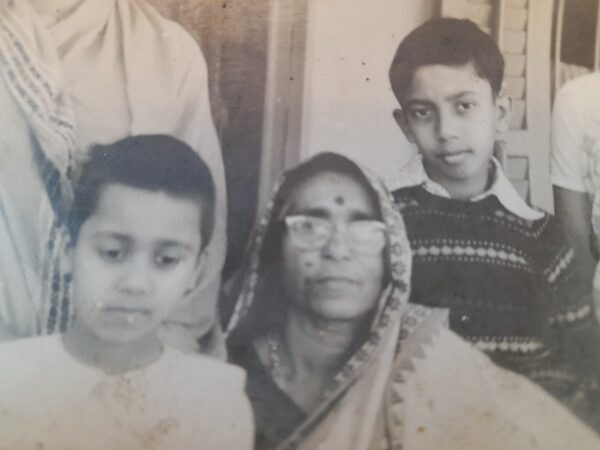
There were many kaanthas to be stitched, for there were babies being born often in the huge extended family. The family had escaped the horrors of Partition, moving early to the west – from undivided Bengal to the industrial town of Jamshedpur (Tatanagar) in Bihar. The sprawling house, set back from a busy thoroughfare, did not have enough rooms to accommodate the 16 or 17 members, but everybody managed. The number of mouths to be fed in a traditional joint family is always exponentially more than the resources at hand, and ‘managing’ most often fell to the women of the household. It was an exhausting task. And so, sewing, stitching, embroidering, knitting, weaving – these were reserved for late evenings, after the kitchen and its incessant demands had been taken care of.
Given the number of kaanthas required, it made no sense to splurge on buying new reels of thread each time. Old sarees would always do. They had all the colours required to brighten the layers of white cloth, leaving tiny lines stretched across the kaantha in different patterns. These became family heirlooms from the very moment of their creation. The smells of baby poop and pee carefully washed away, the kaantha sanitised, folded and stored carefully for the next baby.
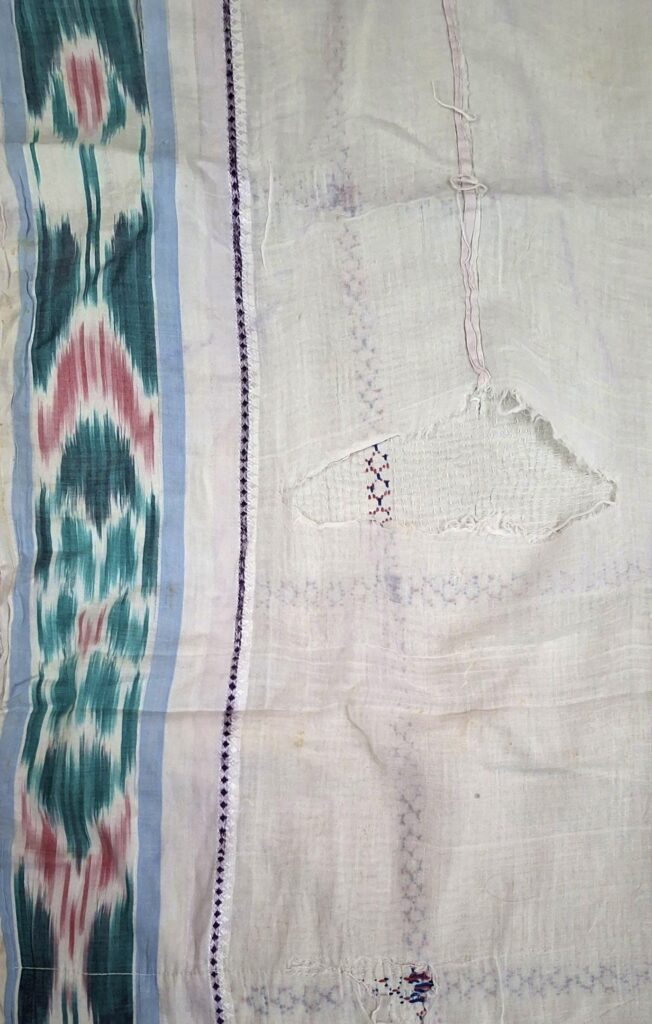
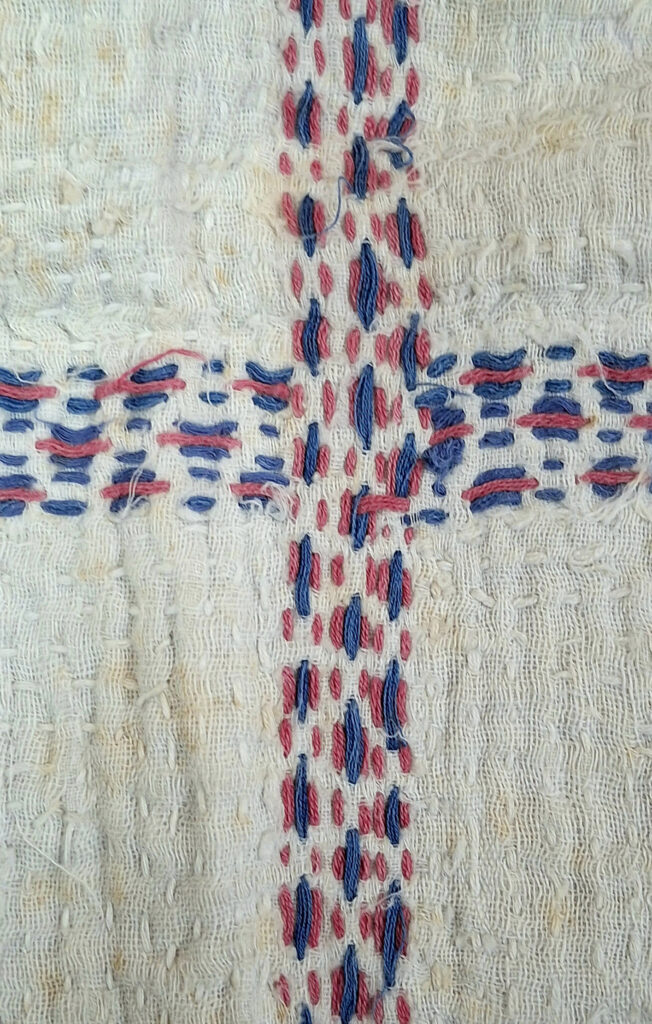
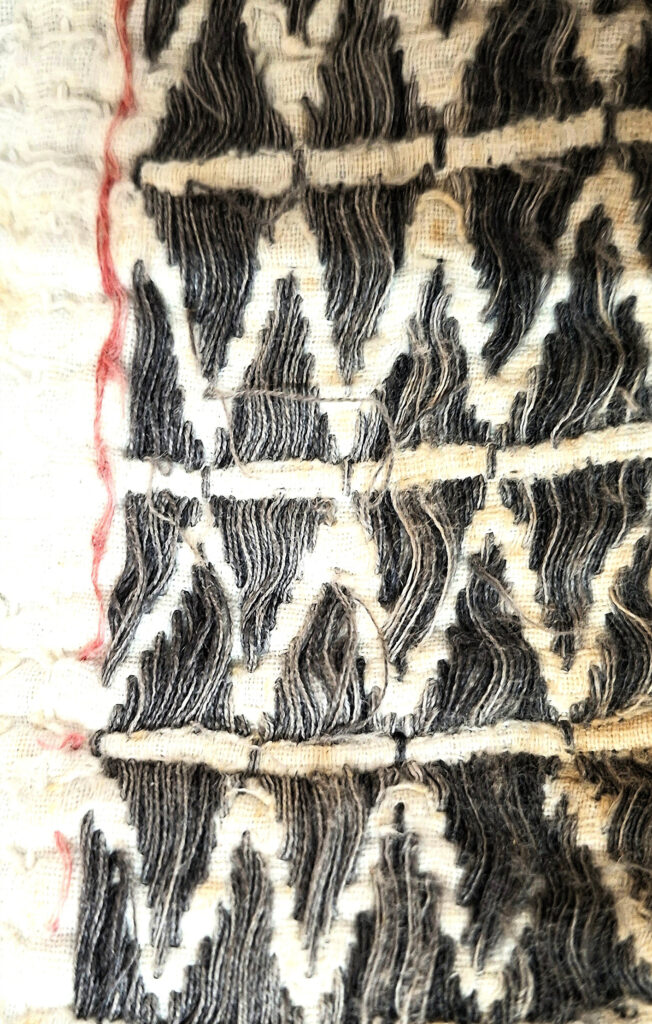
The folds of cloth, the stitches that held them together and transformed them from mundane fabric to patterned beauties, were labours of love, of course. But they also carried the imprint of many tales, of shared secrets exchanged among the women while they sat together with their knitting and sewing; of scoldings and rebuke, of silent companionship. I often think how we, as babies, would have absorbed all that as we lay cocooned in the cloth. How the very cloth, made from old sarees, carried the whiff of the wearer’s sweat, labour, dreams, hopes, anguish. Generational memory too, perhaps?
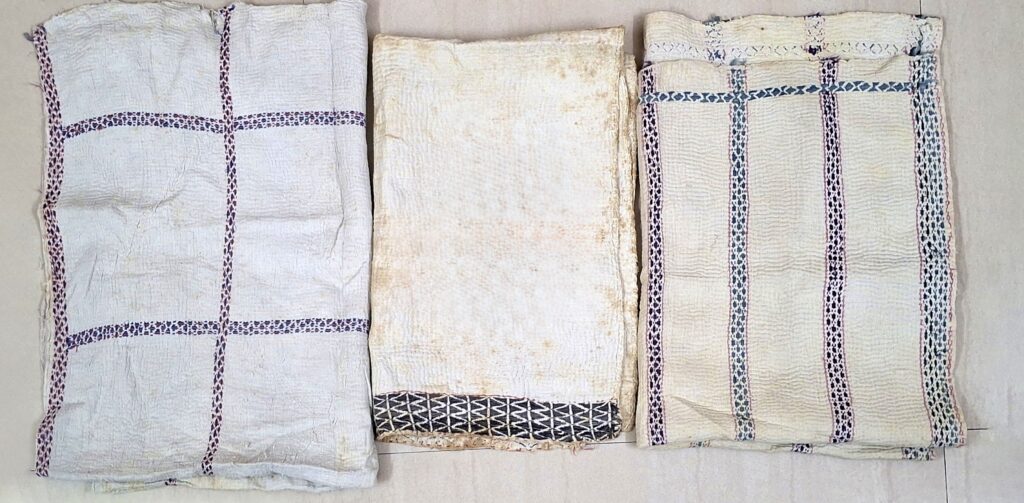
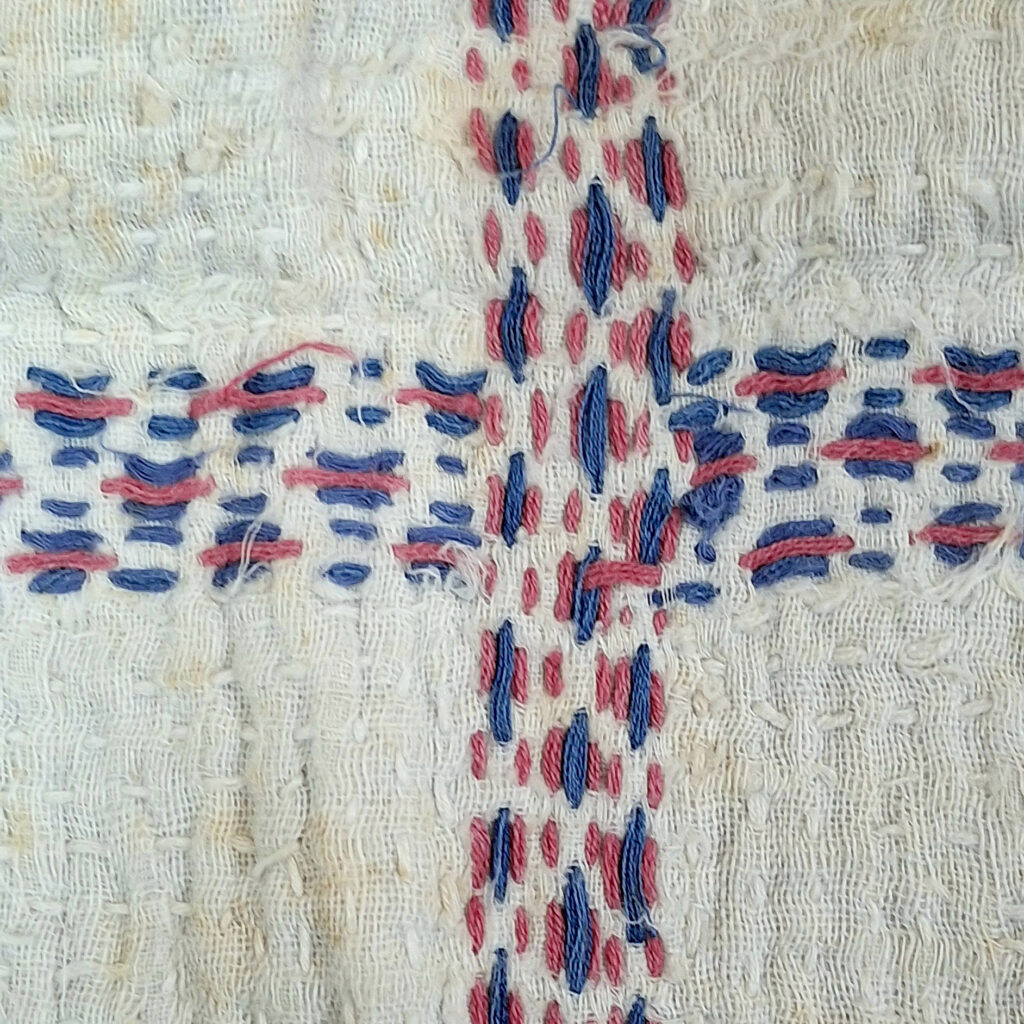
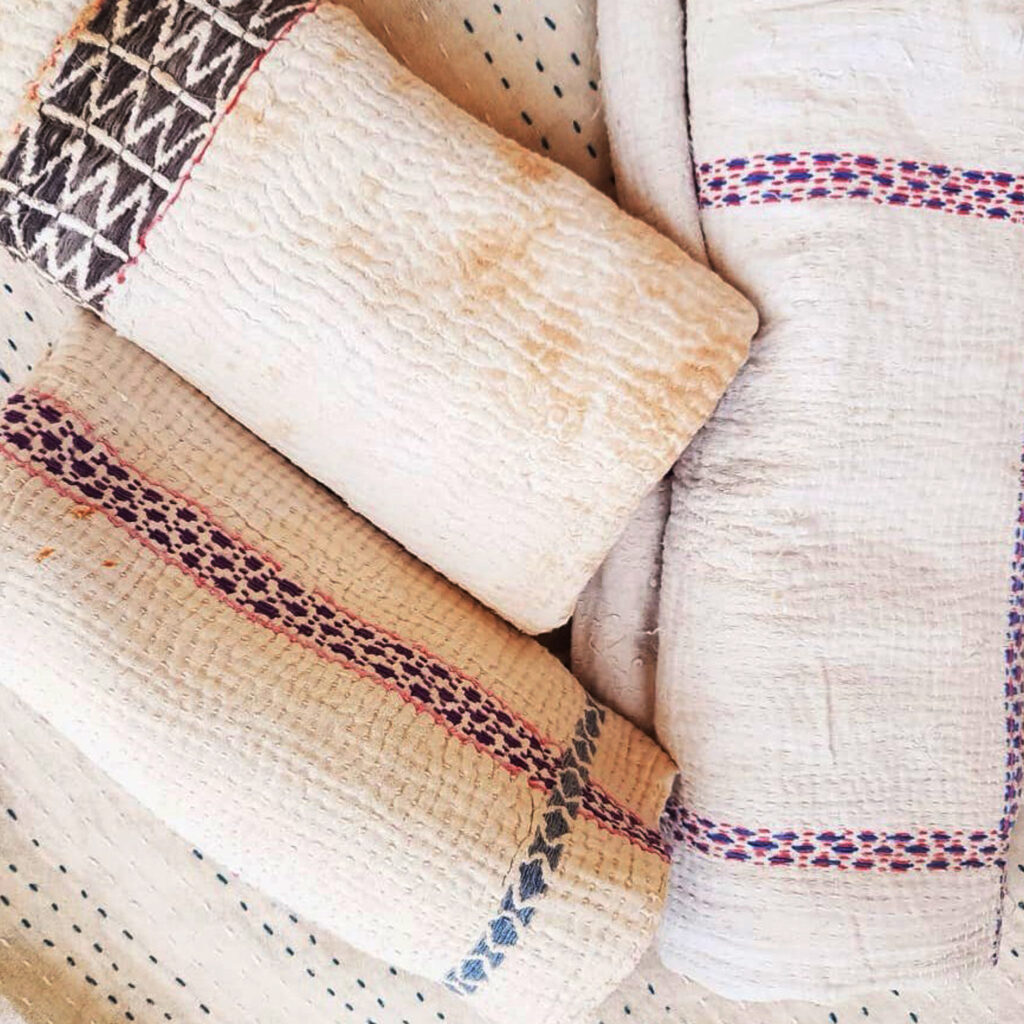
I have three such kaanthas in my possession. Still. In every sense of this word, adverbial and adjectival. Made in 1965-1966, they measure roughly the same: 34” x 25”. They are soft, frayed; stained yellow now, brown in parts. Discoloured not by the bodies they held, but by time. Run through with threads in blue, red, white on white. Tiny straight lines marching along the surface of the cloth. Simple designs, not complicated, not exotic. They held my brother when he was an infant. Me. Perhaps my niece, too. My daughters. They were last used in 2009.
Imagine the strength of the cloth, of the threads, of the hands that created them. The hands that cooked for the family, nursed babies, bathed them, oiled them, brought them up, scolding, petting, fretting, angering, laughing… Imagine the strength of these emotions that spilled into one another, creating a mesh that is as tight and strong as the threads lining the kaantha.
Then this image: I am old enough to babysit a month-old cousin. But the baby is asleep. I am bored and too timid to disobey. So, I start counting the stitches on the kaantha. By the time I finish counting two rows of stitches, the baby stirs and I forget, so I start all over again. The habit has lasted. When I see patterns on cloth, stone, wood, on floors, doors and windows, decorative panels, I count. Counting, like reading, keeps me restful.
Like the kaanthas now in a box inside a divan. Every time I open the box to take out something, I touch these two pieces of a shared childhood. Individual and collective, as was the way of life when we were growing up. I have experienced this. My husband has had the same experience. Our daughters, growing up in nuclear families do not know this. I feel this missing piece in their lives, like palpable loss. I see how it affects them without their knowing. They do not miss something they know nothing about. Till they hear about it from us. Like I heard of a life I had no experience of from my elders. Oral narratives of continuity and disruption.
Thakuma would often keep aside the kaanthas and take up the Krittivas Ramayan or, sometimes, the Mahabharat. She read in a singsong manner. The kaantha would lie crumpled under the book, its spine and cover leaving imprints upon the cloth. I would sit listening to her, barely grasping the words but getting the story, pulling slowly at a saree, trying to extract its thread for her. I loved doing this. My tiny contribution to something that I knew by then would last forever. Often, I would end up entangling the thread or breaking it while pulling hastily. I would be warned to be careful, but no matter how much I try to remember, I do not recall being scolded by her.
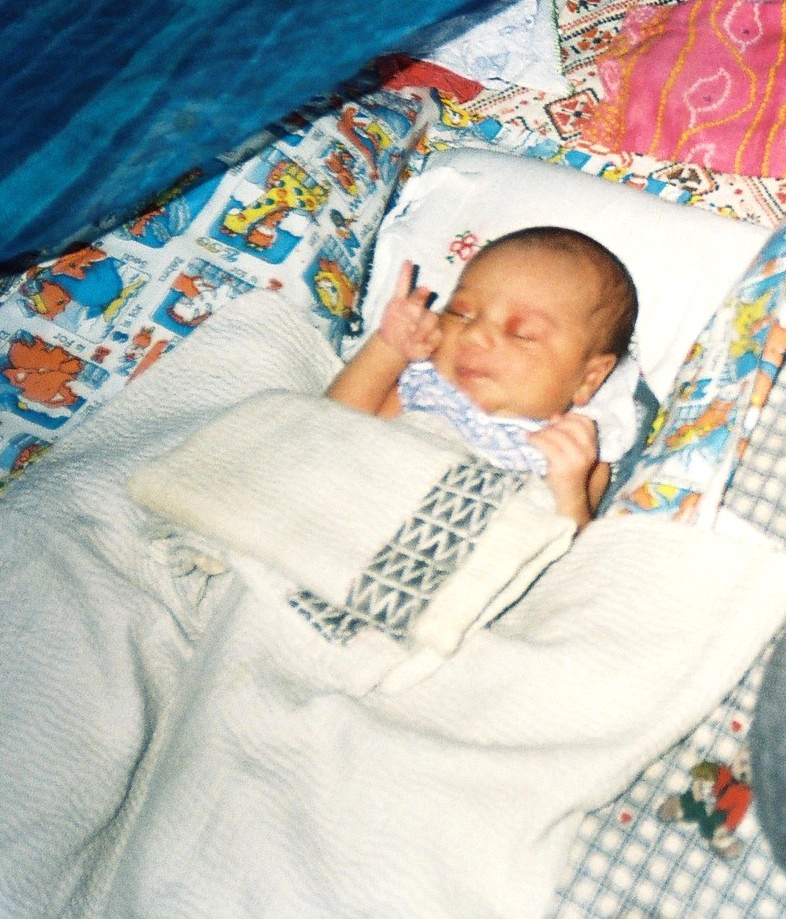
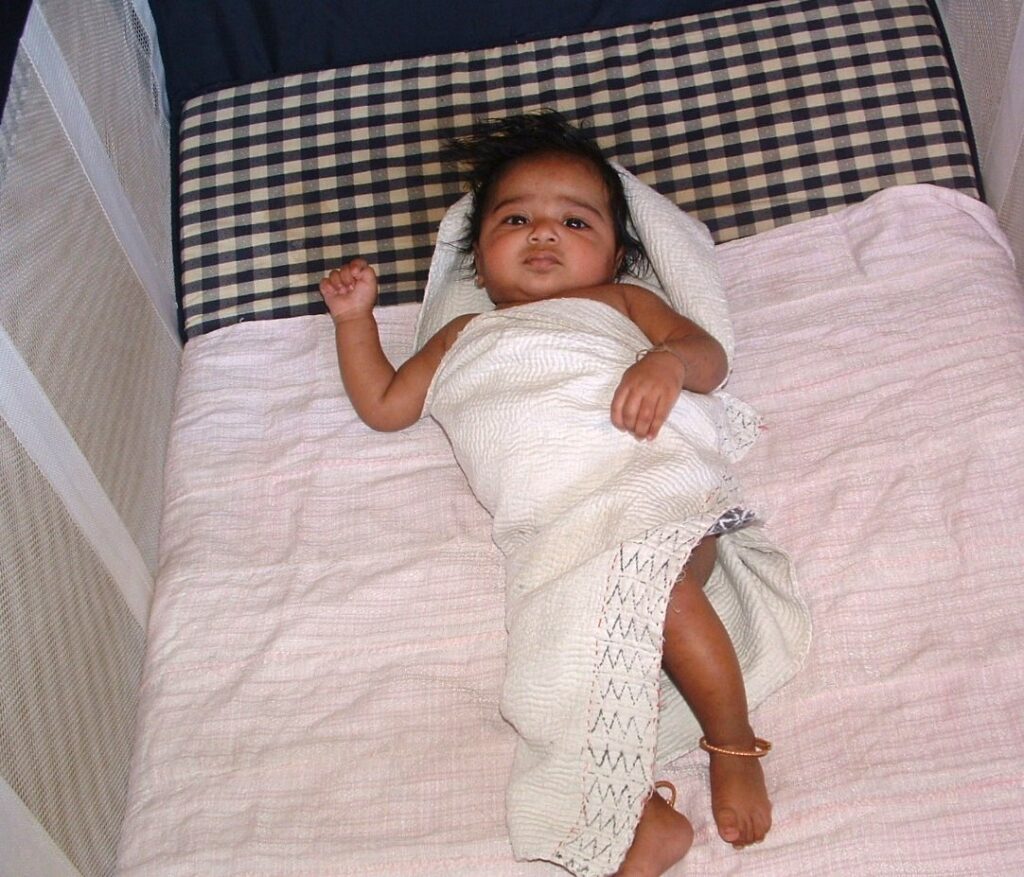
Thakuma would eventually tire of reading and take up the kaantha again. Her fingers were deft. Hands that wielded the bonthi and the spatula as well as they embroidered cloth, crocheted, tatted. Her red sindoor plumb in the centre of her fair forehead and in the parting of her white hair, her thin lips pink till her last breath. The image comes together for me when I write stories. Every grandmother I have ever written into my stories carries a part of her, without my being conscious of it. The kaanthas that we were all laid down upon as infants invariably carry the imprint of her craft, her breath, her skin.
I often wonder: when she broke the thread with her teeth, did she leave some of these mixed emotions into the saliva that softened the thread ends? Or perhaps there was a therapeutic blankness as she concentrated on the delicate work at hand. What sentiments and remnants did we sleep with as babies, absorbing them through the threads? What are the smells that still cling to these relics I have?
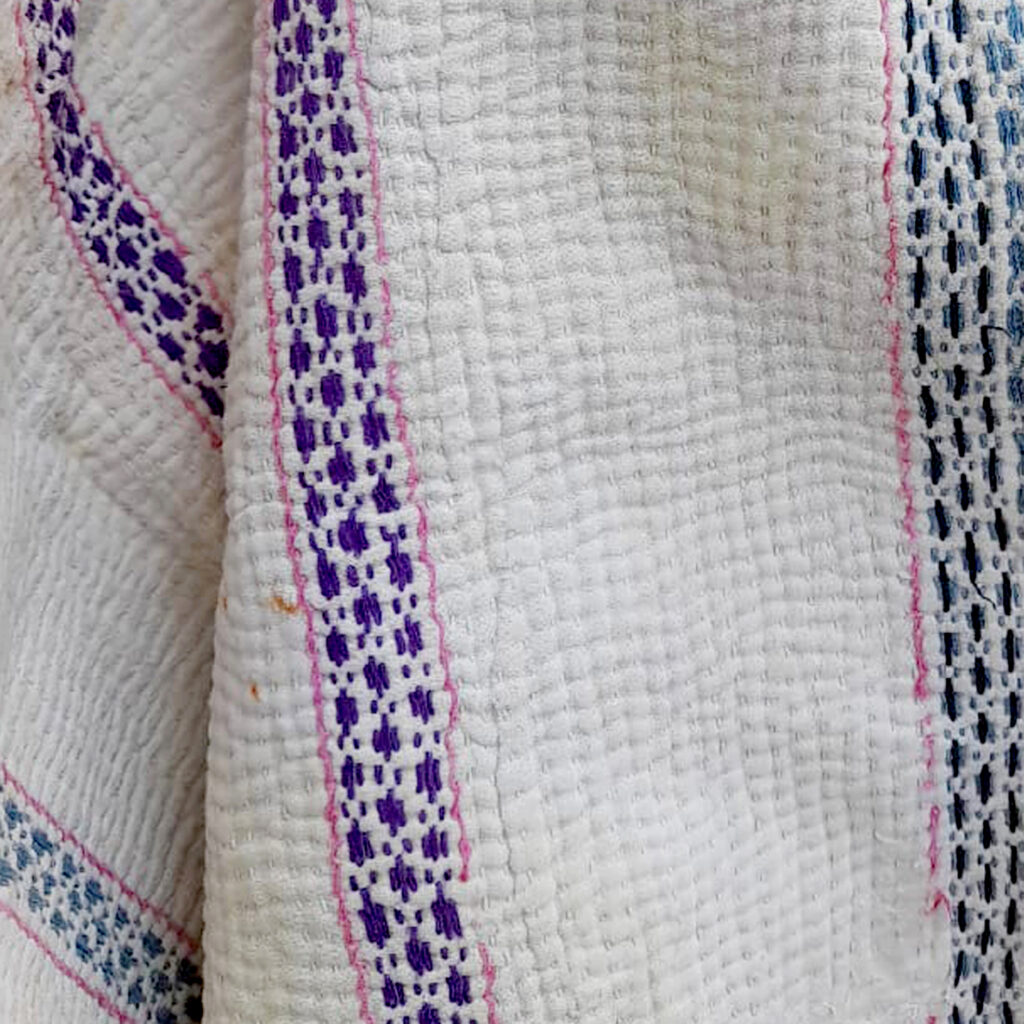
Thakuma must have learnt to make these kaanthas in undivided Bengal – in Mymensingh, where she grew up, or in Khulna, where she was married. Eventually, she settled down with my grandfather and their many children, in-laws, nephews and nieces, her sister and mother, in an unfamiliar place, carving a home far away from her native villages, forever nostalgic for the rivers and streams she had left behind. These lived in us through her stories as she stitched the kaanthas, and through my father’s stories as he remembered the land he had lost in his childhood. These kaanthas I have, carry a part of that generational nostalgia and ancestral yearning, a part of their history and ours – from the villages of undivided Bengal to the cosmopolitan hustle of Pune via Jamshedpur, the city of my birth and growing up years. They lie still, folded, shot through with memories in white, blue, red, and purple.
This is so lovely, Gentle as, and as exquisitely crafted as the kaantha. In the eyes of the artist, everything is a source for art. I loved every line and only wished that it never ended.