
TEXT AND PHOTOGRAPHS BY AASTHA KATYAL
Gurgaon, Haryana
Some objects command attention, while others exist quietly in the background, unassuming and often overlooked, carrying far more weight than their appearance suggests. These objects may seem ordinary at first glance or at times may not even warranty a glance! But upon closer observation, and a bit of interest we surprise ourselves to learn the stories and memories they hold! Have you ever wondered, like me, what tales might these objects around us tell, if only they could speak? Especially the old ones that have carried us humans and our lived histories along through generations?
I recently discovered one such ancient piece in my home. Upon close examination and some prodding around, I figured it was nearly a century old! This stone carved vase that had lived around me, for lord knows how long, had been in my family for around five generations, multiple cities, and even across countries and wars and I was only just getting to know the fascinating times and people it had witnessed.
It has witnessed over a century of my family’s history. It has observed generations change, seen displacement and migration, listened to stories of war, arguments, love, loss, resilience, and countless ordinary moments that never made it into family albums. It might possess a uniquely profound perspective on why my family is the way it is today. Fun fact – it probably was in the room when Nehru visited my nani’s father once!
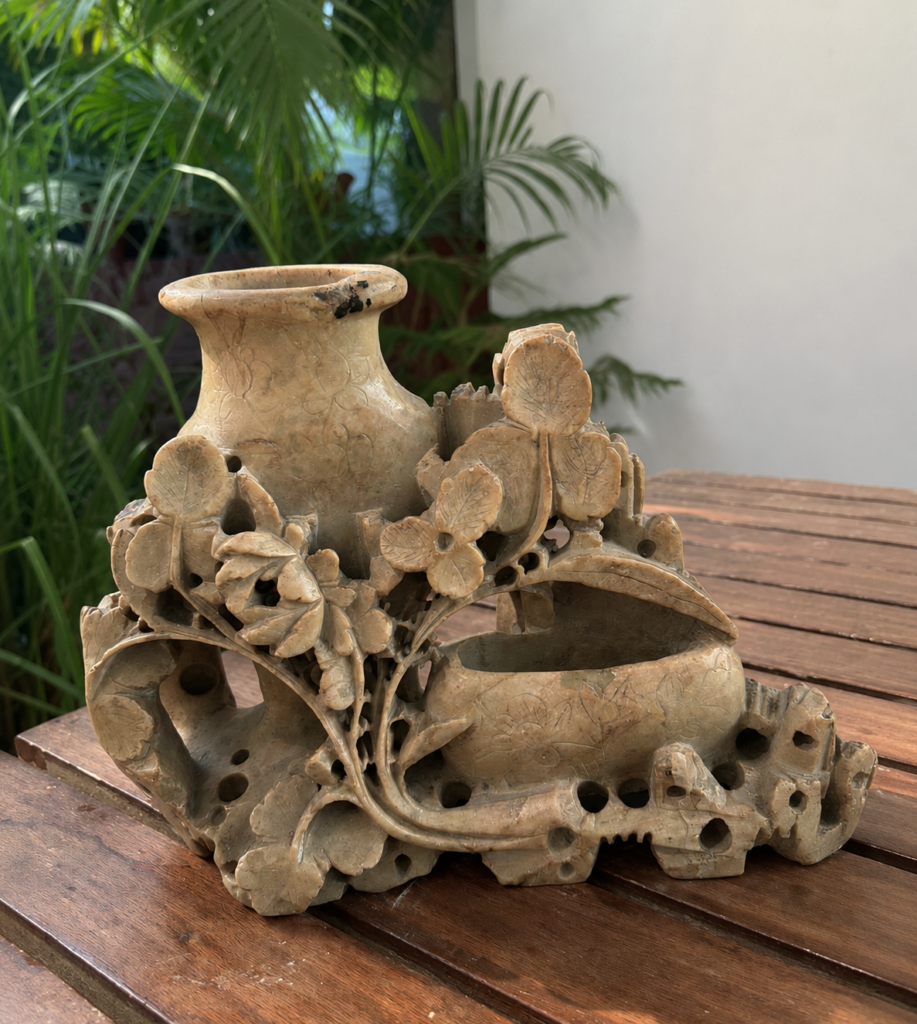
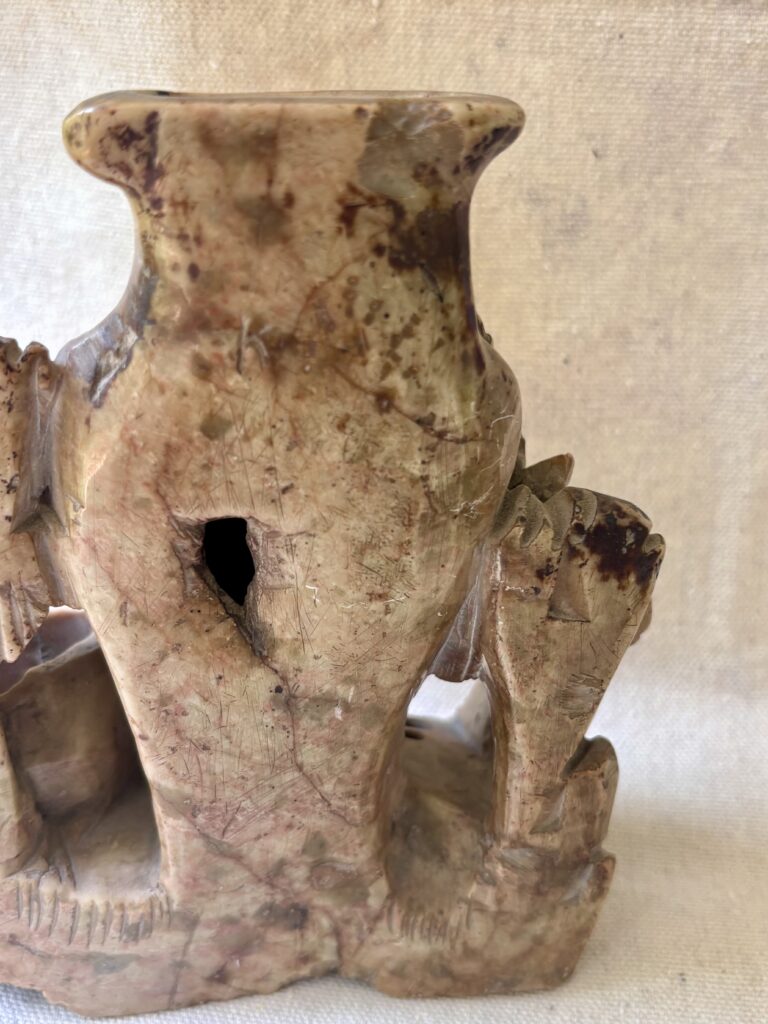
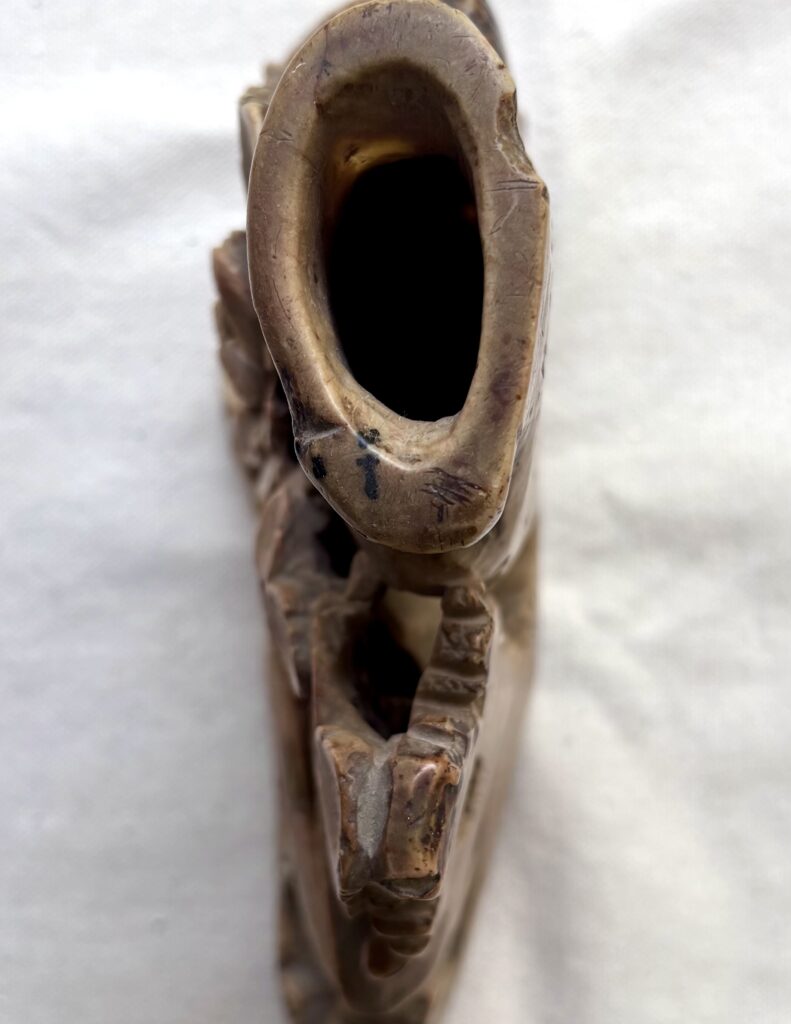
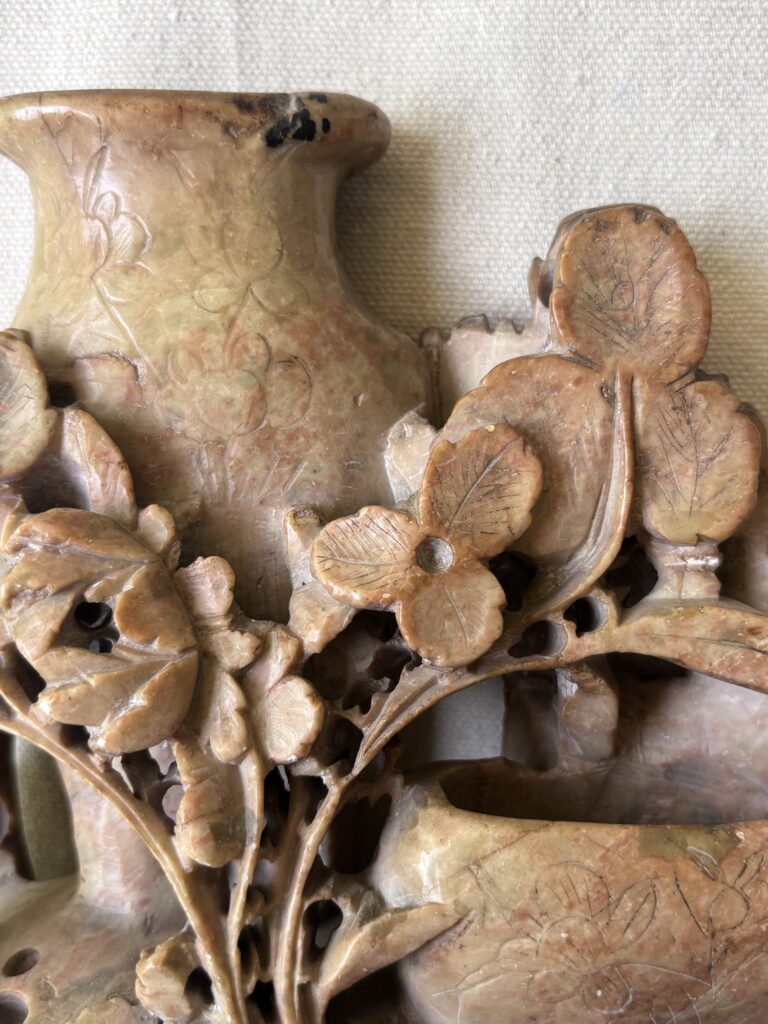
Ah, if objects could speak. But since this one cannot, I shall try to speak for it.
This stone-carved vase entered my family nearly a century ago, sometime in the 1920s, when my maternal grandmother’s paternal grandparents purchased it in Benaras. Perhaps drawn to its intricate craftsmanship, they brought it back with them to Burma, where they lived at the time, never imagining that it would become one of the longest-standing members of our family.
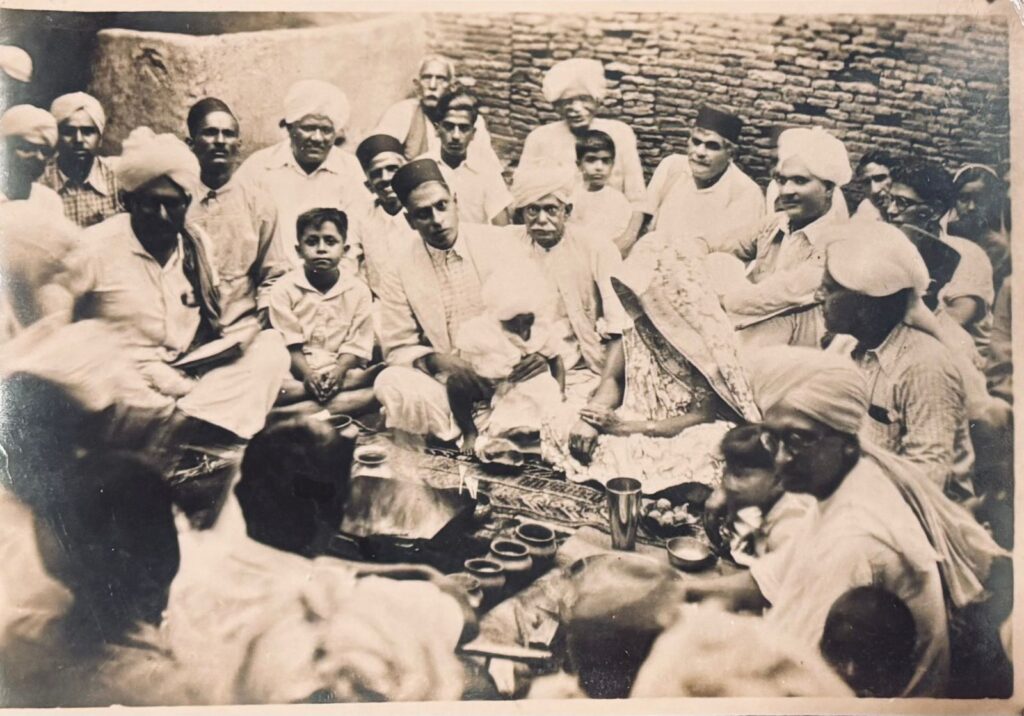
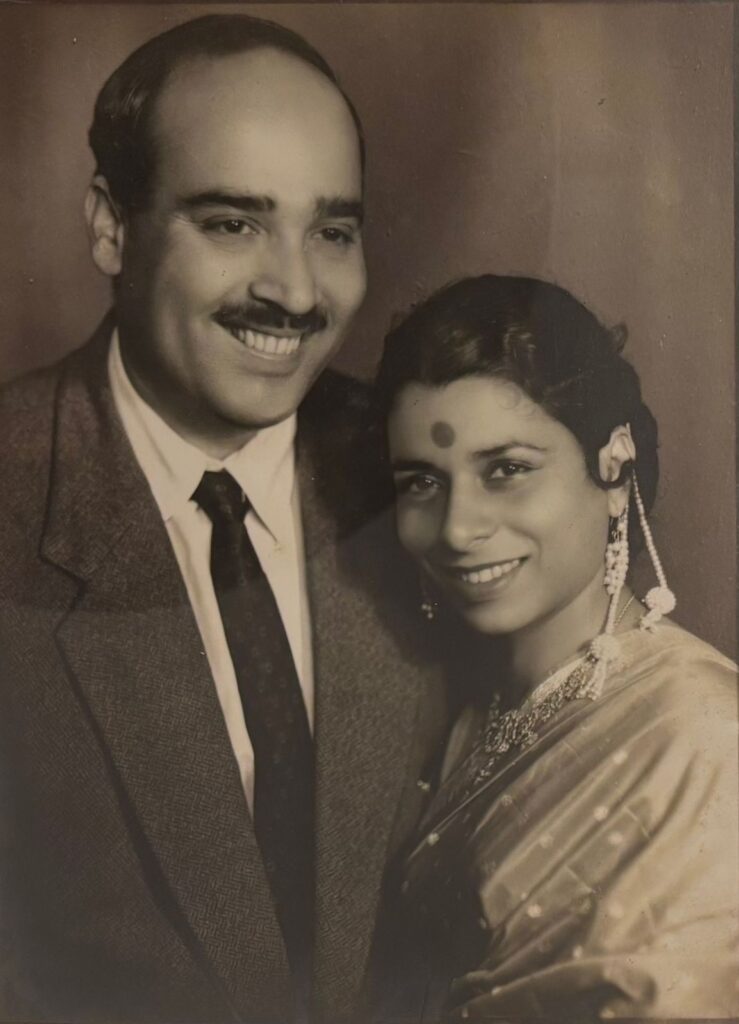
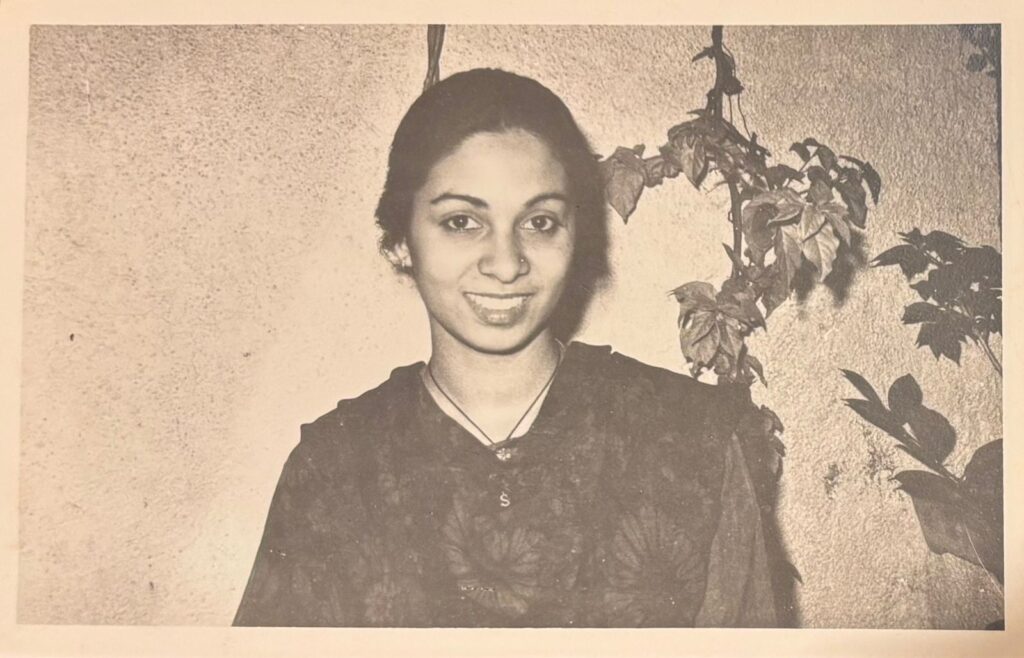
I never knew them, nor did I know my nani’s parents. Yet ever since I was a child, I have been fascinated by stories of my grandparents’ lives and how different their experiences were from anything we know today. I have spent countless hours asking my nani, Anu Sareen, about her childhood, her family, and the world she grew up in.
While my nanu, Mr. Rajendra Sareen, was an active participant in India’s freedom struggle and later became a respected expert on South Asian affairs, my nani was, by her own admission, a quieter observer of history. She was too young when many of the great events of the era unfolded, and later settled in her role of a homemaker. But she retained vivid memories of everyday life. Questions about this vase opened a trail of stories that might otherwise have disappeared.
Her grandfather had worked in the Public Works Department in Rangoon because employment opportunities in India were limited. He later introduced his son, my nani’s father, to a Gujarati business partner, and together they built a successful diamond and gemstone business. Around this time, the vase passed into the possession of my nani’s father as he established his own household after marrying my nani’s mother. His business was thriving. However in 1942, as the Second World War raged, the family travelled to Calcutta so that their eleven-year-old son, my nani’s elder brother, could receive treatment of muscular dystrophy from a renowned doctor. They remained there for nearly a year, but worsening wartime conditions prevented them from returning home. Instead, they were forced to leave behind the life they had built in Burma and relocate permanently to India.
Their journey took them first to Nawanshahr, their ancestral hometown, and eventually to Jalandhar in Punjab. Tragically, the young boy did not survive. Yet somehow, amid war, uncertainty, and displacement, this vase did. It travelled with the family into a large haveli in Jalandhar that, according to family lore, was haunted by a milkman ghost and a few other spectral residents. Whether those stories were true or imaginative, is anyone’s guess. What matters is that they became part of family mythology, and the vase was there through it all.
It remained as the family later moved to another house nearby during the turbulent years surrounding Partition. It sat quietly while my nani, her four sisters, and her surviving brother grew up, married, and began families of their own. To be honest, my ninety-two-year-old nani’s memory is hazy at best today. It is a miracle that she remembers this object at all, and the broad outline of its story.
Yet I like to imagine the vase sitting silently through conversations, celebrations, disagreements, and ordinary afternoons that no one thought to record. Unlike today, when every meal, holiday, and milestone is photographed, documented, and uploaded for likes, views and reshares, life then simply unfolded and was… well, lived! Memories lived in people’s minds and, perhaps, in objects like this one.
Years later, as my nani’s own life evolved, the vase travelled again. It moved from Jalandhar to Delhi, accompanying her through changing chapters of adulthood. New homes brought new routines, relationships, friendships, and memories, yet the vase remained a familiar presence. It had become more than a decorative object. It was a tangible connection to her father, her grandparents, and the lives she had once lived.
When it eventually passed to my mother, its journey continued. As the wife of an Army officer, my mother spent much of her life moving from one posting to another. Homes were packed up and unpacked. Familiar walls gave way to unfamiliar ones. Cities changed, landscapes changed, neighbours changed. The vase changed its location too. It found itself resting in military quarters that had been lived in previously and cantonments across the country, quietly accompanying another generation whose life was defined by movement. While people adapted to new places, the vase carried a sense of continuity. It became a small anchor in the rhythm of relocation, I imagine witnessing familiar emotional patterns emerge across generations while remaining merely an observer.
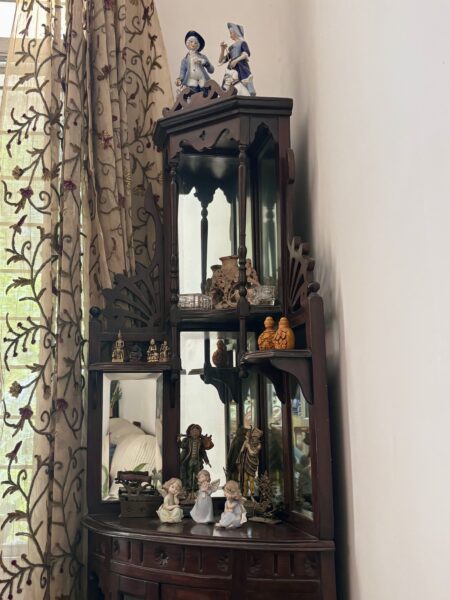
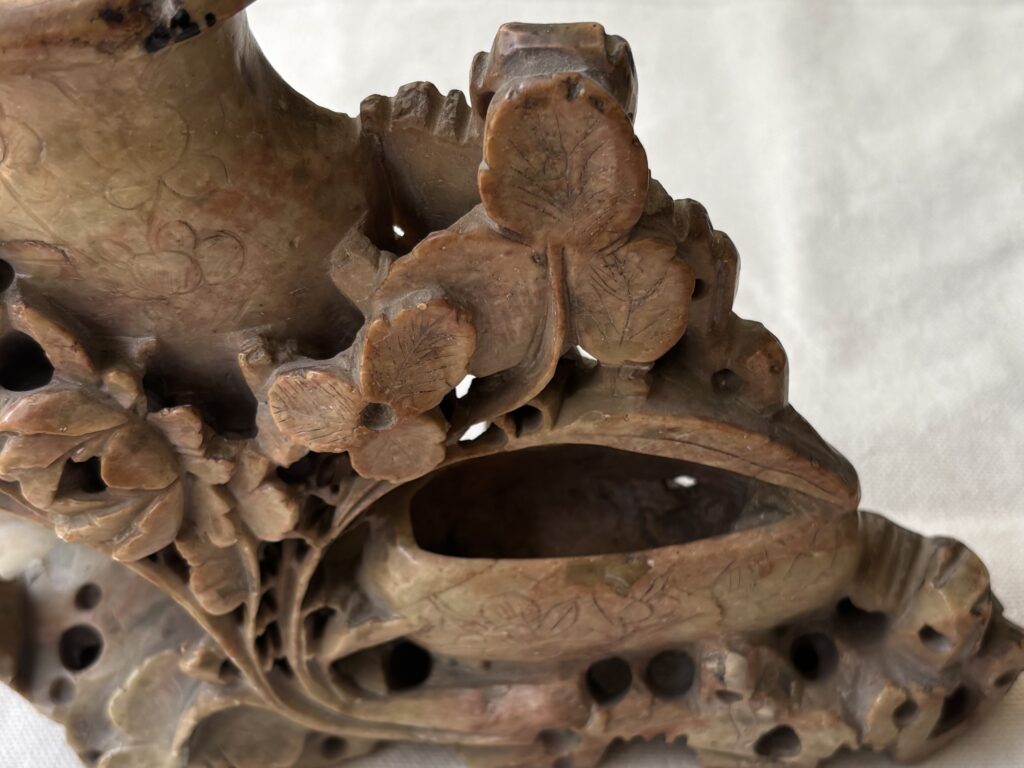
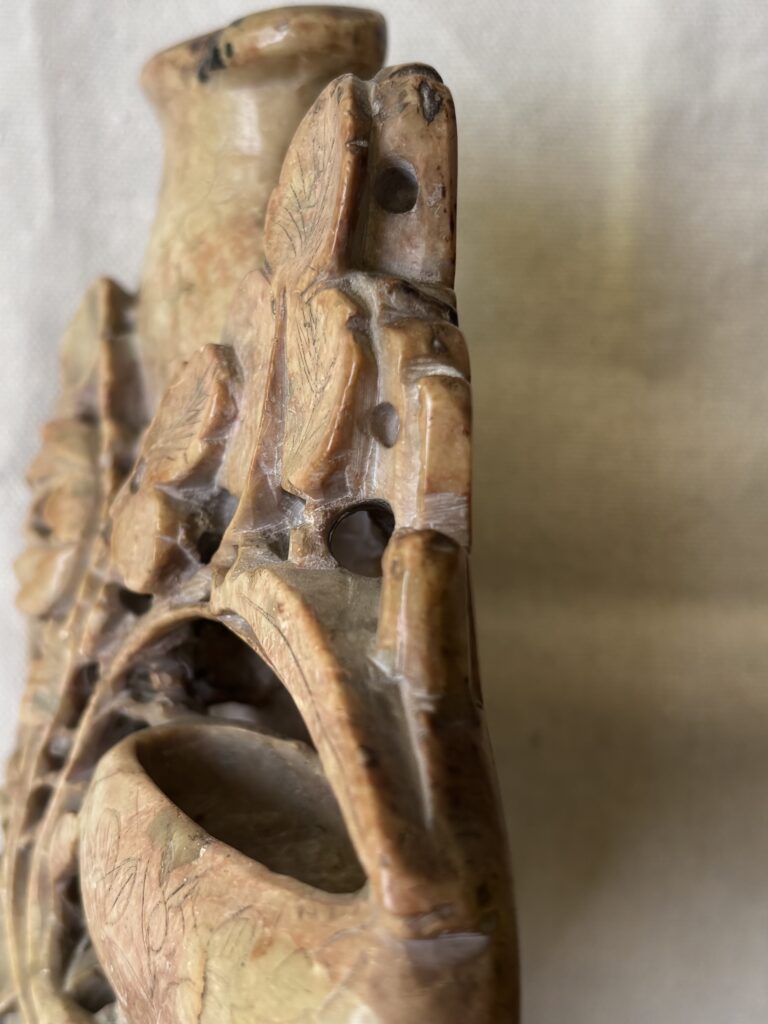
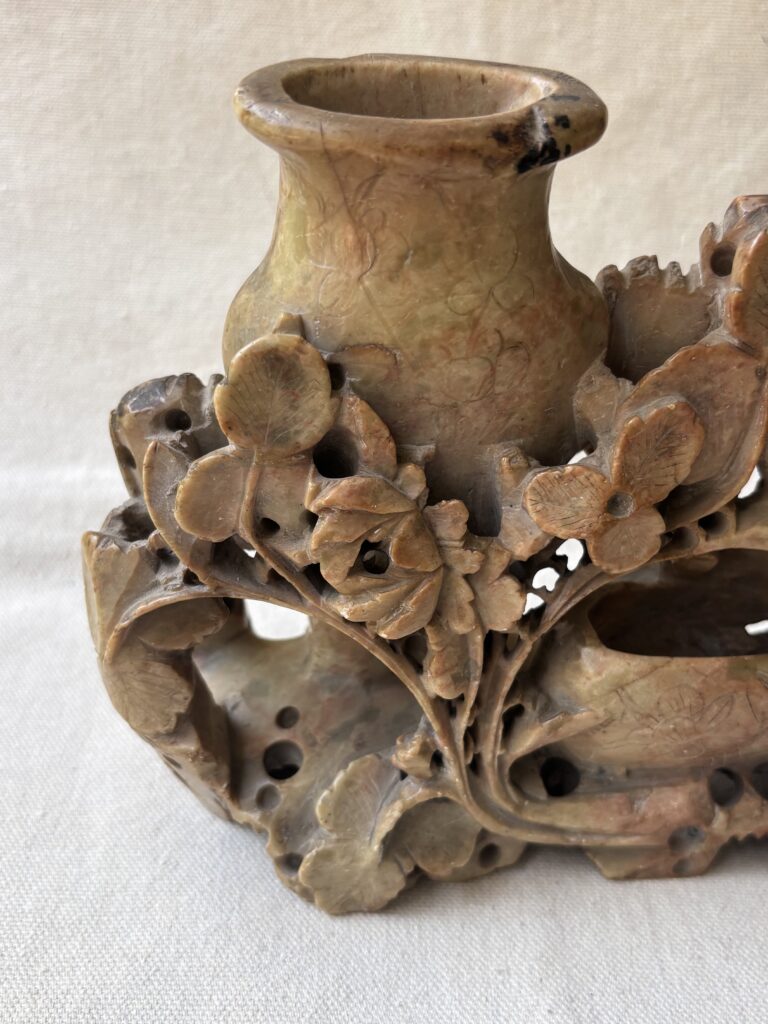
Today, after nearly a century of travel, it finally rests in our home in Gurgaon, tucked into a corner of a mirrored wooden cabinet. It is approximately 6 inches in height, has a 7inch base length and 2.75 inch depth. At first glance, it appears to be what it has always been: an antique decorative object carved from stone. Most visitors barely notice it. Few know its story. Even within our own family, I sometimes wonder how many people fully realise just how many generations and transformations it has witnessed.
That is why, when I began looking around the house for this project, my eyes were pulled to this piece. Its unusual craftsmanship, antique appearance, and slightly charred edges seemed to hint at a larger story. Curious, I began asking questions. I prodded my mother and nani for details, wondering whether there was any history attached to it at all and I was astonished by what emerged. Now, every time I look at it, I no longer see a decorative object. I see an archive of memory. A record of people I never met, lives I never witnessed, and journeys that began long before I arrived.
As a ceramic artist whose practice is rooted in curiosity and narrative exploration, I am deeply interested in the relationship between people and the objects they leave behind. Objects often outlive their makers and owners. They endure long after individual memories begin to fade. Perhaps that is why this vase resonates with me so strongly. It reminds me that, as artists, we create more than functional or decorative things. We create objects that may one day carry stories, memories, and emotional significance beyond anything we can imagine. Handmade objects, especially, hold traces of intention, care, and humanity that deepen over time.
We often think that humans carry objects through life, preserving them and passing them down through generations. But perhaps the reverse is equally true. Perhaps objects carry us. They gather fragments of our lives and transport them safely through time, long after we are gone. And perhaps that is why this vase feels so precious; not because of what it is made of, but because of everything it remembers.