
TEXT AND PHOTOGRAPHS BY DEEPA ANAND
Mumbai, Maharashtra, India
Some stories do not just live in books, they stay with us in memories and often define who we become. This is the story of my grandparents, and the objects that still carry their memories forward.
My dadaji, Jamshed Rai Seth, was born on 1st May 1900 in Sialkot. In 1917, he joined the British Army and was posted to Palestine, serving through both World War I and World War II. His First World War commemorative medal reads, The Great War for Civilisation 1914-1918 and on the rim is inscribed 966 RFMN JAMSHED RAI 1-6 GRKS. This tells me that he was a Rifleman, with the Service Number 2966, serving in the 1st Battalion of the 6th Gurkha Rifles. His General Service Medal from 1918-1962 has a clasp that reads IRAQ, indicating service connected to British operations in Iraq/Mesopotamia after WWI – that there’s where he may have been stationed in the interwar period. A 1925 RAF Cricket Club medal places him in Baghdad.
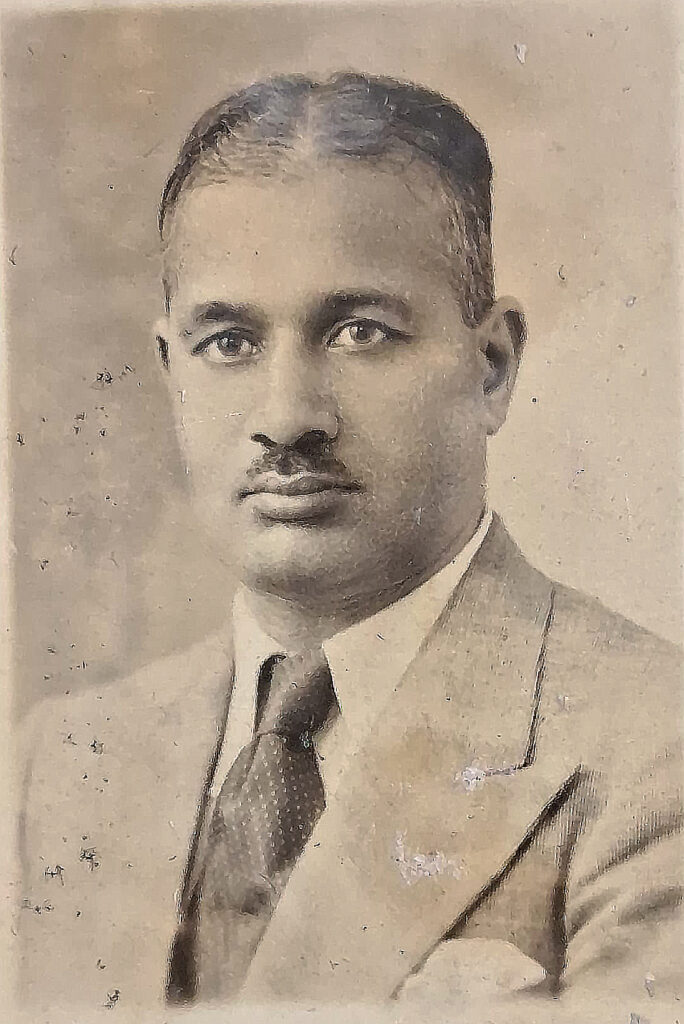
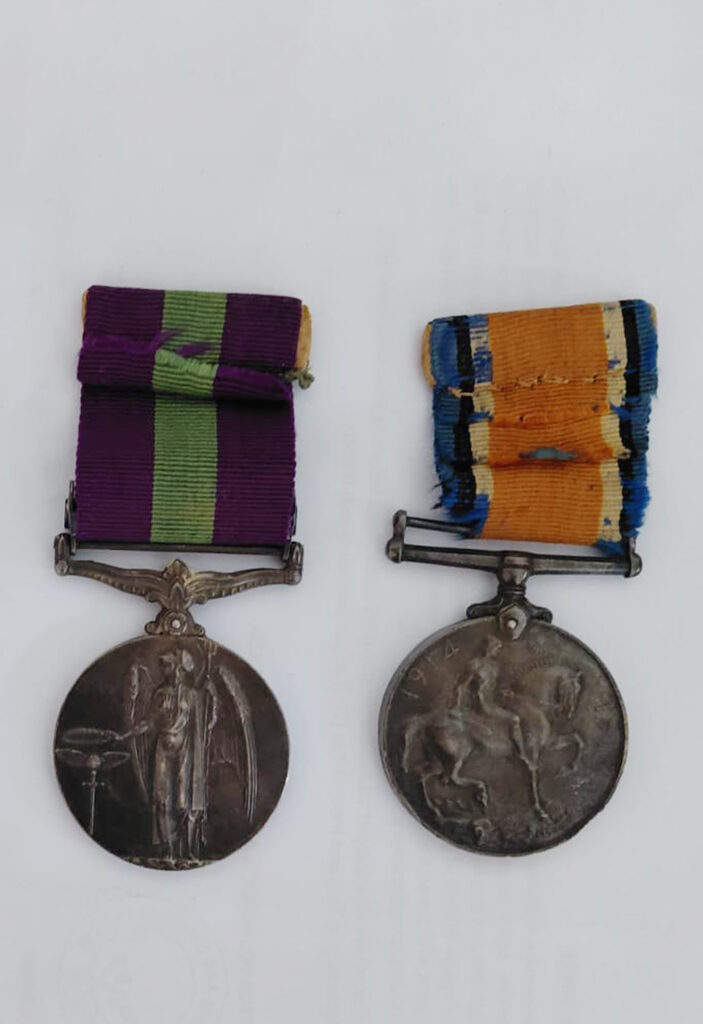
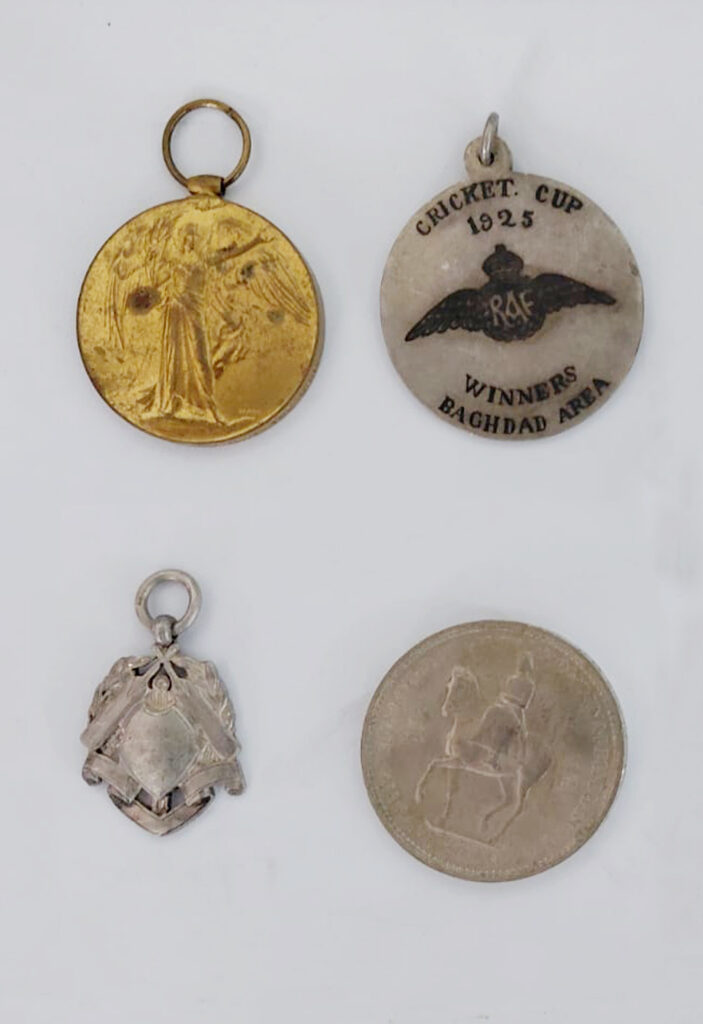
Jamshed Rai Seth’s life stretched across countries and moments in history that feel distant to me, yet deeply personal at the same time, albeit in indirect ways. I may not have experienced these colossal moments myself, but through his photographs, medals, and the stories I heard, they began to feel close—almost like fragments of a life I had partially inherited.
My dadi, Veera Devi, was born in 1912 in Jammu. After their marriage in Sialkot, she joined her husband in Palestine, building a home far from everything familiar. Their first son was born there, and their next two in Bahrain. In 1946, she returned to Sialkot with her children, and in 1947, during Partition, she made her way to Bundi with them. When I was young, I never thought to ask about their lives in detail. I listened to bits and pieces, but never knew the full extent of how they faced wars, migration and the challenges of setting up a home in a new place. I often think about their journey now, and the strength it must have taken to leave things behind and begin again. So many decades later, these memories feel even more precious.
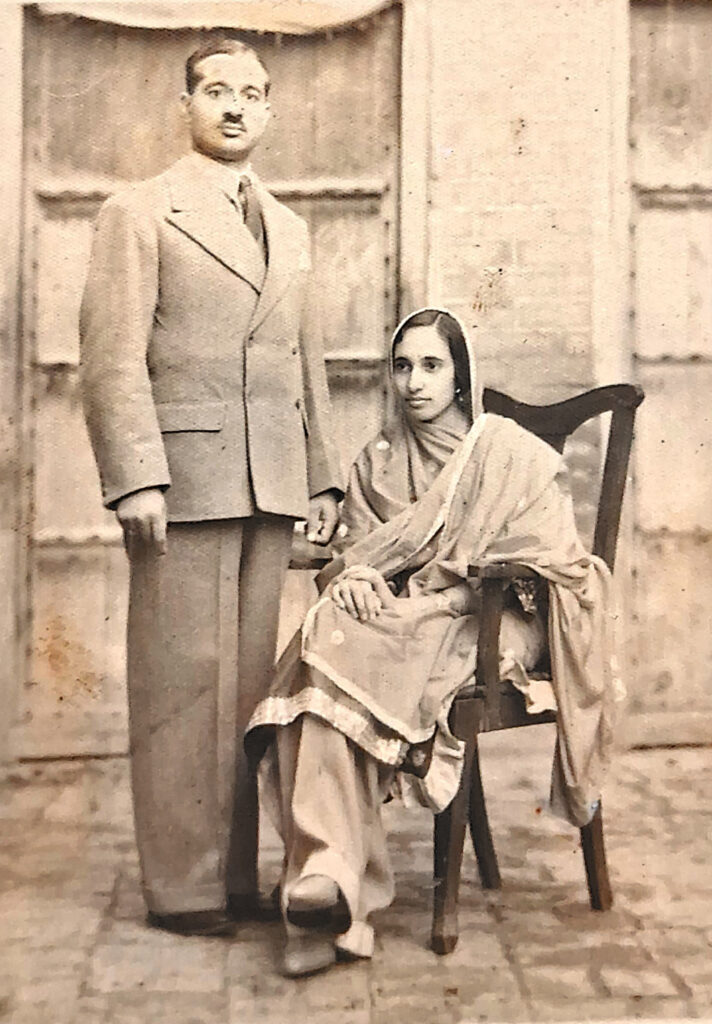
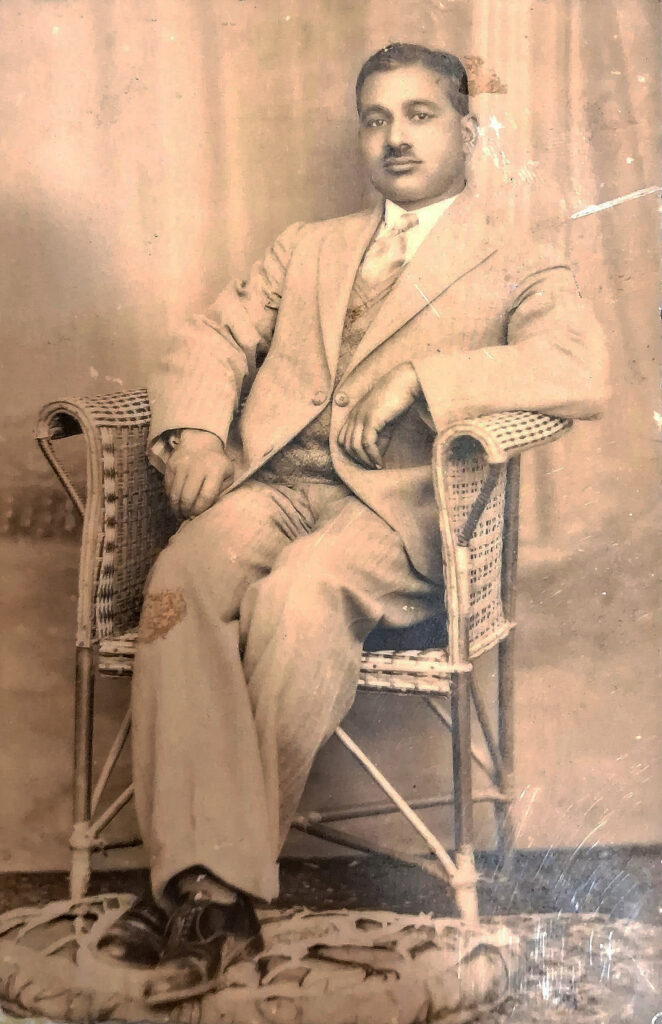
In 1953, as a decorated officer, my dadaji was invited to attend the coronation of Queen Elizabeth II in London. By 1955, he had returned to Bundi. When he passed away shortly after in 1965, he left a legacy shaped by movement and resilience. I don’t remember him speaking much about his worldly experiences. There was no display or storytelling about where he’d been, or what he’d witnessed – on or off the battlefield. Rather, it was his discipline, straightforwardness, and restraint that hinted at a life shaped by hardship, duty, and survival.
After my dada’s death, my dadi moved with my father to Kota, where he had gotten a job. Sometime after that, he got married and as children my brother and I spent much of our childhood around her. Despite having seen a large part of the world at such a young age, she never told many stories from her travels. She was a graceful woman, and I remember that she always busy – reading the newspaper or Dharmyug magazine, or creating something with her hands; she even taught me how to crochet. I feel like my own creativity comes from her, not just in what she made, but in the care and patience she brought to everything.
During our summer holidays, my brother and I would garden with her – she knew a lot about the natural world. We would collect dried leaves and mix them with soil, turning this into natural food for the plants. Then in the winter, she’d set up a small clay stove in the backyard, where she cooked gajar ka halwa and mutton on weekends. We would take turns sitting around, waiting for the halwa to cook, surrounded by the soothing fragrance of the earth and the slow, rich aroma of the food. I truly miss those moments.
In our home, many objects still hold her presence.
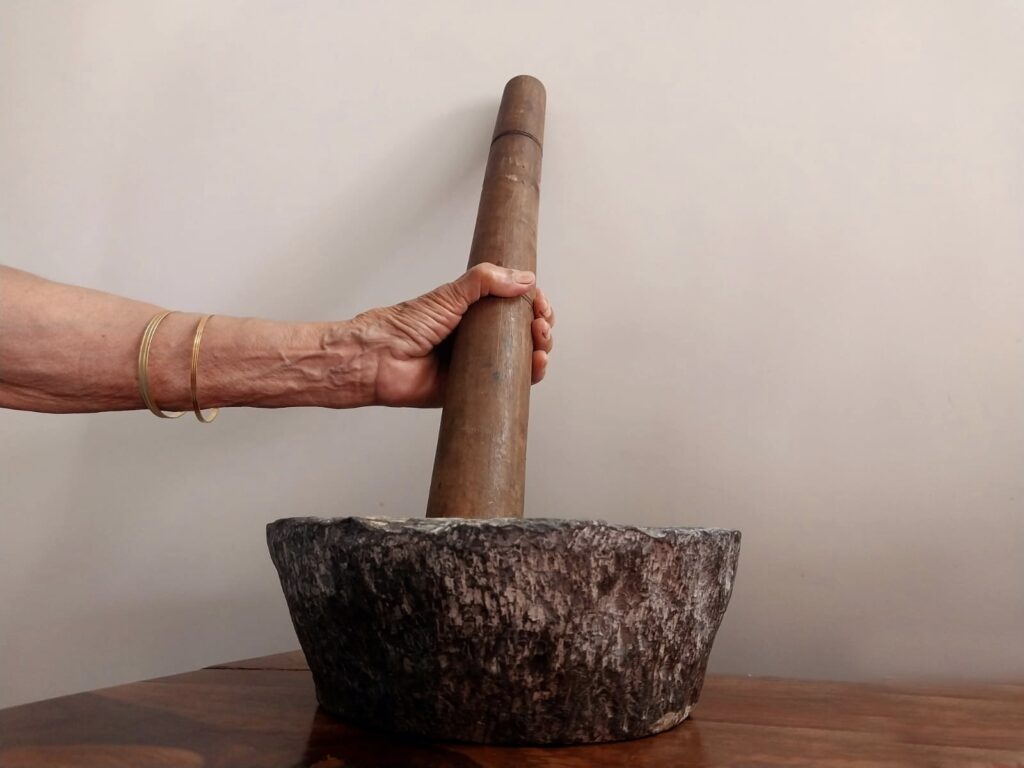
The dori danda, nearly six decades old, is made of solid stone – a rough surface, worn smooth with use and age. The dori is the bowl or the mortar, and the danda is the heavy stick-like pestle. It was used to crush simple masalas and chutneys, slowly by hand. Things like coriander seeds, cumin, dried red chillies, black pepper, and sometimes cloves or cinnamon. The process was slow and rhythmic, and the aroma would fill the space as we crushed them. The chutneys made on this were usually fine in texture. As a child, I remember watching and sometimes trying to help, my strokes uneven, small spills followed by laughter. For me, it was never really about the spices, but the time we spent making things together.
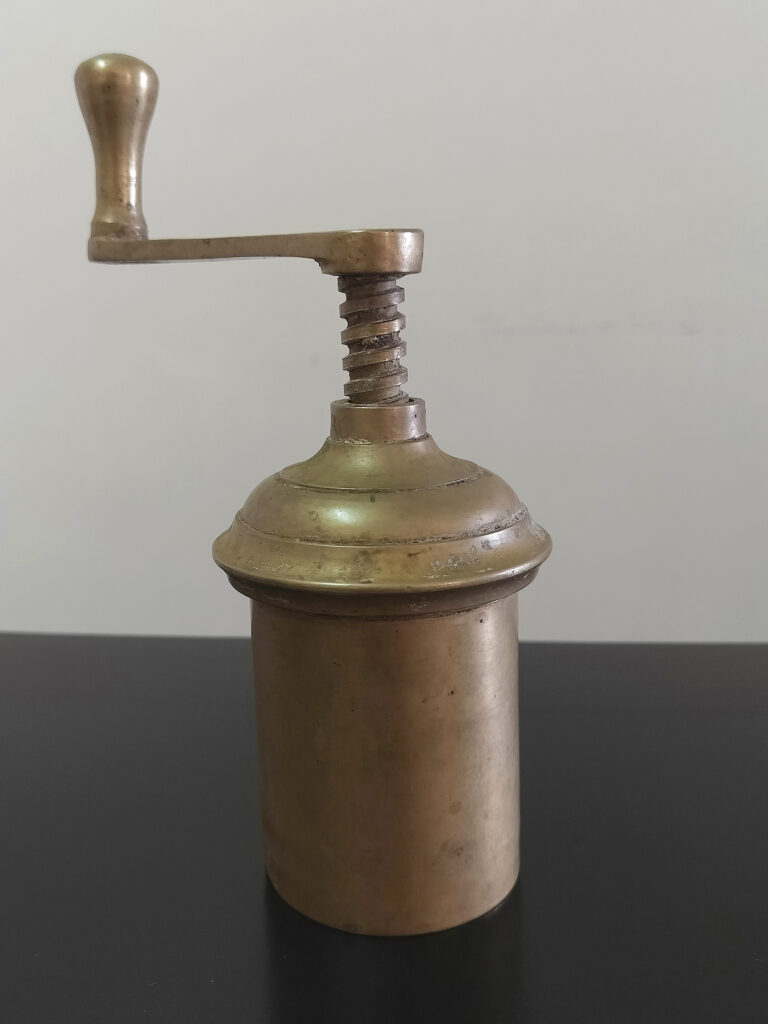
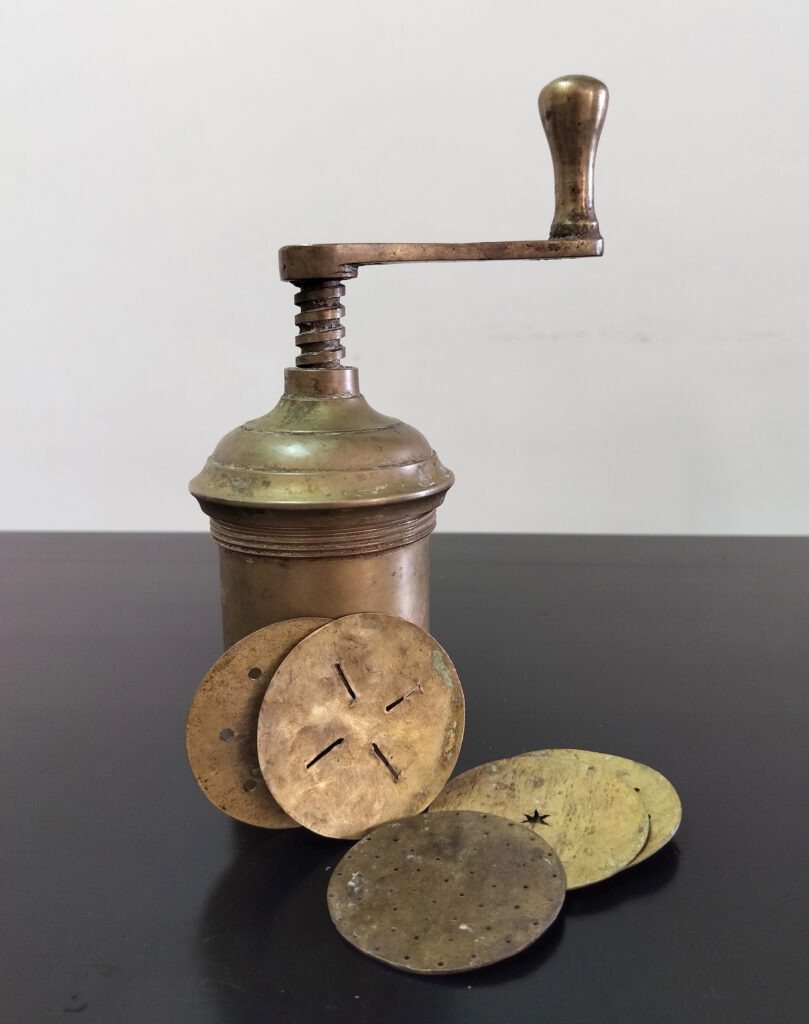
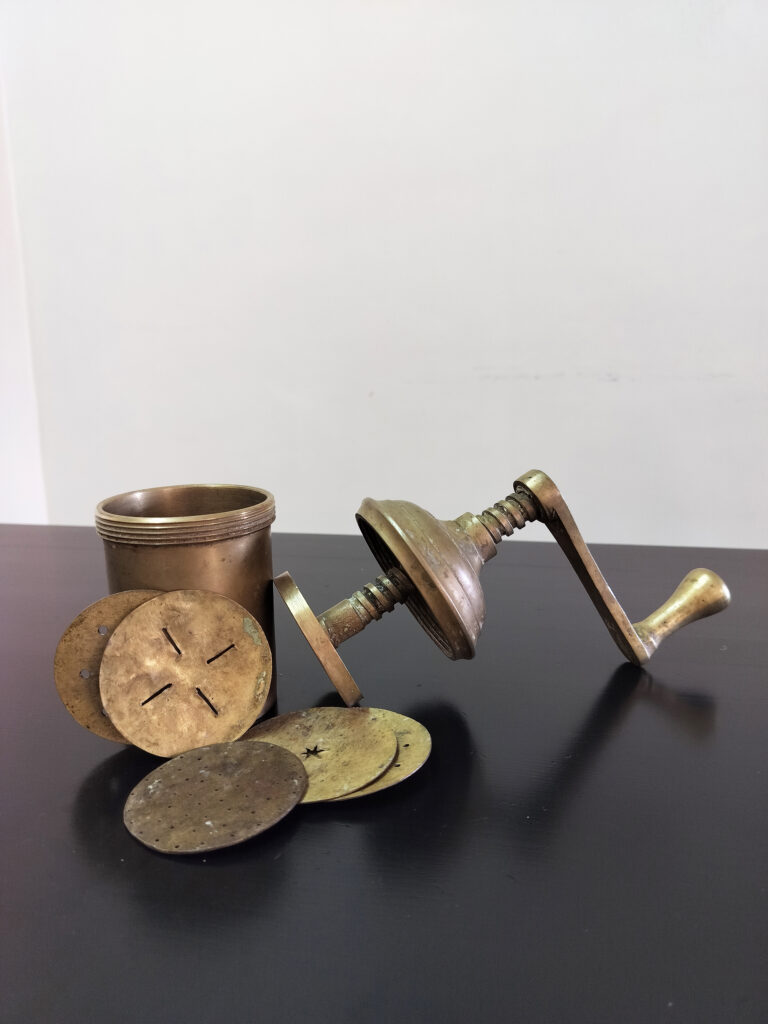
The sev sancha, a brass press my grandparents brought home in 1953 after a trip to Mumbai and Pune, always came out during festivals like Holi and Diwali. It was a traditional manual press with a cylindrical body, several interchangeable discs (for different shapes of snacks), and a rotating handle that pushed the dough through the cylindrical container. My grandmother had asthma, so she couldn’t stand in front of the smoke, but she’d knead the dough. Then my father’s hands turned that dough into sev and papdi, frying it golden, filling the house with warmth. We would wait eagerly, and as soon as it came out hot and fresh. We’d start tasting it.
The hamam dasta came into our family between 1955 – 57, in Bundi, in a home called Lal Kothi. My dadi brought it home after seeing how spices were pounded and prepared locally. Made of heavy iron, it was a cylindrical vessel with a dasta, or stick, and used in our home every day. The hamam dasta was used to burst open the spices, producing a coarser masala than the Dori Danda. They retained texture, and things like fennel, cloves and nuts, coarsely pounded, would release incredible aromas as they cooked. I remember standing beside her, trying to help, turning it into a small game. If she was shelling peas, I’d make small piles or patterns with them. But I was especially fascinated when she made rotis – I’d watch in amazement as she expertly turned it with her hands. As a child, seeing the roti spin and puff up on the flame felt almost magical.
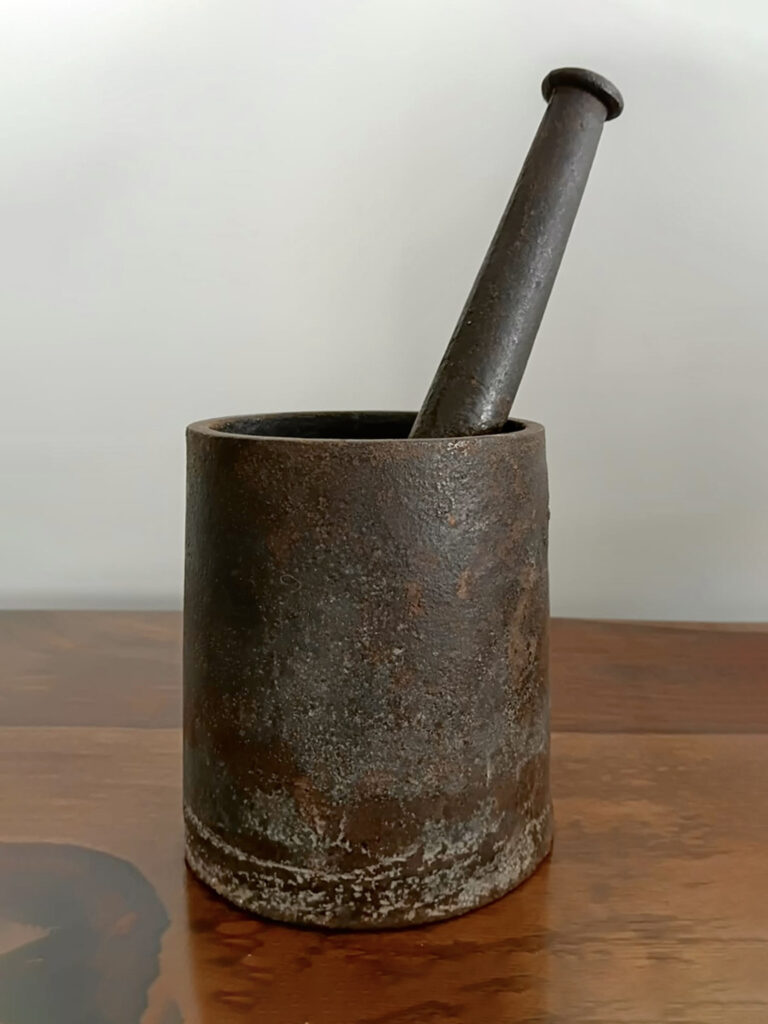
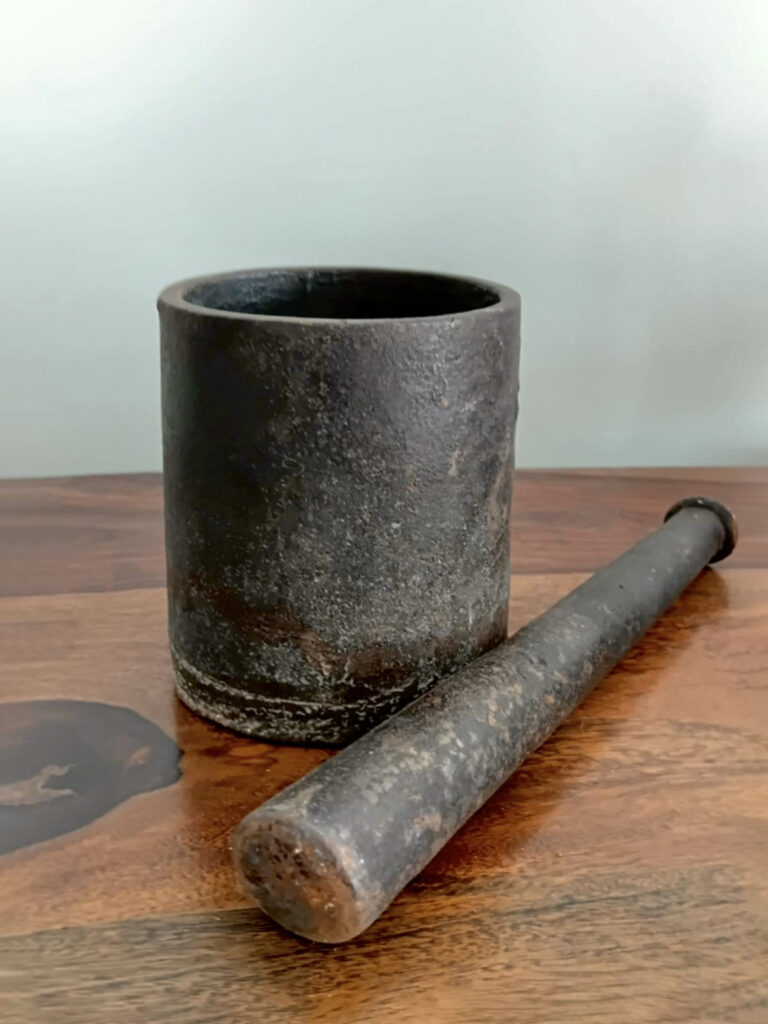
When my dadi passed away in 1996, I was 16 years old and it felt like losing the presence that held everything together. Many of these objects that once held her touch are no longer used. Life has become faster than these slower tools, but sometimes I find myself using them intentionally, just to remember her. At first, I was drawn to the moments where we were together in the kitchen, the small rituals. Over time that turned into an interest in the kitchen itself. So when I use these utensils now, I feel a sense of connection – as if time folds in on itself and the people from the past return in subtle ways. There’s comfort in the familiarity, in the textures and rhythms I grew up with. At the same time, there’s a softness, a longing, because I know that these moments belong only to the past.
Veera Devi remains in these objects, in these everyday actions, in these memories. Her life continue in the smallest things, like a story that never really ended.
Wonderful