
TEXT AND PHOTOGRAPHS BY ANYA SHANKAR
Bengaluru, Karnataka, India
I was fifteen when I first saw Mani. Twenty-five when I found him again. Rummaging through the wardrobe, I came across a box. Not a wooden chest of treasures, but a measly cardboard box filled with junk. I’m convinced that every household has one. Tucked in at the end of your cupboard, filled with things you can’t part with but clutter your room too much.
Half expecting to find pearls hidden inside it, I opened it. All I could find were beaded bracelets from the 90s and rubber bands with pins tangled up. A glimpse of gold made my heart skip a beat. Had I found my treasure? I carefully untangled it from the rest of the junk. It was a mani. A bell, in Tamil. I rushed to show it to my mother, giving her a chance to explain, but she knew nothing. My paternal aunt, however, had much more to say in the matter.
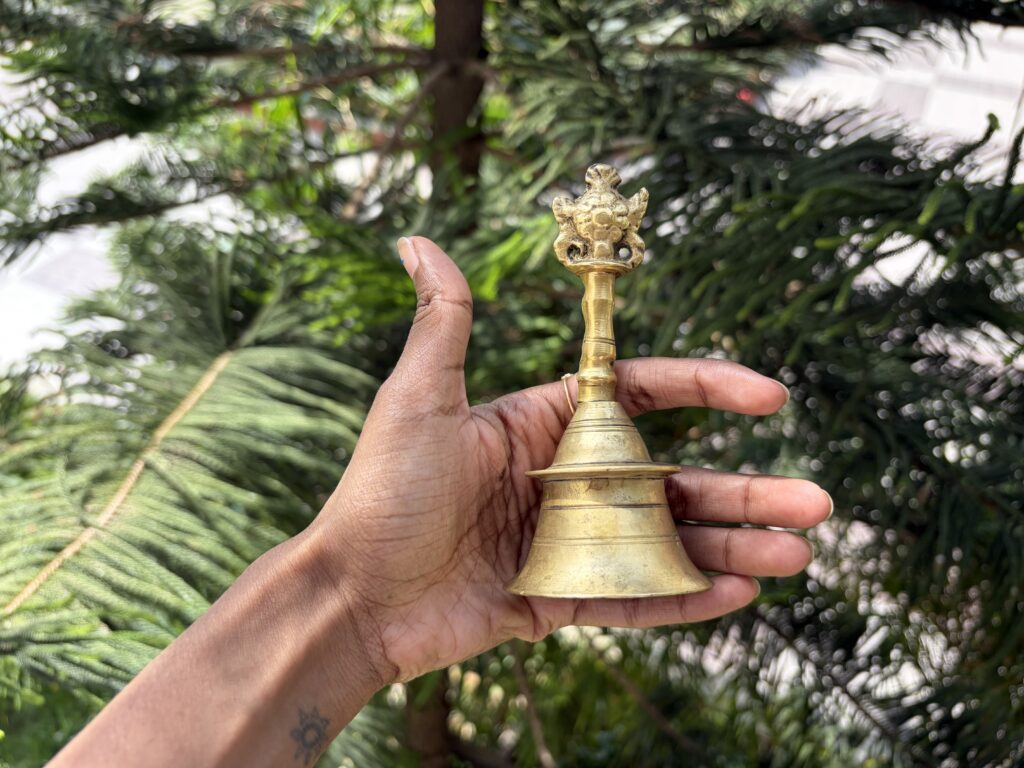
“This? Where did you find it?” she said, reaching out for it. When pressed for more, she made some chai and sat me down like I was five again, waiting for story time with wide eyes, expecting. She chuckled and began narrating. “Somewhere around the early 1920s, your great-grandmother was given a bell and a small vishnu statue by her mother. To remind her of home. The statue is on my Swami table. Go bring it.’
She nestled it in her hands as she spoke. “When your Dadi (grandmother) got married in the 1950s, this bell in your hands and the statue in mine were her heirloom. In the beginning she felt they belonged to her older sister in Jammu. Despite it being sent to her, the goods returned to our door step, with no note.
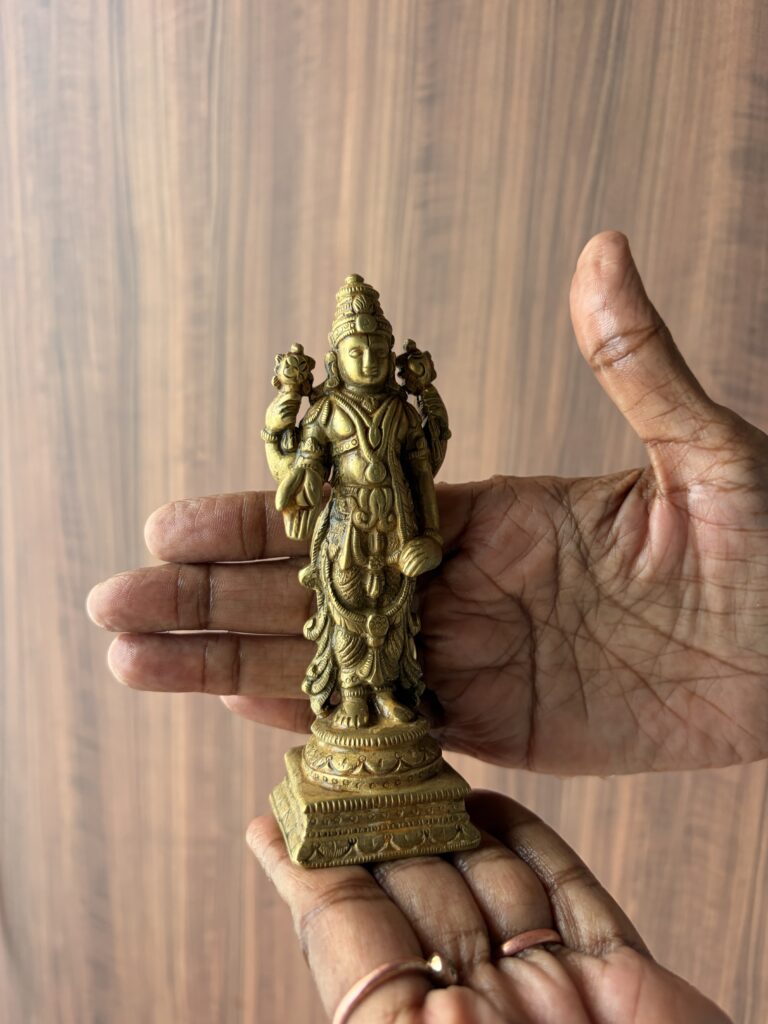
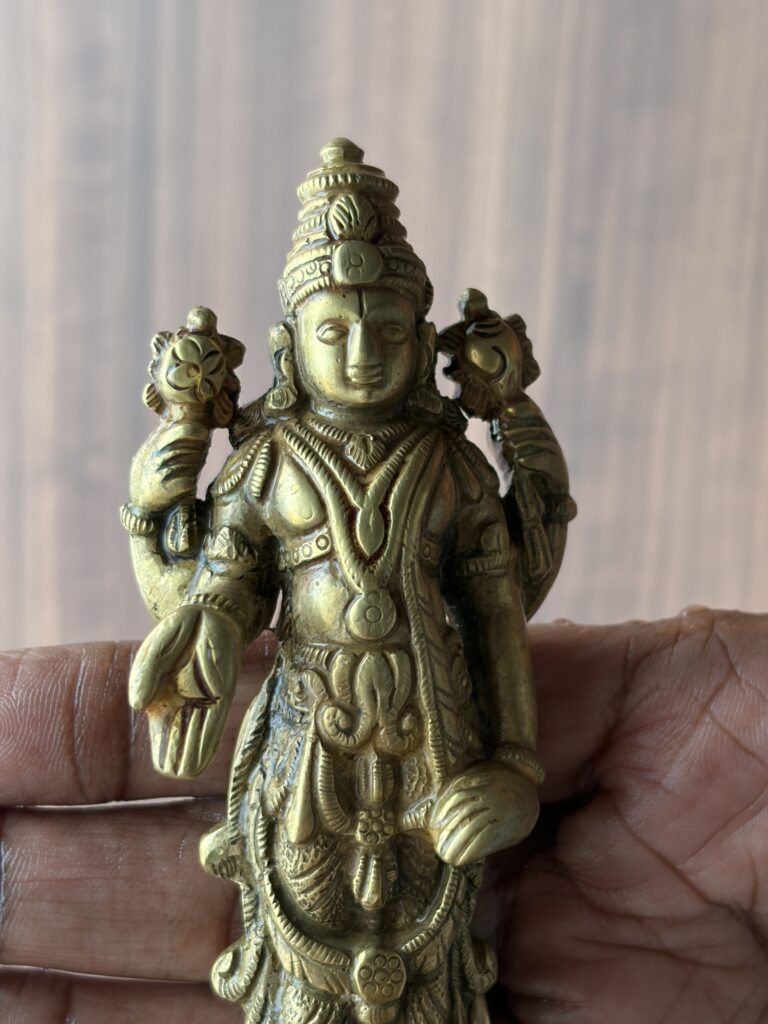
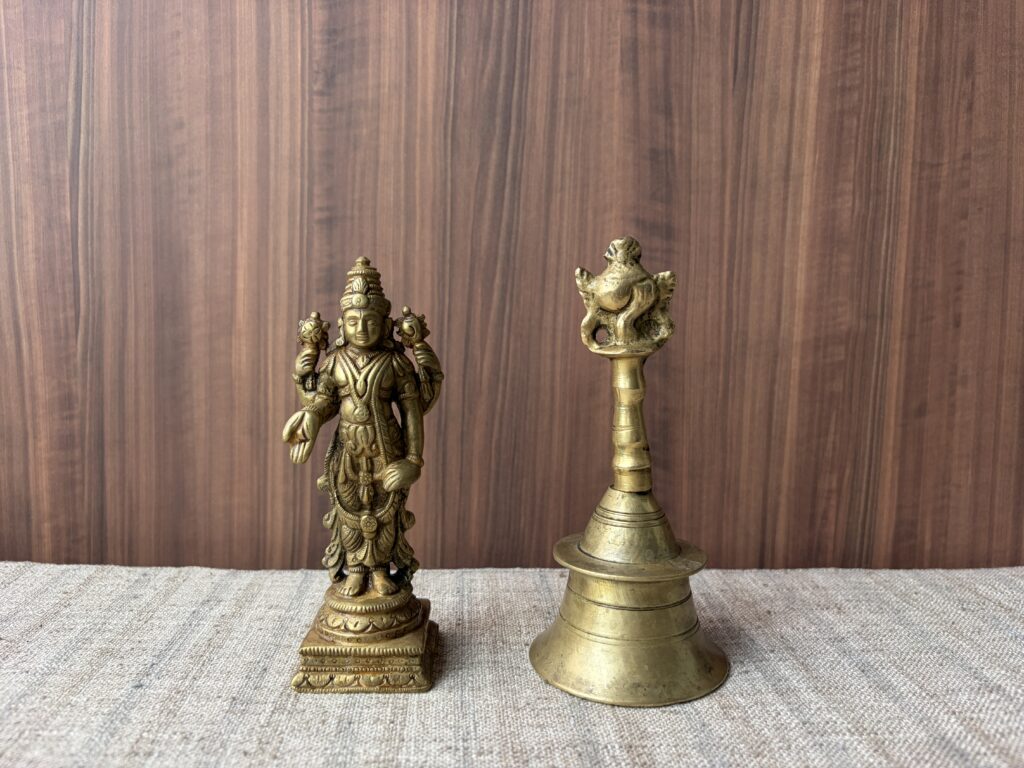
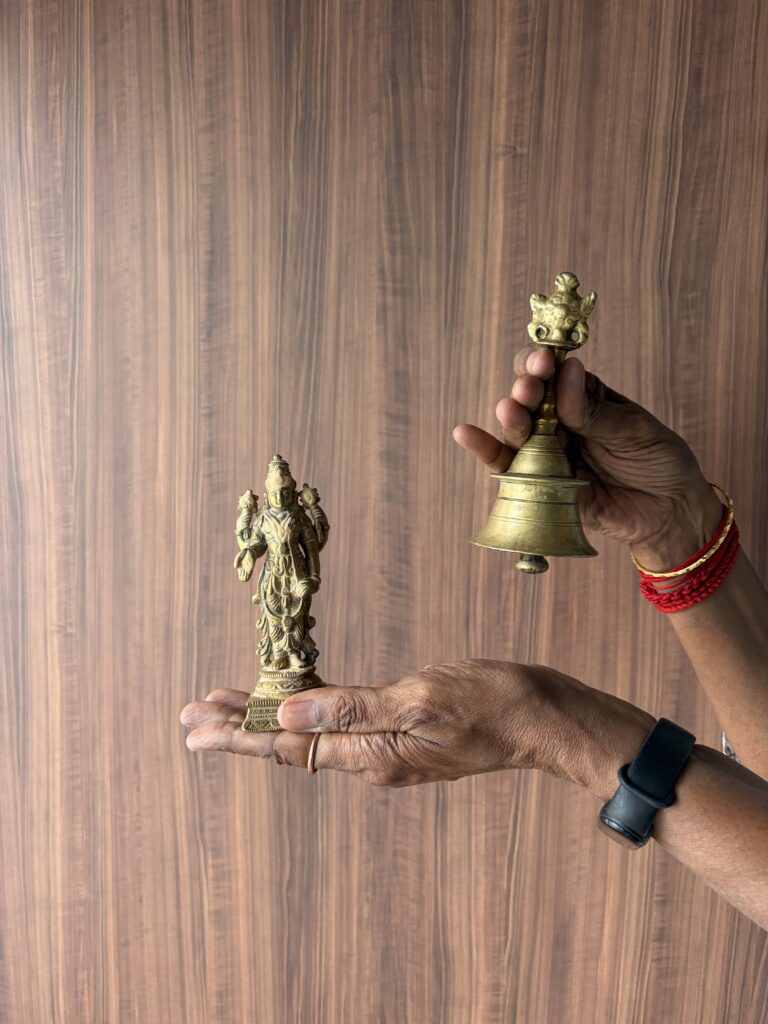
We don’t know where her family got it from, when they first saw it, or what your great-grandmother’s name was. Who remembers these things? All I know is that, among my three sisters, I was the one chosen to pass it on to my daughter. I never got married, so your Dadi kept it to herself. Now it has found its way to you.”
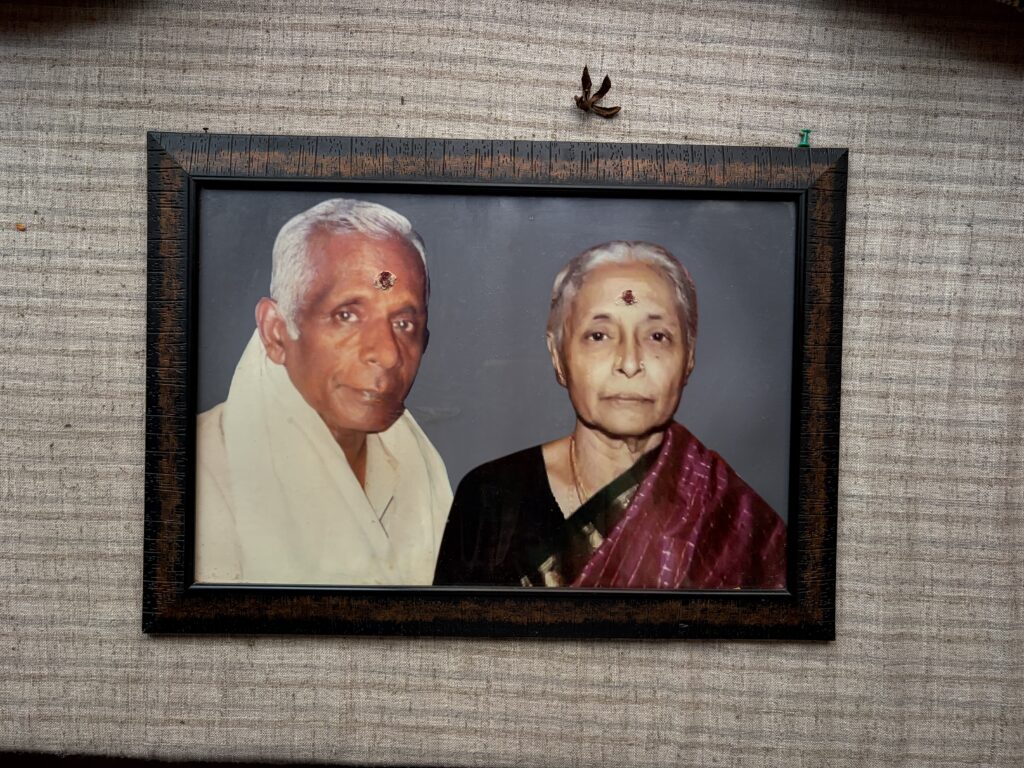
My memory of Dadi tells me how her neighbour named her Lalitha and her family settled around Pondicherry. A family of 7 with her 4 siblings, father and mother. She once told me that her father liked to teach but we never spoke of her mother. Fearing the increasing number of dacoits near their house, the family moved a lot. All until at the young age of 17, my grandmother was made a bride. Married to my grandfather who lived all the way in Delhi. Now I know that her mother handed her a statue and this very bell. I can only guess what the gesture meant – a “we will miss you” or “take care.” But I do know this, Dadi was very happy to be in the capital of young independent India.
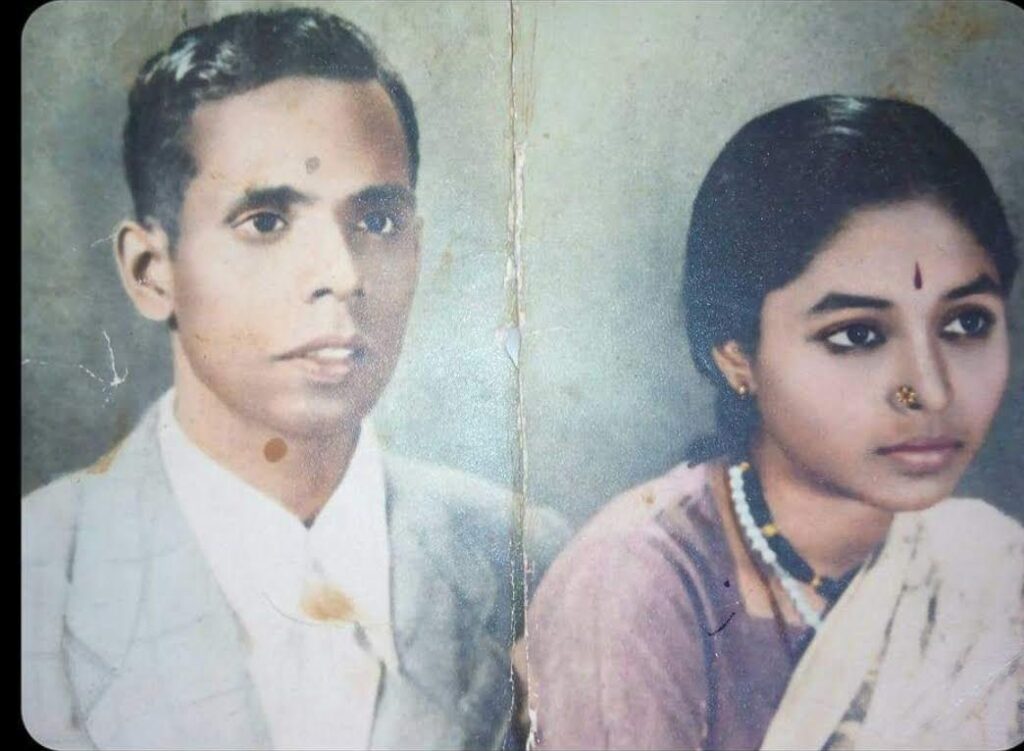
Delhi grew on her, and she cherished her time in her neighbourhood. As a polyglot, she quickly picked up on Hindi and conversed with my grandfather in secrets, only revealed in Tamil. Lalitha had her first daughter when she was 19. After 3 daughters, she had two sons. When asked, she always counted her children as 7, including the two who never made it past the hospital’s doors. “A mother remembers all,” she’d say, “even the ones we never get to know.”
The youngest of hers was my father, Ravee. When he was 19, he moved to Japan. A time he still speaks of with fondness. When he brought a bride home, my 22-year-old mother was greeted by her bitter in-laws. My mother found her footing on her own accord and had me in 2001. I was instantly loved by my Dadi. Years apart, I’d keep returning to her and her to me. She passed away in her sleep, after hours of laughing heartily on her bed. “Thank god Covid didn’t take her” is the first thing my neighbours told my grieving family.
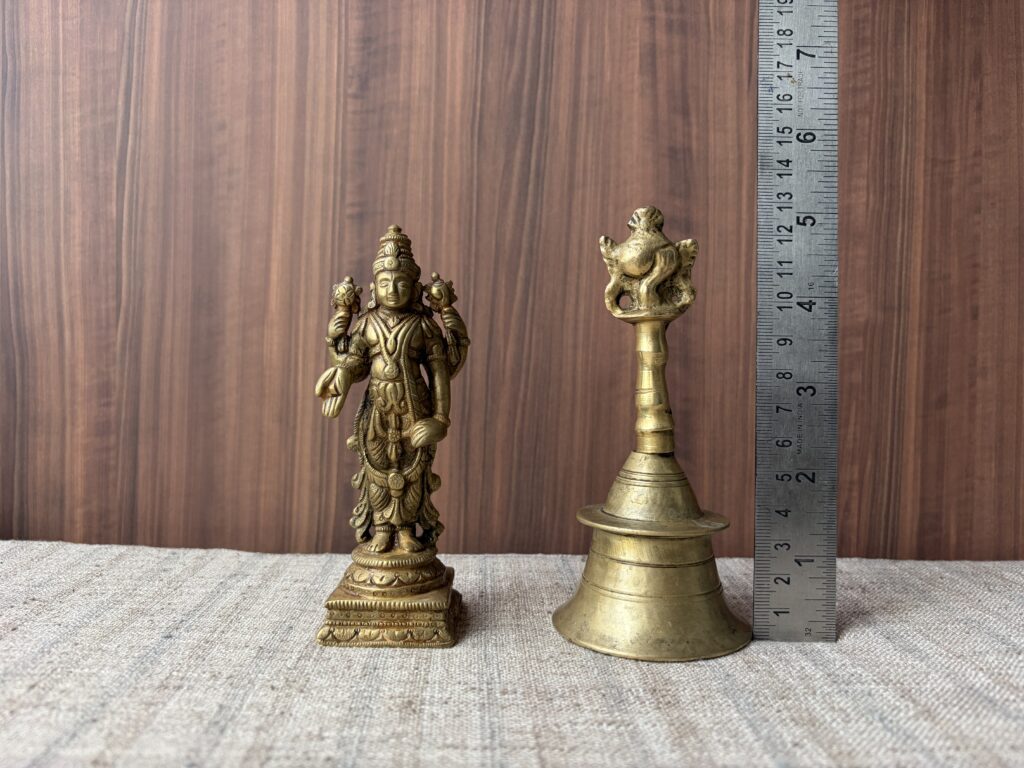
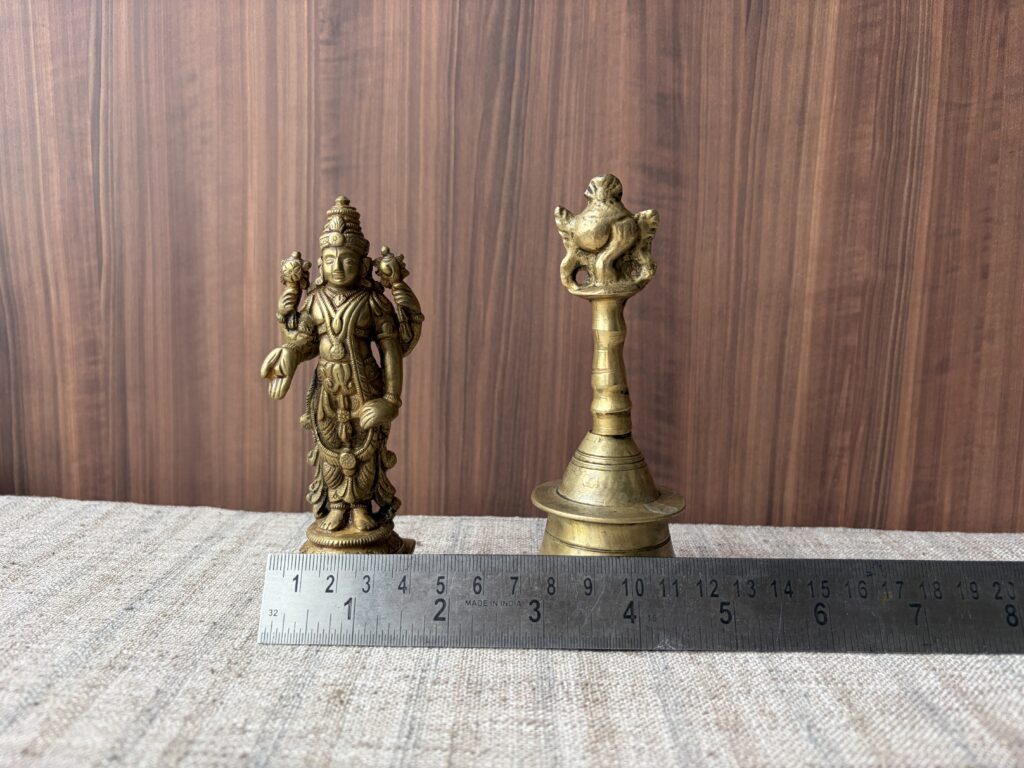
In my household, damaged statues and paintings of the divine are considered inauspicious. A modern equivalent of keeping cards that have expired or never been used. “It shows Lakshmi that she is not welcome,” Amma maintains as she cuts the cards before throwing them away. Yet when I turn to the old mani, the pristine statue and several dolls from my grandmother’s golu collection, my vision is clouded by memories. Some of them were from Chennai’s T nagar market, some from my mother when she was still a part of Kalakshetra.
As a dancer, Amma’s time in Kalakshetra was a huge part of her life. It molded her into the woman she is today, someone who dances to her heart’s content, loves kalamkari and collects idols. They decorate the walls of our house still. A few were gifted, a few bargained for. An archive of nostalgia. Of times none of us can revisit, yet that stubbornly lingers. Perhaps it is a maternal urge to leave your daughters with a collection of miniature gods. For my aunt still cherishes Dadi’s Vishnu statue on her table. “Your Dadi refused to chant her mantras without this bell,” my aunt concluded, before taking the teacups away with a smile.
I looked at the bell once again. Despite its edges smoothened by years of use, I could tell this once shined brighter. The crooked handle shows its age. On one side it has a shell and on the other, a clamp.The inner edges blackened in a shade of greenish-bronze, almost black. The statue however, is maintained in a much better shape. Rinsed and washed thoroughly for decades, it is prepped with chandan everyday for pooja.
I left the bell on the Swami table, inside the mini temple decked with flowers. Right beside Dadi’s beloved statue. It only felt right. Every day since, it is wiped clean after every use, and the yellow thread around it is replaced with a new one. And twice a day at 4:30, the bell chimes a familiar string of tings. If you listen closely, you can almost hear a faint voice chanting with it.