The sea of silver
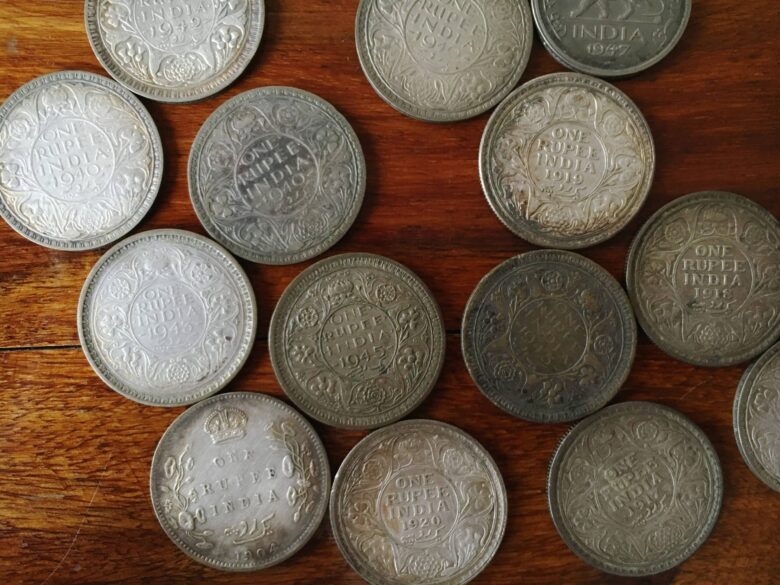
I come in and sit down on the cane chair next to her bed. She is singling out the larger silver coins and laying them in a line, chronologically. The collection begins from the year 1904 and ends at a coin from Independence, 1947.
These chaddars had been embroidered by Biji, my great grandmother, Ishar Kaur, for her own trousseau probably some time in the early 1920s. Often, women of those times would collect or make such items for their trousseau – handcrafted or embroidered cloth – which later could be used to make several smaller items like dupattas, rumaaley, tablecloths and bedsheets.
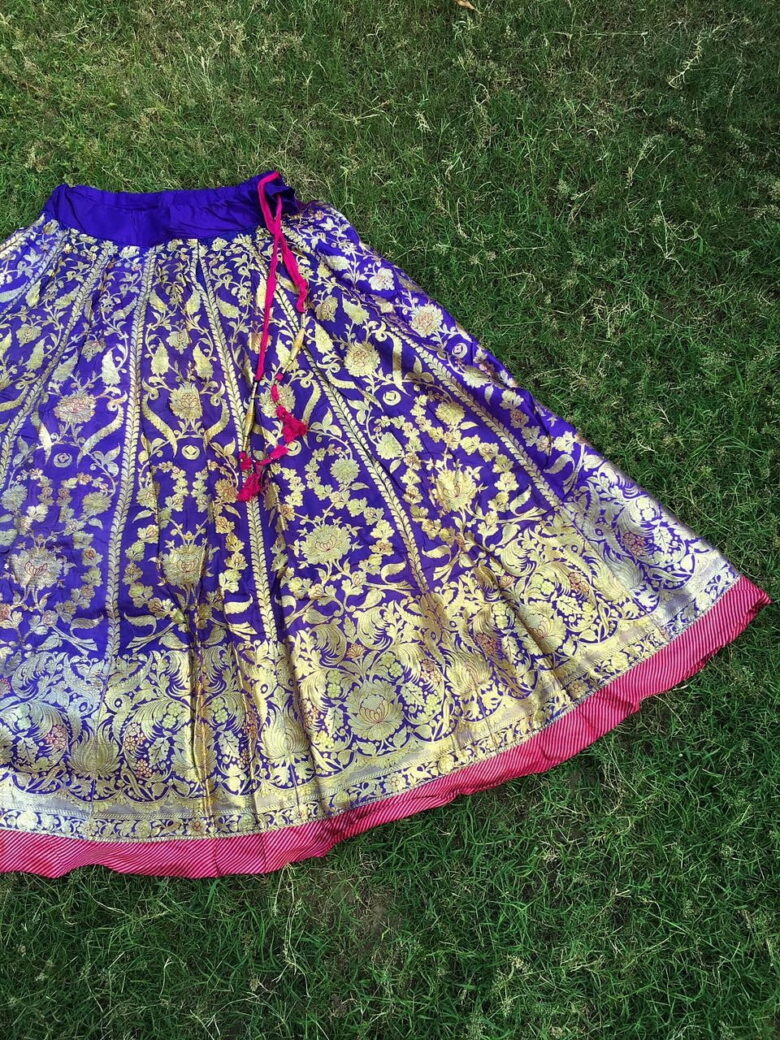
This type of ghagra or popularly known as ghagri, is typically found among families belonging to the Shekhawati region of Rajasthan. This ghaghri was my great-grandmother, Tejwati Sekseria’s.
In those days, it was customary to include a cabinet for dolls in a bride’s wedding presents; this was at a time when most brides were no more than ten or twelve years old. The doll’s showcase possibly travelled with many child brides, across paddy fields and city by lanes, keeping pace with palanquins and jostling on boats across Bengal’s wide rivers.
These buttons used to belong to my maternal grandfather, my nana, Sri Ram Puri, who must have likely bought them in the 1920s or 1930s. When he died, my mother received two sets of these buttons from my nani, his wife. One was given to Dolly, my sister and I got these ones.