
TEXT BY ANURADHA PATI
PHOTOGRAPHS BY EESHA DRABOO
Bengaluru, Karnataka, India
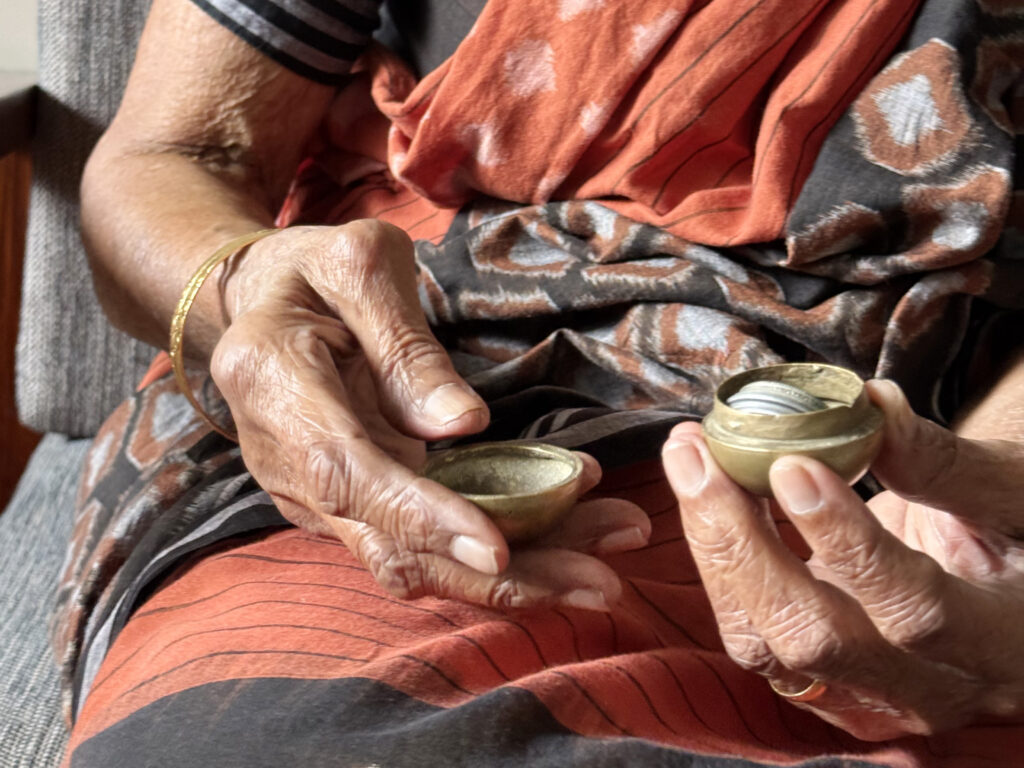
A Karataa (କରାଟ, कराट) is a metal ball, shaped about 2inches in diameter, used by women at a time when the saree was worn without a blouse or petticoat, to fasten the first secure knot of the fabric as they began draping it around their body.
In many parts of India, specifically in forest-dependent communities with large tribal populations, the culture and living were centred around the forest, around foraging, small farmer households, and subsistence communities. These were less feudal societies and life was lived in compatibility with nature, which meant sourcing most of their needs from forests, ponds and small-scale agriculture.
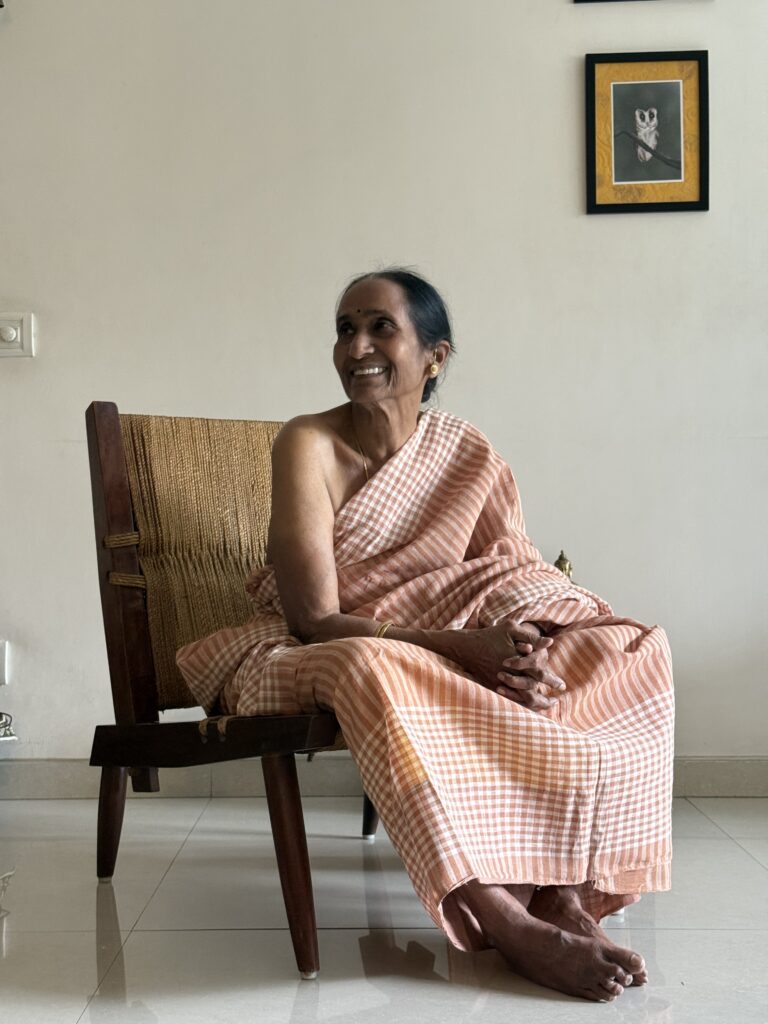
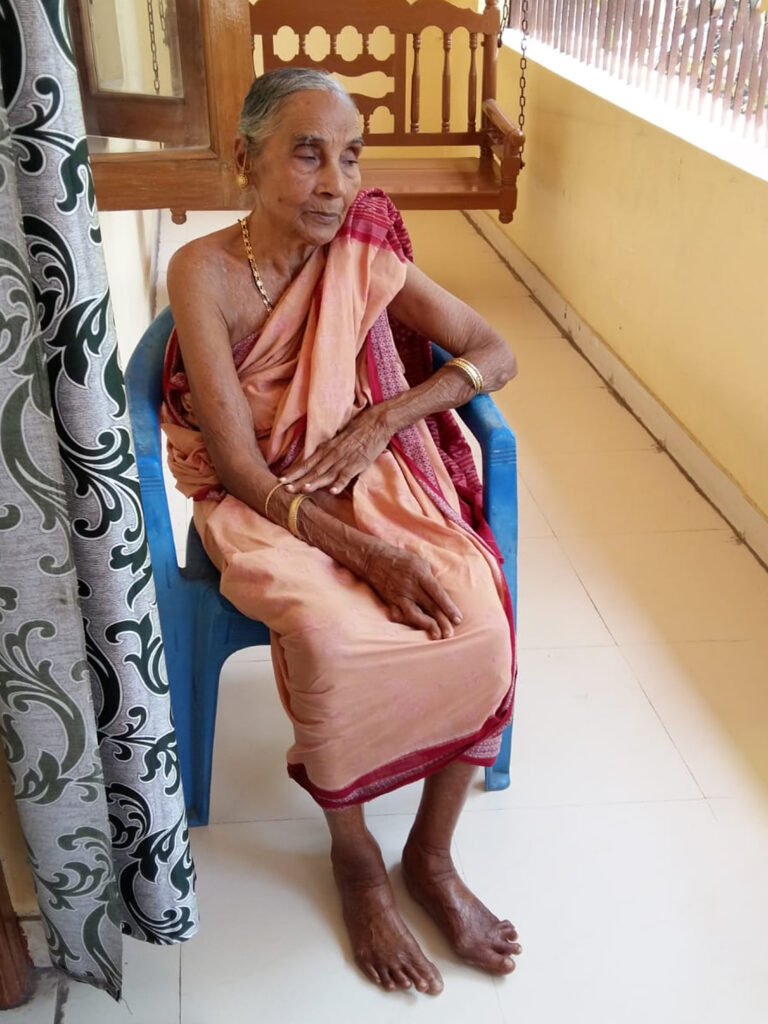
In the past, in parts of eastern India, especially rural West Bengal and Odisha, women did not wear a blouse or petticoat under their sarees, irrespective of caste, dominated by the simplicity and practicality of tribal culture. Some do not even now. These sarees were woven in shorter length, four and half meters (the regular sarees are five and half meters), and in a thicker fabric count. In handloom weaving, the higher the count, the finer, thinner the fabric. So, these sarees were of sixty or eighty count, coarse and non-transparent. Perhaps it was convenient, cheaper, and movement was much freer than if one wore a petticoat. Or perhaps, the idea of a petticoat and blouse had not been born in the time of the Karataa. Much of covering up came with the colonial ideas of propriety and civility, with the British attempt to turn those they considered heathens into cultured beings.
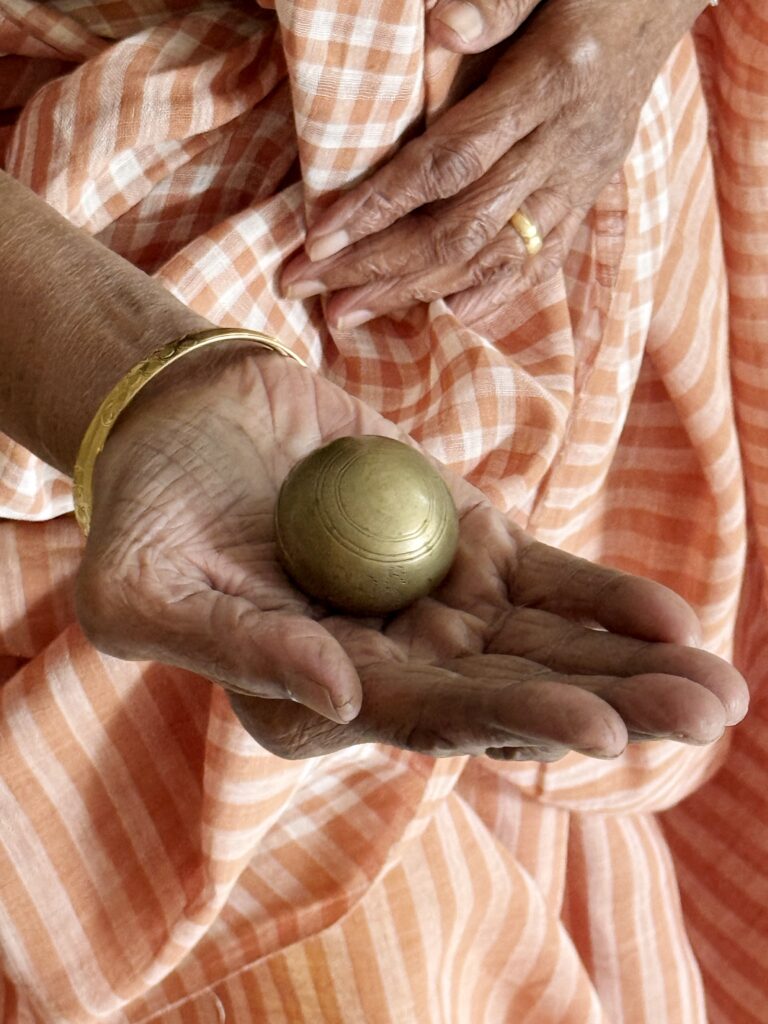
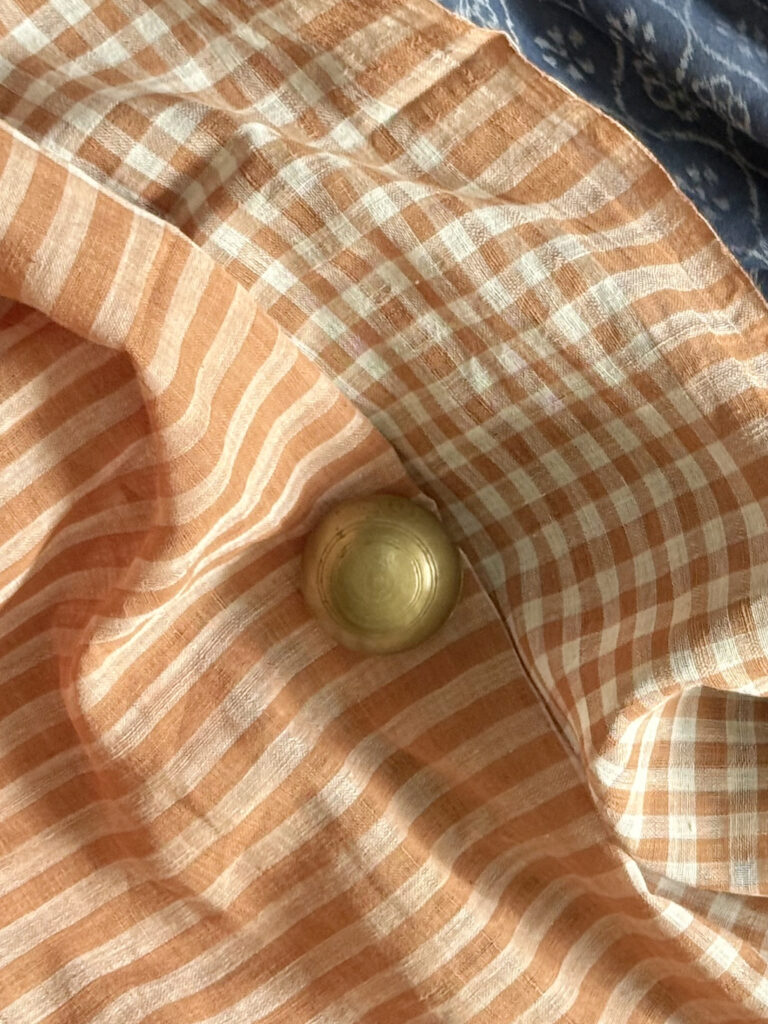
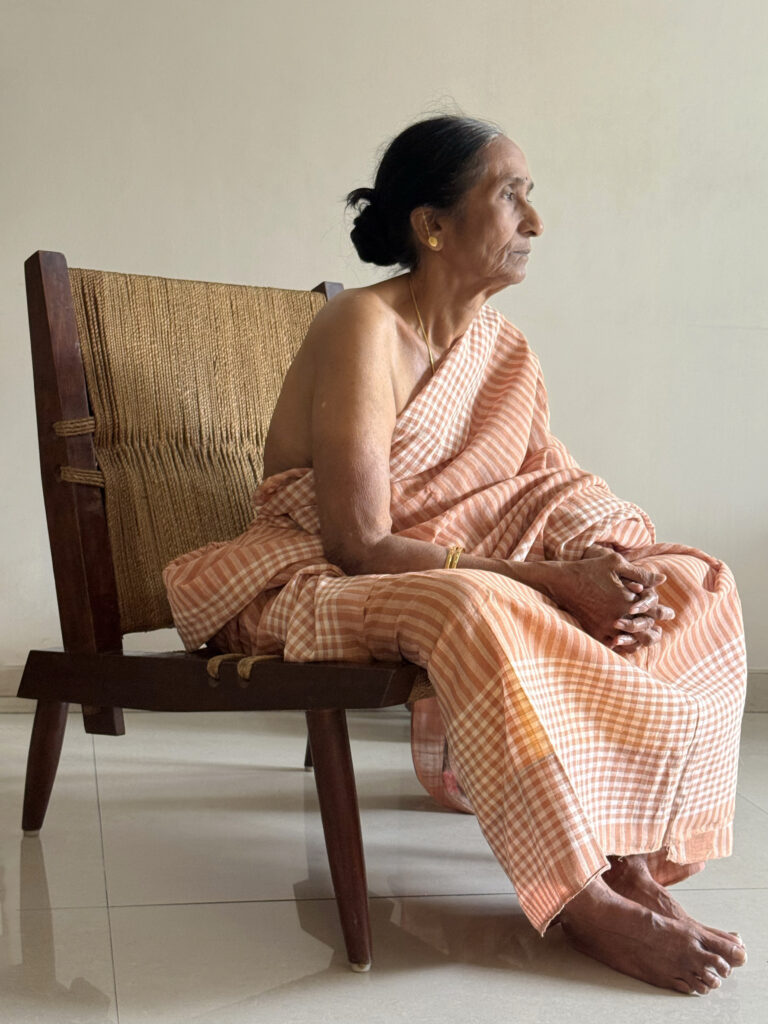
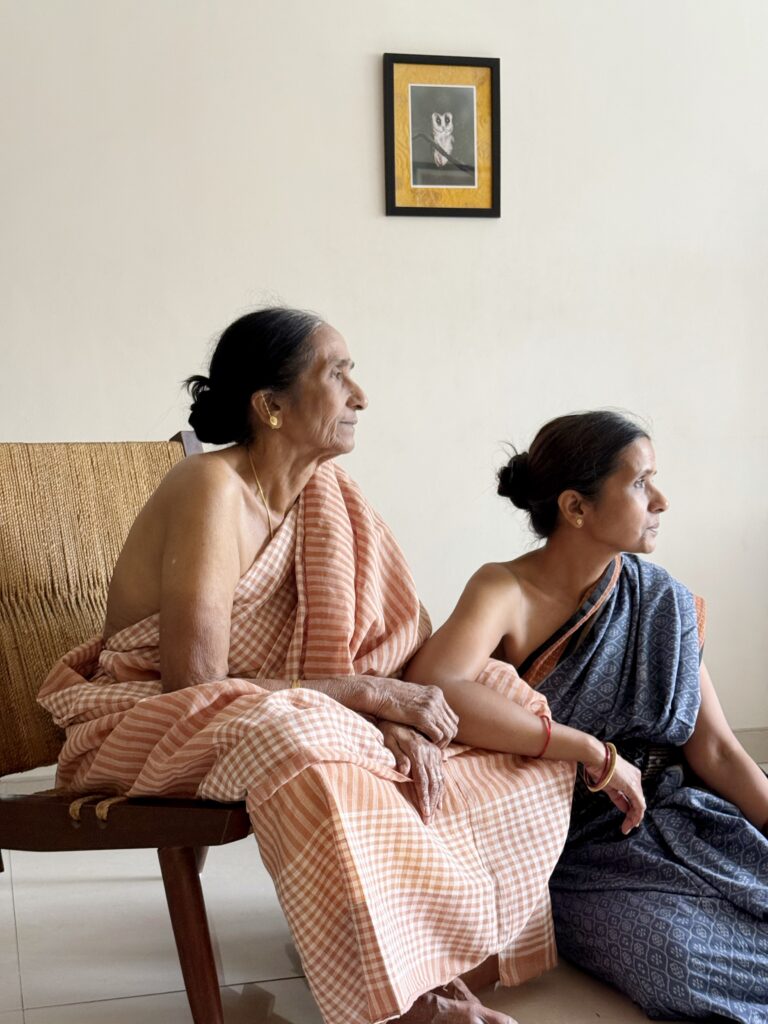
Since there was no petticoat to tuck the saree into, the Karataa was used at the beginning, to secure the cloth at the waist. To begin the drape, we hold the left corner of the saree and fold the Karataa inside it, wrapping it the same way as a toffee. Holding the Karataa-end in our left hand and the rest of the fabric in our right, we begin to wrap the saree around the body, tucking the Karataa into the folds towards the right. This creates the first anchor of the drape. The Karataa sits close to the body without being pulled tight – the overlapping folds hold it securely, while leaving the end loose enough to be pulled out and tucked back in as needed.
Now that the saree has made one full circle around the body, we fold half of the remaining fabric and tuck it into the back of waist, at the spine. The fabric that remains is brought to the right side of the waist to make one more tuck, and then the rest is thrown over the left shoulder. The resulting drape is rough, not shapeless, but easy to move around in. Depending on one’s preference, the weather, or the work at hand, this loose end, the aanchal of the sari, can be wrapped around the body or over the head, leaving the right shoulder bare or covered.
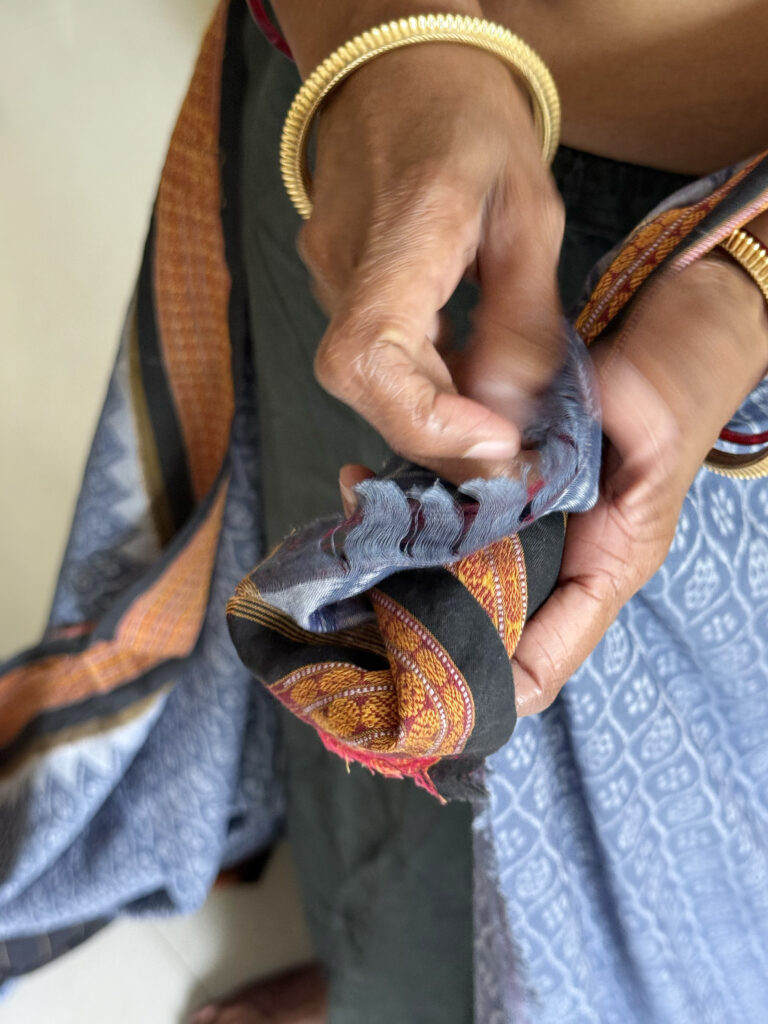
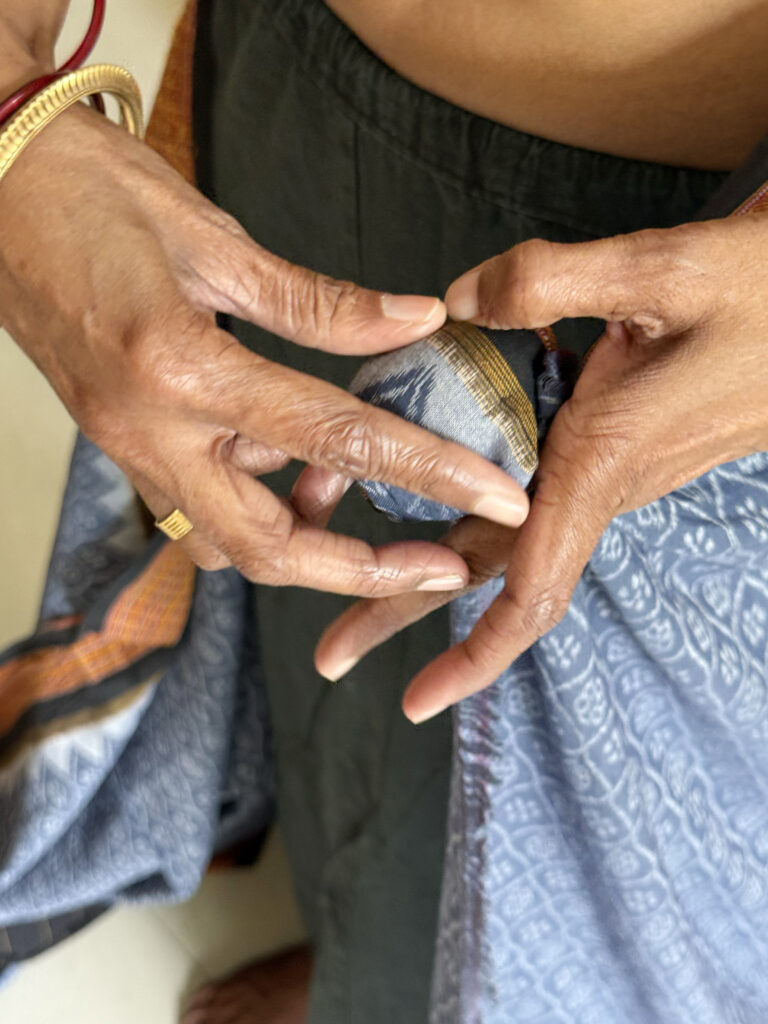
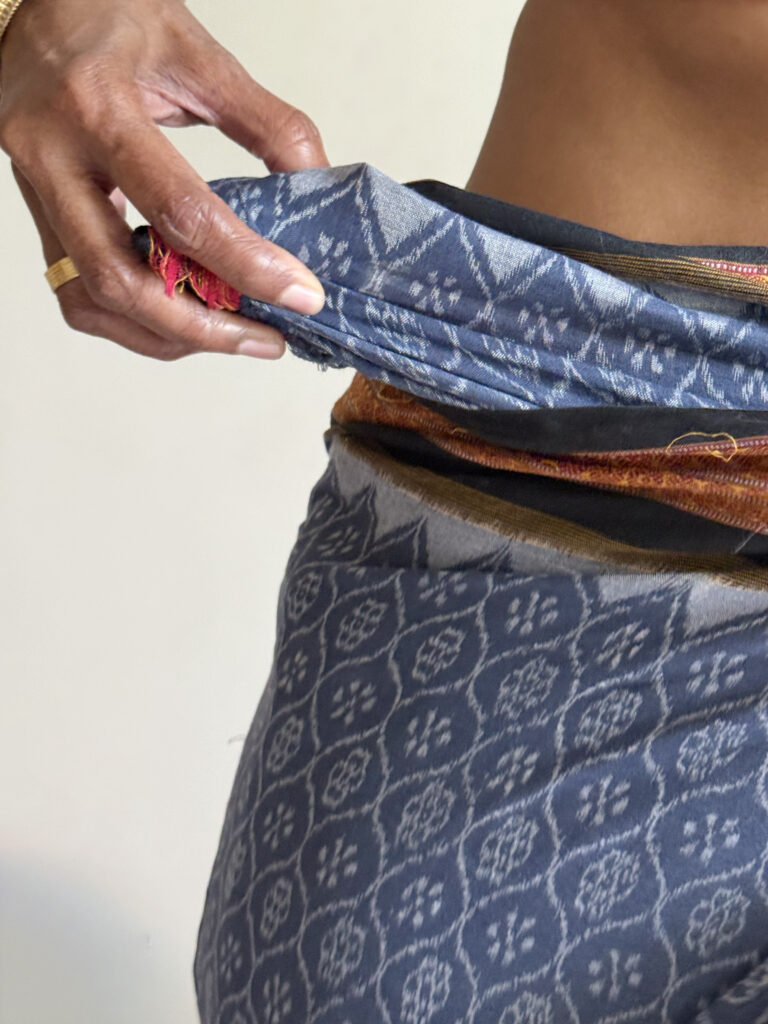
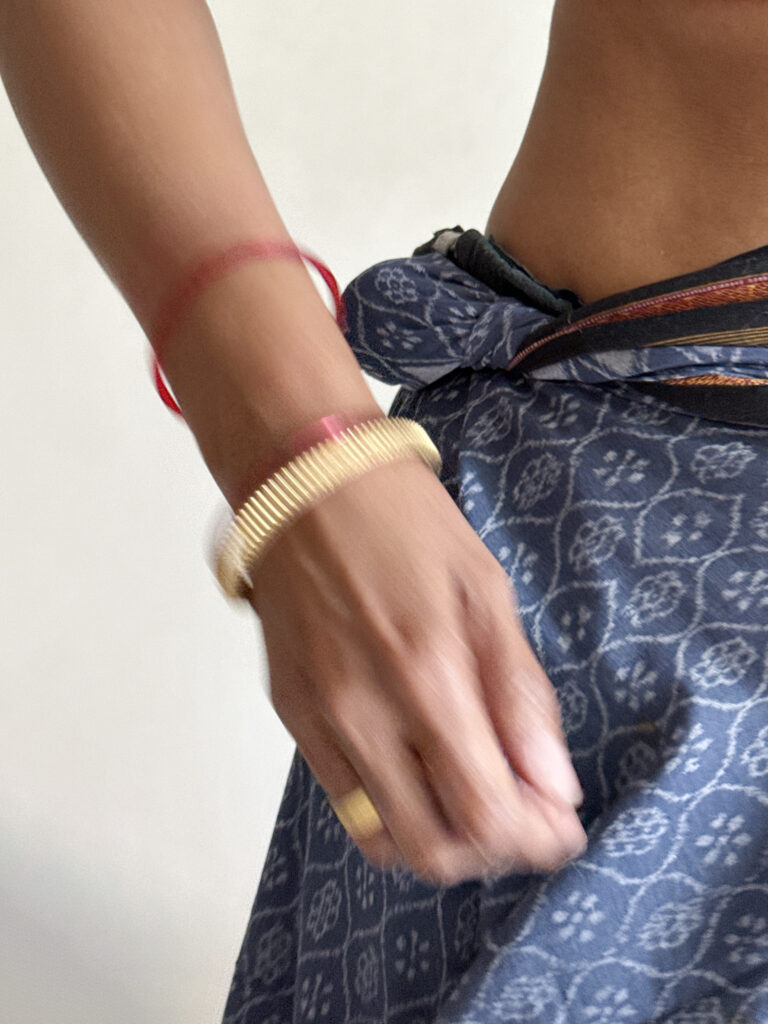
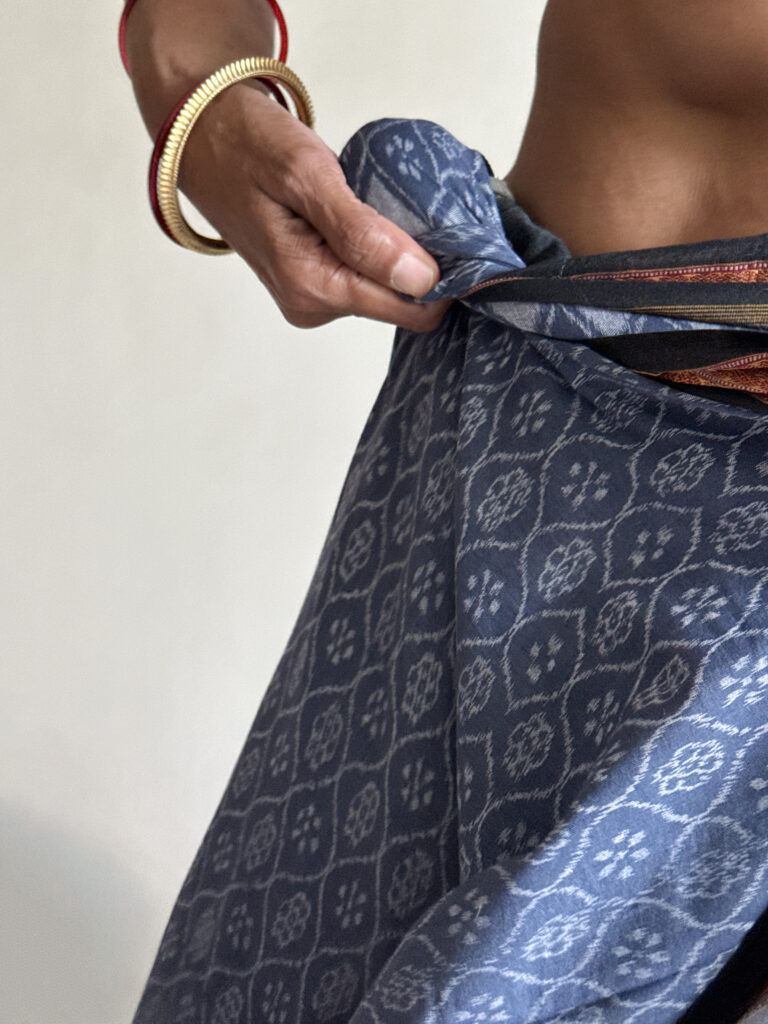
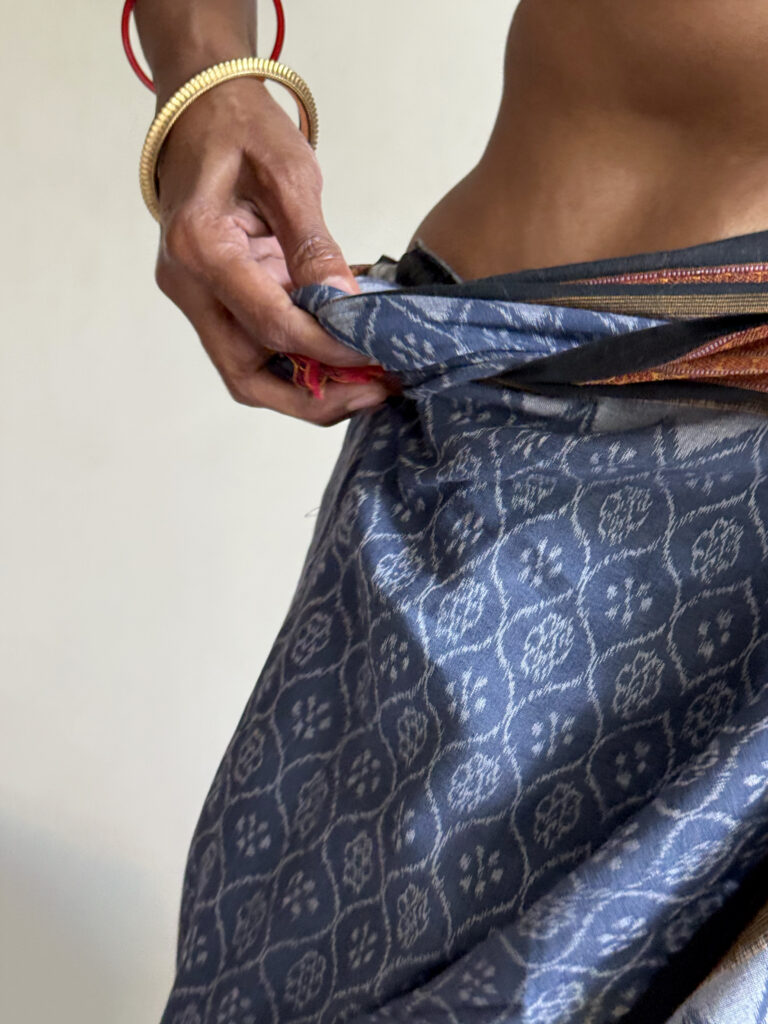
The Karataa itself opens in half and is secured shut with a screw cap. Like a round box, it can hold a few coins, or the pujas threads once worn were also kept inside. Since the Karataa always stayed on the woman’s body, they had access to money at all times, and kept some of their savings or earnings on their person.
There was less shyness around the body. No one was bothered if the shoulder or arm was exposed. Though I cannot recall if only older women wore these coarse sarees in this style, without the blouse, or younger ones did too. What I do recall is a question in passing from a male colleague belonging to the northern part of India, on a visit to rural Odisha. “Why do women here not wear blouses?” He must have been so unaccustomed to uncovered women, that his eyes were unable to process it. But the locals never once saw this as revealing or vulgar or unusual.
My mother was adopted by a couple, Jogamaya and Anadi, her relatives who could not have children. It is remarkable, for that time, that they wanted to adopt a girl and not a boy when both were available (my mother had an elder and a younger brother). They lived in the same village, three houses down from her own parents’, Padmasini and Rupadhar. She spent her childhood in both houses, but more with the adoptive parents than her biological ones.
Her biological father, Rupadhar, was the Gauntia of the village. Their house was always hustling-bustling with all kinds of activities, people, animals, this and that. My mother was the second of four siblings. Her own parents treated her like one of their four children, as it usually is for two boys and two girls in a family, all with their own sense of uniformity and favourites. But for her adoptive parents, she was a blessing. She held their entire focus. Her life with them was quieter. My mother went to school and also helped in the kitchen, plucked fruits and vegetables, caught fish, cooked meat like all the other girls in the village.
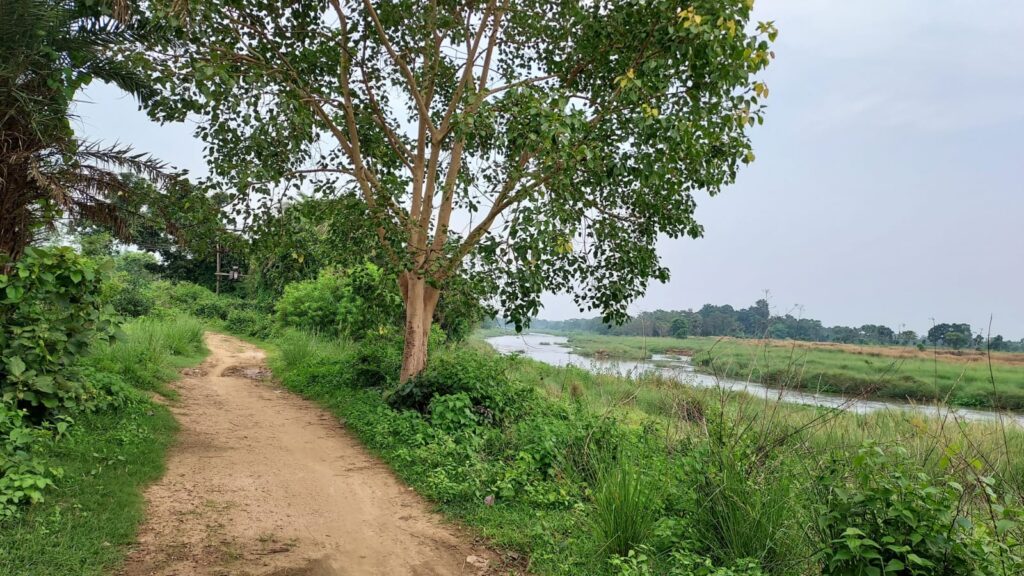
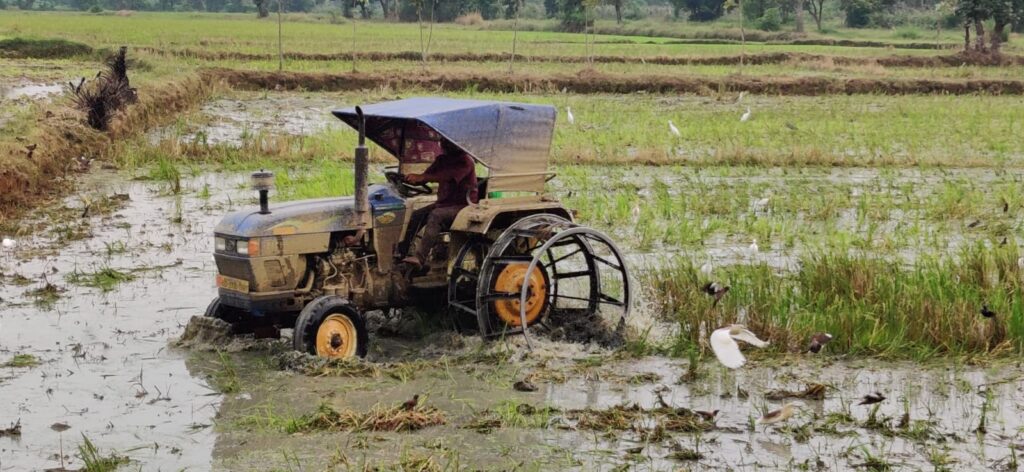
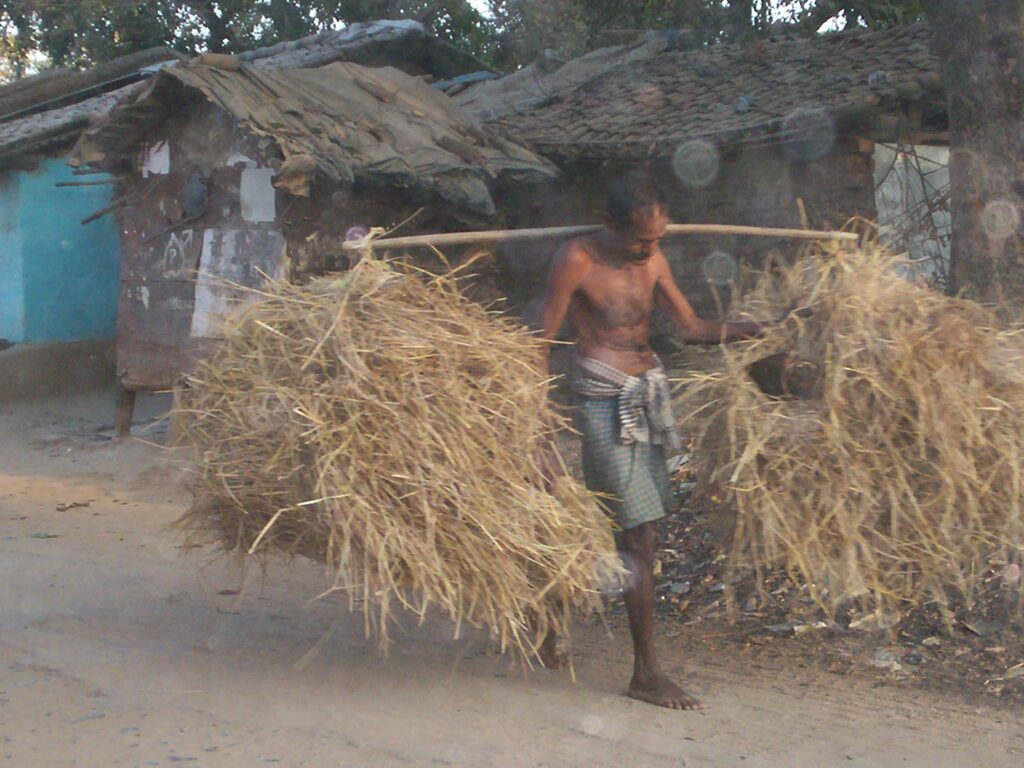
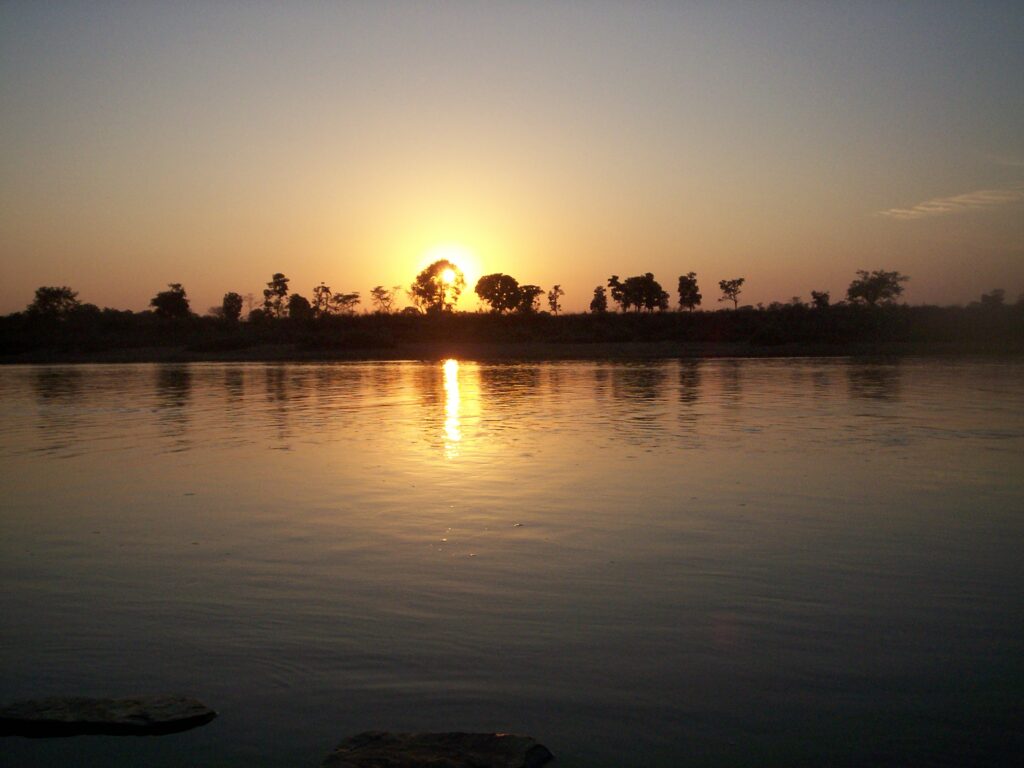
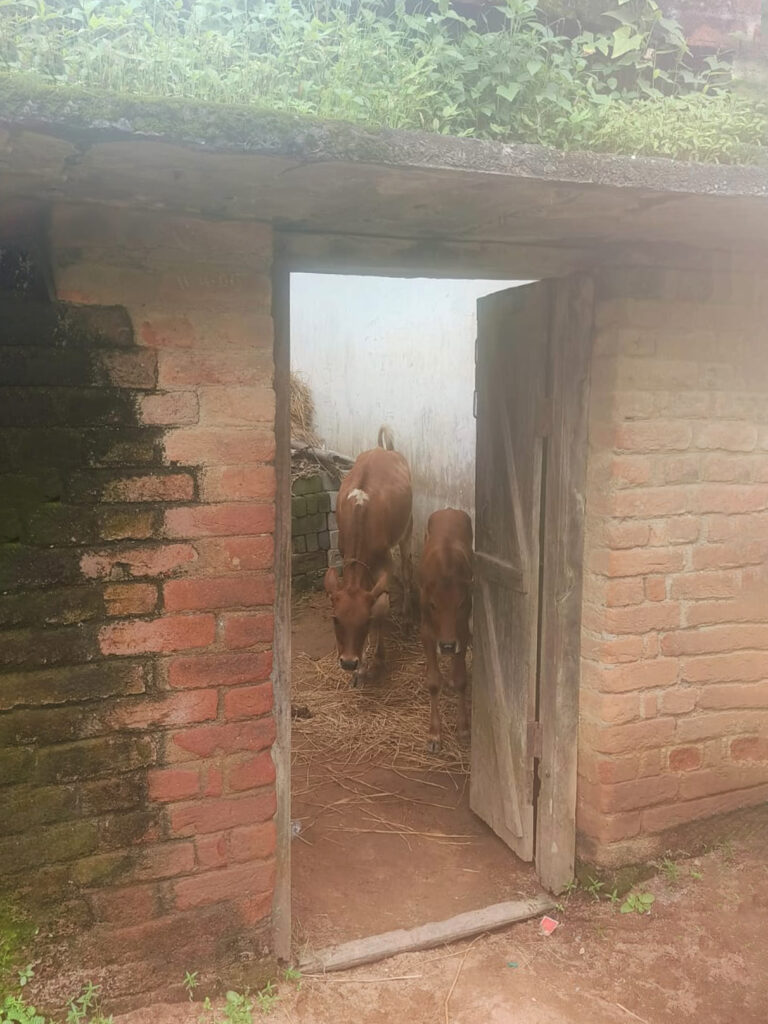
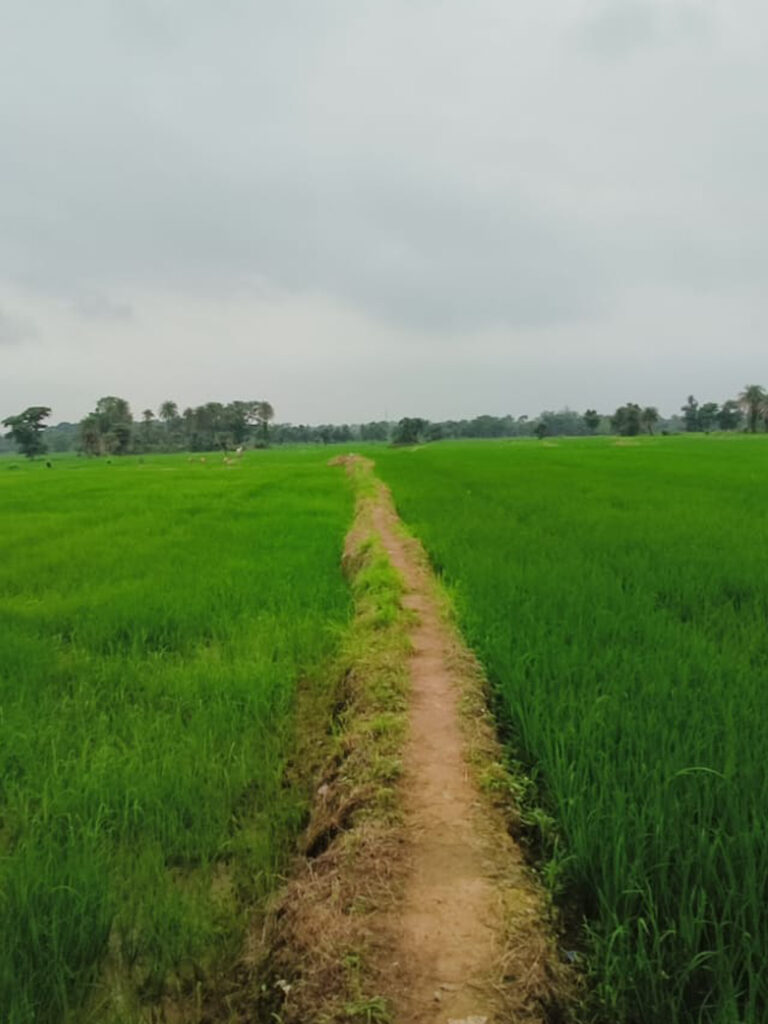
Western Odisha, relatively less feudal, had more tribal influence in its culture. Villages had a village deity. Food was sourced from forest, ponds and homesteads. All those who could send their children to school, sent both their sons and daughters. As children, every summer vacation we went to my mother’s village, where most residents depended on agriculture. The meals that I recall were rice, fresh or fermented depending on season, moong daal from the farm, greens from the kitchen garden, other vegetables like okra, aubergine, long beans, string beans, cucumber, and specific to the area, white onion, white peas, most sourced from within the village or surrounding villages. There was date palm, berries, guava, mango, sugarcane. Apple, orange and such exotic fruits came from faraway places. Only on special occasions, I saw my grandfather wear a jacket and a cap. There was untouchability in the society, but it was not visible to us – someone had to point it out because we were city-dwellers.
When we were toddlers, Anandi, our adoptive grandfather passed away suddenly. He was about eighty-five years old. I must have been about five or six then and I don’t remember him at all. But what I recall is going to the house with my brother, reaching late in the night, my mother howling, my grandmother, Jogmaya weeping in a corner of a dark room, a diya burning in that room. That diya was kept burning till the twelfth day of funerary rituals are over.
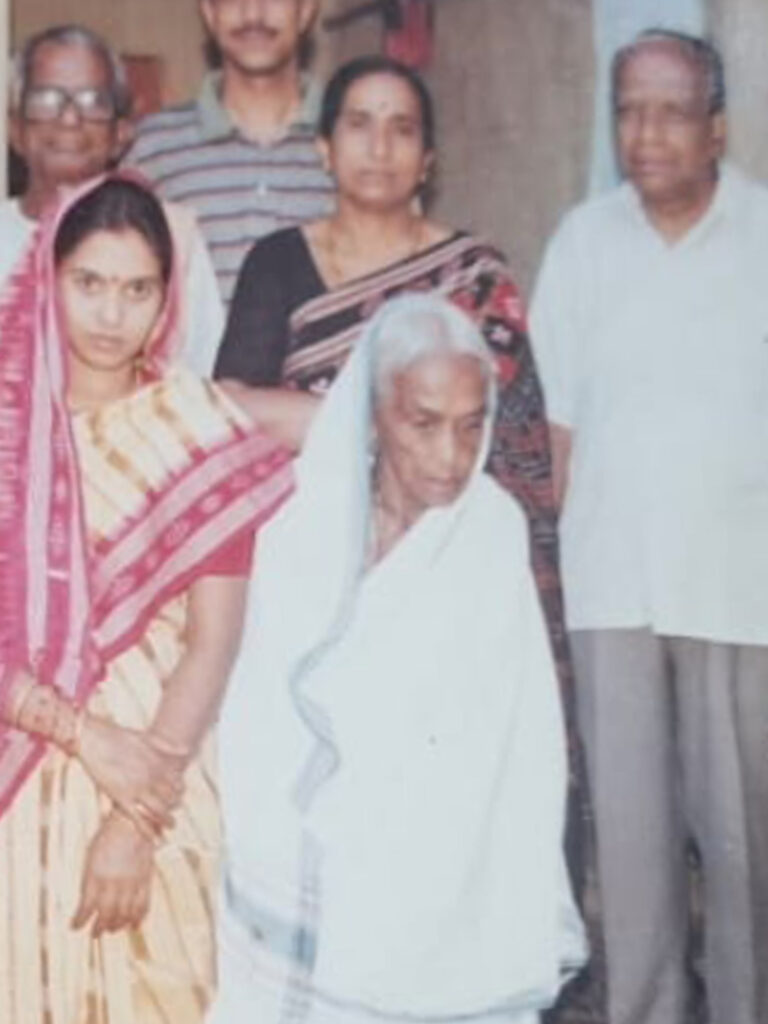
Jogmaya or budhamama as we fondly called her, (though it sounds rude when translated into English as old-grandmother) always had special treats for us when we visited during summer vacation. She was the only one who made us sabudana (tapioca pearls) kheer. And in my memory, she always wore a white saree, the cloth of widowhood.
I was wired to things around the house and the village. Every summer vacation we spent there, I observed everything keenly. There was no TV, so there was plenty of time to just hang around. Old vessels, sarees, hand stitched quilts, baskets, charpais (woven rope beds), I found these mundane things very interesting. What the nooks on the walls held. A portable mirror, which also had a wooden drawer holding a comb, a small box of kajal and sindoor. The small handheld lanterns, the paan box with masalas in tiny boxes, these were all like treasure troves for me. There was also a locker in the puja room, which was fixed to the mud floor of the house. Now when I think back, there was not a lot inside it, but I felt great curiosity whenever it was opened.
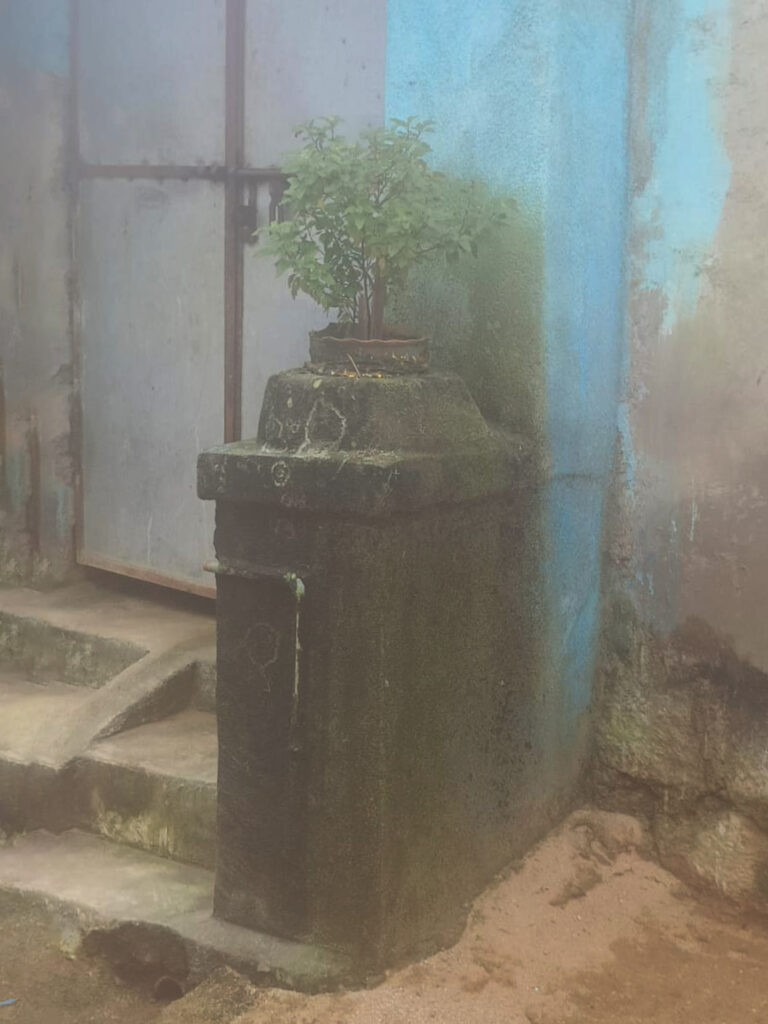
When I was to get married, 1999, I told my parents strictly no jewellery because I did not want them to spend all their savings after spending on my education. But when my mother insisted, I asked for an old fashioned handmade gold earrings called karna-phula-sinkla, that roughly translates to ear-flower-chain.
A few kitchen utensils made of alloy metal like kansa and Pital (bell metal and brass) from my mother’s wedding trousseau are kept in a big aluminium trunk in my parents’ house. These were things that have now become obsolete in a modern kitchen of lighter metal and plastic. There are big plates to hold rice to serve in big gatherings, where people sit down in rows for the community meal. There are large water containers to carry water from the well to the house. Tea kettles, glasses, ladles, all large and heavy and rusting because of lack of use.
At some point, I was interested in some of these vessels as keepsake. I would speak to my mother about these on the phone and she’d mention it to both grandmothers, since there was no phone in the village. At that point, as it always is, modern fabric, mill-made polyester, machine-made jewellery, steel and plastic vessels were replacing all the old things. And so, Jogmaya said, “when I die, give her this Karataa”, as it was the only piece of silver she still had.
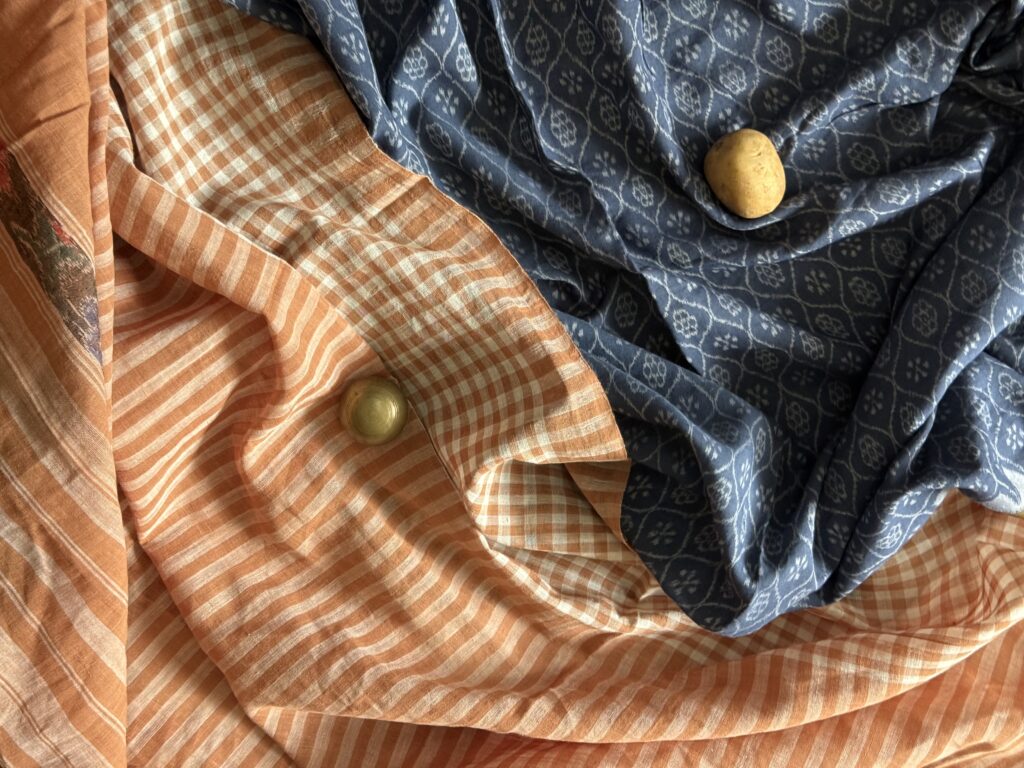
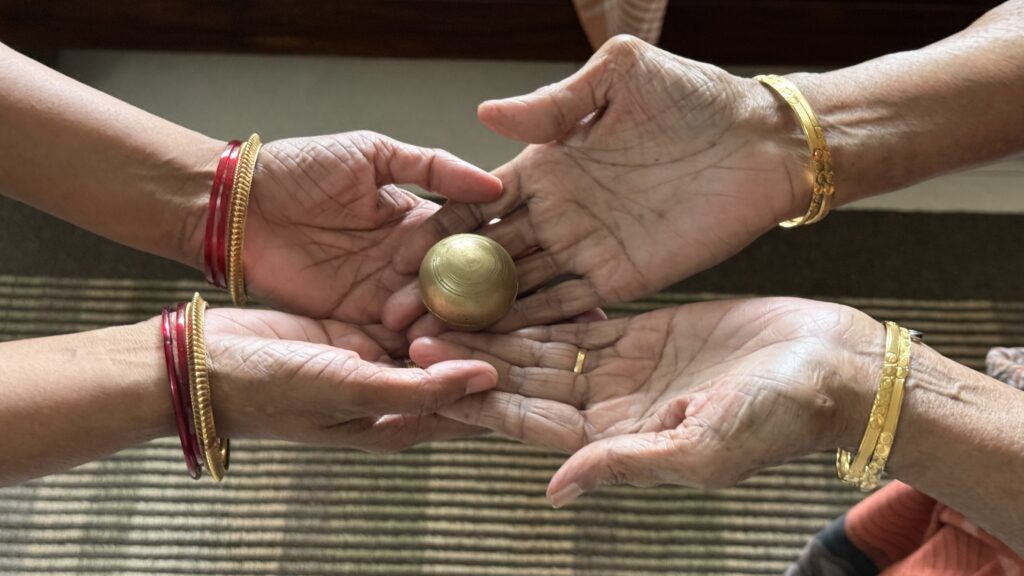
Unfortunately, over the years, it got lost. By then, she was over eighty years old. Maybe she never asked for another Karataa, and nobody thought of getting her one. Maybe it was not an object of enough importance to be replaced. So instead of the Karataa, she began using a potato of similar size to serve the purpose of holding her saree in place. While I don’t remember this, it’s what my mother told me and I still feel sad that I got to know so much later. That I was not in sufficient touch to buy her a new one. She had once asked for a silver ring, as many believed a little silver on a woman’s body is a good thing. At the time, I had simply given her one of mine.
As time passed, my other grandmother also lost her Karataa too, and nobody could tell me what happened to it. Much later, someone got me a replica of the Karataa made in brass. It is one of the things that reminds me of my grandmothers and their style of draping the saree. I even remember the sound of their draping, as their hands moved through the fabric of their simple sarees with only a small design on the pallu. In recent times, I have seen younger people drape the saree in the same way, similar to a Santhal drape. But this is always over a blouse and a petticoat, so there is no need for the Karataa any longer. What’s more is that in all my research, I have never found any written information about the Karataa. It exists only in living memory.
When I think of the Karataa, it serves so much more than its primary functional purpose. Maybe it never got much credit because it was always tucked away, not visible and neither ornamental per se. But it is precisely that quiet, non-glitzy nature of the object – useful, discreet, not to be displayed, holding a few things within it – that makes it extremely interesting. It is for the women themselves. The Karataa may not have been a prized possession, but rather, an essential object for women.
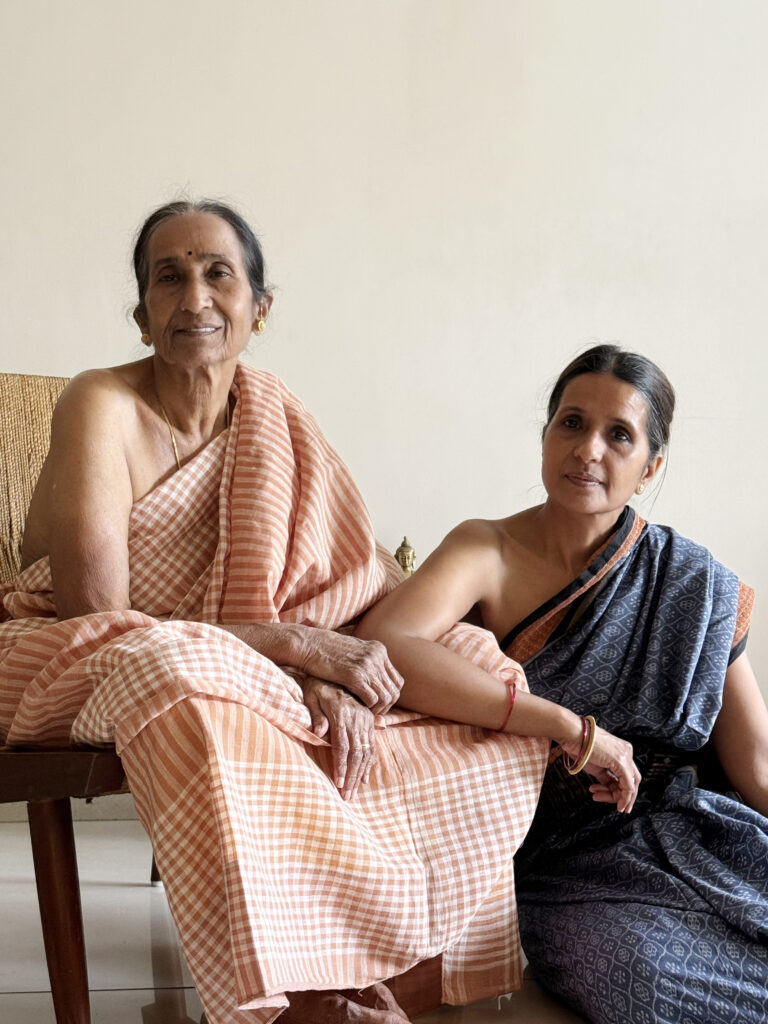
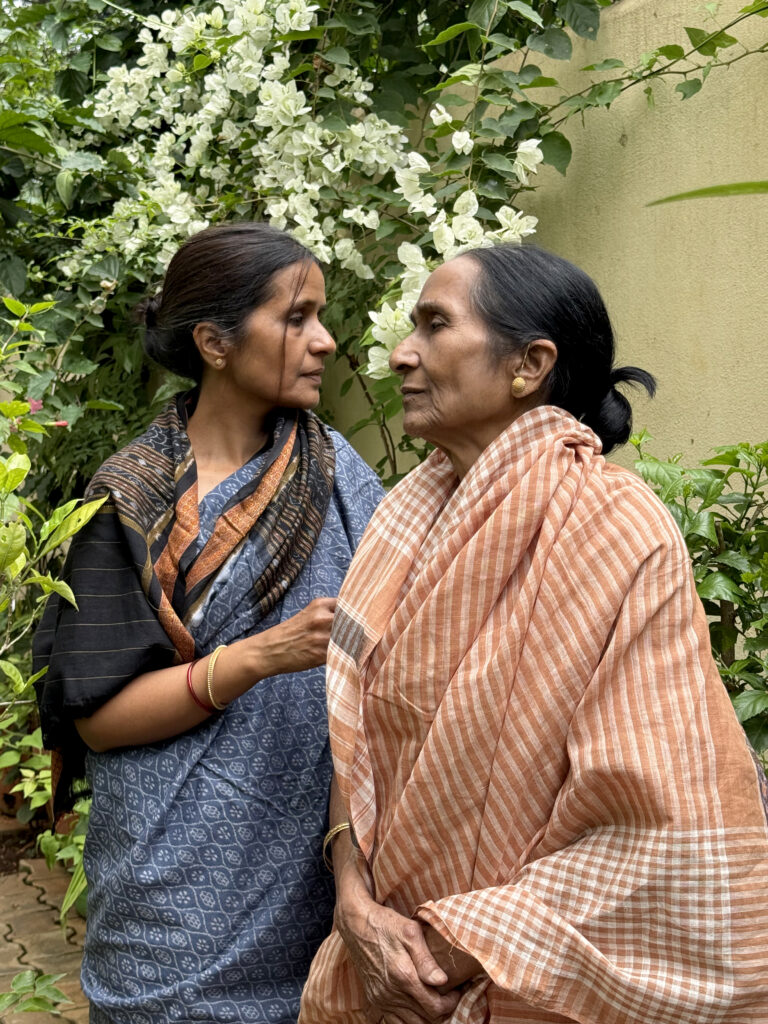
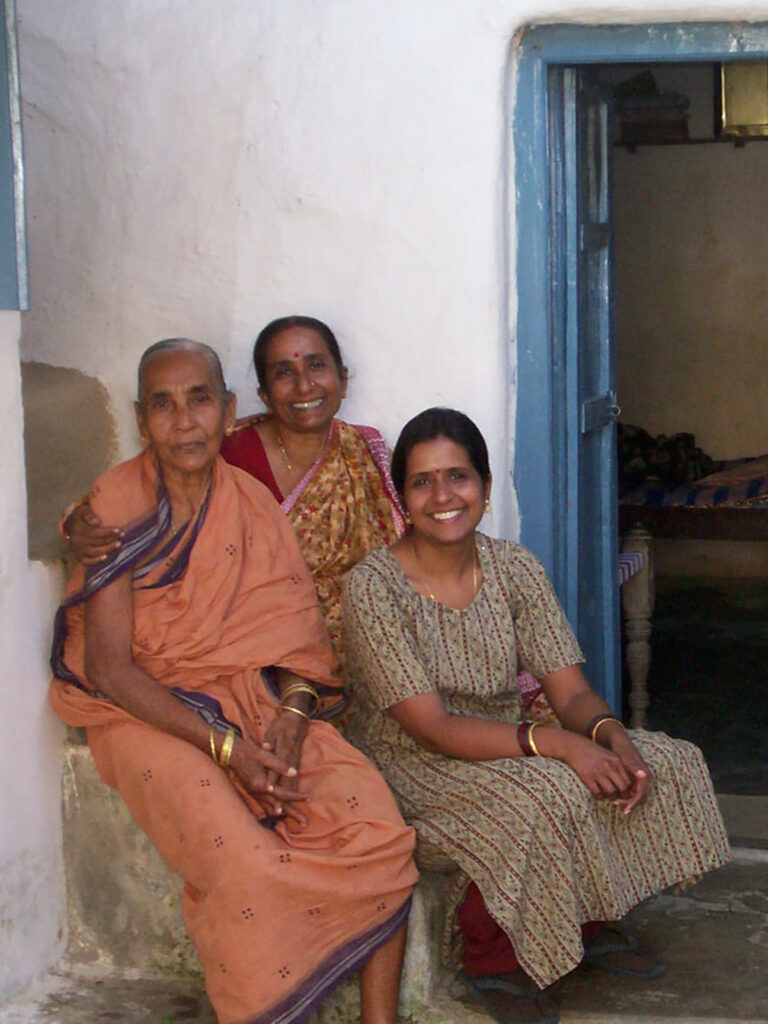
Today, the Karataa is an object on the verge of disappearance. I don’t think anyone in my family will have a Karataa in the future. With petticoats and blouses now the norm, very few wear the saree in that style any more. But the Karataa is my unique memory of my grandmother. In my mind, it is closely linked to her image; an object that I associate only with her. When I began to wear a saree as a young woman, it never even crossed my mind to try to drape like her. It is only later, when I look at the larger politics of powerful, dominant influences on our lives and lifestyles, that I realise how important it is to remember them.
Nice and vivid memories.
This is a fascinating piece of history. Thank you for enlightening us about it. So insightful.
You gave life to the Karataa and made us know of it. For that we are thankful.
Lovely…..thank you for bringing out the story of Karataa which otherwise we would have never known.
Beautifully written article with nostalgic memories.
Abijita ,What a beautiful and deeply touching story about the Karataa and the precious memories it carries. ❤️
I was fascinated to learn how this simple little object was such an important and practical part of women’s lives and traditional saree draping.
Your memories of your mother, grandmothers, village life, and the old traditions beautifully bring a forgotten part of Odisha’s cultural history to life.
It is amazing how a small, ordinary object can hold so much love, history, identity, and memories across generations.
Thank you for sharing this wonderful story and reminding us that preserving these simple traditions is an important way of keeping our heritage alive. ❤️
Very nicely put ! Thanks for sharing your story . I have seen my grandmother and aunts in my hometown wear a saree , without blouse and petticoat , but never knew anything about ‘Karataa’ .
Would love to see how to drape the way your grandma did