
TEXT AND PHOTOGRAPHS BY SOHINI SENGUPTA
Kolkata, West Bengal
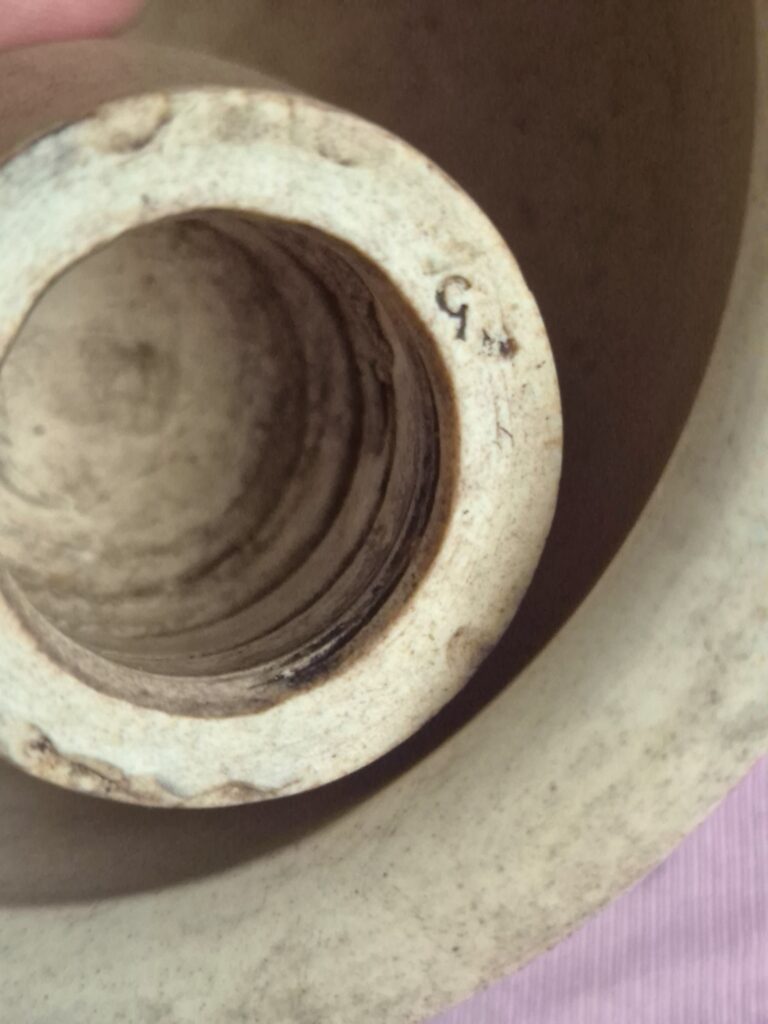
It sits now on the kitchen counter of a modest two-bedroom flat in the southern reaches of Kolkata, pale and worn, its surface scored by more than a century of meetings between mortar and pestle. At first glance, it looks like it could be a trinket from Chor Bazaar, something with no story beyond its age. But turn it over, and on its underside, beneath the soft erosion of time, an address in nineteenth-century England begins to appear. Most stubborn of all is the name of the city, still legible in capital letters: LONDON.
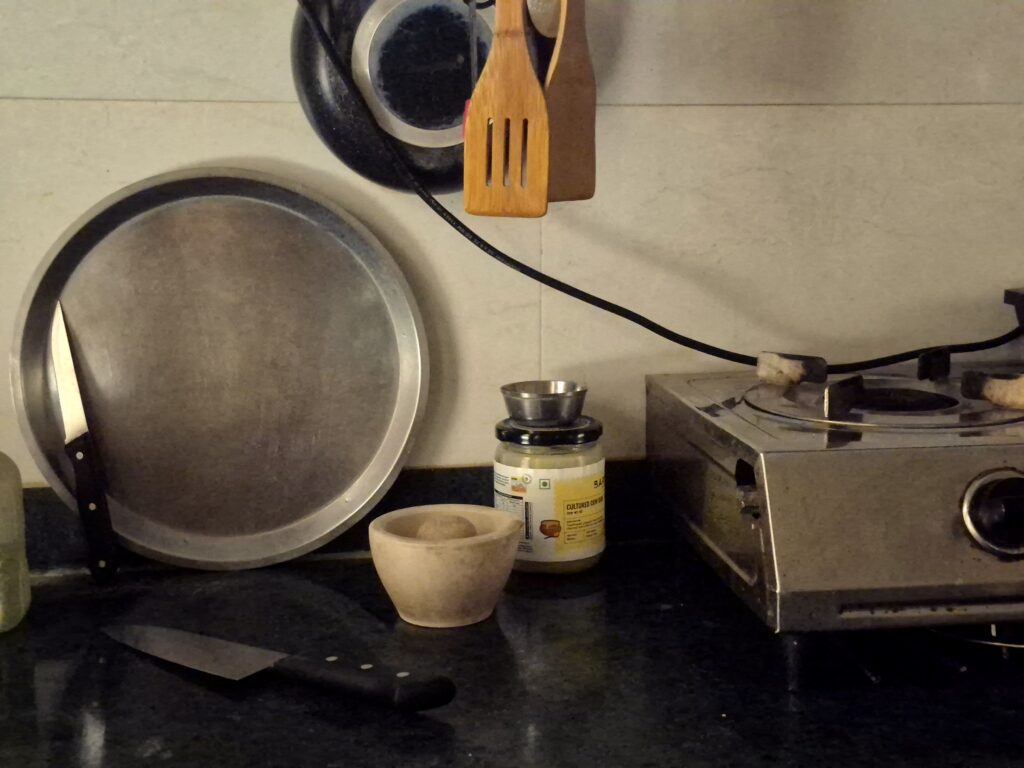
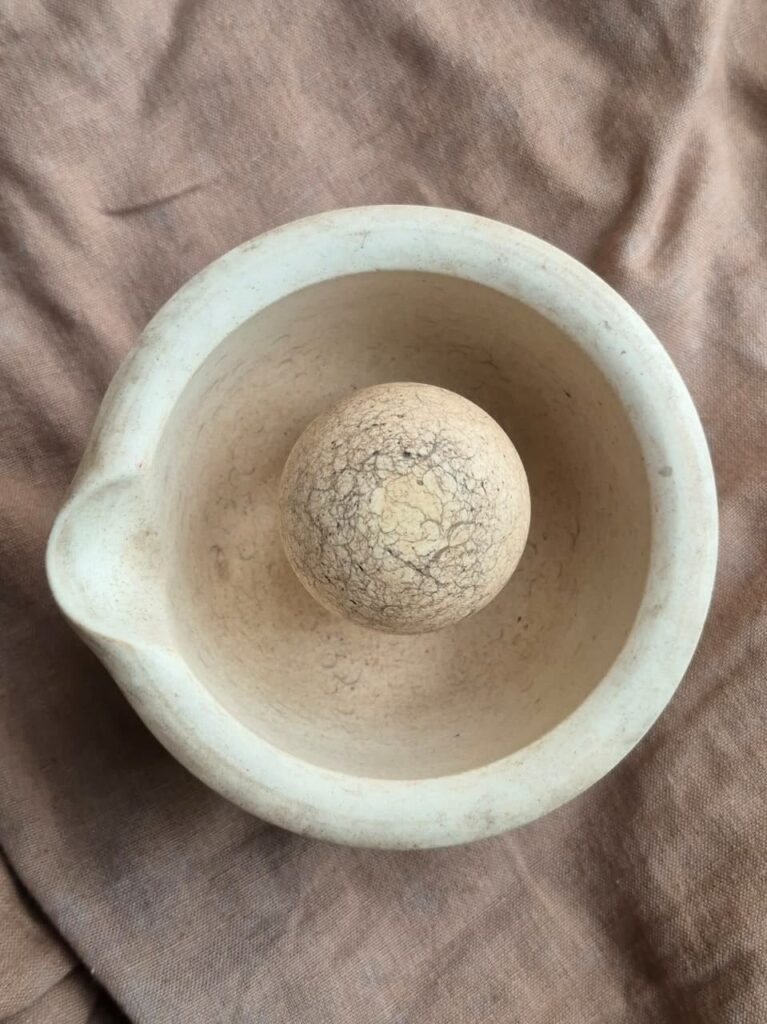
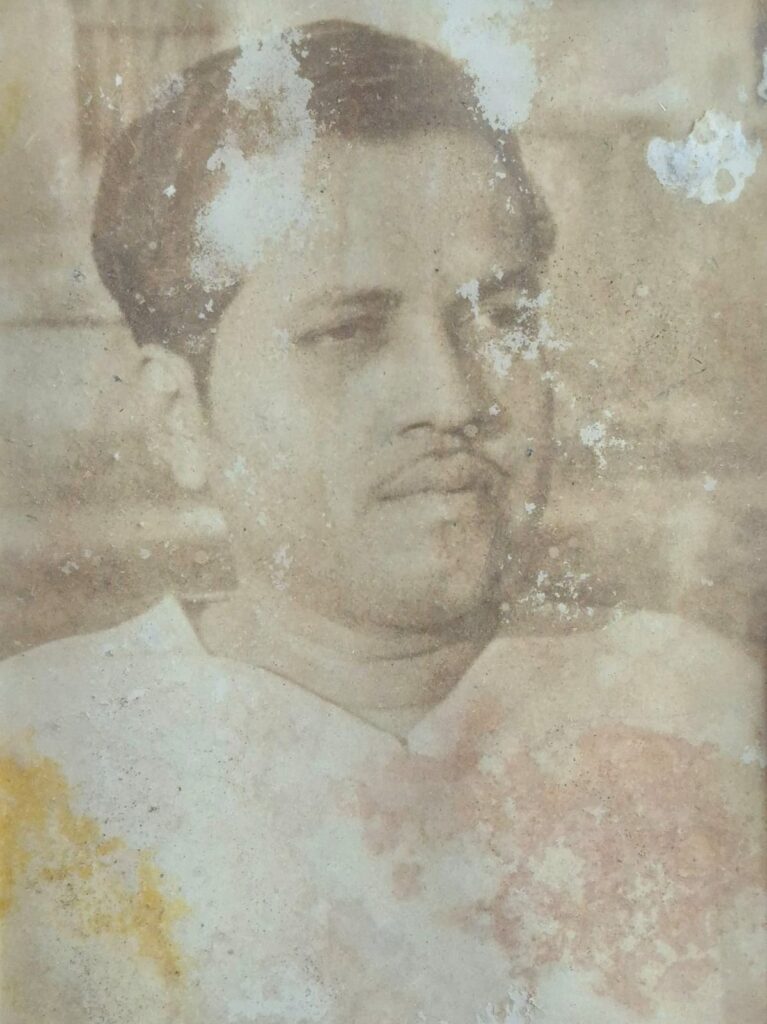
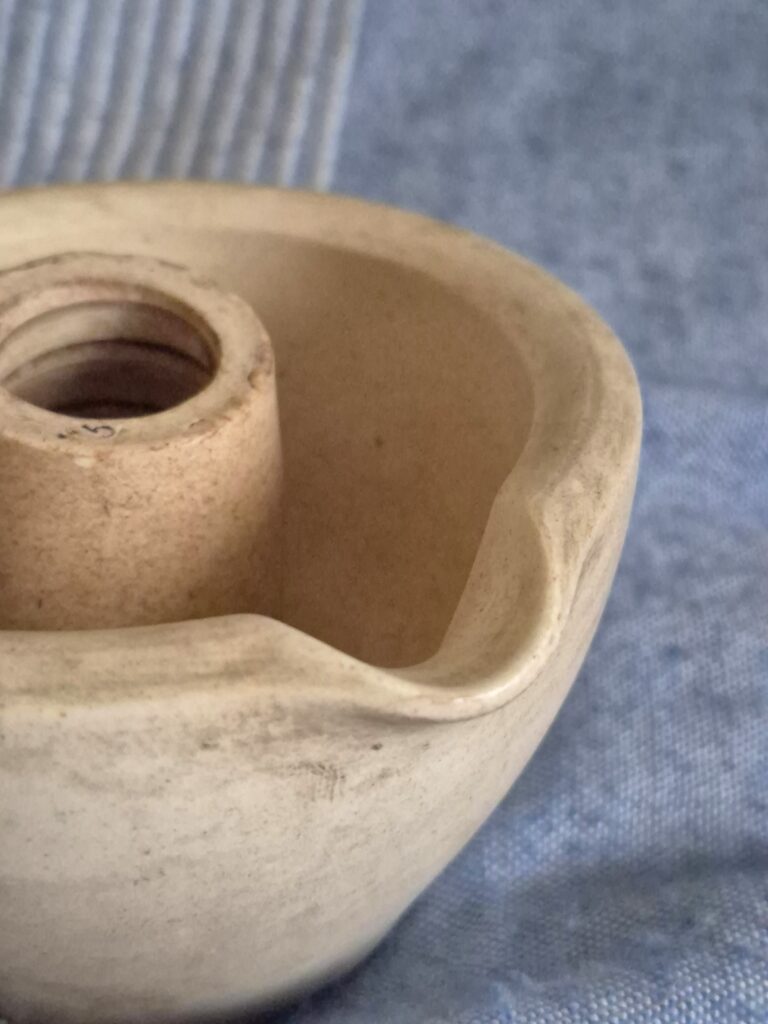
The mortar and pestle now belong to me. Before me, they belonged to my mother. Before her, to her father. And before him, to his own father, a chemist in British-ruled India, born sometime in the late 1800s or early 1900s, paid little, remembered less, and gone in his sixties without leaving behind a single photograph. What he did leave us was oral memory and this ceramic mortar, heavier than the lightweight versions most people know today. For years, we mistook it for stone. Only after a painstaking round of research with the good people at the Museum of Material Memory did we learn what it truly was.
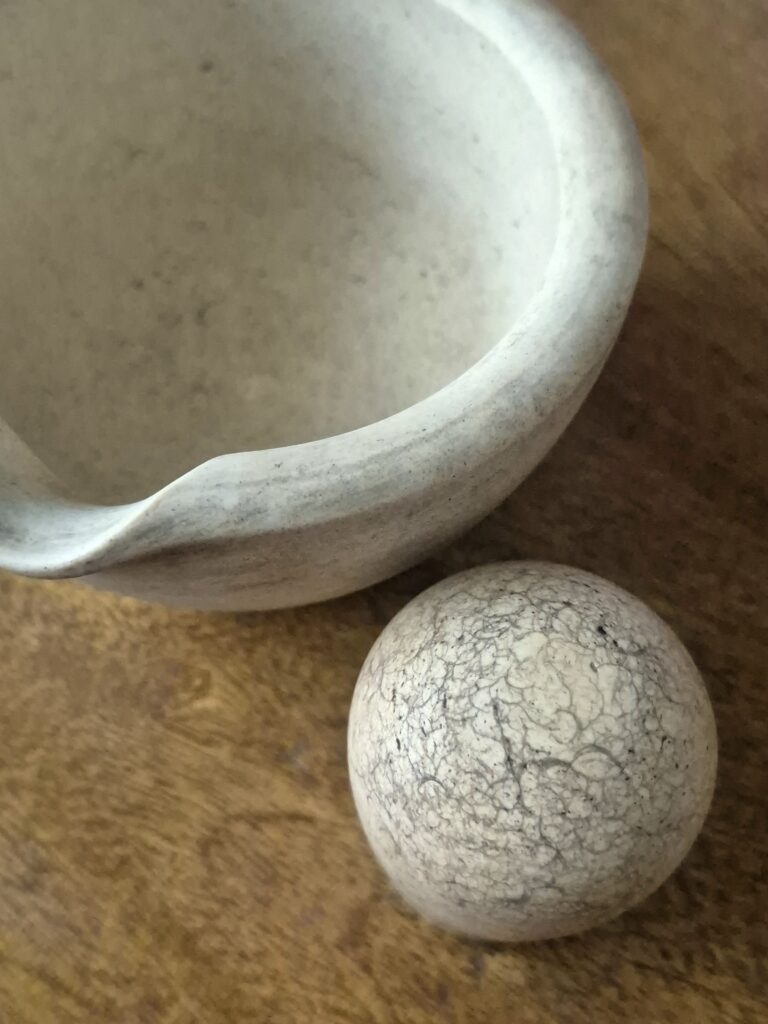
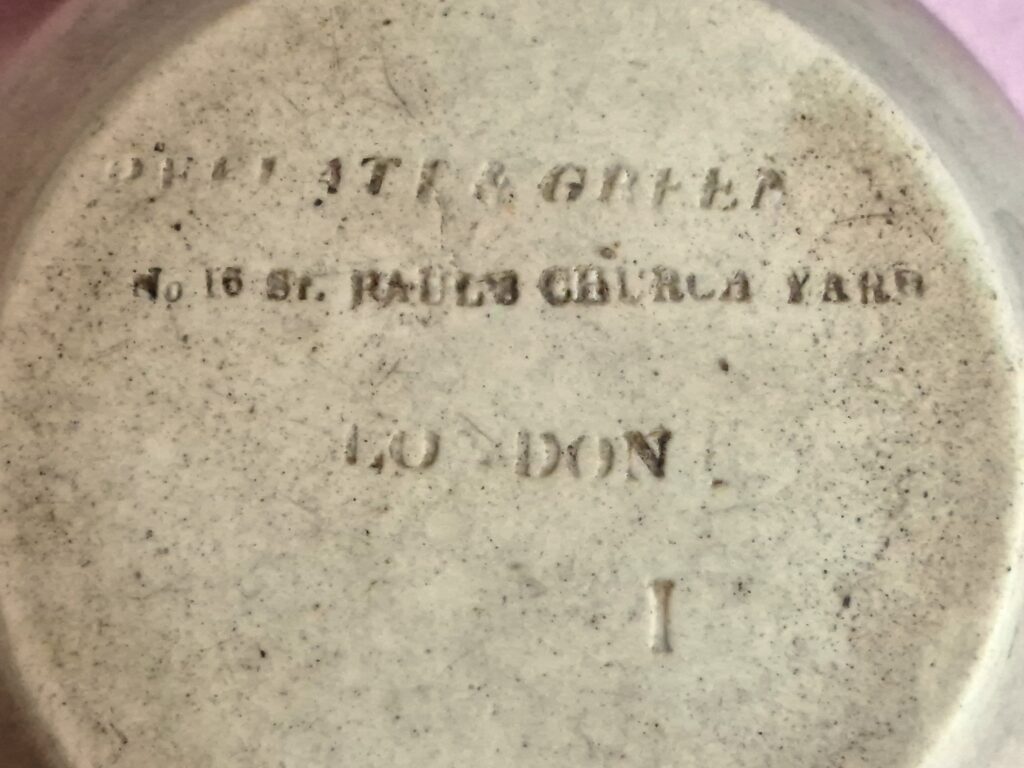
On its base, the inscription reads “No. 16 St. Paul’s Church Park,” with a fainter “& Green” above it. From there, I fell into a rabbit hole of Victorian trade directories, old maps of London, and the long vanished geography of a city that once made and named such things with confidence.
That address points to Pellatt & Green, a royal glass and stoneware manufacturer that worked out of St. Paul’s Churchyard between 1803 and 1814, according to the Regency Reader. They were known as “Glass Makers to the King,” supplying the royal household as well as private clients with a taste for refinement. Their shop once stood at the corner of Paul’s Chain and St. Paul’s Churchyard. Today, that corner has disappeared, slowly absorbed into green space, as though the city itself had decided to soften the edges of its own history.
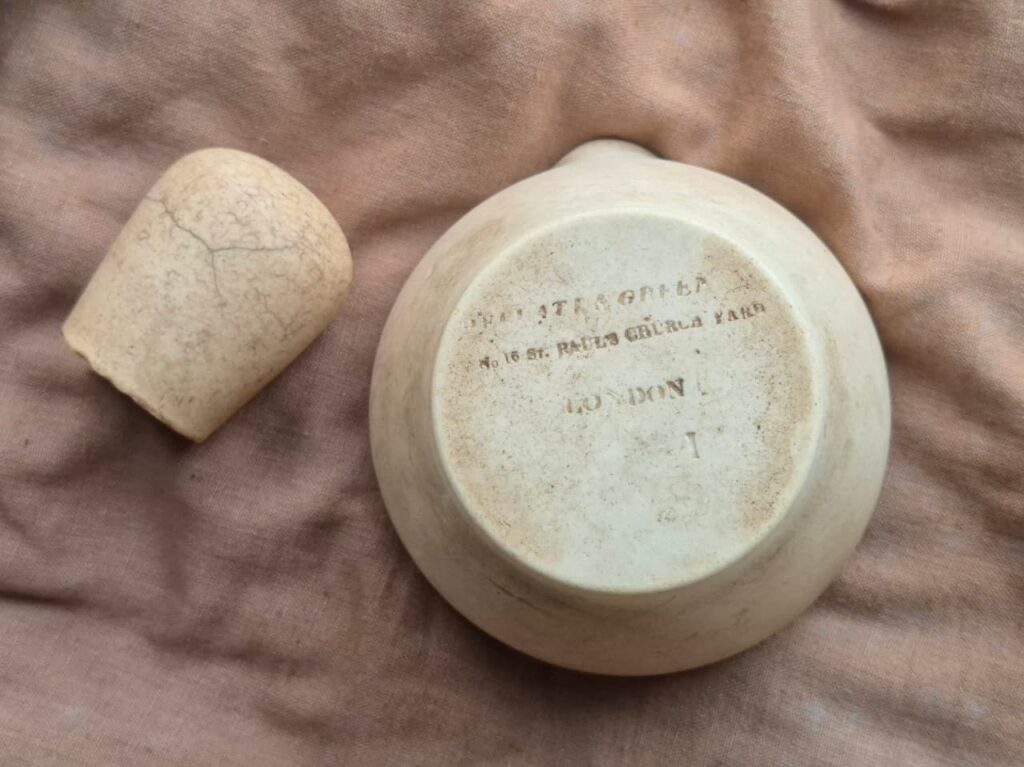
A mortar almost identical to ours sits in the Science Museum’s collection, traced by Navdha Malhotra of the Museum of Material Memory. It is classified under “experimental chemistry” — the same purpose, I believe, for which ours was made. Ours, however, has something else: the pestle. By all accounts, it may be the only surviving example from that period and maker.
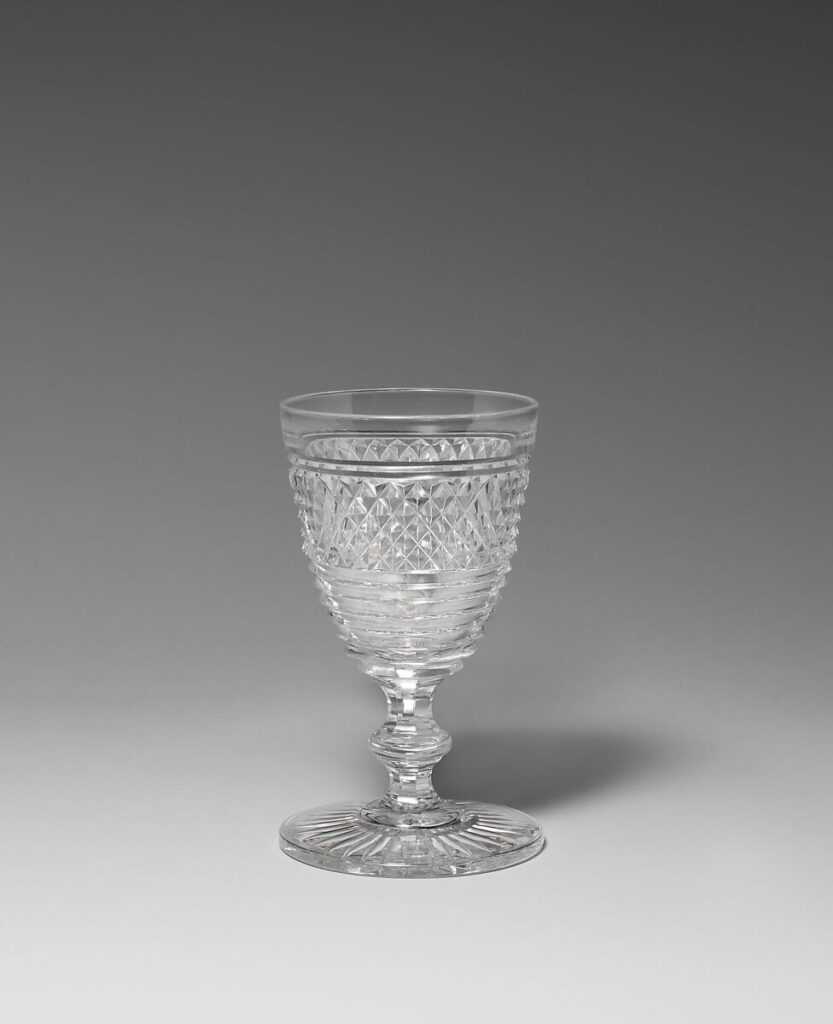
Pellatt & Green did not only make stoneware and ceramics. In 1818, an American merchant named William Bayard commissioned a full table service from them for his daughter and son-in-law. Decanters, wine coolers, tumblers, claret glasses, champagne glasses — all of it in fine lead glass, all of it cut in Regency designs. The bill of sale described the pieces as “elegantly cut in diamonds & Rings.”
The set now lives at the Metropolitan Museum of Art in New York, in Gallery 704.
A piece of Pellatt & Green thus sits in one of the most famous collections in the world. And another piece of Pellatt & Green sits in my kitchen!
How the mortar travelled from a London workshop to the hands of a chemist in colonial Bengal, history has not seen fit to record. What my family knows is that by the time it reached my great-grandfather, it was grinding medicine. In the age of handmade preparations, the mortar and pestle were not accessories but instruments of care — tools with which chemists of its day crushed drugs, blended compounds and made remedies by hand.
There is also, honestly, a caste dimension to this story. We are Bengali Baidyas, a community whose title literally translates to “doctors,” and for generations, men in the family turned toward medicine and adjacent professions with a sense of inheritance, almost of duty. My great-grandfather was no exception, though his path was modest. He worked for a now-forgotten British company and used what he knew to make affordable alternatives for Indians in a home laboratory. He died before anyone could photograph him.

My grandfather, Sailen, idolised his father’s love of chemistry even though circumstances forced him to abandon a degree in chemical engineering. He carried the mortar with him when he left his father’s house. He married in 1966, raised two daughters, and passed the mortar on to my mother: the younger one and his favourite. For years after she left the dilapidated old house, it stayed quietly on top of a sink, until we returned for one last cleanup before trying to sell the property. That was when I brought it to its new home.
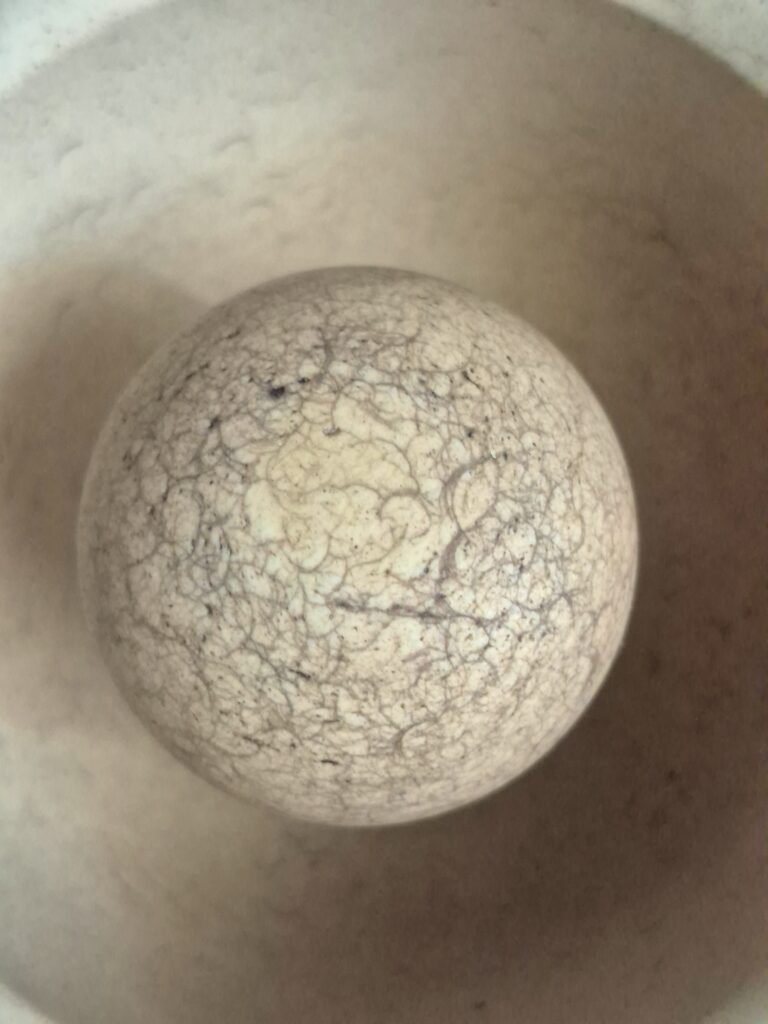
Unaware of its value, I had been using it all this time to crush my dog’s medicines. Remarkably, the hollow pestle still works perfectly. At some point, someone had stuffed plastic inside it, for reasons no one now remembers, but that has since been removed.
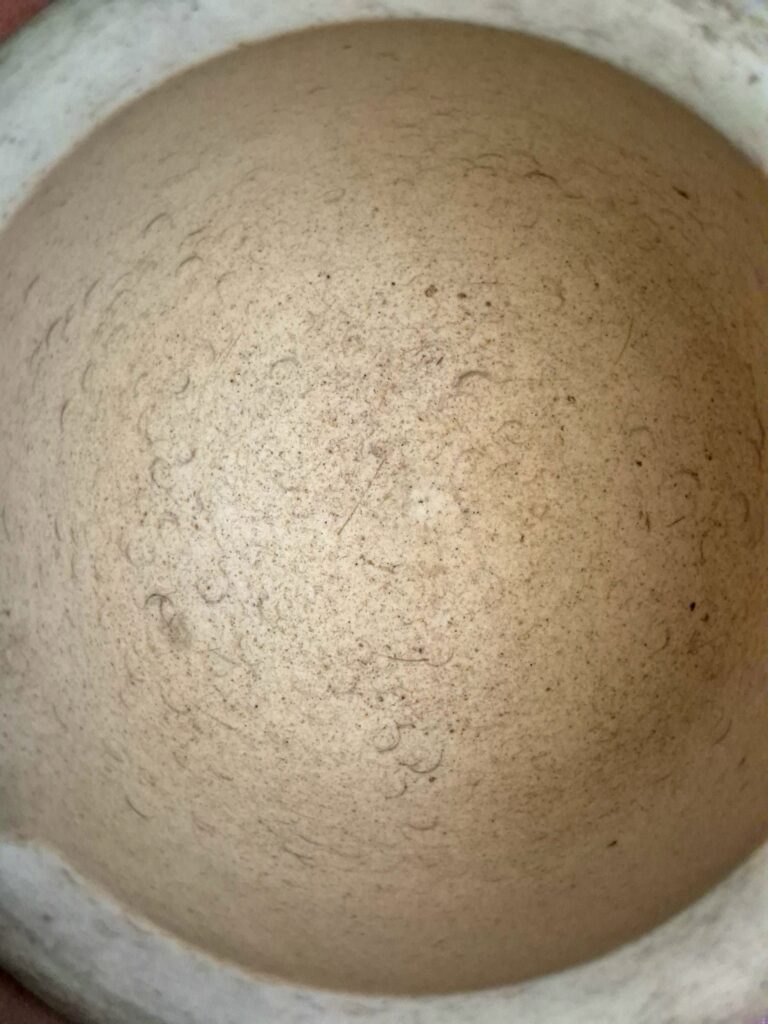
The marks of use are very visible. Tiny dark circles, sometimes concentric, sometimes faintly overlapping, bear witness to countless grinding sessions across generations. The outer surface is smooth to the touch, worn down so completely that your fingers know, before your mind does, that you are holding history. The inside is rougher, scarred by repeated use, and yet it remains intact, showing no obvious sign of shedding into whatever it grinds.
It is perhaps the most ordinary extraordinary thing I own: a household tool made by a royal glassmaker, sold in the commercial churn of the British Empire, and carried somehow into the life of a low-paid chemist in Bengal who wanted to heal people. Did he buy it himself? Was it given to him by the company where he worked? That part is lost. But he passed it down through four generations of a family shaped by separations, compromises and the routines of Indian middle-class life. And so it has come to rest, still whole, on my kitchen slab, though my great-grandfather never knew whether his bloodline would travel this far.
In its cracks, thus, the mortar proves the long afterlife of care.