From the hills of Uttarakhand
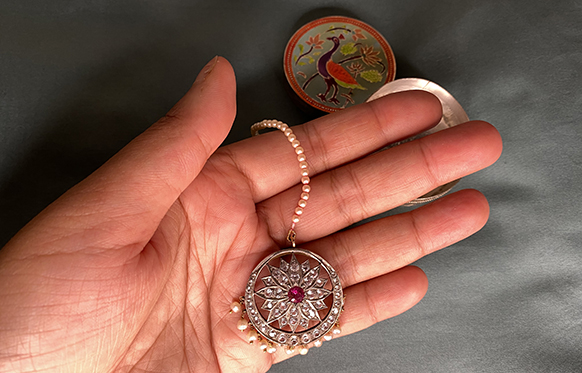
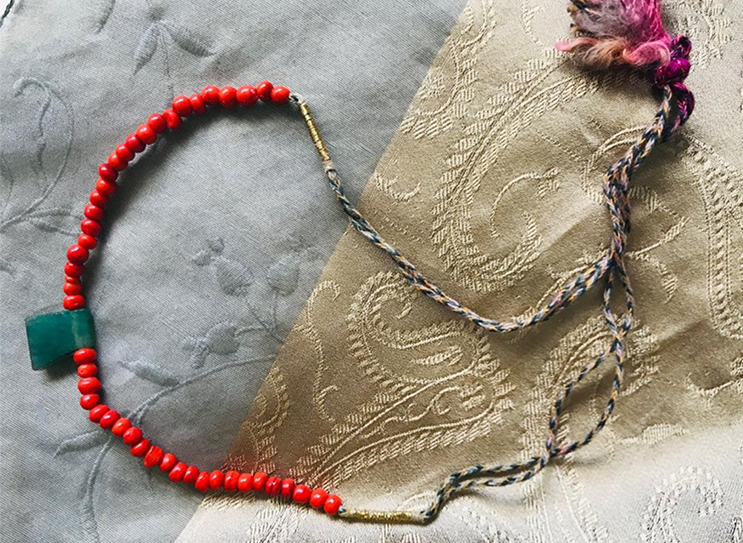
This necklace, called a janjeer in Kumaon, weighs 350 gms and is nearly 70 years old. Presented originally to my grandmother during her wedding in the 1950s, it was passed down to my mother in 1979, and to me in 2011.
The surface of the pendant is smooth, as is the case with Jade. This smoothness gives it an ethereal quality, and touching it, you do feel a sense of calm. You will see some textures and markings in the light, which have appeared over the years, as it was not stored properly. The gold etching on the pendant is delicate, and transports you to a different era.
Rajkumari Devi had embroidered this map for a school competition in the year 1948 when she was only 8 years old. Her school in Amhara, Bihar was visited by some British officials, who awarded her 10 annas for the extraordinary embroidery she had done, despite her young age.
This cabinet was originally commissioned by Bhaskar Vinayak Pandit or Aṇṇā, my great-great grandfather, some time towards the latter half of the 19th century. But the story of the cabinet is as migratory as the family that possessed it.
This Russian Colouring book called The Red Poppy with drawings by N. Obrucheva, printed in the USSR, was published by the “Malysh” Publishing House. It was bought for me by my grandafther between the late 1980s- early 1990s in Asansol.