
TEXT AND PHOTOGRAPHS BY PUNEET SINGH SINGHAL
Delhi, India
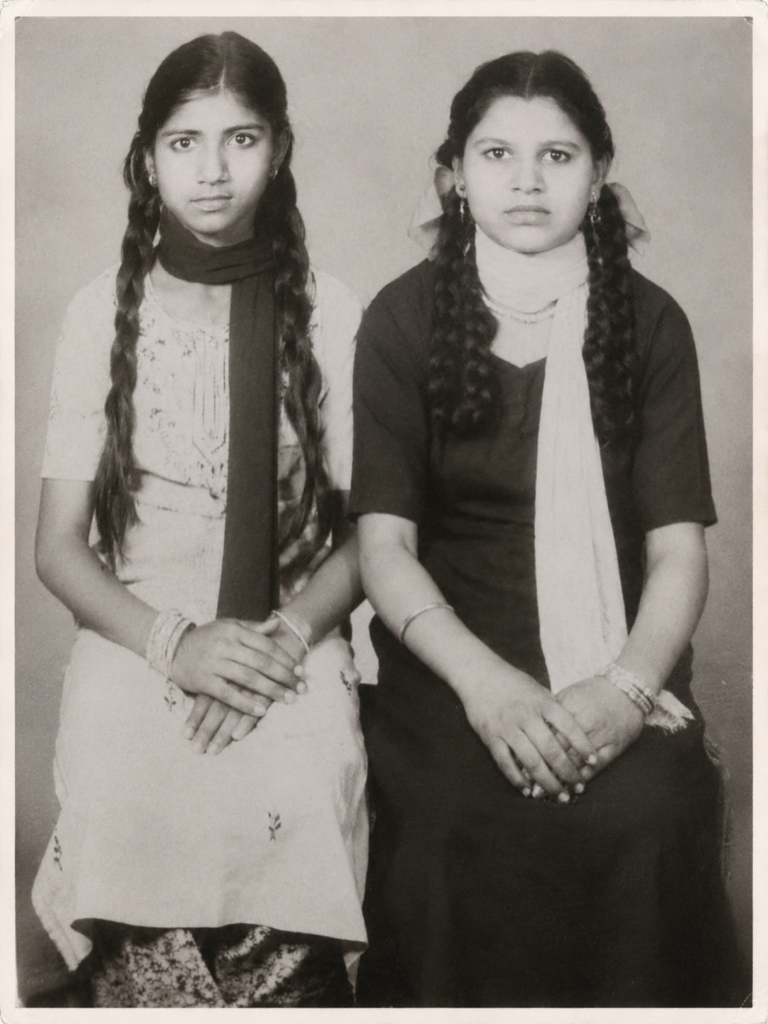
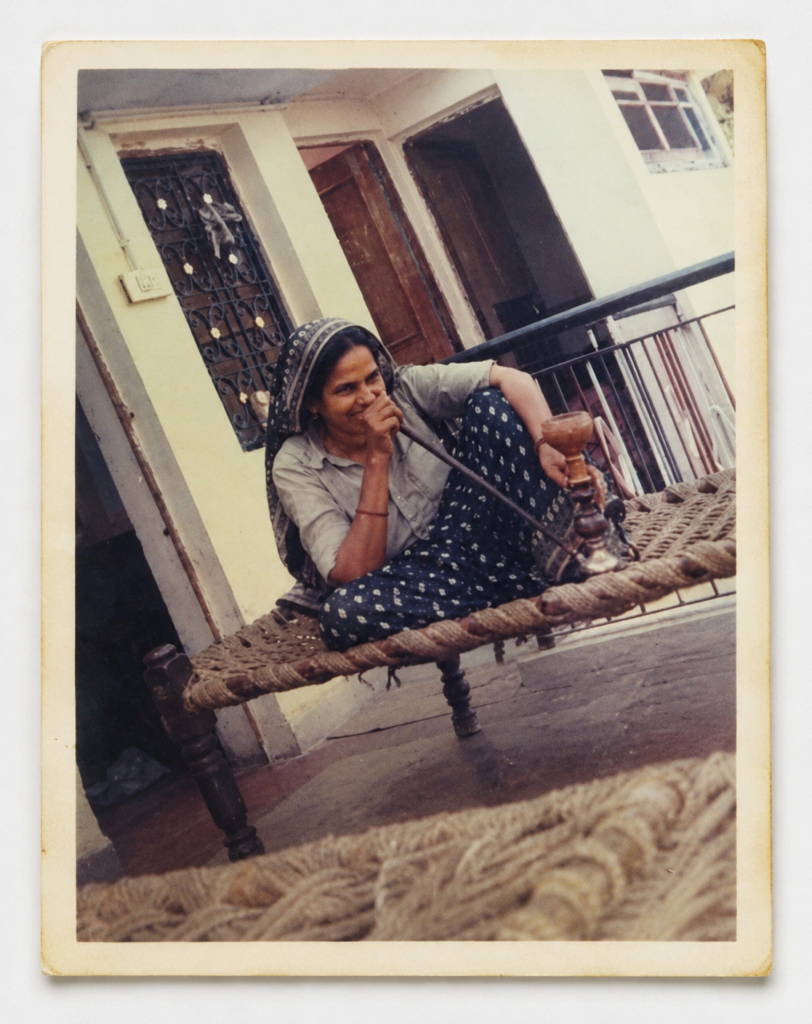
This is the oldest photograph we have of anyone in my family. It was taken in 1969. I do not know who took it, or on what occasion. I do not know whether my grandmother had dressed especially for the photograph, or whether someone simply said, “Baith jaa, photo khichani hai.” But every time I look at it, I feel that a whole world has paused for a moment.
My maternal grandmother, Shrimati Chandarbati, sits with her hands folded in her lap. Her dupatta rests over her head. Her face is calm, almost unreadable, but there is dignity in the way she sits. The photograph is simple. There is no grand background, no decoration trying to make the moment important. Yet the image feels full. It carries the weight of a woman, a family, and a landscape that was already beginning to change.
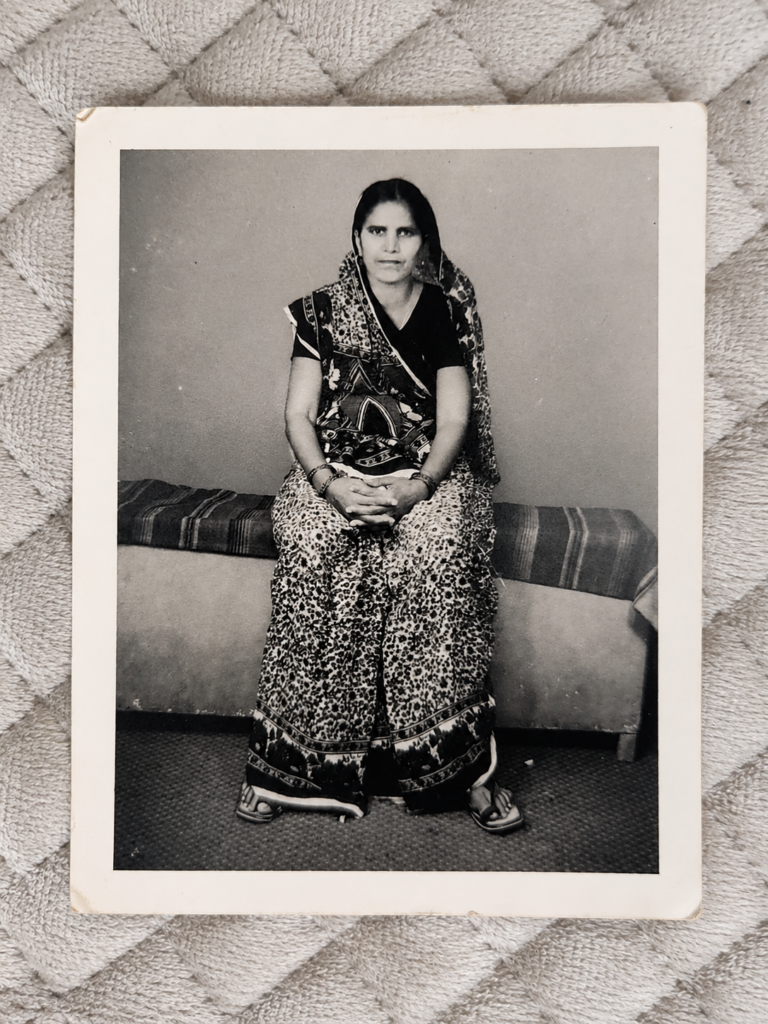
When I hold this photograph, I do not just see paper. I see the first visible trace of our family memory. Before this image, there are stories. After this image, there are more photographs, more names, more documents. But this one stands at the edge between memory and evidence. It says: she was here. This face existed. This life passed through a Delhi that many people no longer recognise.
The photograph itself has become an object of care in our home. Like many old family photographs, it has survived quietly. It must have passed through trunks, envelopes, steel almirahs, and the hands of people who perhaps did not think of themselves as archivists. Someone simply kept it safe. That is how many family histories survive in India: not through museums, but through ordinary acts of not throwing things away.
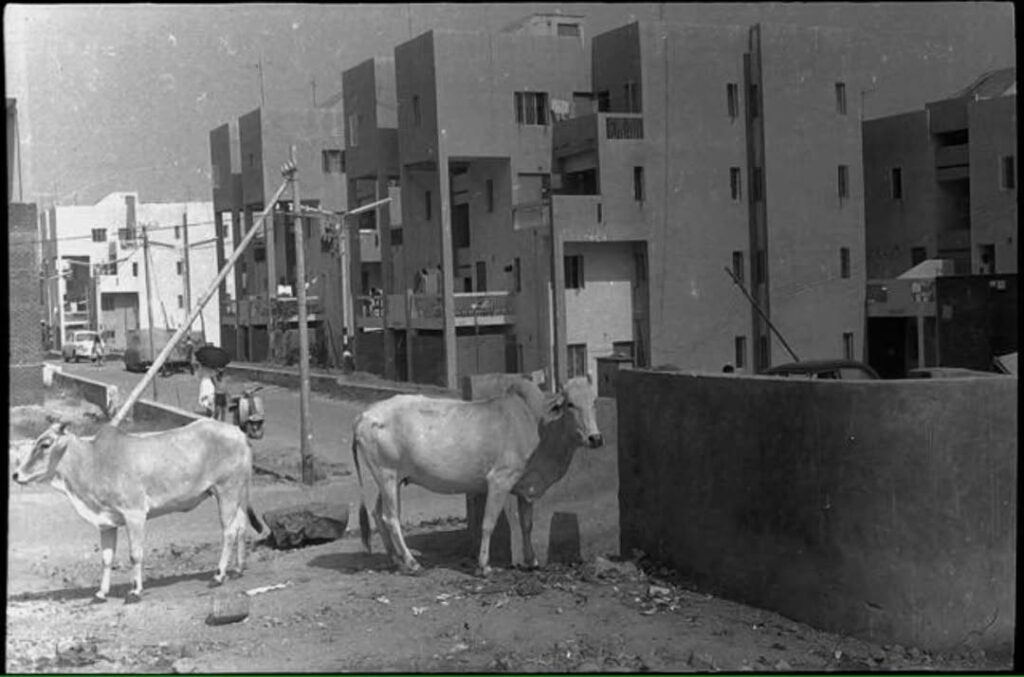
My grandmother was born in Munirka village in the southern part of Delhi. She was the daughter of Subedar Chaudhary Hukum Singh Rathi, a farmer and army man. Today, Munirka is known through rented rooms, traffic, students, shops, paying guest accommodations, offices, and its proximity to R.K. Puram, Vasant Vihar, JNU, IIT Delhi, and other well-known places.
But when my grandmother remembers Munirka, she does not begin with these names. She remembers fields. She remembers walking to her family’s agricultural land as a child. That land stretched across areas that today are known as R.K. Puram, toward Malai Mandir, and into the landscapes that later became Vasant Vihar, Jawaharlal Nehru University, and IIT Delhi. These places now exist in the language of the city: colonies, institutions, campuses, roads, sectors, embassies, and markets. But in her memory, they were not landmarks. They were routes, fields, boundaries, distances, and family land.
Before they became addresses, they were places people worked on, walked through, and belonged to. That is the strange thing about cities. They rename things so confidently that older meanings begin to sound unbelievable. A child growing up today may not easily imagine that land around R.K. Puram or JNU once belonged to village worlds. It is easier to believe in the city as permanent. It is harder to imagine the field beneath the road.
Land acquisition played a significant role in transforming Munirka from an agricultural village into what is now known as an urban village. Like more than 300 villages around Delhi, Munirka was drawn into the government’s plans to expand the capital southwards beyond Lutyens’ Delhi. Over a long and often difficult process that began in the late 1950s and continued into the early 1970s, villagers were required to surrender agricultural land that would eventually become R.K. Puram, parts of Vasant Vihar, Jawaharlal Nehru University, and other institutions that today define south Delhi.
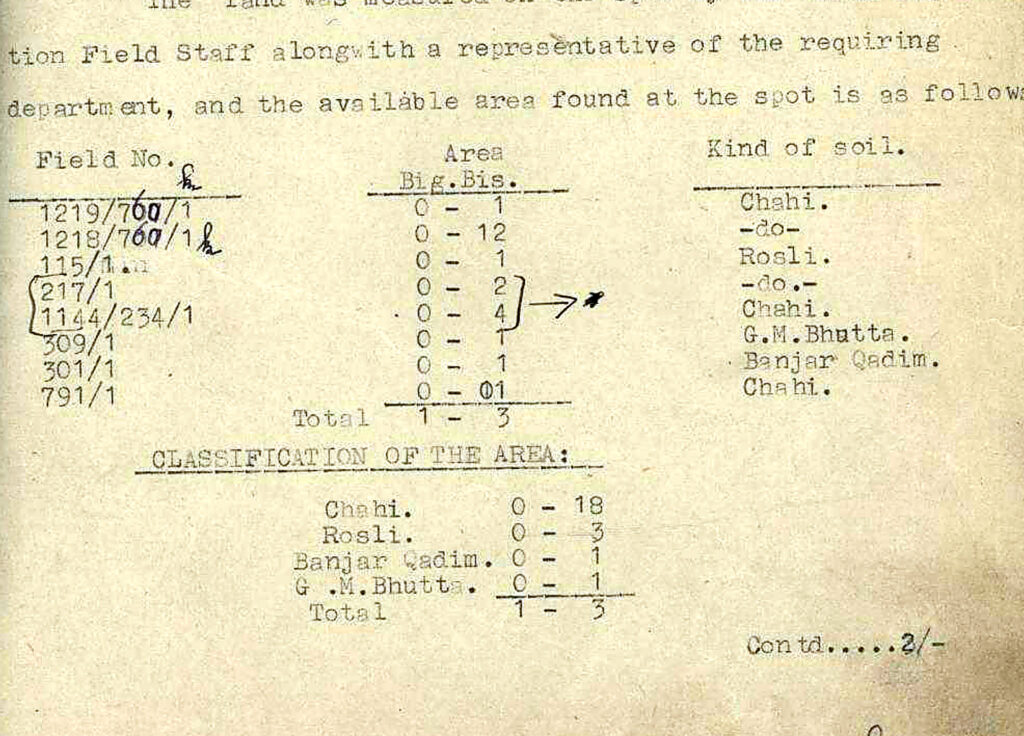
- Chahi: Land irrigated by a well. In older revenue records, this usually meant better agricultural land because it had access to water.
- Rosli: Sandy or sand-mixed land. It was often treated as poorer-quality or uncultivable land in revenue records.
- Banjar Qadim: Old fallow land. This means land that had not been cultivated for a long period, often recorded as uncultivated for several harvests
- Gair Mumkin Bhatta: “Gair Mumkin” means land not fit or not available for cultivation; “Bhatta” usually refers to land used for something like a kiln or non-farming use
For families whose livelihoods depended on agriculture and allied occupations, the acquisition was not simply a change in land ownership. It marked the beginning of a profound social and economic transition. Farming gave way to new professions, but that shift did not happen overnight. It unfolded over generations, leaving many families to navigate uncertainty while adapting to a rapidly changing city.
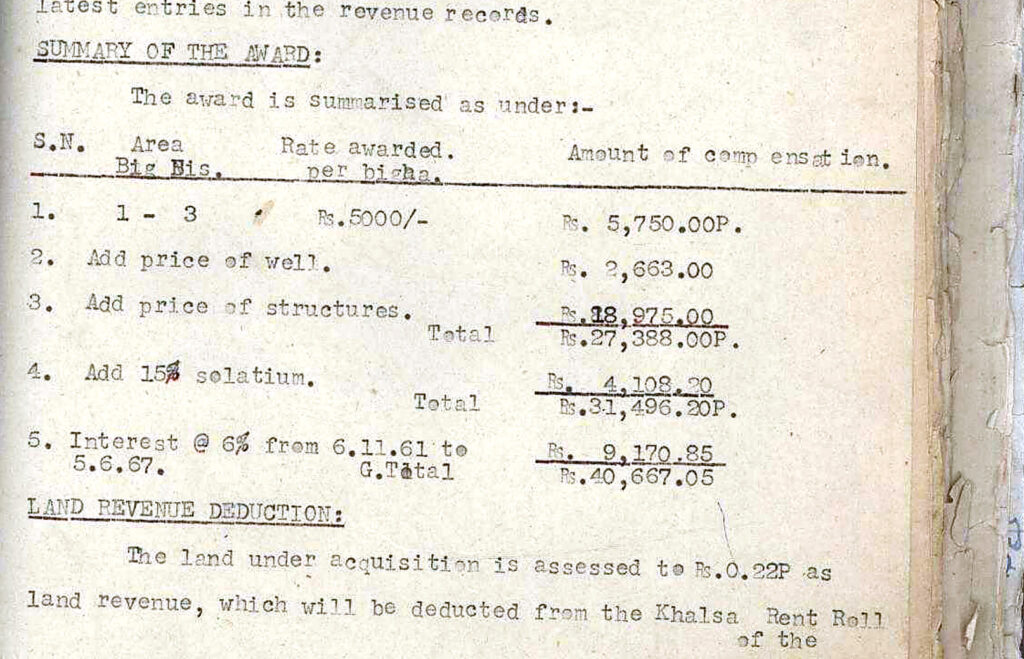
For my grandmother, these changes were not abstract. They were deeply personal. One of the places she remembers most vividly is a village well where she spent summer afternoons fetching water and cooling herself from the heat. Even today, she can point to the area near what is now R.K. Puram Sector 3 and tell us where the well once stood. The well disappeared during the construction of government housing, but it remains alive in her memory. Alongside these stories, a small collection of land acquisition documents has survived in our family. These papers are among the last tangible souvenirs of her childhood landscape.
The documents are preserved today by the children of her brother, the late Squadron Leader Satbir Rathi, who served in the Indian Air Force. Together with my grandmother’s memories, they offer a glimpse into a world that existed before the city took its present shape.
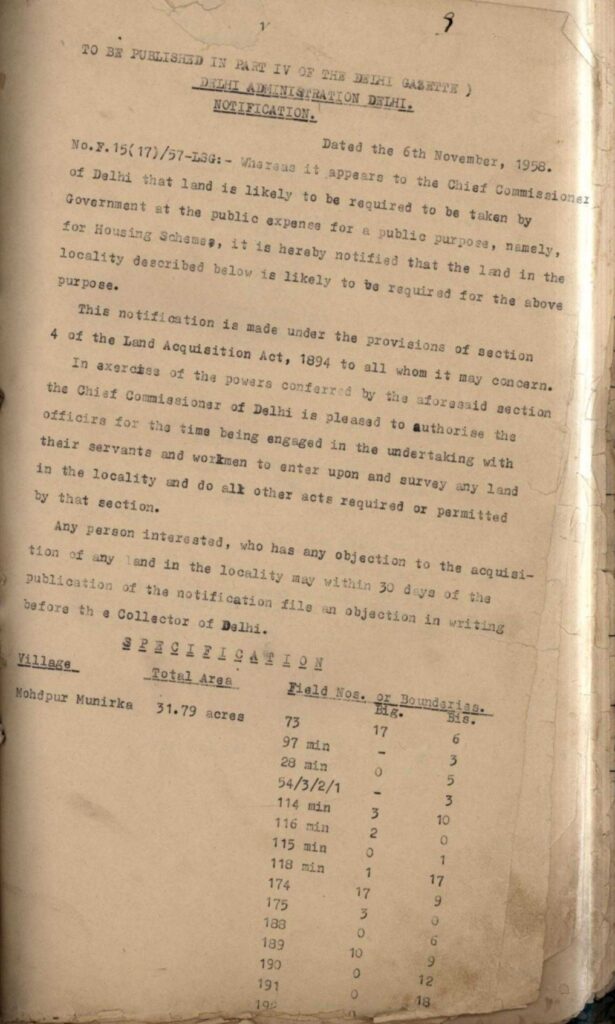
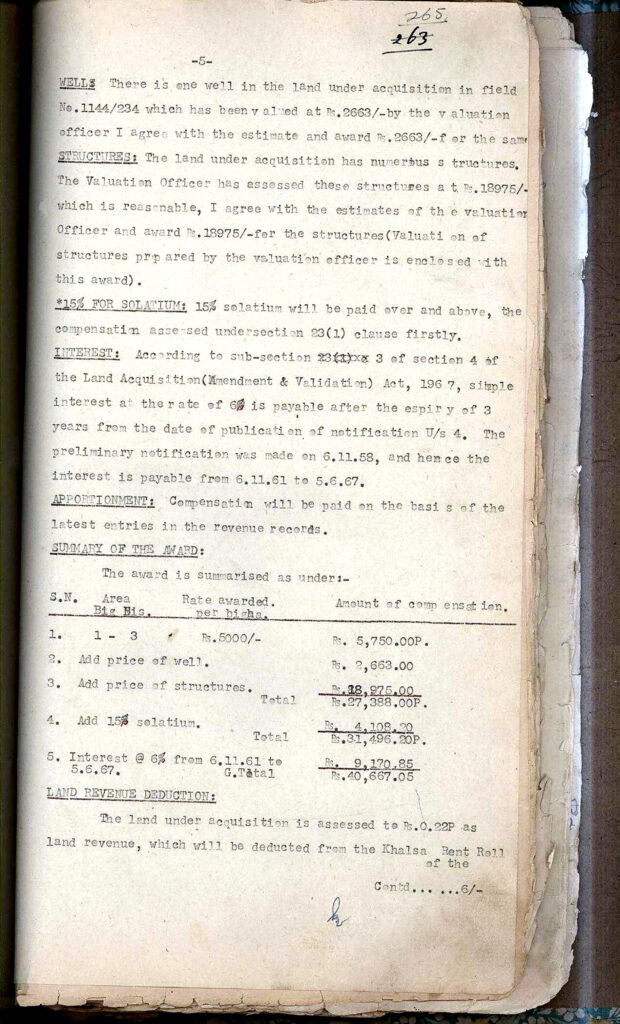
When we speak of urbanisation, we often speak in big words: growth, expansion, infrastructure, modernity, national development. But in family memory, urbanisation sounds different. It sounds like someone saying, “Yahan hamare khet hote the” – our fields used to be here.
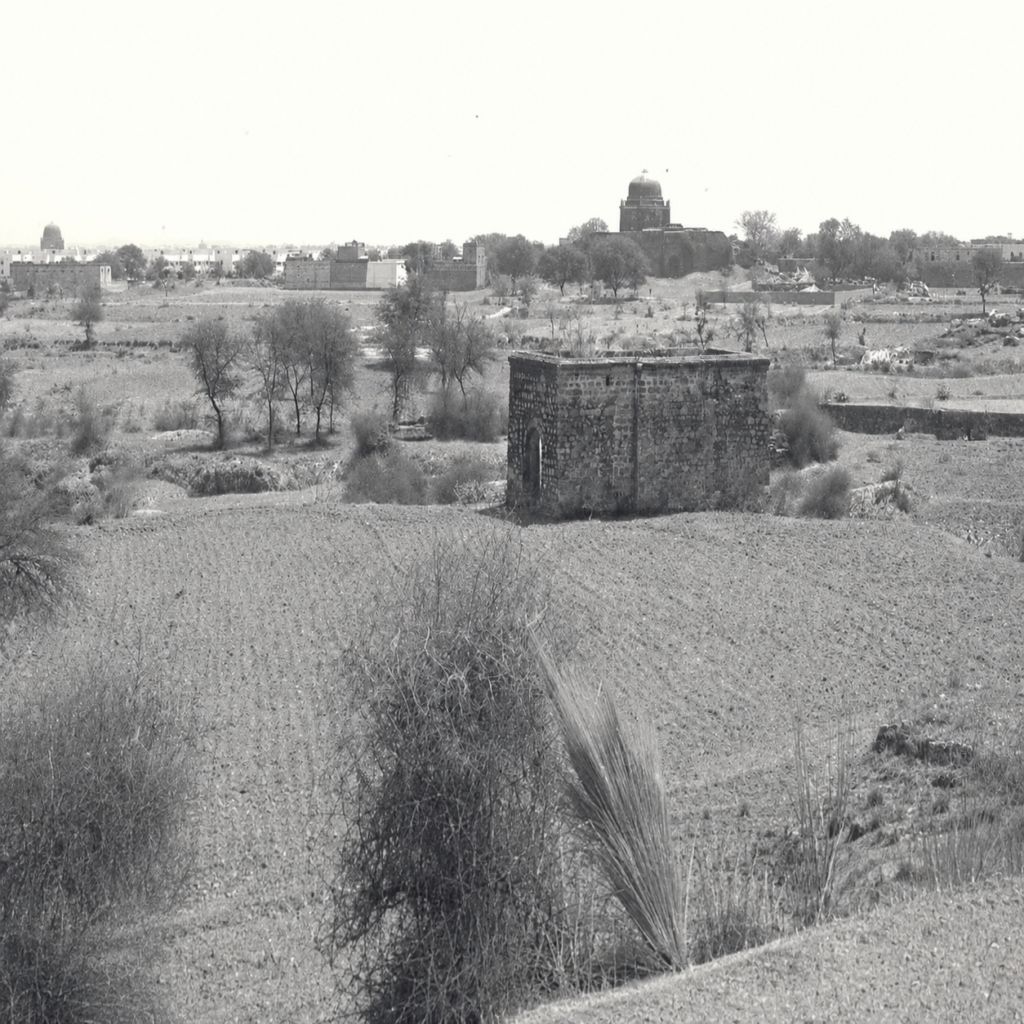
Munirka’s landscape was also shaped by water. Situated along the Aravalli ridge, the village received rainwater runoff that collected in a johad, or traditional pond. For generations, villagers, especially children, swam there. Local belief held that its waters could help cure certain skin ailments, and the pond occupied both a practical and sacred place in village life. Much of the surrounding landscape has changed, but the johad still survives near the Baba Gang Nath temple, offering one of the few visible connections to an older ecological history of the village.
After marriage, my grandmother moved from Munirka to Sahibabad village in Ghaziabad, after marrying Shri Nathu Singh Tewatia. There, too, she witnessed a similar transformation. Sahibabad, once rooted in village life and agriculture, gradually became part of an industrial and urban region. The village landscape gave way to the Sahibabad Industrial Area, and later the wider urban spread of Vasundhara and nearby colonies.
In one lifetime, she saw two village worlds change. One was the village of her birth. The other was the village of her marriage. Munirka became absorbed into south Delhi’s institutional and residential expansion. Sahibabad became part of Ghaziabad’s industrial and urban growth. She did not study urban planning, but she lived through its consequences. She did not write history, but she carried it in memory.
This is why I keep returning to this photograph. A photograph freezes a person, but it also opens a door to everything around that person. When I look at her in 1969, I wonder what she had already seen by then. How much land had already changed? How many conversations had happened in village homes about acquisition, compensation, uncertainty, and the future? How many women like her watched these changes from courtyards, rooftops, kitchens, wells, and family gatherings, without ever being asked to officially record what they knew?
Women often hold the emotional map of a place. They remember which path was taken for weddings, which well had sweet water, where relatives lived, where the fields began, which family shifted where, which land was lost, which festival was celebrated in which courtyard. Yet their memories rarely enter official histories. They remain in conversation, in pauses, in corrections, in the way an elder says, “Naa, pehle aisa na tha.” My grandmother belongs to that tradition of memory.
These documents and my grandmother’s memories became one of the inspirations behind the Dilli Dehat Project. As a child, I struggled to imagine the landscapes she described with such excitement. By then, Delhi had become a vast metropolis of roads, colonies, flyovers, institutions, and endless construction. But in her telling, it was still a network of villages connected by fields, ponds, shrines, the Aravalli ridge, and the Yamuna. Listening to her, I realised how much of Delhi’s rural and ecological heritage had disappeared from public memory.
Through the Dilli Dehat Project, I have been trying to document the rural histories of Delhi and its surrounding region: villages, rituals, landscapes, oral histories, shrines, ponds, family archives, old photographs, and the everyday cultural worlds that existed before flyovers and glass towers. The project emerged from a desire to document those histories before they are lost entirely. I often wonder whether some of the environmental challenges Delhi faces today are connected to our neglect of the landscapes and knowledge systems that once sustained these places.
This photograph of my grandmother is part of that larger work, but it is also more intimate than any public archive can be. It reminds me that Delhi’s history is not only in monuments. It is also in family albums. It is in women’s memories. It is in village names that survive even when the land has changed. It is in people who can still tell you what stood where before the city arrived.
When I look at this photograph, I see my grandmother as she was in 1969. But I also see Munirka before R.K. Puram became R.K. Puram. I see fields before campuses. I see Sahibabad before industry. I see a generation that lived through transition without always having the language to call it loss. The photograph has survived. Much of the world it came from has not.
Puneet Singh Singhal is the Founder/Curator of Dilli Dehat Project, a community-led archive and storytelling initiative that documents the rural histories, cultures, and lived realities of Delhi’s villages.
Thank you, Navdha and team for working with me on this to create such a wholesome story. 🙂