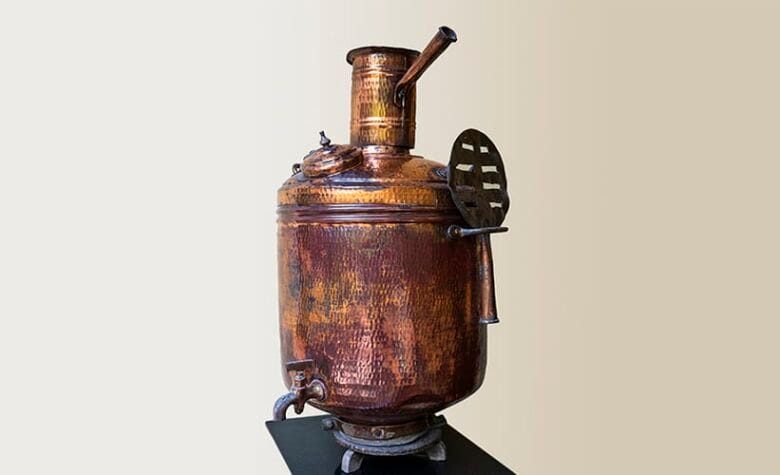
Sandhya’s copper boiler

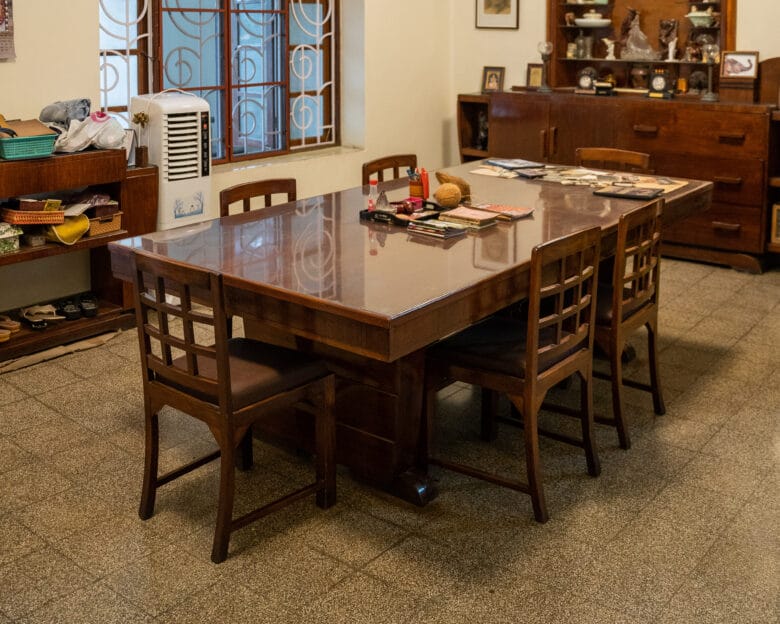
In the corner of Sandhya Venkat’s typical Madras home, a beautiful copper patina of burgundy and dark green catches the light pouring in through the courtyard. Although maintained exquisitely, turquoise and white spots reveal its proximity to the coast. The copper boiler originates from Madras and is likely from 1943.
Heirlooms from Faridkot

I was at my maternal home in Ajitgill village, Faridkot, looking through old things when I saw my nani’s sandook in the corner. It wasn’t locked so out of curiosity, I looked inside. It was like opening a pandora box. All of her things were still in there. Her clothes – she would wear men style kurtas with a collar and pockets on both sides, with a ghaghra – her trinkets, handwritten notes, and photographs. It was then that I felt closer to her than ever before.

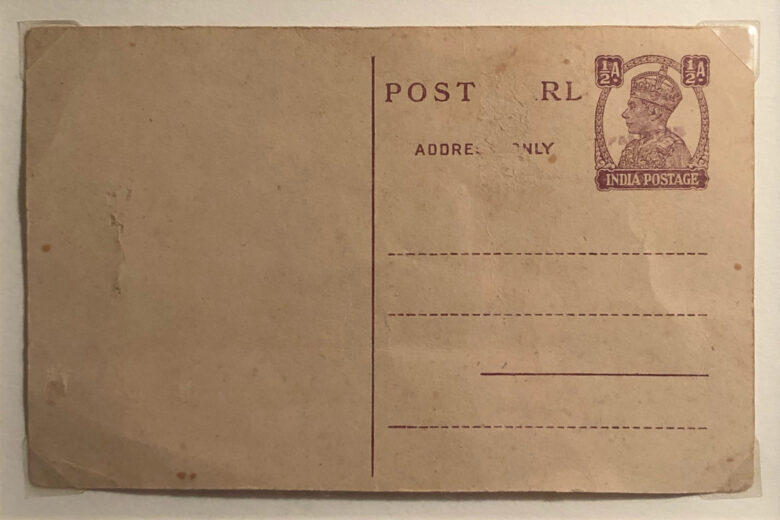
Independence Postcard

At the time of Independence, he chose to join the newly-created Pakistani Civil Service, and this decision effectively terminated his employment with the Indian Government. I remember him telling me that when Pakistan was created, the new Civil Service used these Indian postcards and ‘Pakistan’ was stamped on top of the image of King George VI.

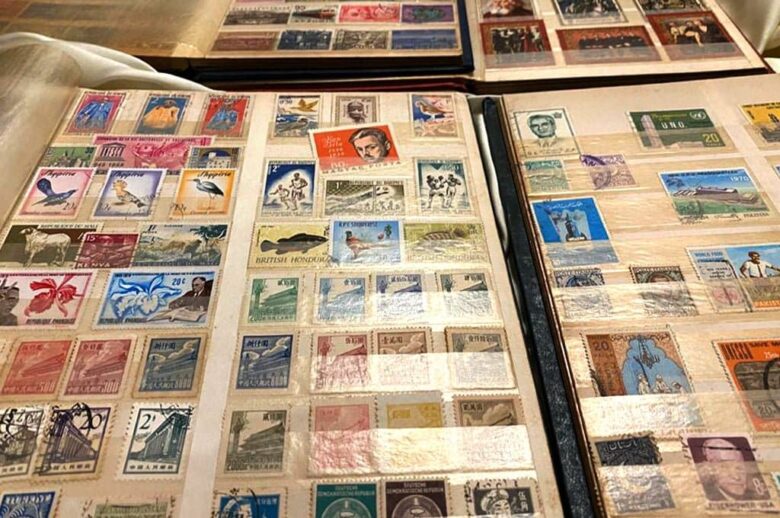
Baba’s Philatelic World

It was only in 1968, at age 11, when my father began arranging the tiny sheetlets, he amassed, into the leather-bound albums that have now been passed on to me. By 1972, he had a collected over 6,000 stamps that were distributed evenly in eight albums.

Amina Begum’s mulmul farshi

A farshi is a long voluminous garment that generously falls to the ground, and when standing or walking has a long train. The word farshi comes from ‘farsh’ or the ground/floor, which the garment trails on. This particular garment was carried from Panipat to Lahore and eventually to Sahiwal a few months after Partition.

Close
© Copyright 2024. All rights reserved.
Close

Subscribe to the Museum

Receive a new story from somewhere in the Indian subcontinent in your inbox every week!

Loading