My nani’s Kirpan
This Kirpan belonged to Shanta Boora, my nani , my maternal grandmother. She always carried this with her.
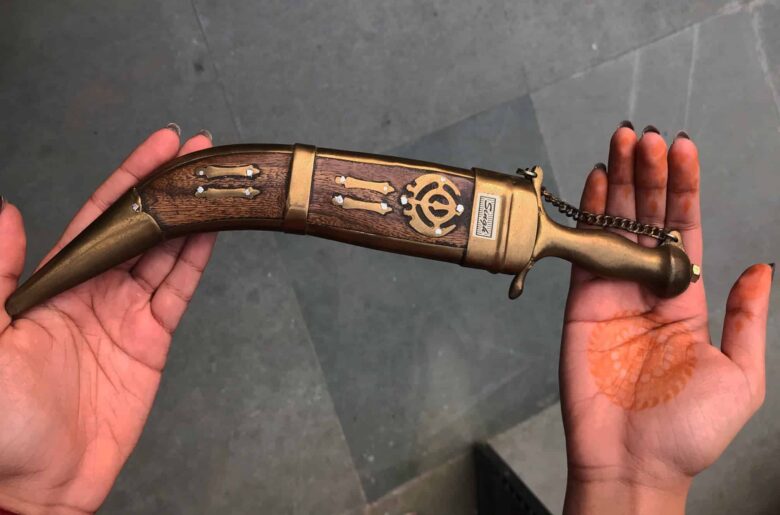
This Kirpan belonged to Shanta Boora, my nani , my maternal grandmother. She always carried this with her.
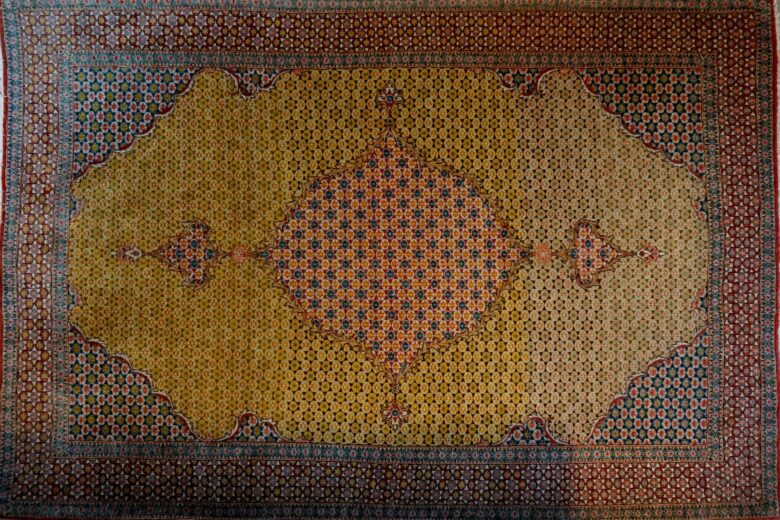
One such thing is a beautiful Persian carpet, which started its life in Qom where my husband’s grandparents bought it while on holiday more than 50 years ago. In the centre is a medallion, a tradition harking back to early 15th century Persian Manuscript covers. The medallion has four flowers coming off at each corner topped with a palm tree motif.

One of her aides in acclimatizing to her new environment, was the family cook, Misser ji. Custodian of lost and aged recipes, raconteur par excellence and caretaker of all the silverware used for cooking and serving – the young girl that my grandmum was, latched on to him to not just pick up the unfamiliar language and its nuances, but also conquer palates with dishes such as ‘kulfe ki kadhi’ and santre ka raita, beaten yogurt with oranges.
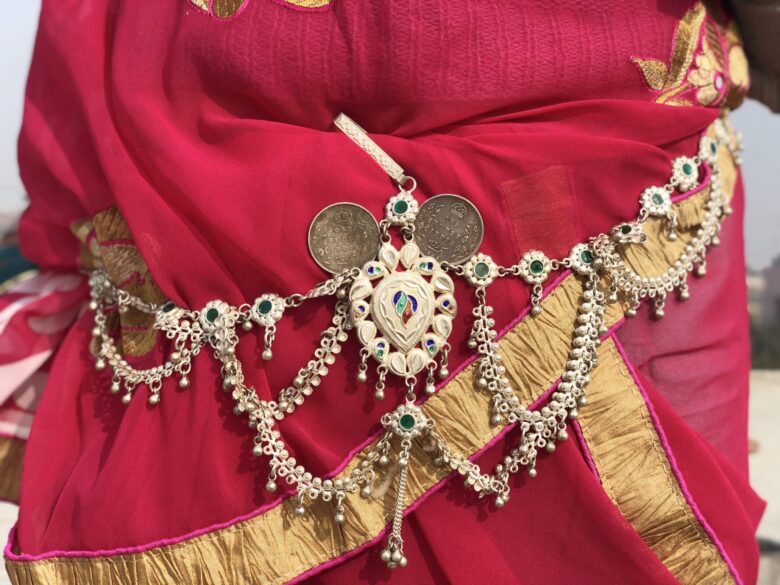
The coin from 1906 was no mere coin, but rather a piece of my great-grandmother’s jewellery. It was a part of her tagdi, the silver belt she wore around her waist on top of her sari, which was eventually bequeathed to my grandmother. The story goes that so beautiful was her mother that when her future father-in-law came to see the young girl, he immediately liked her for his son, and presented her with a silver coin. This silver coin, to be exact.
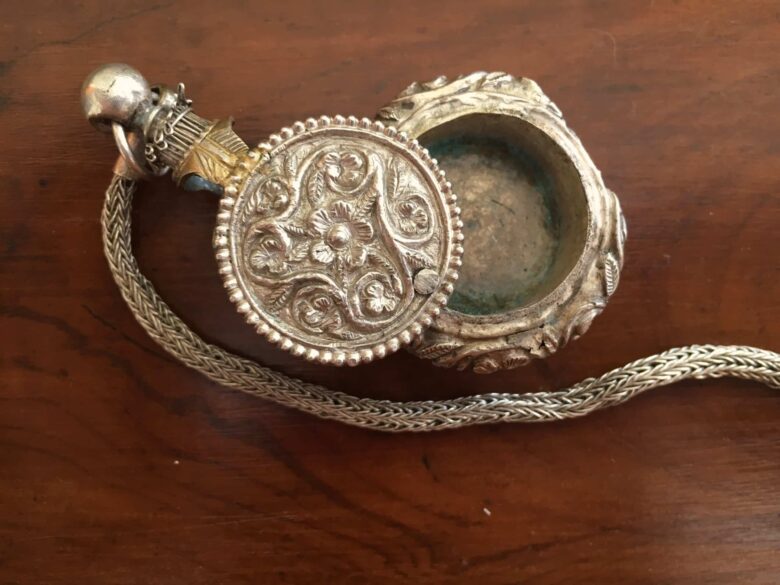
I have faint memories of summer afternoons when an ittarwalla, a man selling aromatic oils and perfumes – ittar – would arrive from Awadh with a black briefcase. My parents would buy small amounts of a certain ittar from him and fill it in glass jars, which were then placed inside a wooden ittardan, a small rectangular box made to store perfume.