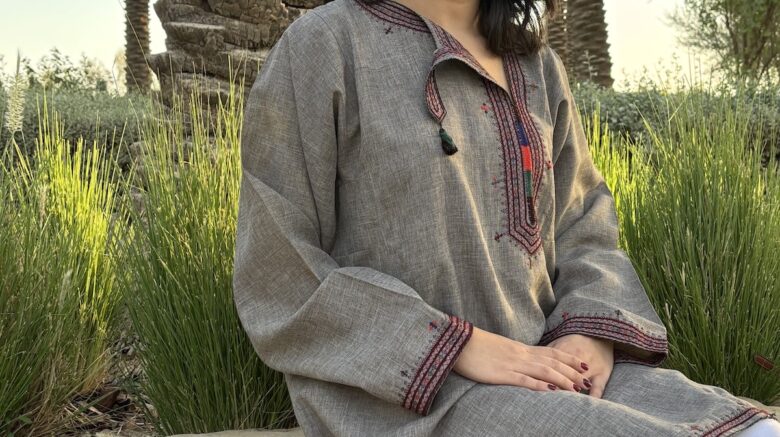
The tunic that bridges time and distance

It is a different feeling to be holding this piece of fabric in my hand, almost like a portal allowing me to feel my grandfather’s presence. I had been carrying a piece of my land without knowing it, and seeing this object as a vessel – one that connects the immediate to the vast – has transformed my understanding of my ethnic identity.
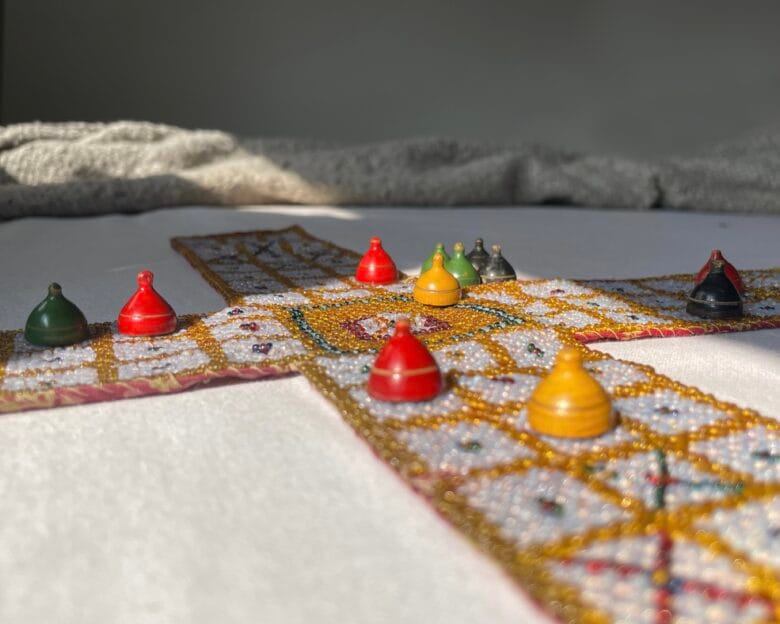
Pachisi, Sepoys, Cowries: My Grandparents’ Tabletop Story

Throughout history, pachisi was the ‘poor man’s chaupar’. But to my grandmother, whose childhood pachisi grids were scribbled in chalk, my grandfather’s novelty board — like rubies, emeralds, sapphires, and pearls sewn together — seemed no less regal. “She embroidered each bead herself,” she tells me, looking back at the outbursts, meltdowns, and amusement this game brought to my grandparents’ living room 60 years ago. “I guess she’d be your great-great-grandmother”.

Vari da bagh

The story of this ‘vari da baagh’ begins with bebeji. It was hand-embroidered in around 1965 and given to my dadi as part of her wedding trousseau. The baagh is made of red “khaddar” hand-dyed and hand-woven cloth.

Aaji’s vintage crochet needle

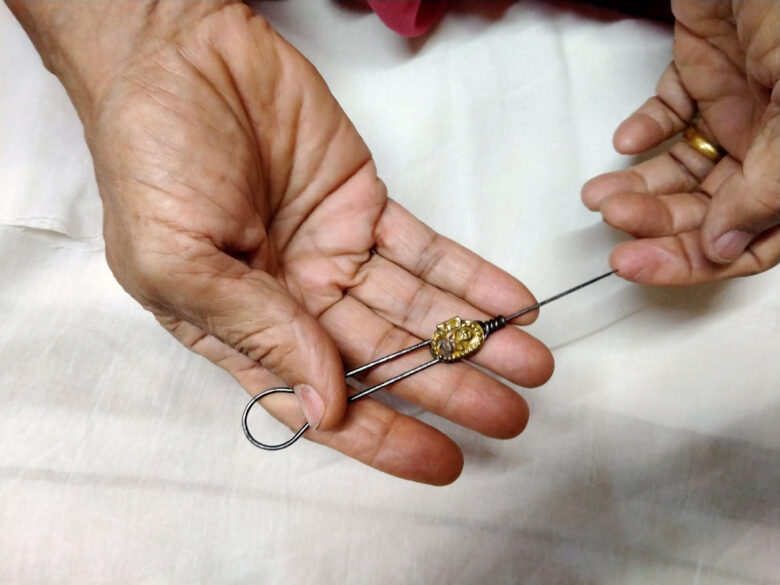
This beautiful thing – I was told by aaji – was a crochet needle almost 90 years old! I could never have guessed it was a needle merely from the shape. I asked her where the hook was and she smiled and slid the oval silver mechanism to the top, pulling with it a hidden hook, extending its size to 12cm.

Nisa’s Purse

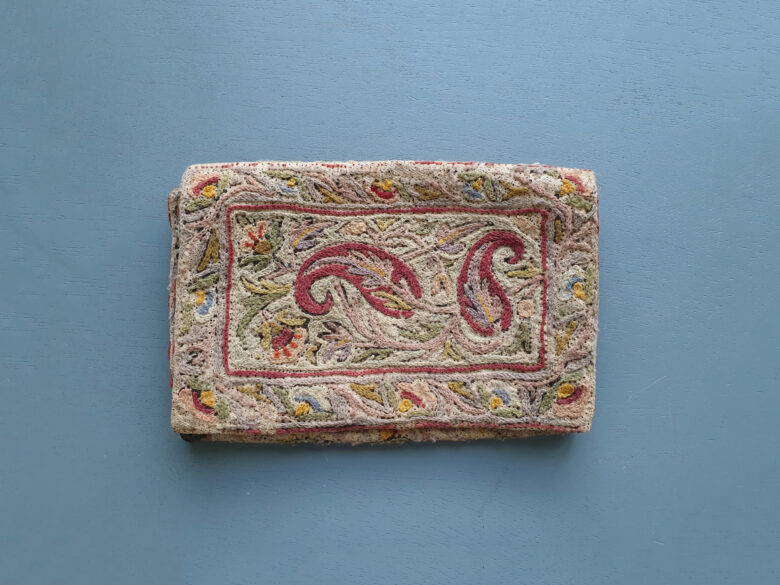
The envelope clutch purse measures 6 inches in width and 4 inches in height. It is covered in very fine crewel embroidery – a type of surface embroidery using wool and a wide variety of different embroidery stitches. The purse was handmade in Srinagar, Kashmir and gifted to my grandmother roughly ninety years ago.

Close
© Copyright 2024. All rights reserved.
Close

Subscribe to the Museum

Receive a new story from somewhere in the Indian subcontinent in your inbox every week!

Loading